If your priority is a beach and nothing else, pick the Caribbean for soft white sand and predictable all-inclusive value. If your priority is the beach plus scenery you will still remember in ten years, Hawaii costs more and earns it. Our Hawaii vs Caribbean for a beach vacation comparison covers shoreline, weather risk, travel time and cost, so you can settle the question in ten minutes instead of twenty forum threads.
These are genuinely different trips wearing the same word. Hawaii is a US state of volcanic islands in the central Pacific with one culture, one currency and one entry policy. The Caribbean is a region of more than 7,000 islands and cays spread across several independent nations, each with its own culture, currency and travel rules. That single fact explains most of what follows, including why one side has predictable weather and the other does not.
Table of Contents
- Hawaii vs Caribbean for a Beach Vacation at a Glance
- Which Has Better Beaches?
- Hawaii vs Caribbean beaches: volcanic variety versus soft white sand
- Caribbean beaches: fine white sand and shallow water
- Which beach wins depends on what you do in the water
- How Do Weather and Seasons Compare?
- Which Destination Is Easier to Get Around?
- Which Is More Budget-Friendly?
- What Activities Are Better in Hawaii or the Caribbean?
- What Kind of Vacation Does Each Destination Suit?
- Which Should You Choose?
- Frequently Asked Questions
- Is Hawaii or the Caribbean better for a relaxing beach vacation?
- Which destination is cheaper for a week-long beach trip?
- Is Hawaii or the Caribbean better for snorkeling and diving?
- Which is easier for travelling with children?
- When is the best time to visit Hawaii versus the Caribbean?
- Can you combine a beach holiday with adventure and nature activities?
- Bottom Line
Hawaii vs Caribbean for a Beach Vacation at a Glance
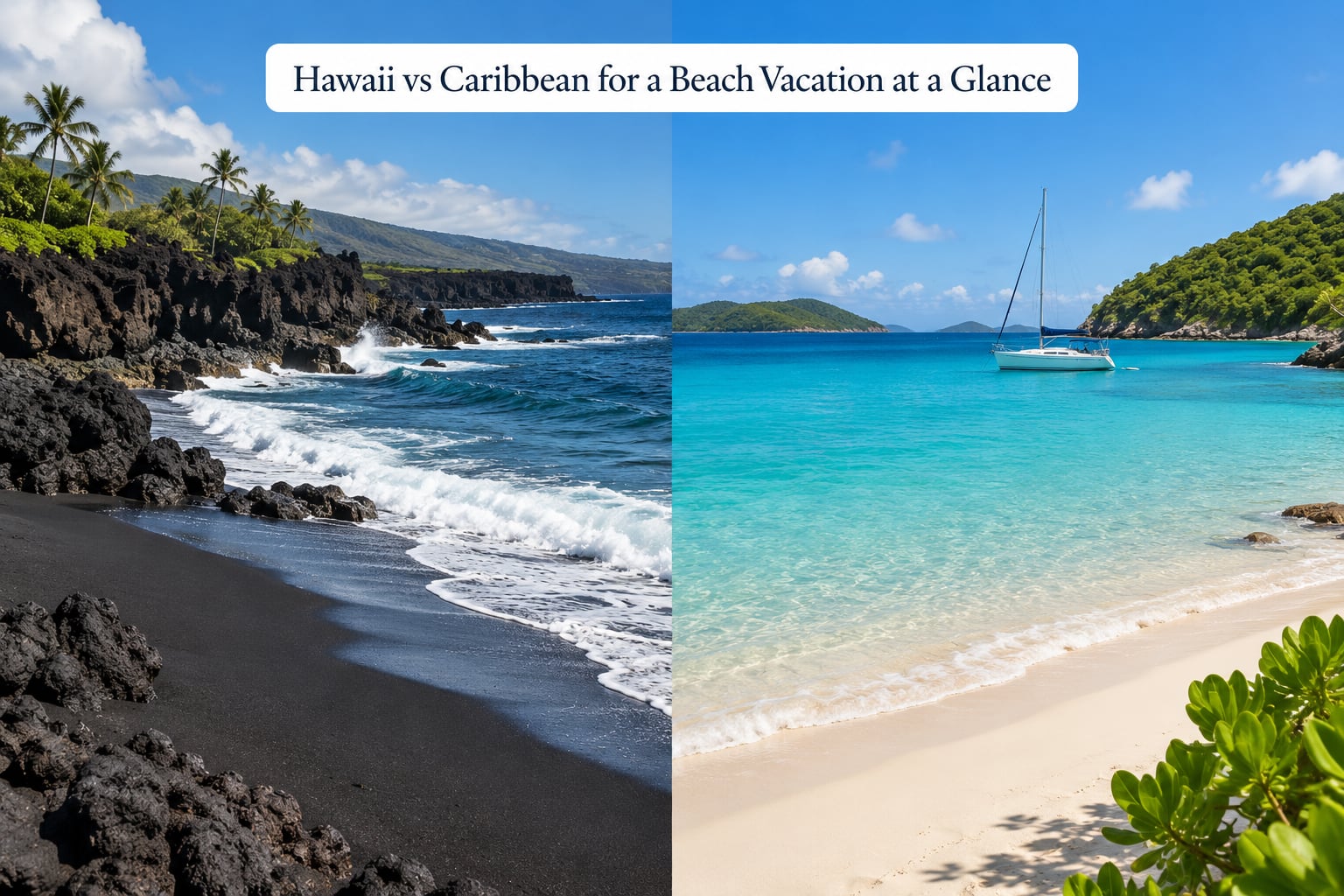
Hawaii is the pick for drama, surf, hiking and road trips. The Caribbean is the pick for calm shallow water, all-inclusive simplicity and a shorter hop for anyone flying out of the eastern US. Here is the short version before the detail.
| Factor | Hawaii | Caribbean |
|---|---|---|
| Best time to visit | April to June and September to October for warm, dry days | December to April, outside the June 1 to November 30 hurricane season |
| Beach character | Volcanic black, grey, white and green sand; surf-driven | Fine, soft, bleached white sand; shallow and calm |
| Weather risk | Very low hurricane risk; trade winds and rainy micro-seasons | Hurricane season plus a seaweed season on some islands |
| Best water sports | Surfing, snorkelling on volcanic reefs, diving | Snorkelling, scuba, sailing, paddleboarding on glassy water |
| Flight time from the US | About 5 to 6 hours nonstop from the West Coast, longer from the East Coast | About 2.5 to 4 hours from the East and Gulf Coasts, longer from the West |
| Cost pattern | Higher daily rate, plus resort fees, parking, food and activities on top | Lower daily rate at all-inclusives; extras cost more outside the bubble |
| Getting around | You need a car; islands are separated by short flights | Resort transfers and ferries; a car helps outside resort zones |
| Passport | Not needed for US citizens; it is a US state | Required for most islands, including the US territories |
| Island culture | Polynesian heritage, local towns, one chain of islands | Colonial history, distinct food and music per island, many countries |
| Best for | Honeymooners, surfers, hikers, self-directed travellers | Families, budget-conscious couples, all-inclusive resort shoppers |
Which Has Better Beaches?
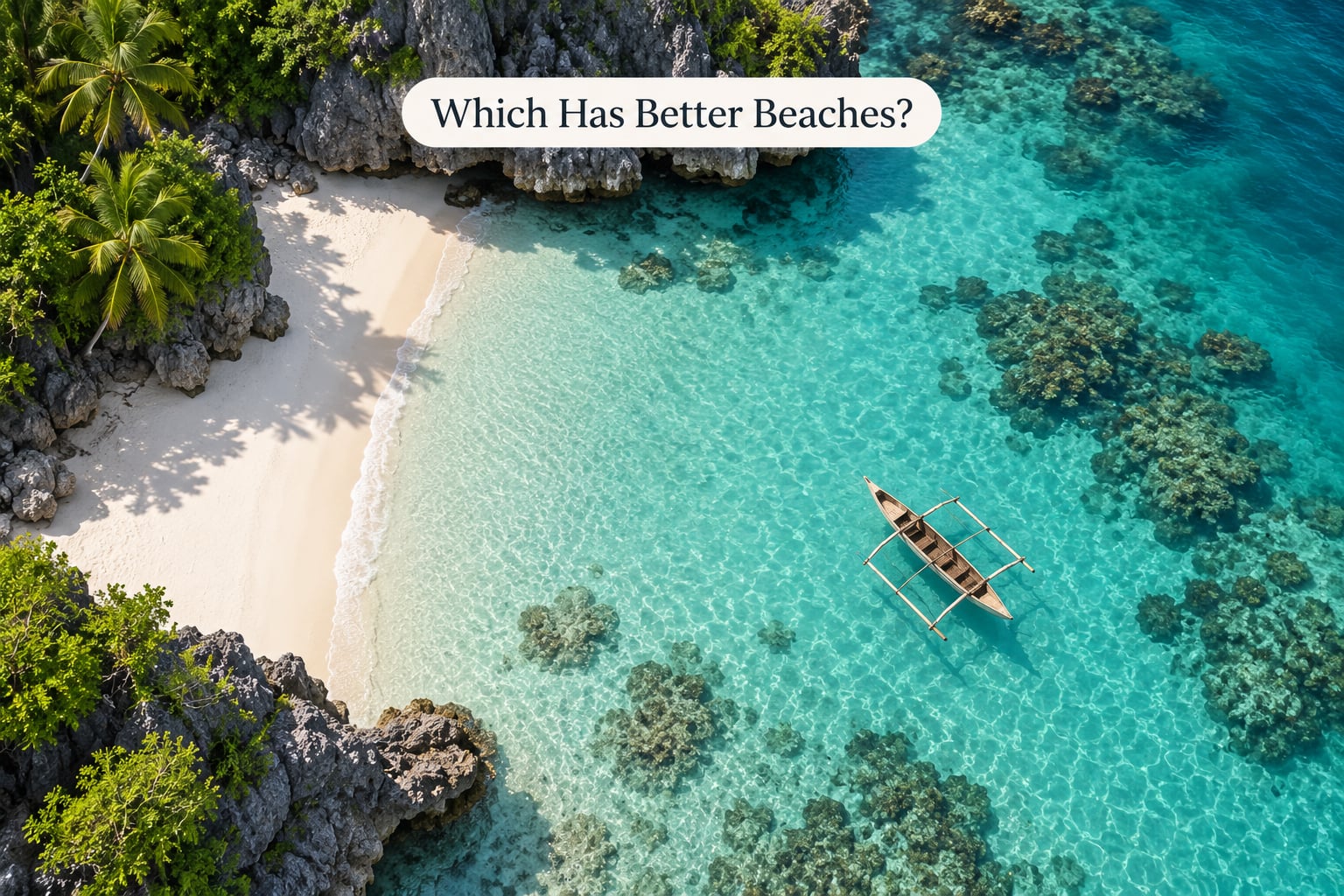
It depends on whether you want to sit on the sand or get in the water. Hawaii gives you more variety of shoreline in a single trip; the Caribbean gives you a longer stretch of the specific beach most people picture when they say beach holiday.
Hawaii vs Caribbean beaches: volcanic variety versus soft white sand
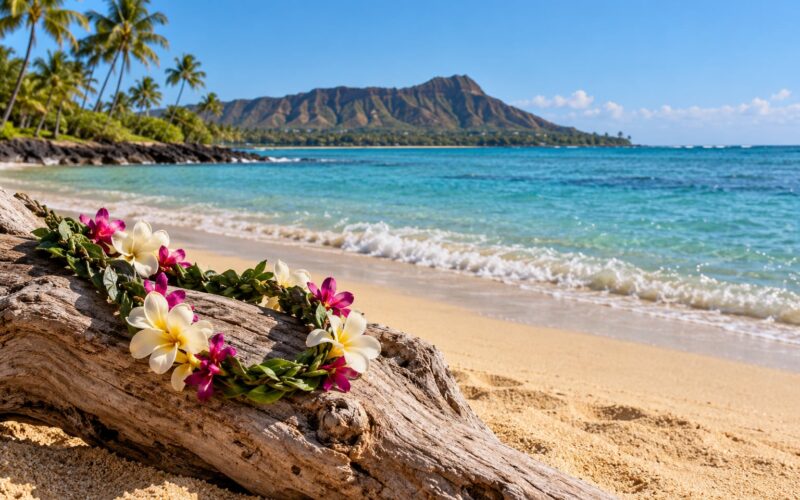
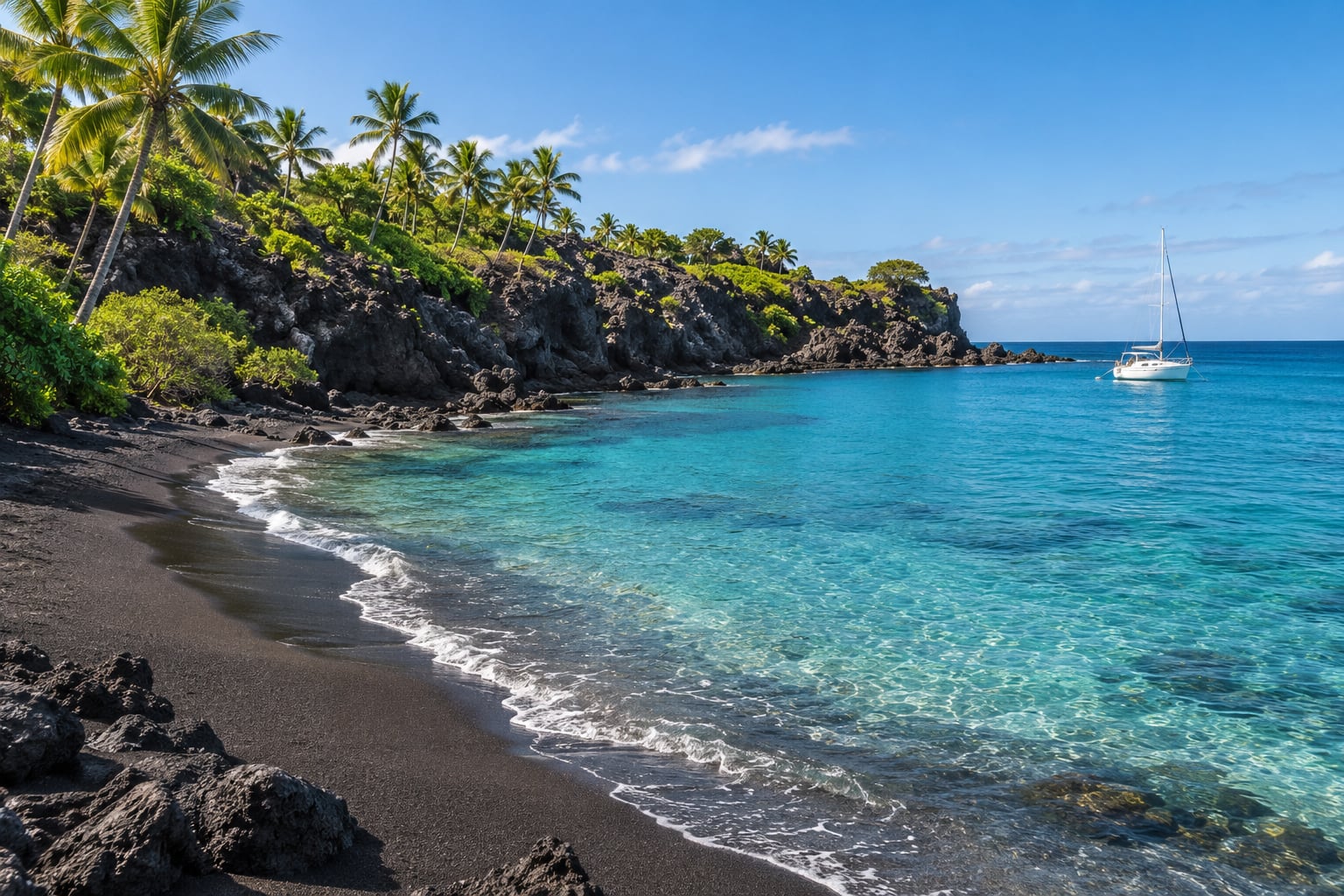
Hawaii’s sand is made from eroded lava, basalt and coral, so the colour changes with the island. On the Big Island you can stand on jet-black sand at Punaluu in the morning and on green-black sand near a rainforest the same afternoon. Maui has the famous white sand of Wailea and Kaanapali along a dry, sunny coast, and Lanai has a beach that feels like it has not been discovered.
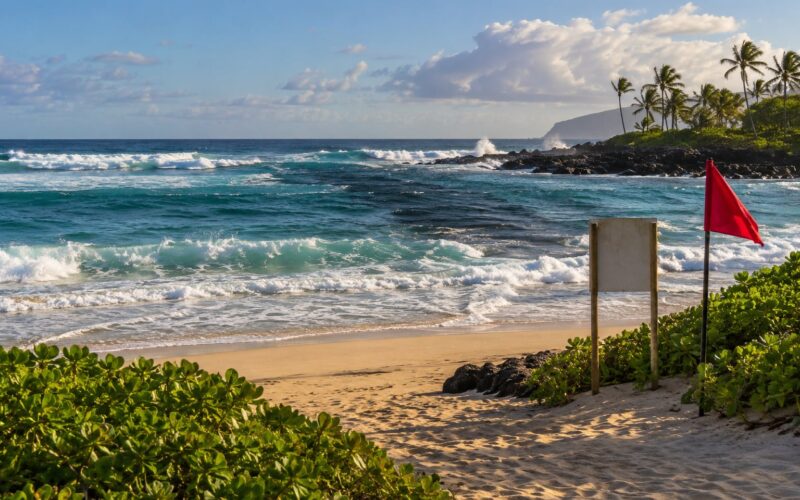
That variety is the appeal, and it is also the catch. Many Hawaiian beaches have a reef or rocks close to shore, and most of the north and west shores carry real surf. That is excellent if you surf, and a genuine consideration if you are swimming with young children. Pick the south and west beaches on Maui and Oahu for calmer water, and check the conditions for specific stretches rather than trusting an island’s general reputation.
Caribbean beaches: fine white sand and shallow water
The Caribbean’s signature beach is the pale, powdery crescent you find around Cancun and Playa del Carmen, Punta Cana, Montego Bay, Negril, Grace Bay in Turks and Caicos, Aruba’s Palm Beach, and the bays of Puerto Rico. The sand is softer, the water tends to sit at knee-to-waist depth for a long way out, and there is usually a calm lagoon’s worth of protection from the open sea.
It is the more forgiving beach for wading, floating and children building a moat. What you give up is the sense of place that comes from terrain shaped by volcanoes. The water is the draw here rather than the terrain behind it.
Which beach wins depends on what you do in the water
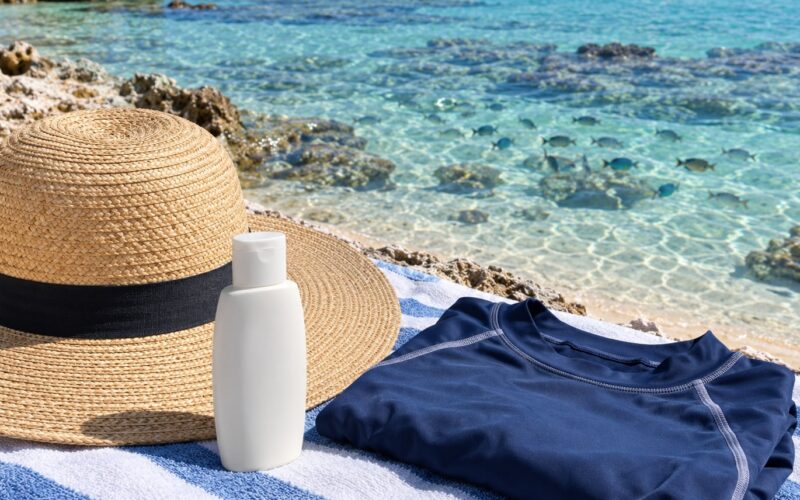
If your trip centres on surfing, Hawaii wins outright. The North Shore of Oahu and the north and west shores of Maui and the Big Island have consistent swell and a culture built around it. If your trip centres on being underwater with a mask and snorkel, many Caribbean islands win, and Bonaire in particular is a serious dive destination with shore-entry reefs.
The forum consensus splits the same way: Hawaii gets praised for water clarity, scenery and surfing, while islands such as Turks and Caicos and Bonaire get named when snorkellers compare. Neither side is wrong. They are optimising for different holidays.
How Do Weather and Seasons Compare?
Hawaii is the more predictable option, and this is the single biggest practical difference between the two. Hawaii sits outside the Atlantic hurricane belt, so the storm risk that shapes a Caribbean booking barely exists here. What Hawaii does have is trade winds, a wet winter and dry summers, and micro-climates that can differ by ten degrees and a rainstorm between neighbouring valleys.
In practice, Hawaii’s weather runs in roughly ten-day cycles. A few rainy days, then a stretch of bright mornings with afternoon trade-wind showers. Waikiki is sheltered and often sunny. Hilo on the Big Island is wet. Kailua-Kona is dry. Checking a local forecast for the specific beach town matters more than the island name, because that is how locals themselves plan their day.
The Caribbean trades tropical consistency for a real storm calendar. Hurricane season runs June 1 to November 30, and the months right after it, December through April, are the calmest and warmest stretch. Booking inside hurricane season is not reckless; the odds of a direct hit on any given island in any given year remain low. It is a risk-management decision, not a coin flip, and it is worth checking the National Hurricane Center outlook and the US State Department travel advisory for your dates.
Travel insurance with cancel-for-any-reason cover matters more on the Caribbean side, partly because of storms and partly because of resort reopening timelines after storm damage. Hawaii needs it too for a different reason: fewer flights and less hotel inventory mean a volcano-related closure or a wildfire on one island can reshape a trip quickly.
One more Caribbean wrinkle catches first-timers out. Sargassum, a floating brown seaweed, arrives on Caribbean beaches heavily in the spring and early summer, particularly along the Riviera Maya near Cancun and Playa del Carmen. It smells sharp in the heat and it is unpleasant, though it is not a safety issue. If a Caribbean trip is happening in that window and the beach is the whole point, check the conditions for your specific resort zone first.
Which Destination Is Easier to Get Around?
Getting around Hawaii takes planning, and getting around the Caribbean depends entirely on whether you are staying inside a resort. Hawaii’s islands are not connected by bridges, so a two-island trip means two flights, and the out-of-the-way islands such as Lanai and Molokai are not for spontaneous day trips. On the larger islands a rental car is close to essential, and the public bus system exists but does not run to every trailhead or beach at the hours you want it.
That is a real cost, both in money and in time. Budget an hour each way for a beach that would be fifteen minutes away in a resort zone, and remember that fuel, parking and rental fees stack up fast. Hawaii rewards travellers who like planning a route and stopping at a dozen places along it.
The Caribbean is easier in one way and harder in another. Inside an all-inclusive resort the practical answer is that you walk to the beach, the pool and most of the restaurants, and the airport transfer is arranged before you land. Outside the bubble, you rely on taxis, tour shuttles, local buses, ferries and short hop flights. Some islands are essentially one big resort strip, while others have real towns and road networks worth driving.
Flights skew the whole decision. From the US West Coast, Hawaii is around five to six hours nonstop and lands in the morning of the same day, so there is minimal time difference and almost no jet lag. From the East and Gulf Coasts, Cancun, Punta Cana, Montego Bay, Nassau and Aruba are roughly two and a half to four hours, often with a connection in Miami or Atlanta. Flipping the origin flips which destination wins on fatigue.
Entry rules are the other thing people forget. Hawaii is a US state, so US citizens need no passport and no customs queue. Most Caribbean destinations require a valid passport, including US territories like Puerto Rico and the US Virgin Islands, and return tickets are commonly requested at check-in. Check your specific island’s rules rather than assuming the region’s.
Which Is More Budget-Friendly?
The Caribbean wins on price, and Hawaii costs meaningfully more for a comparable week. Forum threads going back decades repeat the same objection about Hawaii: the daily rate looks survivable until you add the resort fee, parking, rental car, meals, tours and tips, and the total lands well above what a similar Caribbean trip would have cost.
Structure matters more than any single number. The Caribbean has a deep all-inclusive model where a large share of your spending is bundled into one rate: food, drinks, entertainment and often airport transfers. When you stay inside that bubble, your daily extra spending is small, which makes a week easy to budget. Step outside it and you are spending Caribbean prices in local restaurants, taxis and excursion prices, which is where the budget quietly breaks.
Hawaii has no comparable all-inclusive tier to hide in. Even at a large resort you are usually paying for a room and then spending on meals, activities, parking, rental cars and the many small extras that add up across seven or ten days. Hawaii also has a wider spread between a simple condo or small inn with a kitchen and a high-end resort on a golf course, so your position in that range matters more than any average.
Two levers do most of the work. First, timing. September and October in Hawaii, and the late shoulder season either side of hurricane peak, give meaningfully better room and flight pricing than the weeks around Christmas and New Year, when both regions hit their highest prices. Second, length of stay. Ten nights in the Caribbean costs far less than ten nights in Hawaii for the same level of comfort, so if your trip is a real escape rather than a long weekend, the Caribbean stretches further.
What you cannot do is expect resort-grade Hawaii on a Caribbean budget. Hawaii’s luxury resorts are the benchmark that travellers ask for by name when they say they want the feeling but a shorter flight, and no Caribbean island replicates that particular combination of architecture, landscaping and setting. If that specific experience is what you are buying, the budget difference is the price of the destination.
What Activities Are Better in Hawaii or the Caribbean?
Hawaii is the better choice when your group will get restless after two days of poolside nothing. The Big Island has active volcanoes you can walk up to in the dark and a national park that works as a day trip from the coast. Maui has the Road to Hana, Haleakala sunrise and the summit of a volcano you can bike or drive down. Kauai has the Waimea Canyon and Na Pali coast, where the cliffs drop straight into the sea. Add surfing lessons, whale watching in season, and inner-island flights, and you have a trip with a running theme.
The Caribbean is the better choice when the water is the activity. Sailing and catamaran trips leave from most resort marinas, and the conditions on a calm day are about as pleasant as sailing gets. Below the surface there is real variety: Bonaire is known for shore-entry reefs, Cozumel has clear water and a cave system to explore, and Roatan draws divers for its walls. Add historic forts, colonial towns and food tours built around local cooking, and you can fill a week easily without a rental car.
Resort life is its own category, and here the Caribbean pulls ahead. Adults-only properties with swim-up bars, a full activities schedule, several restaurants on site and a nightly entertainment programme are the Caribbean’s default, and they are what the word resort usually means in the region. Hawaii’s best resorts are excellent, but they are not built around that model, so the evening schedule is yours to fill.
One thing Hawaii does not have an equivalent for: cold water and warm water in the same week. There are no other tropical island chains like that in the Caribbean, where every beach is warm year round.
What Kind of Vacation Does Each Destination Suit?
Match the destination to the trip you are actually taking, not the trip you think you should be taking.
Honeymoon or anniversary: Hawaii, if you want drama and a trip that feels specific to you. Maui and the Big Island give you scenery, quiet beaches and a long dinner without planning a schedule. The Caribbean wins if ease matters more than uniqueness, and adults-only resorts handle honeymails well with almost no logistics.
Family with children: The Caribbean usually wins. Shallow water, all-inclusive food that children actually eat, kids clubs, and a resort layout where nobody has to walk far. Cancun, Punta Cana, Montego Bay, Aruba and Puerto Rico are all strong picks. Hawaii works fine with kids on Oahu and Kauai, but you will be driving everywhere and paying more for food.
Budget travel: The Caribbean, without question. Longer stays cost less, all-inclusive rates cap your daily spending, and shoulder-season pricing widens the gap. Hawaii becomes workable if you stay in a condo with a kitchen, rent a car and cook some meals, and stay on Oahu or Maui rather than the pricier islands.
Adventure and nature: Hawaii, by a distance. Volcanoes, ridgeline hiking, waterfalls, ocean cliffs and surf lessons are part of the destination rather than an excursion bolted onto it.
Pure relaxation with no decisions: The Caribbean all-inclusive resort. You can genuinely leave the planning at home. Hawaii relaxes you too, but you drive, you book, you plan.
A winter escape from cold weather: Either, and this is where the Caribbean is strongest. The whole island is warm from December to April while Hawaii has its cooler, wetter stretch over the same months.
Solo travel or a longer independent trip: The Caribbean gives you more islands to chain together with ferries and short flights for less money. Hawaii gives you more variety per island, with the cost of a rental car to access it.
Which Should You Choose?
Choose Hawaii when four things are true: you can spend more per day, you want scenery as well as sand, you are happy to drive and plan, and you would be disappointed to miss a volcano, a surf session or a sunrise hike. Choose the Caribbean when you want the beach to be the main event, when cost control matters, when your group includes children or a large family, or when you are flying from the East Coast and want the shortest possible journey.
Three specific decisions settle most cases. Where you are flying from decides the fatigue factor, since West Coast fliers get no time difference in Hawaii and East Coast fliers get none in the Caribbean. When you are travelling decides the weather risk, since a December trip is calm Caribbean weather and a September trip is calm Hawaii weather. And how you want to spend your evenings decides the resort model, since the Caribbean hands you a nightlife and entertainment schedule while Hawaii leaves the evening to you.
Who should skip each one? Skip Hawaii if your budget is fixed and tight, if you plan to leave the resort rarely and want that added cost back, or if a long flight is a genuine barrier for anyone in the group. Skip the Caribbean if you are booking dates inside hurricane season and cannot absorb a change of plan, if a flight with a connection is worse for you than a longer one, or if the idea of leaving the resort walls for local towns sounds risky to your group.
There is also a version of this where people regret the choice in both directions: couples who picked the Caribbean for price and wished they had chosen Hawaii for atmosphere, and couples who paid Hawaii prices for a week that looked like every other resort beach. Both mistakes come from booking for the wrong reason. Decide what the trip is about first, then pick the island.
Frequently Asked Questions
Is Hawaii or the Caribbean better for a relaxing beach vacation?
The Caribbean is easier for pure relaxation, because all-inclusive resorts put the beach, the food and the entertainment within walking distance and you can stop making decisions. Hawaii relaxes you just as well if you stay put, but you drive everywhere and pay more for meals and activities. If relaxation means scenery and quiet rather than a schedule-free resort, Hawaii is the better fit.
Which destination is cheaper for a week-long beach trip?
The Caribbean is usually cheaper for the same trip length and level of comfort, largely because all-inclusive rates bundle food, drinks and entertainment into one price and keep your daily extra spending low. Hawaii costs meaningfully more once resort fees, meals, rental cars, parking and activities are counted. Stay in Hawaii on a longer trip and the gap narrows, but it rarely closes.
Is Hawaii or the Caribbean better for snorkeling and diving?
Both are excellent, and the right answer depends on the island. The Caribbean has the stronger scuba scene, with Bonaire, Cozumel and Roatan recognised as serious diving destinations with shore-entry reefs and excellent visibility. Hawaii has clearer water in places and superb snorkelling over volcanic reefs. For scuba, the Caribbean generally wins; for an easy, shallow snorkel close to a resort, either works.
Which is easier for travelling with children?
The Caribbean is easier for most families. Water tends to be shallow and calm, all-inclusive properties include kids clubs and familiar food, and the beach is usually a short walk from the room without needing a car. Hawaii works well with children, particularly on Oahu and Kauai, but you will need a rental car for most beach days and pay more for food and activities.
When is the best time to visit Hawaii versus the Caribbean?
For the Caribbean, December through April is the calmest and warmest window, and it sits outside the June 1 to November 30 hurricane season. For Hawaii, the driest and warmest stretches are April to June and September to October. The two sweet spots sit in different months, so your ideal trip window actually depends on which destination you want more than the time of year.
Can you combine a beach holiday with adventure and nature activities?
Hawaii does this more naturally, because volcanoes, ridgeline hiking, waterfalls, surf lessons and coastal drives are part of the destination rather than separate excursions. The Caribbean still allows plenty of adventure, with sailing, scuba, hiking at its peaks, rainforests and historic forts, but the strongest of it is water-based. Book fewer beach days in either place and both work well.
Bottom Line
Start with the budget and the month you can travel, then pick the destination that fits. Under budget pressure, or travelling between December and April with kids in tow, the Caribbean gives you more beach for the money and a shorter trip. If you can spend more and you want a trip with scenery, surf and places to go, Hawaii is the one you will still be talking about in 2026. Whichever you pick, check the island-specific weather and entry rules before you book, not after.