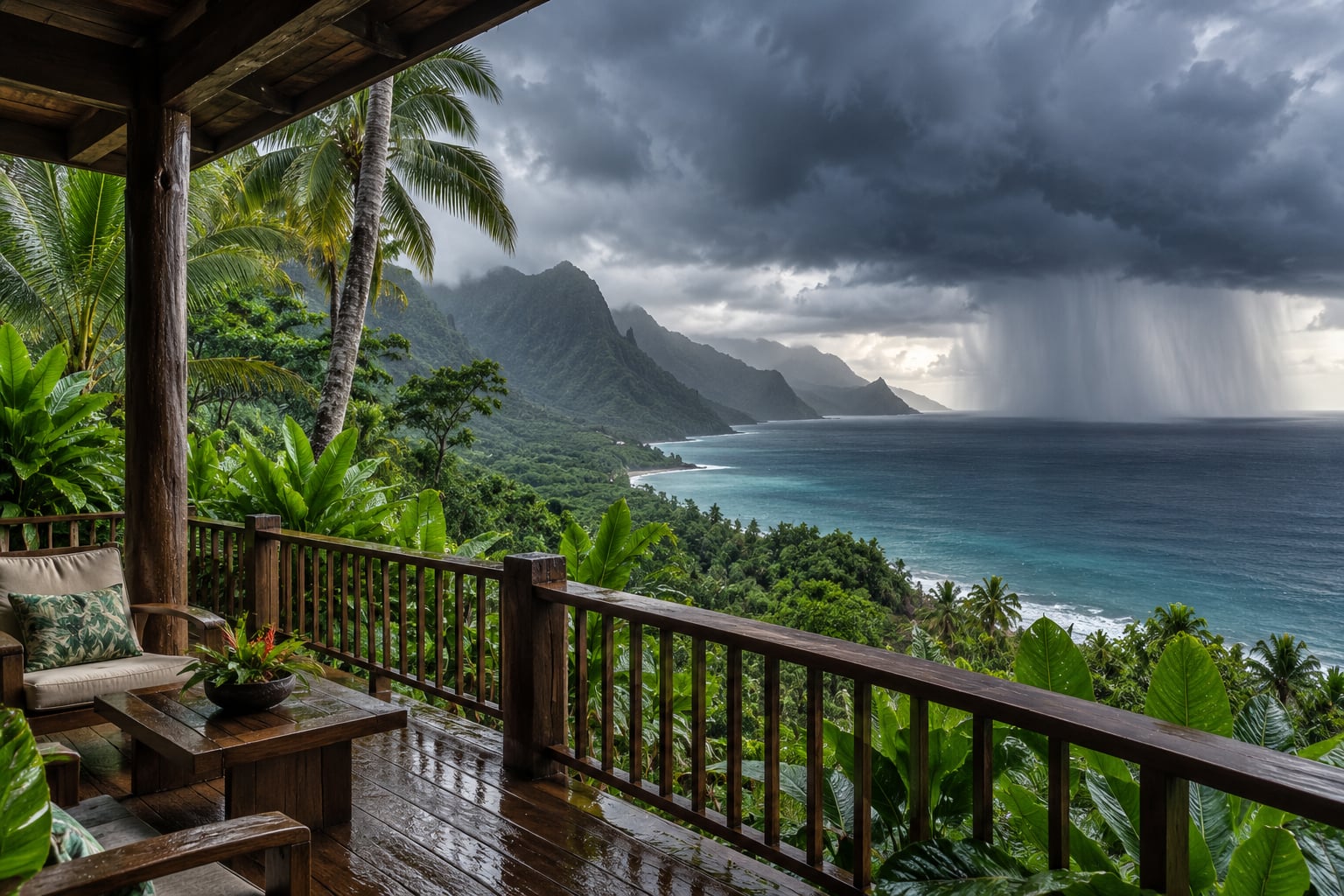
Hawaii rainy season what to expect is mostly a question of how the rain arrives. The wet season runs roughly from November through March, and on most days it shows up as warm, passing trade wind showers rather than a washed-out sky from sunrise to sunset. The windward coasts take the brunt of it, the leeward resort areas stay mostly dry, and a handful of large low pressure systems each winter can deliver genuine all-day rain that closes roads and floods streams.
So rain in Hawaii is real, seasonal and highly local. Knowing that shape of it is the difference between packing for a wet week and packing for a shower that lasts twenty minutes.
Table of Contents
- Hawaii Rainy Season at a Glance
- When Is Hawaii’s Rainy Season?
- Hawaii rainy season timing: month by month
- Hawaii Rainy Season What to Expect on Oahu
- How Rain Differs on Maui, Kauai, and Hawaii Island
- What Rain Can Change During a Hawaii Trip
- How to Pack and Plan for Hawaii Rain
- Rainy-Season Alternatives for Outdoor Itineraries
- Frequently Asked Questions
- What is the rainiest month in Hawaii?
- Does it rain every day in Hawaii during the rainy season?
- Is Hawaii’s rainy season the same as hurricane season?
- Which Hawaiian island is the wettest in winter?
- Is Waikiki dry during the rainy season?
- Should I cancel a Hawaii trip because of rain is forecast?
- Bottom Line on Traveling in Wet Season Hawaii
Hawaii Rainy Season at a Glance
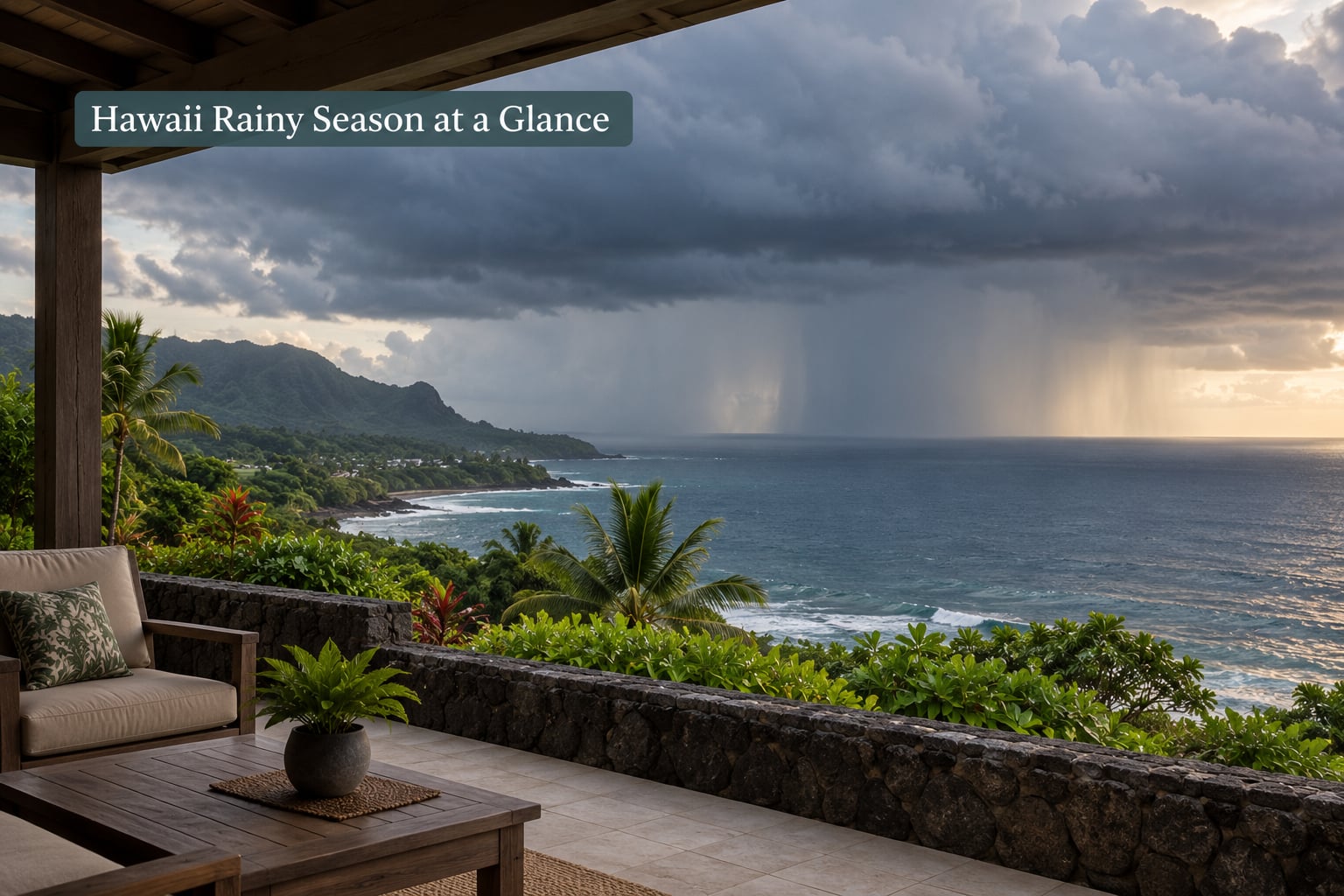
Hawaii has two seasons, not four. Locals call the dry half the kau and the wet half the hoʻoilo, and the shoulder months between them blur the line. Here is the honest version of what each stretch feels like.
| Period | Typical conditions | Rainfall character | Planning impact |
|---|---|---|---|
| Kau (dry season), roughly May to September | Long sunny stretches, warm trade wind weather | Showers still possible on windward ridges, usually brief | Best odds for beaches, snorkeling and summit drives |
| Shoulder months, April, May and October | Warm, humid, building cloud cover | More frequent showers, first winter systems can appear in October | Good value, book flexible, expect mixed skies |
| Hoʻoilo (wet season), roughly November to March | Warm and humid, windward sides noticeably wetter | Passing showers most days, punctuated by a few multi-day rain events | Pack a shell, protect electronics, keep itineraries loose |
The single biggest planning mistake is treating a rain icon in an app as a promise of twelve wet hours. In the islands, forecasts are hyperlocal, and a shower can sit over one valley while the rest of the island stays bright.
When Is Hawaii’s Rainy Season?
The wet season runs from about November through March, peaking in the middle of that window. It is driven by the northeast trade winds, which strengthen and hold longer during these months, and by a handful of subtropical low pressure systems that stall near the islands. The wet season is not a constant wash, and it does not look the same on every island or even on opposite sides of the same island.
Hawaii rainy season timing: month by month
November is when the pattern shifts. Trade wind showers become a daily feature on the windward side, mornings are stickier, and the first significant low pressure systems of the season can arrive late in the month. Leeward towns such as Kihei and Kailua-Kona still see plenty of blue sky.
December and January are the heart of the season. This is when widespread rain days are most likely, when overcast skies can hang around for hours, and when the trade winds push showers straight over the ridges. It is also peak humpback whale season, so the two overlap.
February and March stay wet, with some of the coldest mornings of the year at elevation. Rainfall starts easing through March, and by late March and April the trade wind pattern loosens up noticeably.
October is the wild card. It looks like late shoulder season, then a subtropical low can sit over the islands for a day or two and soak everything at once. October is also the first month of the Central Pacific hurricane season, though a direct hit on the islands is rare.
Hawaii Rainy Season What to Expect on Oahu
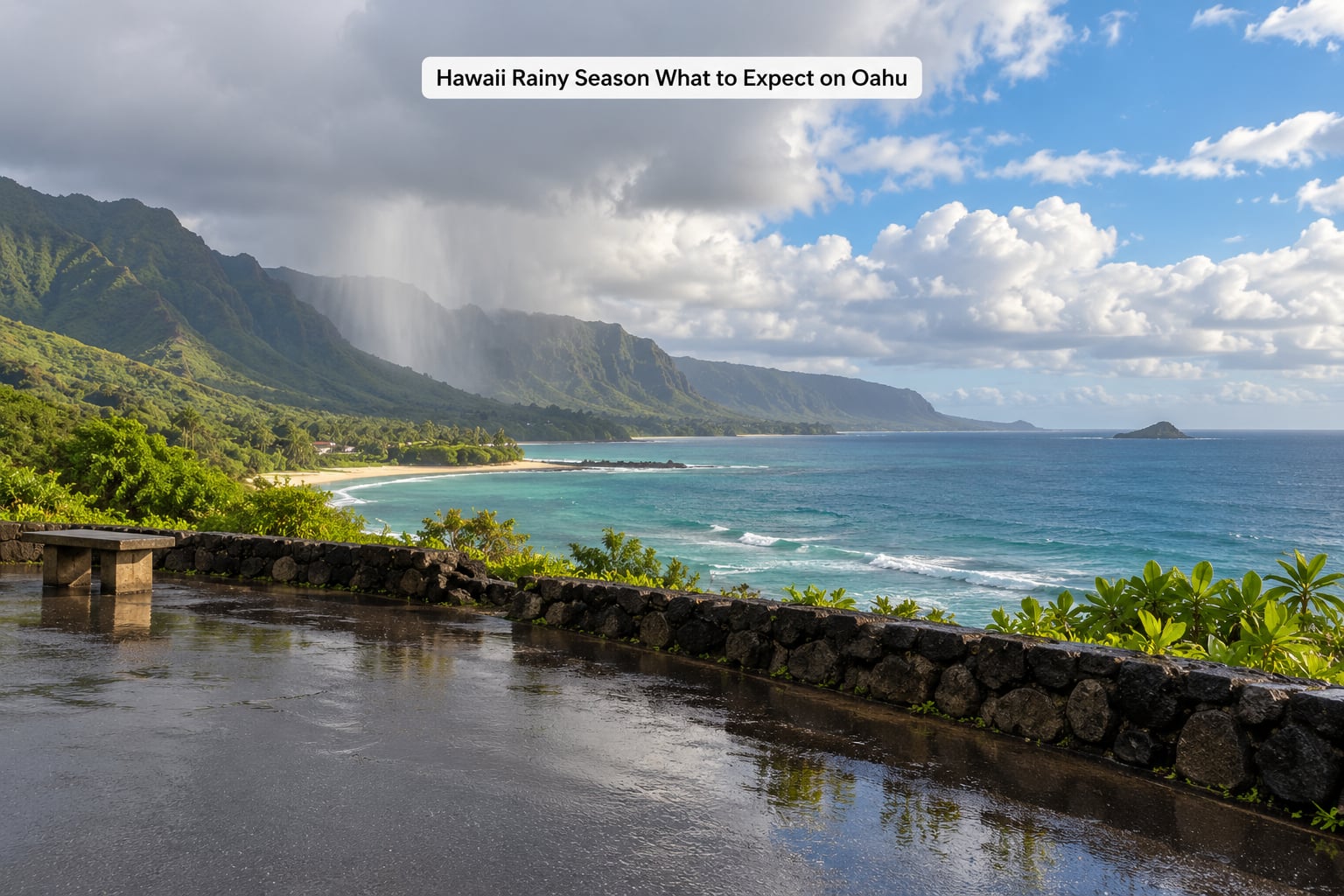
Oahu is the easiest island to read in winter because it shows the whole pattern in miniature. Honolulu and Waikiki sit in a partial rain shadow, so the south shore is frequently sunny while the North Shore, the Valley, and the windward side are under a shower at the same moment.
Expect a rhythm more than a pattern. Interior valleys and the ridge around the Punchbowl crater take morning cloud and afternoon showers reliably, and the windward side from Kaneohe to Hoomaluhia sees rain more often than not during the season. The North Shore gets squalls that clear quickly, and Haleiwa can sit under a grey ceiling while Makapuʻu is in full sun.
Most of the well-known Oahu activities hold up. Diamond Head, Lanikai, the Ala Moana shoreline and the Pearl Harbor visit are not weather-dependent in any meaningful way. The slots that suffer are the exposed ridge trails, the Kaena Coast road, and the Pali or Like Like highways in heavy rain, where runoff water collects fast.
One local detail worth knowing: a Waikiki forecast of rain and a North Shore forecast of rain are two different statements about the same island. Check which side of the ridge your plans are on before you change them.
How Rain Differs on Maui, Kauai, and Hawaii Island
On Maui the split runs across the island. The east and windward side, including Hana, upcountry Kula and the flanks of Haleakalā, takes the moisture first, so mornings there are often grey and wet. Kihei, Kapalua, Wailea and the dry country around Puʻu Kukui sit in the leeward rain shadow and can be clear while Hana is pouring.
That is also why a Haleakalā sunrise is a genuinely different bet from a Road to Hana day. The summit frequently sits above the cloud layer in dry weather, and the summit road can be closed at the summit for ice and wind even when the coast is tropical. The Hana Highway is a different animal: slick pavement, muddy shoulders, and narrow bridges that make low visibility a real issue.
Kauai is the wettest of the four in most years, because Mount Waiʻaleʻaʻe near Hanalei takes almost no break. Hanalei and the north shore can record rain on a large share of winter days, and the flattest explanation is the mountain sitting right in the trade wind path. Poipu, Waimea and the south and west leeward side are considerably drier, though flooding there during a big storm is not unusual.
The Big Island shows the widest spread of any island. Hilo is among the wettest populated places in the United States, receiving on the order of three times the annual rainfall of Kailua-Kona on the same island, only a few hours away. The Kohala and Kona coast is the driest region in the state, but a kona low can still reverse that for a day or more and swamp the leeward towns. The summit of Mauna Kea often sits above the clouds and stays dry while Hilo soaks, and Volcano gets a share of the volcanic slopes’ moisture on a scale that turns trails to mud.
Elevation is the quiet variable across all of it. The same storm can be a passing shower at sea level and steady rain at 6,000 feet, which is why a forecast for the resort strip tells you very little about the trailhead.
What Rain Can Change During a Hawaii Trip
Rain changes conditions far more than it changes plans. A single wet afternoon is an inconvenience; a multi-day system is a different trip. Here is what to watch.
Flash floods. Gully and stream crossings, low spots on H-2 and H-3 on Oahu, the road through the Kaupo Gap on Maui, and the valleys on the Big Island’s Hamakua coast are the classic trouble spots. Rain falling on mountains that cannot absorb it arrives downstream fast, and a stream that looks shallow an hour before a downpour can carry enough water to move a car.
Brown water. After heavy rain, runoff plumes of sediment and fresh water near shore change ocean conditions. Surfers and snorkelers are the ones who notice, and local advisories are posted when conditions turn.
Trails. Popular routes such as the Na Pali Coast and the paved portions of the Ridge Trail around Waimea Canyon hold up far better than narrow muddy ones. Roots and wet rock make even moderate trails slower, and shoes with real grip matter more than a rain jacket.
Waterfalls and lookouts. Waterfalls run at full flow, which is the visual upside. But turnout-style viewpoints on Hwy 11, Hwy 19 and the Hema Highway become slick, and roadside parking areas flood.
Visibility and surf. Reduced visibility on highways and in valleys, plus a bump in north shore surf and muddy nearshore water after storms, are the two effects most visitors do not plan for.
Safety guidance from travelers and forum regulars is consistent and worth repeating plainly: treat any flash flood warning as real, stay out of streams and off waterfall edges, do not enter brown water, and never cross a flooded roadway on foot or by car.
How to Pack and Plan for Hawaii Rain
A wet season bag is a dry season bag with six additions. Nothing about it is bulky, and nothing about it is guaranteed to keep you dry for a full day in a storm, which is exactly why a real packable shell matters more than an umbrella.
A packable rain shell. A hooded one that folds into a pocket. Cotton shirts stay wet for hours in tropical humidity, so a synthetic base layer under the shell makes a bigger difference than most travelers expect.
Dry storage. A waterproof zip pouch for phone, camera, documents and travel cards. A simple plastic bag handles the phone; the pouch handles the rest.
Footwear with grip. Trail shoes or sandals with real tread for the water, and a spare pair of dry shoes for the hotel. Wet sneakers dry badly.
Quick layers. A change of clothes in a dry bag, a microfiber towel, and a light fleece if you are driving to a summit where elevation makes the air feel nothing like the coast.
Camera care. A microfiber cloth, a rain cover, and the discipline to keep the lens capped between showers. A simple towel draped over the body works better than nothing at all.
Backup planning. Flexible reservations where possible, and travel insurance that you have actually read the weather terms of, because most tour operators and many hotels treat rain differently from a hurricane.
For forecasts, ignore the daily rain percentage and read the hourly radar loop instead. The National Weather Service radar and a good radar app are far more useful in Hawaii than a city forecast, because they show you where the shower actually is and how fast it is moving.
Rainy-Season Alternatives for Outdoor Itineraries
The goal is not to abandon a day at the first dark cloud, and not to sit in a hotel lobby through a shower that ends before lunch. Here is how I break it down.
Check the radar at breakfast, commit by mid-morning. Morning cloud in the islands often burns off. A decision made at 8am based on a grey sky is usually wrong.
Keep the flexible day for the flexible activity. Book tours and luau reservations on days with the most forecast stability and leave a wide window for beach, hike and lookout time.
For families, split the day. An aquarium or a museum in the morning and a shorter outdoor window after lunch works far better than a full-day hike that a child will not finish in the wet.
For hikers, swap elevation for exposure. A lower trail with drainage and a paved section keeps the day walkable. Save the ridge routes for mornings that are actually clear, and go early, since cloud builds.
For beachgoers, watch the surf and the sediment. North shore swells after a storm and brown water near shore are both reasons to sit the day out at that specific beach and try another.
For drivers, build in time. Standing water on a highway slows traffic hard. A longer loop with two short stops beats a tight schedule across the island on a wet day.
On the other side of that, the wet season has real compensations. Waterfalls run hard, the ridges and valleys turn an improbable green, rainbows show up over the ocean almost daily, crowds thin out, and rates on flights and rooms soften.
Frequently Asked Questions
What is the rainiest month in Hawaii?
Most of the islands see their wettest stretch from December through March, with January and February usually the wettest months on the Big Island and the north shore of Kauai. Monthly totals vary year to year, so a specific month is rarely as dramatic as the season overall. Rain then tapers through March and eases into April.
Does it rain every day in Hawaii during the rainy season?
Not on most days. The wet season is dominated by warm trade wind showers that build, pass and clear, often leaving bright breaks in between. A few subtropical low pressure systems each winter do bring genuine all-day rain, but they are the exception rather than the pattern, especially on leeward resort coasts.
Is Hawaii’s rainy season the same as hurricane season?
No, they are different seasons with different causes. The rainy season runs November to March and comes from trade winds and winter low pressure systems. Hurricane season in the Central Pacific runs June through November, and direct hits on the islands are uncommon, so most wet-season planning should focus on showers, not storms.
Which Hawaiian island is the wettest in winter?
Kauai and the Big Island take the top spots, depending on which town you measure. Hanalei and the north shore of Kauai sit directly in the trade wind path below Mount Waiʻaleʻaʻe, and Hilo on the Big Island is among the wettest populated places in the United States. Maui and Oahu are drier overall.
Is Waikiki dry during the rainy season?
Waikiki is in a partial rain shadow and stays drier than most travelers expect, though brief showers still reach town. The same afternoon can bring a downpour to the North Shore while the beach is in sun. Staying on the leeward or south side of an island is the simplest way to reduce the chance of weather ruining a day.
Should I cancel a Hawaii trip because of rain is forecast?
Usually not. Forecast icons across an entire island hide the fact that rainfall is often brief and localized, and the wet season brings fuller waterfalls, greener scenery, thinner crowds and softer rates. If your trip is fixed, keep the outdoor days flexible, read the radar each morning and reserve the non-refundable activities for the most stable days.
Bottom Line on Traveling in Wet Season Hawaii
Do this first: pick your lodging on the leeward or south side of the island, pack a packable shell and a dry bag, and read the radar rather than the daily forecast icon each morning. That combination covers nearly every wet season problem. Save non-refundable bookings for the clearest days, keep one flexible day in the itinerary, and take flash flood warnings seriously no matter how blue the sky looks ten minutes earlier.