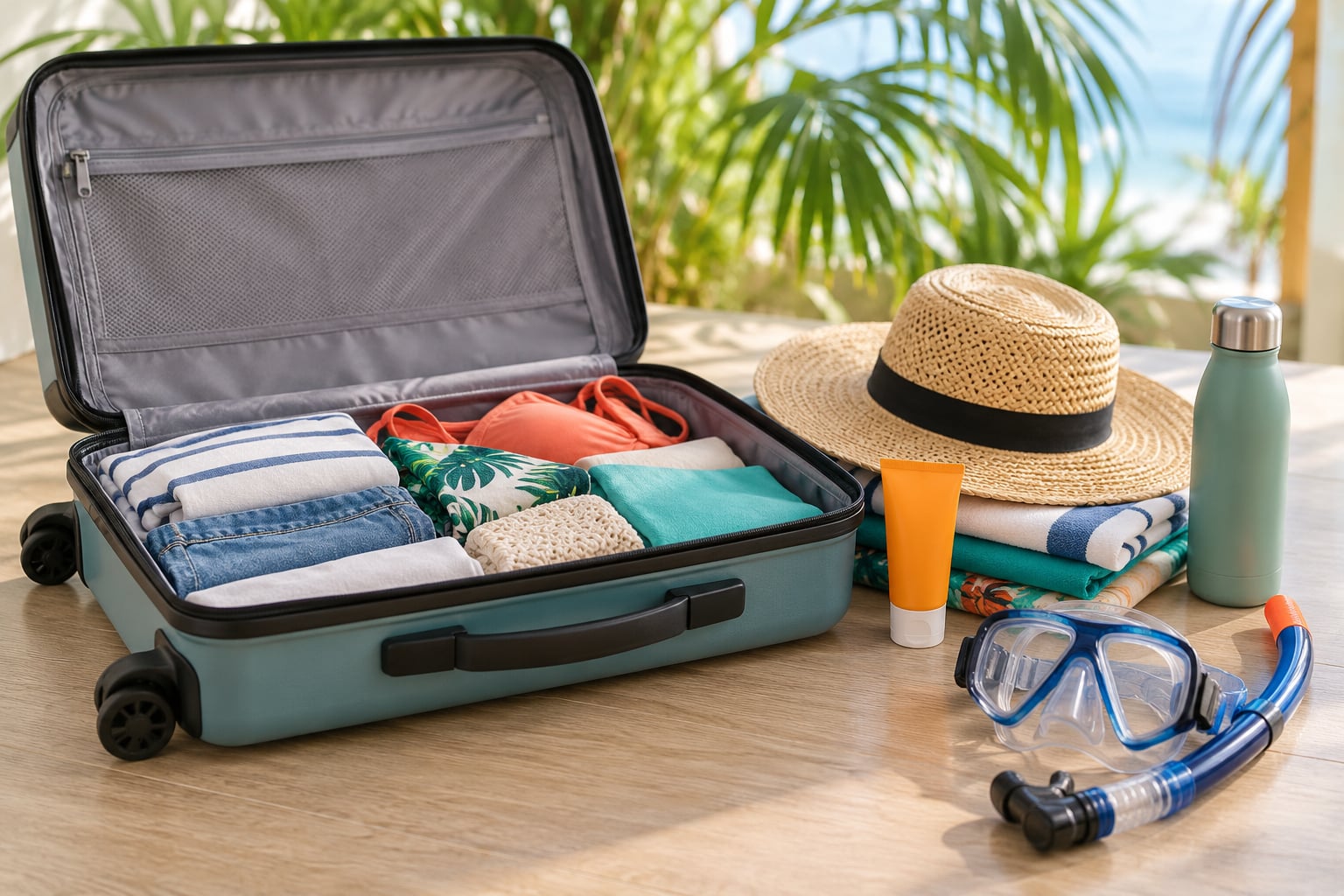
Pack for a week in Hawaii and you need three swimsuits, five or six tops, two pairs of shorts, one long pair of pants, two or three dresses, a light rain shell, reef-safe sunscreen, and a small pile of beach and tech gear. That is genuinely enough for seven days, and most of it fits in a carry-on if you pack by activity instead of by outfit. This guide gives you the count for every category, plus the optional extras your specific itinerary might require.
Updated for 2026. Everything in this Hawaii packing list for a week long trip reflects general island conditions rather than a forecast, so check the weather for your travel window a few days before you leave.
Hawaii packs a lot of variety into a small area. A beach morning at 9am and a summit overlook at 6am the same day can feel like two different seasons, and a week gives you enough time to use everything you packed at least twice. It also gives you enough time to do laundry once, which is the single easiest way to cut your clothing count in half.
Table of Contents
- Hawaii Packing List for a Week Long Trip at a Glance
- 1. Lightweight, Breathable Clothing
- How Much Clothing Fits in a Hawaii Packing List for a Week Long Trip?
- 2. Swimsuit and Quick-Dry Beach Clothing
- 3. Comfortable Walking Shoes
- 4. Light Rain and Sun Layers
- 5. Reef-Safe Sun Protection
- 6. Refillable Water Bottle
- 7. Beach and Water Gear
- 8. Personal Toiletries in Travel-Size Containers
- 9. Medications and Health Essentials
- 10. Documents, Cards and Emergency Contacts
- 11. Travel Adapter and Portable Power Bank
- 12. Offline Maps and Connectivity Kit
- 13. Small Laundry Bag
- 14. One Versatile Day Bag
- Frequently Asked Questions
- Do I need to bring everything on this Hawaii packing list for one island?
- What should I wear on a week-long Hawaii vacation?
- Is a suitcase or backpack better for traveling in Hawaii?
- Can I do laundry during a week-long trip to Hawaii?
- What should I rent instead of bringing to Hawaii?
- Conclusion
Hawaii Packing List for a Week Long Trip at a Glance
Here is the full list as counts rather than a pile of adjectives. Work down the first fourteen rows and add only the extras your trip actually needs.
| Category | Pack for 7 days | Notes |
|---|---|---|
| Tops and tees | 5 to 6 | Two can be quick-dry for water days |
| Shorts | 2 | Add 1 pair of athletic shorts if you hike or surf |
| Long pants or leggings | 1 | Yes, you do need one pair |
| Dresses or casual sets | 2 to 3 | One for a luau or nicer dinner |
| Underwear and socks | 7 sets | Socks dry slowly in humidity |
| Sleepwear | 1 set | Resort pajamas are fine |
| Swimsuits | 2 to 3 | One to swim in, one dry backup |
| Cover-up or sarong | 1 to 2 | Cheap, useful, dries fast |
| Light long-sleeve shirt | 1 | Sun and air conditioning cover |
| Rain shell or packable jacket | 1 | Shower, wind, boat ride, cold summit |
| Walking shoes | 1 pair | Broken in before you fly |
| Flip flops plus sandals | 2 pairs | Wet sandals for the beach |
| Water shoes | 1 pair | Only if you plan reefs or rocky shore |
| Hiking shoes | Optional | Only for trails like Haleakala or Na Pali |
| Reef-safe sunscreen and SPF lip balm | 1 each | No oxybenzone or octinoxate |
| Hat and UV sunglasses | 1 each | Wide brim beats a baseball cap |
| Refillable water bottle | 1 | Insulated if you hike or wait in queues |
| Beach tote and dry bag | 1 each | Wet sand and electronics stay separate |
| Quick-dry travel towel | 1 | Thinner than a hotel towel, folds smaller |
| Waterproof phone pouch | 1 | For waves, kayaks and boat tours |
| Travel-size toiletries | As needed | Within the 3.4 oz liquids rule |
| Medications plus buffer | Full trip plus 3 days | Keep in original labeled packaging |
| First aid kit | 1 small kit | Bandages, antiseptic, antihistamine |
| Passport, cards, documents | 1 set | Cloud backup plus a paper copy |
| Power bank and cables | 1 each | Keep batteries in the cabin, not checked |
| Offline maps and eSIM | Set up before departure | Confirm device compatibility first |
| Fillable laundry bag | 1 | Makes wet swimsuits survivable |
| Day bag or crossbody | 1 | Zips closed, worn across the body |
Optional extras, only when your itinerary asks for them: a resort or golf outfit, a child float vest and spare rash guards for families, a collapsible cooler for beach picnics, a portable alarm and door wedge for solo stays in less staffed accommodations, or a folding chair if you plan long days on a beach that does not rent them.
Two details are worth flagging before the details. First, buy bug spray after you land rather than packing it, because most insect repellents cannot pass through airport security in carry-on luggage. Second, do not pack lava rock, beach sand or coral, or a souvenir made from them, since taking any of it out of Hawaii is illegal.
1. Lightweight, Breathable Clothing
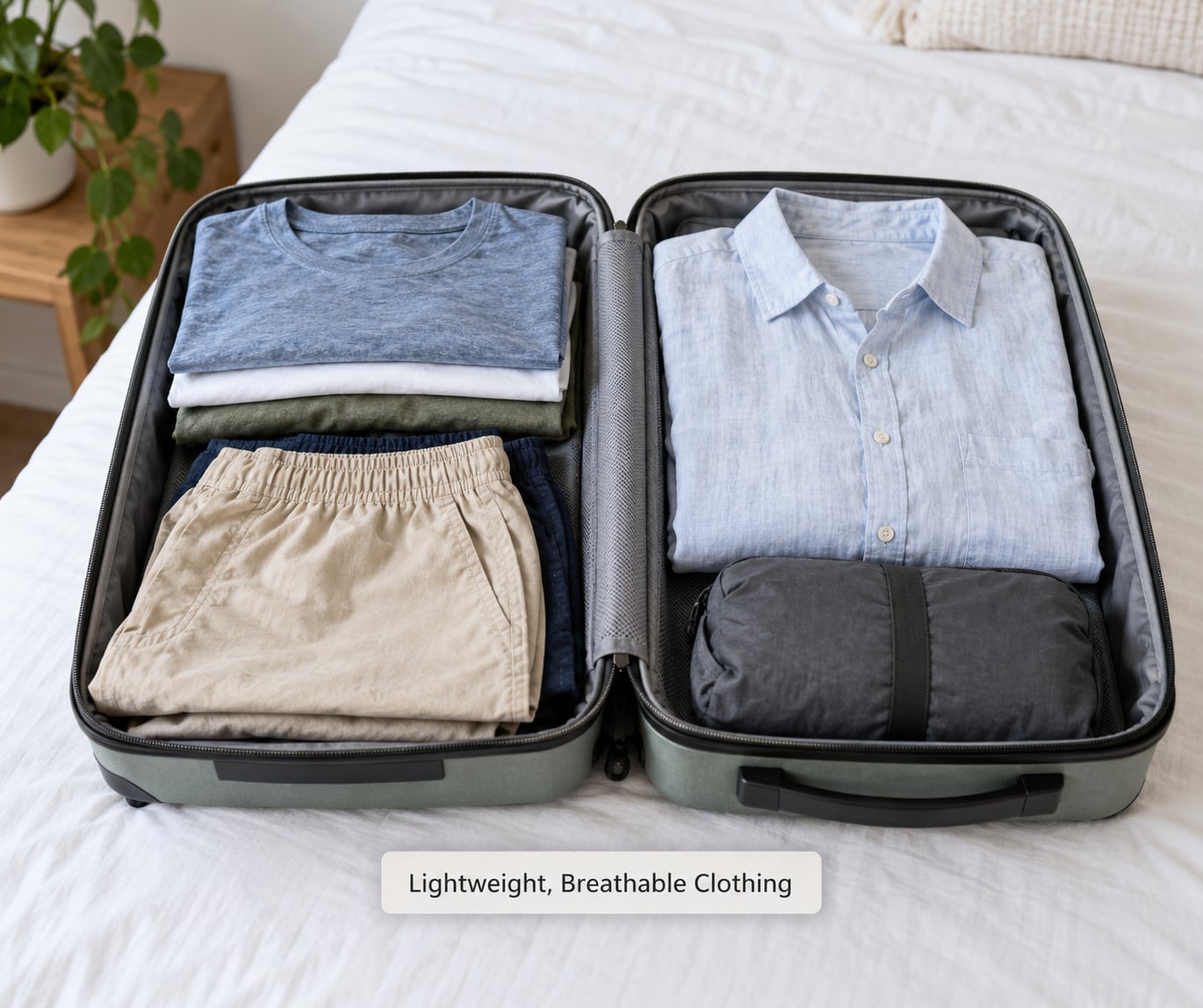
Pack clothing that breathes and dries quickly, because island humidity means cotton stays damp longer than you expect. Linen, rayon, lightweight cotton and anything marketed as quick-dry all work well. Heavy denim is the item to leave behind; it holds sand and moisture and takes up a suitcase’s worth of room for one outfit.
A simple seven-day formula: five tops, two shorts, one long pair of pants or leggings, two or three dresses or casual sets, and one light long-sleeve shirt. That covers beach days, dinners, a hike, and one decent photo outfit without dragging a full wardrobe across the Pacific.
Two adjustments matter more than the rest. Resort dining in Waikiki and most other tourist areas is more dressed up than visitors expect, so pack at least one outfit that reads as restaurant-casual rather than beachwear. And restaurants, buses and movie theaters run air conditioning hard, so the light long-sleeve is not optional if you get cold easily.
How Much Clothing Fits in a Hawaii Packing List for a Week Long Trip?
The quantities above assume you will wash once mid-trip or re-wear two or three pieces. If you plan to do laundry, you can drop one top and one pair of shorts. If your resort has no laundry and you refuse to use a laundromat, add two more tops.
Underwear and socks are the exception: pack seven of each. Socks take forever to dry in humidity, and going barefoot in a wet sock is a miserable way to start a Road to Hana drive. Sleepwear can be a single set, because you will wear it on flights more than you wear it in bed.
Rolled clothing beats folded. Compression packing cubes for shirts and underwear, a loose bag for anything bulky, and one flat folder for the dress you do not want wrinkled make a carry-on hold noticeably more than loose stacks.
2. Swimsuit and Quick-Dry Beach Clothing
Pack two swimsuits minimum and three if you swim most mornings. One gets wet and salty by day two, and a wet swimsuit in a closed suitcase for a week is how you end up unpacking everything to find one dry outfit. Rotate rather than repeat.
Add one cover-up or sarong. A sarong is a large square of fabric that works as a beach wrap, a shoulder cover for an air-conditioned restaurant, and a towel substitute when you are not in the water.
Quick-dry fabric earns its place twice in a week-long trip: it dries between the beach and dinner, and it means one wet piece is not blocking your entire packing cube. Rinse swimsuits in fresh water before packing them away, and roll rather than fold so they keep their shape.
3. Comfortable Walking Shoes
Bring one pair of closed walking shoes you have already worn. Island sidewalks are concrete, distances between attractions are longer than they look on a map, and new shoes on a sightseeing day is a bad combination. Broken-in trainers or walking sandals both work.
Water shoes are a separate decision. They matter if you are walking a rocky shoreline, launching a kayak, or entering a reef flat where shells and coral cut. If your week is beach, food and resort pools, flip flops are enough.
Two pairs of footwear covers most trips: closed shoes for walking and hiking, flip flops or sandals for everything else. Add hiking shoes only if your itinerary names a trail. Wear your bulkiest pair on the plane, because that is free suitcase space nobody uses.
4. Light Rain and Sun Layers
Bring one lightweight water-resistant shell. Showers in Hawaii are usually short and heavy rather than all-day drizzles, so a packable jacket answers the problem without adding cold-weather bulk. The same layer handles boat spray, strong afternoon trade winds, and cold restaurants.
You do not need a winter coat for the beach, but do pack a fleece or mid-layer if you are watching sunrise at Haleakala or driving up toward Haleakala’s summit, where it can be genuinely cold before dawn while the rest of the island sits in the mid-seventies. That trip needs the shell over the fleece, both packed flat.
Check the forecast for the last few days of your trip before you leave, and adjust if rain is forecast for the whole week. A rainy stretch changes the plan more than anything else on this list: bring the shell, a second pair of dry shoes, and more layers than feels silly at home.
5. Reef-Safe Sun Protection
Hawaii bans sunscreens containing oxybenzone or octinoxate, and the law applies to everything sold in the state, not just what you bring in. Reef-safe means the label omits both ingredients. Check the active-ingredient panel rather than the front of the bottle, since reef-safe branding is inconsistent.
Pack one broad-spectrum sunscreen, one water-resistant stick formula for your face and hairline, an SPF lip balm, a brimmed hat, and lightweight UV-protective sunglasses. A rash guard with UPF fabric is the most reliable sun protection you can wear and takes almost no space.
Apply as the label directs and reapply as directed, especially after swimming or sweating. A hat does more work than most people give it credit for, and a wide brim beats a baseball cap for beach hours.
6. Refillable Water Bottle
Carry one refillable bottle, insulated if you will be hiking or standing in line. It saves roughly seven plastic bottles over a week, and it fits in the side pocket of a day bag without a strap.
A filter or purification bottle is a reasonable upgrade if you are picky about tap water, though the public water supply on the islands is generally treated. If your bottle is bulky and you are packing strictly light, a collapsible bottle plus refilling at any convenience store or beach shower works fine. Buying one after landing also works if your carry-on is already at the limit.
7. Beach and Water Gear
Beach gear divides cleanly into what you carry and what you rent. Carry a reusable tote for towels and snacks, a dry bag or waterproof pouch for electronics, a waterproof phone case for the ocean, and a quick-dry travel towel that folds smaller than the hotel towel it replaces.
Do not pack a full snorkel set unless you have your own and know how to use it. Guided snorkel tours include mask, snorkel, fins and flotation, and boat tours include the gear as standard. Rental shops near the major beaches handle standalone rentals if you decide you want them mid-trip.
Surfboards, paddleboards, kayaks and dive rigs are rental and lesson territory. Beaching chairs and umbrellas are often available for a fee or free at hotel pools, so check with your accommodation before packing either.
8. Personal Toiletries in Travel-Size Containers
Decant what you use daily into containers that meet airport security’s limit of 3.4 oz or 100 ml per item, all inside a single quart-size clear bag. Full-size bottles of shampoo and lotion are the most common reason a carry-on gets flagged at the gate.
Skip anything you will not use. A second bottle of a product you already own at home is dead weight for seven days. Keep medication in its original labeled packaging rather than decanting it, because unlabeled pills create problems at both security and customs.
Two small extras pay for themselves: a laundry bag, and a travel-size stain remover or wrinkle-release spray. Salt and sunscreen stains appear on everything, and hotel laundry services can usually handle a garment for less than replacing it.
9. Medications and Health Essentials
Bring enough of every prescription medication for the trip plus a few extra days, in carry-on luggage. A refill delay on the mainland is an expensive problem to solve in Honolulu.
Pack a small first aid kit with adhesive bandages, antiseptic wipes, a basic pain reliever, an antihistamine for unexpected allergic reactions, and any blister treatment you need for long hikes. Add a pair of nail clippers and a small tube of antibiotic ointment if you plan active days.
For anything specific to your own health, ask your doctor or pharmacist before you travel. Stay hydrated in the heat, and take breaks in the sun, because the combination of strong sun and long walks catches people out more often than they expect.
10. Documents, Cards and Emergency Contacts
Carry a passport or other accepted travel document, a photo ID, your flight and hotel confirmations, insurance details, and a card with a chip. Keep a paper list of emergency contacts you can read without unlocking a phone.
Back everything up digitally: photographs of your documents in a secure folder, and a cloud copy of your itinerary and bookings. Download anything you might need offline, because mobile data coverage is good but not identical to everywhere on the mainland.
Entry and identification requirements change, including for visitors from different countries, so verify them on official government sources before departure rather than trusting a blog or a forum post, including this one. The same applies to any health entry rules currently in effect.
11. Travel Adapter and Portable Power Bank
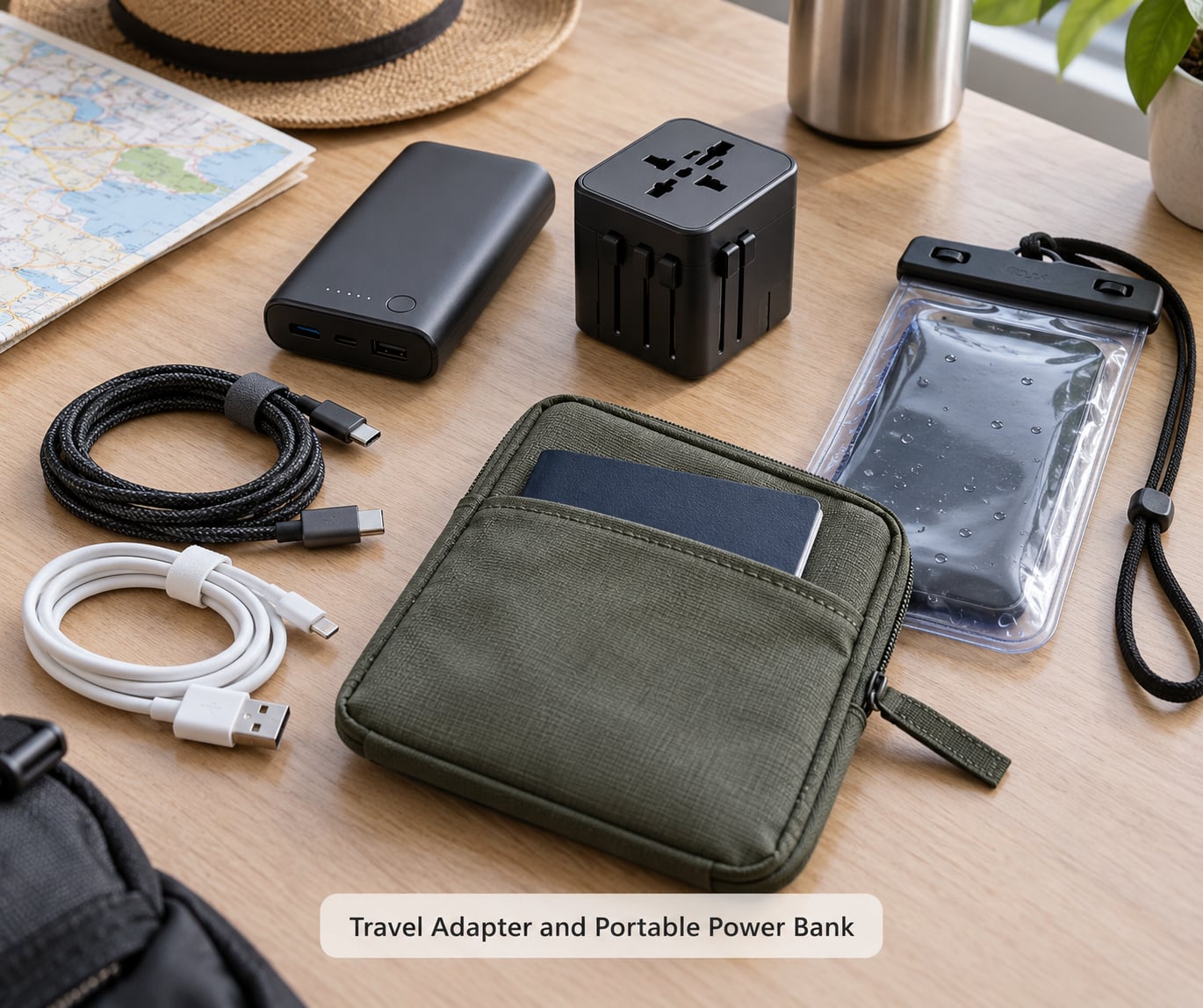
Decide whether you need an adapter based on the plugs your devices actually use, and the outlets at your accommodation. A US plug fits US sockets, so travelers from most other countries need at least one type adapter, and a multi-device adapter with USB ports usually replaces several chargers.
Pack one power bank sized for your phone rather than a laptop-sized one. Charge it the night before you fly and keep it in your cabin bag, since large lithium batteries are restricted in checked baggage. Bring one spare cable, because the cable that fails is almost always the one you own and use daily.
A waterproof pouch earns its space if you are doing kayaking, boat tours, or any activity where your phone gets wet. Keep a dry copy of your documents in the same pouch so a lost or soaked bag is still recoverable.
12. Offline Maps and Connectivity Kit
Download offline maps for each island you are visiting before you fly, and save your hotel address, the nearest emergency numbers, and any booked activity addresses as screenshots. On the Big Island or Kauai, cell coverage has real gaps, and paper directions become useful fast.
Arrange an eSIM or travel data plan only if your phone supports it and your home carrier does not already include Hawaii. Check roaming terms before you buy anything, because a data plan you did not need is a bill you will pay at home.
Keep a backup: know your hotel’s address by heart, screenshot your return transport booking, and download any music or audio you want for the drive. A hotspot from your accommodation or a rental phone is the last resort, not the plan.
13. Small Laundry Bag
A fillable laundry bag is the smallest item on this list with the largest effect. It separates damp swimsuits, wet towels and salty workout clothes from everything dry, which means you stop unpacking your whole bag every night to find a clean shirt.
Run a load on day four or five. Most hotels can handle a few garments for less than the cost of buying a new outfit, and laundromats are common in resort towns. Washing swimsuits at the end of the trip before flying also stops salt drying into the fabric and stiffening it.
Laundry changes the math on clothing. If you plan to wash once, drop one top and one pair of shorts from the counts above. If you will not, add two tops. Either way you travel lighter than you think you need to.
14. One Versatile Day Bag
Bring one day bag that works from the airport to the beach: a lightweight backpack, a crossbody, or a roomy tote with a zip closure. On arrival you will be carrying water, sunscreen, a towel, your phone, wallet and cards with nothing else to hold them.
What matters is security rather than style. A bag that zips fully, sits in front of you on public transit, and can be closed while you are swimming is worth more than a better-looking one. At crowded beaches and trailheads, keep valuables in the dry bag rather than in the beach tote.
Pick something with padded straps if you are carrying water and sunscreen all day, and skip the heavy canvas option unless you want it for the flight itself. Public transit, ferries and rental cars all make a single bag simpler than two.
Frequently Asked Questions
Do I need to bring everything on this Hawaii packing list for one island?
No. Most travelers visit a single island and never leave it, so your luggage stays put and every item on this list works as written. The count already assumes seven days, whether that is seven days on Oahu or seven days split across two islands. Only add the optional extras rows if your itinerary needs them, and skip anything tied to an activity you have not booked.
What should I wear on a week-long Hawaii vacation?
Five or six tops, two pairs of shorts, one long pair of pants or leggings, two or three dresses or casual sets, and two to three swimsuits cover seven days comfortably if you rotate. Add a light long-sleeve for air conditioning and one outfit smart enough for a resort dinner, since Waikiki restaurants dress up more than visitors expect. Re-wear shorts and tops on the least sunny days.
Is a suitcase or backpack better for traveling in Hawaii?
For a week with these quantities, either works. A backpack suits travelers who move between islands or use public transit, since it is easier on stairs and ferries. A wheeled suitcase is easier for families or anyone carrying bulky hiking or beach gear. Most travelers who only need swimsuits and clothes end up buying something at the airport and regretting the bag the whole week.
Can I do laundry during a week-long trip to Hawaii?
Yes. Most hotels offer same-day or next-day laundry service, and laundromats are common in resort towns, so you can wash on day four or five without affecting your itinerary. Doing one load lets you cut one top and one pair of shorts from your list, and it stops salt drying into your swimsuit fabric before you fly home.
What should I rent instead of bringing to Hawaii?
Rent or book through a licensed operator rather than packing: full snorkel sets, paddleboards, surfboards, kayaks and dive gear. Boat tours include snorkel equipment as standard, and most beach operators rent chairs and umbrellas or charge a fee for them. Buying these in advance usually costs more and uses suitcase space you will want for clothing and sunscreen.
Conclusion
Start with the four things that cause the most trouble when forgotten: clothing counts, swimsuits, reef-safe sun protection, and documents and medications packed where you can reach them. Everything else on this Hawaii packing list for a week long trip is an add-on, chosen by what your itinerary actually asks of you.
Then add gear per activity rather than in general: water shoes for reefs and rocky shore, hiking shoes for summits and waterfalls, a dry bag for boat tours, and a warm layer for a Haleakala sunrise. Rent the big water equipment, buy the bug spray after landing, and leave the heavy stuff at home. A week is long enough that you will repeat things, so pack for repeating.