You can bring almost any solid snack through airport security in your carry-on. Liquids, gels and spreads are the only catch: each container must be 3.4 oz (100 ml) or smaller and fit inside one quart-sized clear resealable bag per passenger. Pack the solid stuff, leave the big tubs of dip at home, and the checkpoint is a non-event. Here is how to travel with snacks on a plane without losing a single bag to a bin.
This guide was checked against current TSA guidance in 2026. Rules are stable but carriers and destinations add their own layers, so the second half covers international arrivals, where food is far more likely to be taken away.
Quick answers
- Solid snacks are allowed in both carry-on and checked bags: crackers, nuts, jerky, dried fruit, sandwiches, granola bars, cookies, chocolate, hard cheese.
- Liquids, gels and spreads are capped at 3.4 oz (100 ml) per container, all inside one quart-sized clear bag per passenger. This covers yogurt, hummus, peanut butter, jam, salsa, dressings and soda.
- Ice packs must be frozen solid when you reach the checkpoint. A slushy ice pack is treated as a liquid and has to fit the 3.4 oz rule.
- Pack snacks in your personal item, in a clear hard-sided container, not loose at the bottom of a suitcase where they get crushed.
- On international routes, finish fresh food before you land. Customs cares about what arrives, not what departed legally.
Table of Contents
- What You Need
- Step-by-Step: How to Travel with Snacks on a Plane
- Step 1: Pick solid snacks that will pass screening
- Step 2: Get the liquids right with the 3-1-1 rule
- Step 3: Pack so nothing arrives crushed
- Step 4: Move through the checkpoint quickly
- Step 5: How to travel with snacks on a plane internationally
- Step 6: Pack snacks for kids and toddlers
- Step 7: Keep food cold or fresh on a long flight
- Step 8: Build a delay backup
- Snack picks by flight length
- Common Mistakes
- Frequently Asked Questions
- Can I bring snacks through airport security?
- Are solid snacks allowed through TSA?
- Can I bring yogurt, applesauce, or hummus on a plane?
- How should I pack snacks for a long flight?
- Can I eat airline food that I am allergic to?
- What should I do if my flight is delayed and I have no snacks left?
- What To Do First
What You Need
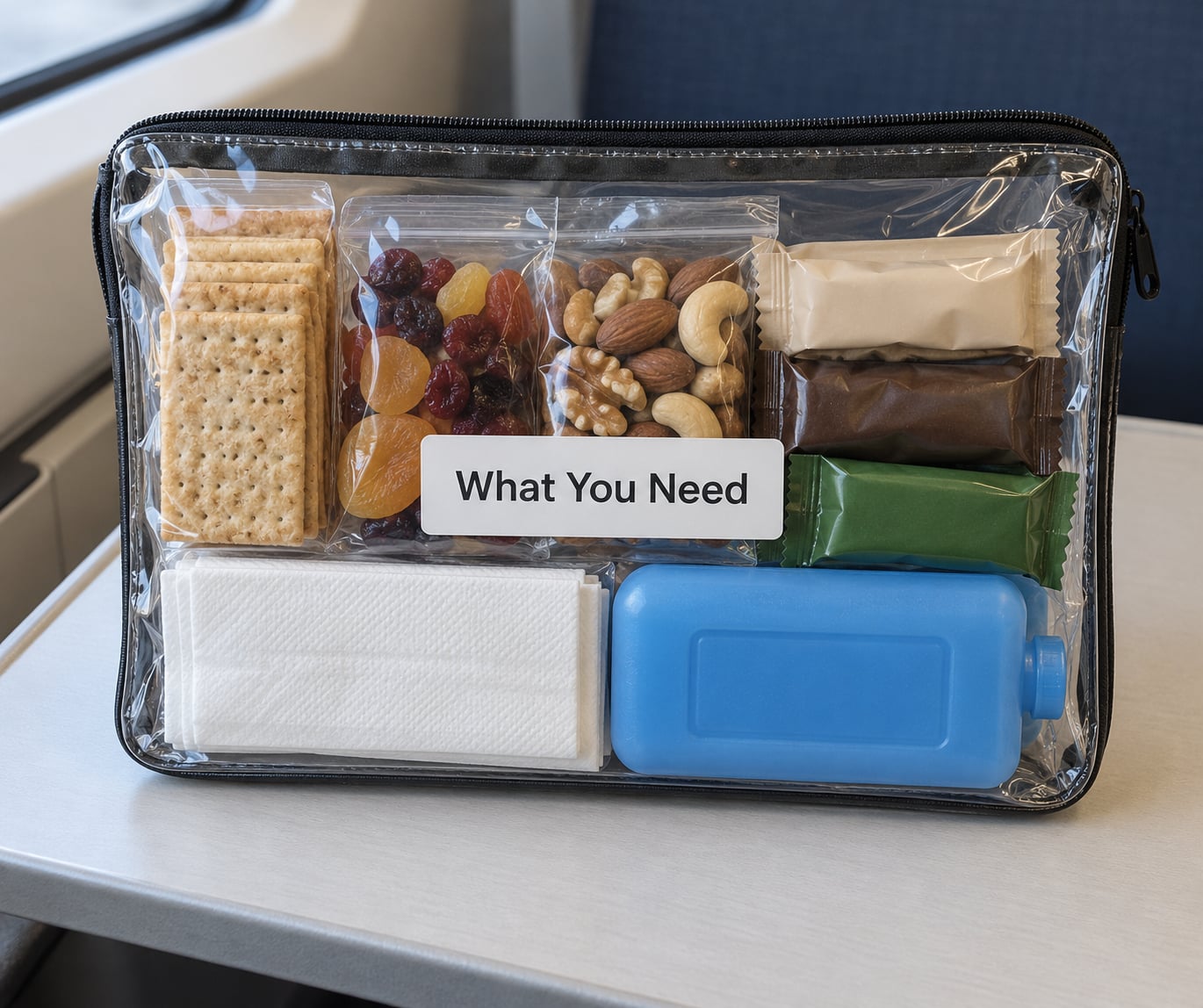
You need far less than people imagine. A clear zip bag, something rigid to keep it from flattening, and about a third of what you were about to pack.
- A dedicated clear snack bag. Clear so the officer can see it in the X-ray machine, and separate from the rest of your personal item so they can lift it out in one go.
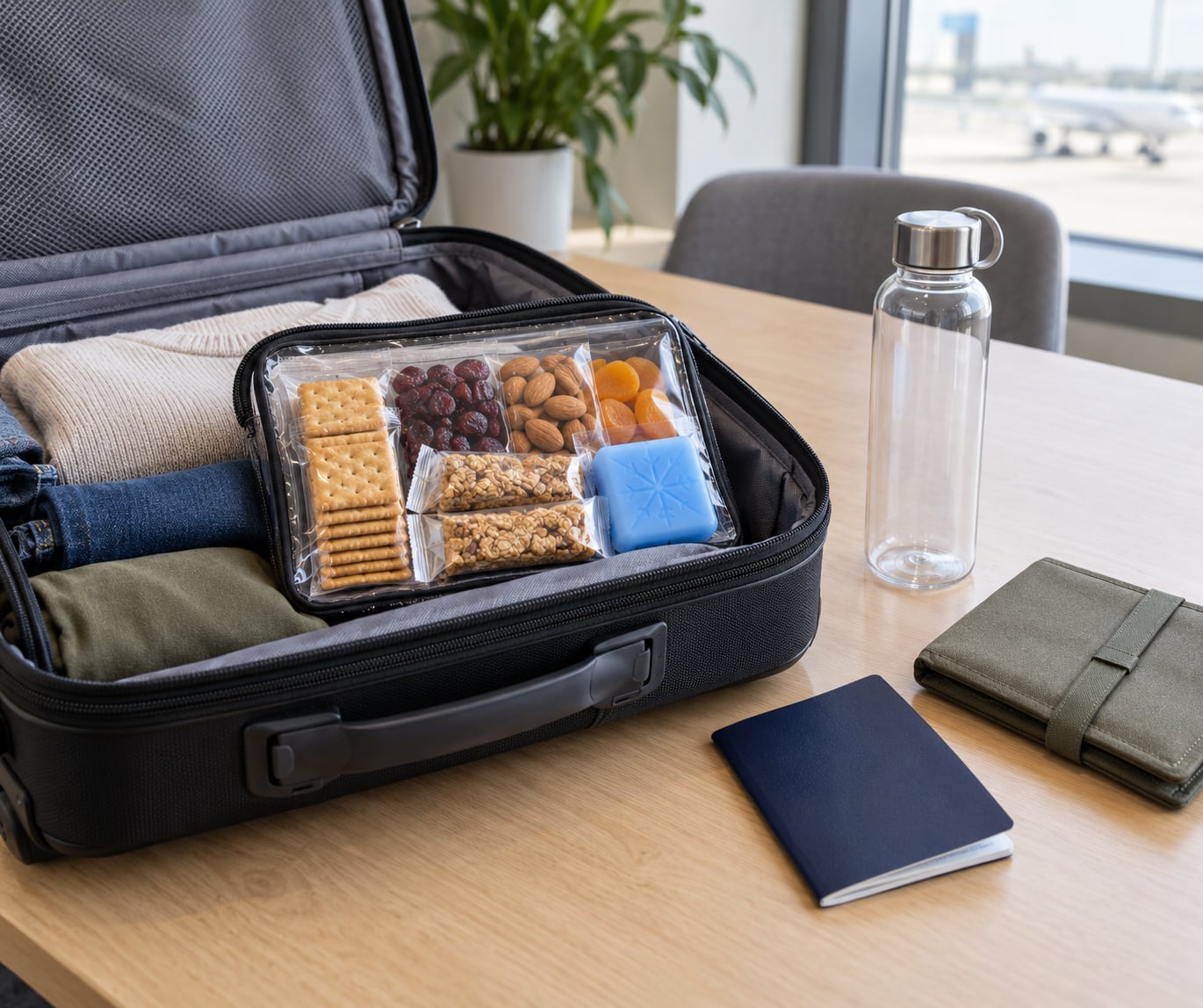
- A hard-sided container or small Ziploc bags. Hard containers protect crackers and cookies. Portioning into small bags means one spilled or crushed serving does not ruin the whole pile.
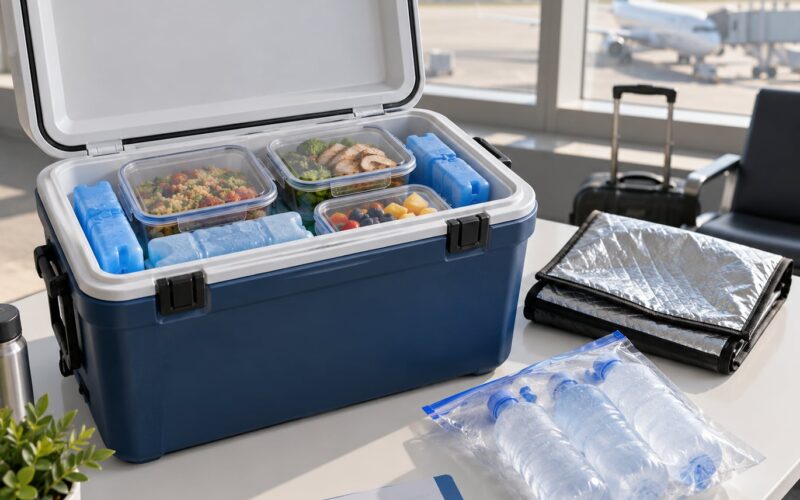
- An insulated pouch, only if you need one. Worth it for a long flight with a toddler and a thermos of warm food, pointless for crackers.
- Napkins and a small wipe. Cheesy snacks and sticky fruit hands are the two most common complaints from people seated near you.
- Allergy-safe backup items. If someone at your table reacts to peanuts, packing only nut-free options avoids an awkward mid-flight scramble.
- An empty water bottle. You fill it past the checkpoint, and it is a non-liquid tool for rinsing hands or cleaning a spill.
Step-by-Step: How to Travel with Snacks on a Plane
Step 1: Pick solid snacks that will pass screening
Start with the boring rule: if it is a solid, you can bring it in your carry-on or your checked bag. That is the single most repeated piece of advice across travel forums, and it holds.
Work down this list of what actually survives a flight:
| Snack | Carry-on | Checked bag | Notes |
|---|---|---|---|
| Crackers, pretzels, cookies | Allowed | Allowed | Sturdy varieties hold up where potato chips turn to dust |
| Nuts, trail mix, granola bars | Allowed | Allowed | Nuts are a common allergen, so pack a nut-free option too |
| Beef or turkey jerky | Allowed | Allowed | Generally fine on international routes when commercially sealed |
| Dried fruit, fruit gummies | Allowed | Allowed | Dried and gummy forms avoid the fresh-produce customs problems |
| Sandwiches, wraps | Allowed | Allowed | Label homemade ones; foil wrapping draws extra questions |
| Hard cheese, chocolate | Allowed | Allowed | Solid cheese passes; soft cheese spreads count as a liquid |
| Canned food, soup, pie | Discouraged | Allowed | Cans look dense on an X-ray, so expect extra screening |
| Fast food, pizza, fried chicken | Allowed | Allowed | Yes, you can carry a bag of takeout through the checkpoint |
Step 2: Get the liquids right with the 3-1-1 rule
Liquids, gels and spreads each get 3.4 oz (100 ml) or less per container, and all of them go into one quart-sized clear resealable bag. One bag per passenger, not per family.
That means hummus, peanut butter, yogurt, applesauce, jam, jelly, salsa, salad dressing, syrup, soup and soda all need travel-size containers to come through the checkpoint with you. Anything larger goes in checked luggage, gets eaten before you leave home, or gets bought after security.
| Item | 3.4 oz (100 ml) or less | Over 3.4 oz (100 ml) |
|---|---|---|
| Yogurt, applesauce, hummus | Allowed in the quart bag | Checked bag only |
| Peanut butter, nut butter | Allowed in the quart bag | Checked bag only |
| Jam, jelly, honey, syrup | Allowed in the quart bag | Checked bag only |
| Salsa, dip, salad dressing | Allowed in the quart bag | Checked bag only |
| Soda, juice, sports drink | Allowed in the quart bag | Checked bag only |
| Ice packs and gel packs | Allowed if frozen solid | Treated as a liquid if slushy |
Breast milk, formula and jarred baby food are treated separately. They are allowed, but you have to take them out at the checkpoint and tell the officer you have them, and you may be asked to show them.
Step 3: Pack so nothing arrives crushed
A bag of potato chips in a personal item under a seat is a bag of crumbs by hour three. Hard-sided containers, repurposed snack tubes and portioned small bags solve nearly all of it.
Keep each serving separate. It looks fussy and it works: when a nine-year-old drops a pouch of raisins on the floor at 30,000 feet, the other four servings are still fine. Add a dry cleaning wipe to the bag, because sticky hands reach everything.
Step 4: Move through the checkpoint quickly
The fastest lanes are the organized ones. Keep the snack bag on top, keep liquids grouped in the quart bag, and pull out anything factory-sealed and obviously food so the officer does not have to reason about it.
Two things reliably slow people down: a cluttered personal item where the snacks are buried, and unlabeled homemade items that look like an unknown object on the X-ray. Write the name and the date on homemade food. If canned goods are non-negotiable, TSA guidance is to put them in checked bags, ship them, or skip them.
Pre-screening enrollment changes the pace too. If you have TSA PreCheck or CLEAR and your airport offers it, you often walk through a dedicated lane and get screened separately from the food question, which removes most of the uncertainty.
Step 5: How to travel with snacks on a plane internationally
Departure security is the easy half. The part that catches travelers is arrival: many countries restrict fresh fruit, vegetables, dairy, and unpackaged meat and seafood, and violations can mean fines or the food being taken at the border.
Before you leave, check the destination’s rules on travel.state.gov and the U.S. Customs and Border Protection site for arrivals into the United States, and check the CDC for anything health-related. Do not rely on a forum answer written five years ago.
A few habits make the difference. Eat fresh fruit, fresh vegetables and homemade dishes before you land so nothing perishable arrives. Keep commercially sealed, shelf-stable items like jerky, dried fruit, rice cakes, biscuits and sealed spice packets, since dried and processed food is far less likely to be questioned than fresh produce. If you do carry something restricted, declare it. A declaration is a form; an undeclared agricultural item is a fine.
If you are flying within the European Union or the UK, the liquid rule is the same idea at 100 ml per container in a single 1-liter transparent bag, and a screening officer can ask for a second bag. Canada applies a similar container limit. Non-liquid food is treated far more loosely at each of them, so dried and packaged snacks travel well.
Step 6: Pack snacks for kids and toddlers
Children eat far more in the air than on the ground, and the low point is usually the last two hours, not the first. A rough starting point is one snack per hour per child, then add two extras, because a delay or a fussy landing can stretch a four-hour hop into eight.
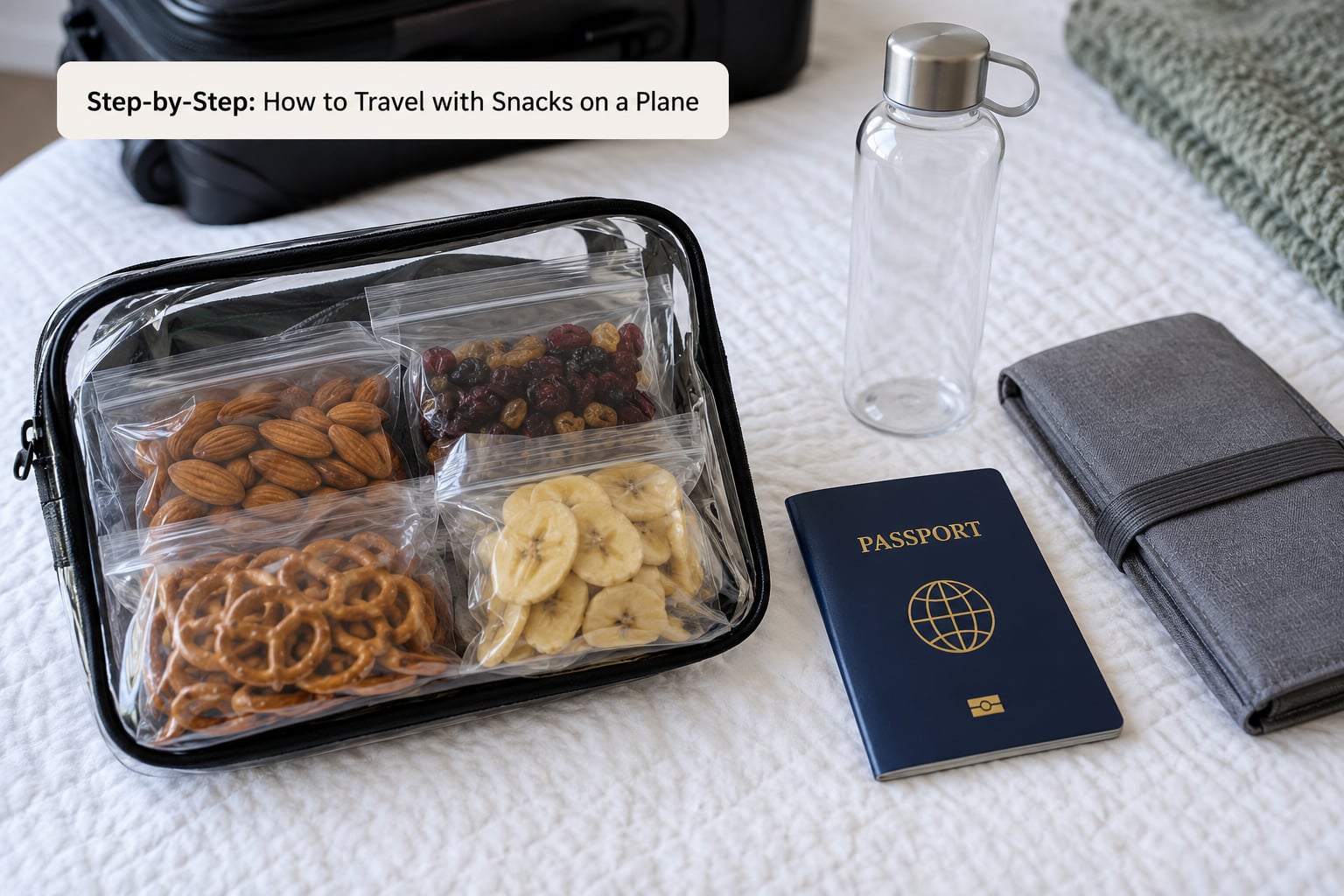
Portion into small Ziploc bags, one per child per snack, so nobody is reaching over anyone else and a spill stays contained. Choose low-mess options: rice cakes, crackers, dried fruit, cheese cubes, banana chips, individually wrapped granola bars and homemade fruit leather.
Keep the flavors boring and separate, because strong smells in a packed cabin are a genuine grievance from the people around you. Skip anything that needs a knife, and save the melting chocolate for after takeoff rather than the last hour.
Step 7: Keep food cold or fresh on a long flight
For a 8 to 12 hour flight without refrigeration, treat shelf-stable food as your main plan and anything perishable as the treat. Hard cheese, whole fruit, sealed deli meat and yogurt all need cold within two hours of leaving the cold zone.
If you do need to keep something cold, frozen gel packs must be completely frozen solid at the checkpoint. Pack them in an insulated bag, because a cabin is roughly room temperature and a soft pack becomes a warm one within a few hours. Dry ice is permitted in checked bags with a 5 lb limit and requires specific labeling and airline approval, so check with the carrier before you buy any.
Step 8: Build a delay backup
The reason travelers end up with nothing is not that they packed badly, it is that the schedule changed. Keep one sealed, shelf-stable item in the personal item and leave it there. It is the snack you eat at hour nine when the flight is on the tarmac and the meal service never came.
Also decide before you board whether you actually need a meal. Many short-haul and budget-carrier routes serve no food at all, and a long-haul free meal usually arrives as a tray. Packing is insurance against both.
Snack picks by flight length
Match the quantity to the block time, not to the distance.
- Under 2 hours: one snack and a drink. Crackers or a bar is plenty, and you will probably still have your sandwich from home.
- 2 to 8 hours: two to three items per person, including one salty and one sweet. Add a substantial option like a sandwich or a bento-style box if the carrier serves nothing.
- 8 hours and up: plan a real meal, plus backups. Sandwiches, wraps, rice cakes, jerky, nuts, dried fruit, crackers and a small sealed treat for later. You also want something that does not need a fork, because tray tables on a red-eye are not a dining surface.
Common Mistakes
Packing too many liquids. Full-size yogurt, hummus and peanut butter get dumped. Bring 3.4 oz (100 ml) containers or move the full size to checked luggage.
Bringing perishables with no cold plan. Cream cheese, cut fruit and soft cheese are not safe at cabin temperature for hours. Use a frozen solid gel pack, or pick something shelf-stable instead.
Packing chips in a soft bag. They arrive as crumbs and crumbs land on the seat of the person beside you. Hard crackers and cookies hold their shape.
Forgetting to label homemade food. A foil-wrapped sandwich or an unlabeled container is a question you do not need at the checkpoint. Write it out.
Underpacking for kids. Most parents underestimate a two-year-old on a ten-hour flight by a factor of five. Overpack a little; leftover snacks go to the neighbors.
Packing strong-smelling food. Smoked salmon, raw onion and pungent cheese are solid and legal, and they can make a long flight unpleasant for everyone around you.
Assuming the airline will feed you. Meal service varies by carrier and by route, and on many short or budget flights there is none. Check the specific flight before you decide to pack a meal.
Ignoring the destination country’s rules. Legal at departure can still mean confiscated on arrival. Finish fresh food in the air and check travel.state.gov for where you are landing.
Packing nothing as a backup. A single sealed bar left in the personal item costs you nothing and saves a long delay.
If you want a fast check before you leave the house: solids only in the personal item, liquids in one quart bag, homemade items labeled, fresh food destined for before landing, and one extra snack per traveler in reserve.
Frequently Asked Questions
Can I bring snacks through airport security?
Yes. Solid foods such as crackers, nuts, jerky, dried fruit, sandwiches, granola bars, cookies and chocolate pass through screening in both your carry-on and your checked bag. Liquids, gels and spreads are the exception: each container must be 3.4 oz (100 ml) or less and fit in one quart-sized clear resealable bag per passenger. Pack your snacks in a clear bag on top of your personal item so they are easy to remove and inspect.
Are solid snacks allowed through TSA?
Solid snacks are allowed, and the solid-versus-liquid distinction is the whole rule. A sandwich, a bag of trail mix, dried fruit, hard cheese and a granola bar all pass. Hummus, peanut butter, yogurt, jam, salsa and salad dressing are treated as liquids or spreads, so they need 3.4 oz (100 ml) containers inside your quart bag. Ice packs are allowed only when completely frozen solid at the checkpoint.
Can I bring yogurt, applesauce, or hummus on a plane?
You can bring them, but only in containers of 3.4 oz (100 ml) or less, and all of them must share one quart-sized clear resealable bag per passenger. Full-size tubs fail the rule and go into checked luggage or stay home. On international routes, commercially sealed dairy is often restricted on arrival, so check the destination’s import rules and finish it before landing when you can.
How should I pack snacks for a long flight?
Portion each serving into a small bag and keep them in a hard-sided container or a repurposed snack tube inside your personal item, never loose at the bottom of a bag. Skip potato chips, which crush, and choose sturdy crackers, cookies, jerky, nuts, rice cakes and dried fruit. Bring napkins, keep strong-smelling food out, and stash one sealed backup item in case of a delay.
Can I eat airline food that I am allergic to?
Treat airline meals as unsafe if you have a serious allergy. Shared ovens, prep surfaces and tray handling make cross-contact possible, and ingredients are not always listed. Pack your own nut-free or allergen-safe snacks so you always have something you control, tell the cabin crew before they serve you, and carry any prescribed auto-injector in your carry-on where you can reach it. For a severe allergy, talk to your doctor before flying.
What should I do if my flight is delayed and I have no snacks left?
Airport kiosks, fast food and vending are usually the fallback, but they close late at night and get pricier the later it gets. The fix is preventive: keep one sealed shelf-stable bar or box of crackers in your personal item and do not eat it unless you really need it. Buy any top-up snack at the gate area before boarding if your flight is already flagged as tight.
What To Do First
Put your solids in a clear bag in your personal item tonight, and move any full-size spreads into checked luggage or the kitchen drawer. Everything else on this page is refinement.