Airline baggage fees are charges airlines add on top of your ticket price for luggage your fare does not already cover. Most are per bag, and the bill is set by four things: what your fare includes, the size and weight limits, which airline actually flies the segment, and when you pay.
That last one surprises people most. That is how airline baggage fees work day to day: the same bag can cost very different amounts depending on whether you pay online days before you fly, at the check-in counter, or at the gate when the bins are full. This guide breaks down every fee type, where the charges hide, and what you can do before you reach the airport.
Table of Contents
- What Airline Baggage Fees Are
- The Main Types of Airline Baggage Fees
- Carry-On Bags: Size, Weight, and Basic Allowance
- Checked Bags: How the First Bag Is Charged
- Oversized, Overweight, and Excess Bags
- Why Airline Baggage Fees Vary by Flight
- How to Check Your Airline’s Baggage Rules
- How Airline Baggage Fees Work at the Airport
- Ways to Avoid or Reduce Airline Baggage Fees
- Frequently Asked Questions
- How do checked bag fees work?
- How many checked bags do I get for free?
- Do you pay checked baggage fees both ways?
- What airline has the cheapest checked bag fee?
- How much do airline baggage fees usually cost?
- How do I avoid paying a checked bag fee?
- The Bottom Line
What Airline Baggage Fees Are
Airline baggage fees are optional charges for things a passenger can decline and still fly. The US Department of Transportation groups these under the term ancillary fees, alongside seat assignment charges and other extras, because none of them is part of the base fare a passenger sees when searching for a ticket.
Every fee is calculated by running through four checks, in this order. Your fare class decides how many bags are included. The operating carrier sets the size, weight, and price rules. The condition of your bag when you hand it over decides whether extras apply. And the moment you pay decides the amount.
Get those four right and the cost is predictable. Miss one and the same trip can produce a surprise charge at a counter you had no reason to expect one at.
The Main Types of Airline Baggage Fees
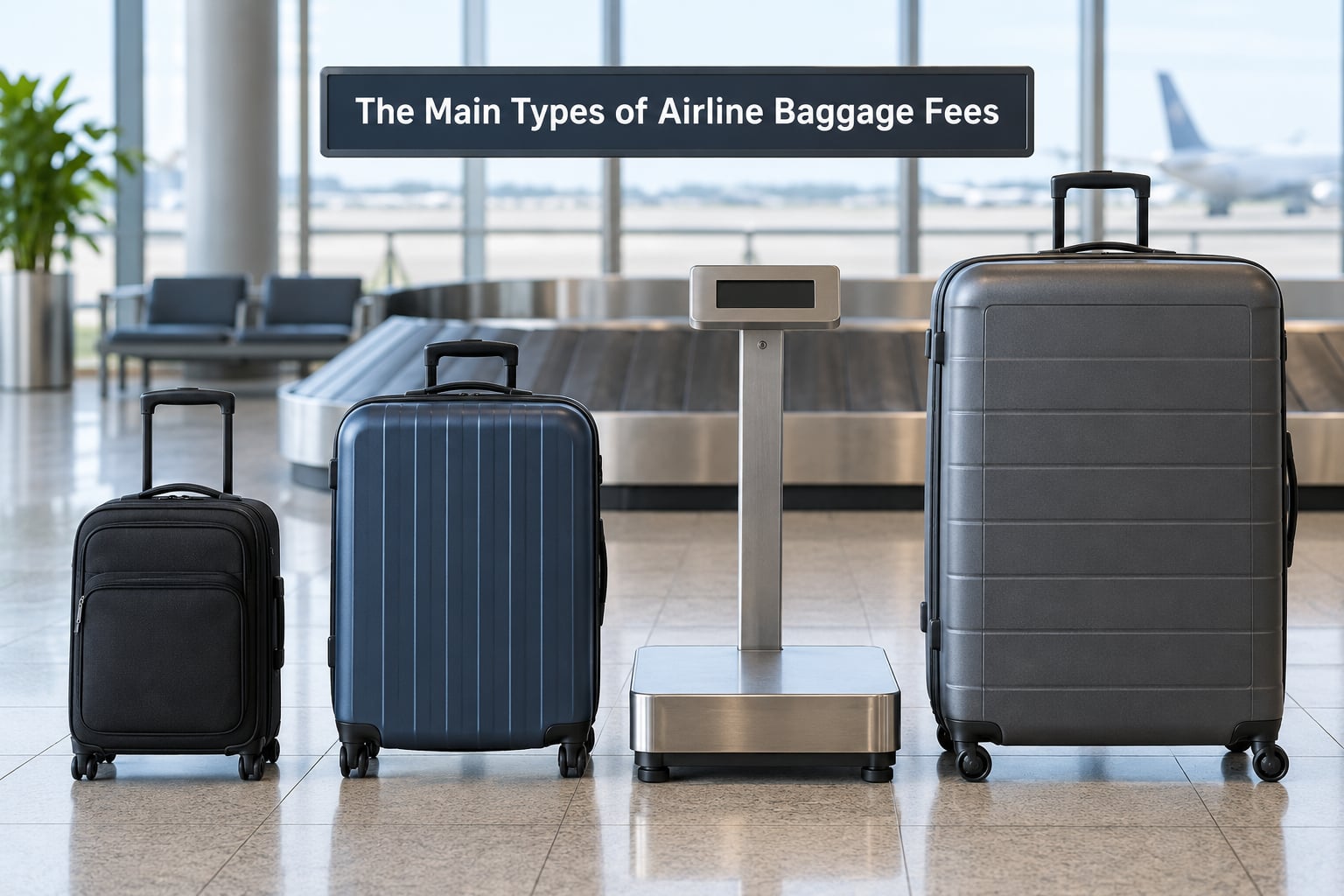
Baggage fees fall into a handful of families, and a single trip can stack several of them.
- Carry-on fee charged when your fare does not include a cabin bag, or on a carrier whose lowest fares allow only a personal item.
- First checked bag fee the charge for the first piece in the hold, which is often steep because most fares include none.
- Additional bag fees for the second, third, and fourth pieces. The third and fourth are priced as a deterrent, not as a normal service.
- Excess weight fees charged when a single bag is over the carrier weight limit, usually by the kilogram or pound.
- Oversize fees charged when a bag exceeds the allowed dimensions even if it is light.
- Special item fees for sports equipment, instruments, pets in the cabin, mobility aids, and oversized gear.
Battery-powered items and medical devices are handled under separate rules rather than as ordinary bags, and those rules are usually more generous. Checking them before you book avoids a scramble.
Carry-On Bags: Size, Weight, and Basic Allowance
A carry-on is the bag that goes into the cabin, and airlines judge it on three things: how many you may bring, how big it may be, and how much it may weigh. Most US carriers use linear dimensions, meaning length plus width plus height, often around 22 by 14 by 9 inches. Many carriers set no cabin weight limit at all, which is worth knowing before you load a heavy soft bag.
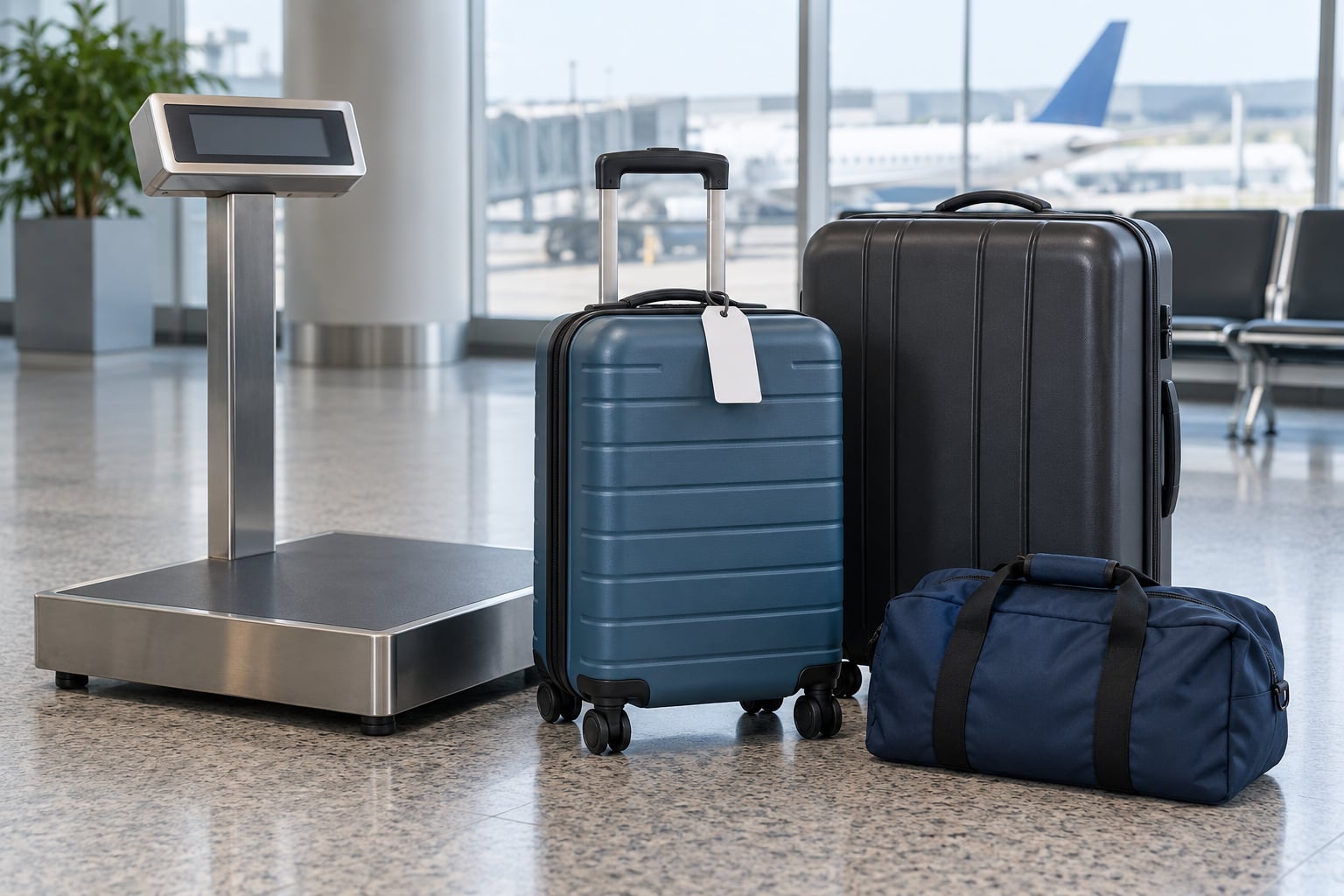
The three bag categories are not interchangeable. A personal item is the small bag that fits under the seat in front of you, and a purse counts toward that allowance rather than as a separate item. A carry-on is the larger bag for the overhead bin. A checked bag goes into the hold.
| Bag type | Where it goes | Typical allowance |
|---|---|---|
| Personal item | Under the seat in front of you | One, on nearly every fare including basic economy |
| Carry-on | Overhead bin | One, on most main-cabin fares; none on the lowest fares at some carriers |
| Checked bag | The hold, tagged at the counter | Zero to two free depending on carrier and fare class |
Even a bag that meets every published rule can be taken off you at the gate. That is a gate check, and it happens when a full aircraft leaves too few bins for everyone boarding. A gate-checked carry-on is normally handed back at the jet bridge or the arrivals belt, and a compliant bag is not supposed to trigger a cabin bag charge, though a fee for a large carry-on can still apply on some carriers.
So if a bag does not fit the sizer frame at the gate, an agent can check it whether you like it or not. Packing light is what reduces the odds of that happening.
Checked Bags: How the First Bag Is Charged
Checked bags are sold in two systems. US and Canadian carriers mostly use piece-based pricing, where each bag counts as one unit within a weight limit, and a typical limit is 50 pounds. Many carriers outside North America price by weight instead, charging a set rate for the first 20 or 23 kilograms and adding per-kilogram charges beyond that.
Inside a piece-based system, the number of bags your fare includes is what sets the price. A basic economy fare on a full-service carrier commonly includes no checked bag, standard economy commonly includes one, and premium or flexible fares bundle one or two. Airlines that advertise free checked bags as a standard feature, Southwest being the most cited example in traveler forums, are the exception rather than the rule in North America.
Prepaid versus airport pricing is the mechanism most guides skip. Add the bag during booking or through the airline app and you pay the prepay rate. Wait until the check-in counter and you pay a higher rate. Wait until the gate, because bins are full, and you can pay the highest rate of all. The US Government Accountability Office has documented this pricing-by-timing pattern across major carriers, and travelers on carrier forums describe the same experience: the fee visible at booking was lower than the one demanded at the counter.
Prepayment usually has a cutoff, often a few hours before departure and sometimes 24 hours before. After that cutoff the airline assumes you will pay at the airport. The price difference between the earliest and latest stage can be more than double for the first bag, which is why a five-minute detour into your confirmation page is worth it.
One more mechanic catches people on round trips and connections. Baggage fees are normally charged per bag, per direction, and often per flight segment. A round trip with one bag each way is two charges, not one, unless the fare you bought explicitly bundles them.
Oversized, Overweight, and Excess Bags
Oversize and overweight are different problems with different charges. Oversize means the bag breaks the carrier’s linear dimension limit, usually by an inch or two, and the fee is a flat surcharge on top of any bag fee. Overweight means the bag is within its dimensions but past the weight cap, and carriers charge either a flat overweight fee or a per-kilogram or per-pound charge, whichever is greater.
The metric conversion is where a lot of travelers get caught. A 23 kilogram limit is about 50 pounds, but airlines round in their own favour, and a bag that a scale elsewhere would call 49 pounds can read 51 on an airport scale. If you are flying internationally, weigh your bags at home and leave a few pounds of margin rather than packing to the exact number.
An extra bag is a different charge again: not overweight, not oversized, just one more piece than your fare includes. Fee ladders climb steeply, with the third and fourth pieces priced several times higher than the first, and a few carriers sell a discounted extra bag at the airport as a promotion. Checking for that offer before your trip is often worthwhile when a family needs a third suitcase.
There is no partial refund for a bag you choose not to check. If a bag is ineligible or over the limit, you either pay the charge or the bag does not fly.
Why Airline Baggage Fees Vary by Flight
The same passenger can see three different baggage policies on one itinerary, and none of the differences is a mistake. Fare class is the biggest lever. A basic or light fare on a full-service carrier is sold on the assumption that you will pay extras, while a flexible fare is priced with the bag included, so the same bag looks free on one ticket and costly on the next.
Then there is the operating carrier. When you buy a codeshare ticket sold by one airline and flown by another, the flying airline’s baggage policy governs the flight, not the one whose website you booked through. On multi-carrier itineraries, every segment can carry its own rules, and the fee is commonly applied per segment, so one checked bag on a two-connection trip can become three separate charges.
Route matters too. Transatlantic, transpacific, and long-haul itineraries often carry different allowances than domestic hops on the same airline, and a regional commuter aircraft may have smaller overhead bins than a widebody on the same ticket. That is a common reason for an unexpected gate check.
Finally, status and payment method can override the published policy. Elite frequent flyer tiers, employee travel, and certain airline credit cards include free checked bags or waive fees on specific cards, and these benefits usually attach to the passenger rather than the ticket, which means they have to be attached to your booking before check-in.
How to Check Your Airline’s Baggage Rules
Checking baggage rules takes about five minutes if you know where to look. Start at the airline’s own fee page rather than a comparison blog, because the airline page is the version that gets enforced.
Work through this list before you pay for the ticket:
- Open the fare details for your exact fare class, not the cabin name. A search result showing Economy may be a fare that includes no checked bag.
- Find the allowance for the operating carrier on each segment, especially if the trip involves a partner airline.
- Note the size and weight limits in the units that apply to that airline, whether pounds or kilograms.
- Check the prepay cutoff time and the difference between the prepay rate and the airport rate.
- Look up your credit card’s baggage benefit and confirm the card is on the booking, since benefits attach to the reservation.
- Confirm your loyalty tier is linked to the booking if you expect a free bag from status.
- Screenshot the allowance and the fee you were quoted, so you have proof if the counter disagrees.
Do this for every segment, not just the first. A two-hour layover with a different operating airline is where rules quietly change.
How Airline Baggage Fees Work at the Airport
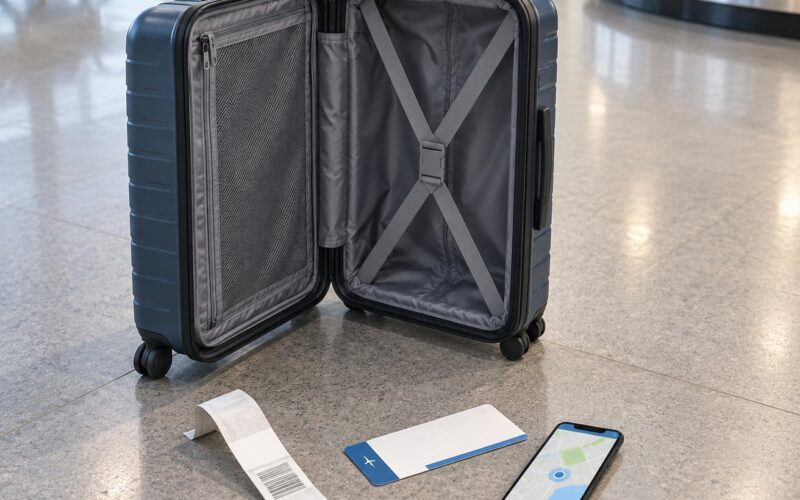
At the counter, an agent looks at your booking, your bag, and the clock. The booking says how many bags are included, the bag tells the agent whether size and weight extras apply, and the clock decides which price you are quoted. The tag your bag receives is the record of what was paid, so check the number of tags before you walk away.
Carry-ons meet their sizer at the gate, and the frame is unforgiving about wheels, handles, and side pockets that add width. A bag that fails the sizer becomes a checked bag at the last possible moment, and on a full flight that can mean waiting at the carousel rather than walking out with it.
If you believe you were charged twice, or a prepaid bag fee did not appear on your reservation, raise it at the counter before you leave the queue. Agents can usually void a duplicate immediately. If the system will not correct it, take the receipt, note the date, time, and airport, and file a complaint with the airline’s customer service team, then escalate through the relevant consumer authority if the refund never arrives.
That order matters. Contested baggage refunds almost always get resolved faster with a receipt in hand and a specific date attached than with a recollection of what happened.
Ways to Avoid or Reduce Airline Baggage Fees
Packing lighter is the only approach that costs nothing and always works. A week’s trip in a carry-on removes the first checked bag fee entirely, and on a weight-based airline it removes the risk of an overweight charge as well. Weigh bags at home; airport scales are unforgiving.
Prepay rather than pay at the airport. The same bag costs less when added during booking, and the cutoff is usually earlier than people assume.
Use the personal item allowance properly. One small bag under the seat plus one carry-on covers more than most people pack, and no fee applies to either under a normal fare.
Look for carriers whose standard fare includes bags rather than searching for the lowest airfare. Forum travellers consistently raise Southwest as the fallback when a trip involves three or four pieces, because two free checked bags changes the arithmetic entirely for a family or a group.
Check your credit card and loyalty tier before you book, not after. Both benefits attach to the reservation, and neither applies retroactively once you are standing at the counter.
Book each segment on the same carrier when you have heavy luggage, or prepay for bags on every segment separately. A single connecting itinerary across three airlines is the most reliable way to end up paying more than you calculated.
Finally, ask about discounted additional bags at the counter. Several carriers price a third piece far lower as a counter promotion than the published fee suggests, and it costs nothing to ask.
Frequently Asked Questions
How do checked bag fees work?
A checked bag fee is calculated from four inputs: the number of bags your fare includes, the size and weight limit for each bag, which airline operates each flight segment, and when you pay. Prepaying online during booking is normally the cheapest, the check-in counter costs more, and the gate costs most when bins are full. Fees are normally charged per bag, per direction, and per flight segment.
How many checked bags do I get for free?
It depends entirely on the carrier and fare. Most full-service airlines include no checked bag in basic economy, one in standard economy, and one or two in flexible or premium fares. Some carriers, Southwest most often, include free checked bags as a standard feature rather than an upgrade. Always read the allowance for your exact fare class, since two tickets on the same flight can carry different baggage rules.
Do you pay checked baggage fees both ways?
Usually yes. On a round trip, a checked bag fee is generally charged once per direction, so one bag each way counts as two charges unless the fare you bought explicitly bundles checked bags in both directions. Prepaid bag purchases are often priced per bag per segment, so a connecting itinerary can add further charges on top of the outbound and return legs.
What airline has the cheapest checked bag fee?
There is no single cheapest answer, because carriers that include free bags charge nothing for the first two pieces but often price seats and other extras higher. Among carriers that charge per bag, the lowest total is usually achieved by prepaying online before the cutoff, and by picking a fare that bundles one bag rather than a basic fare that bundles none. Comparing the total trip cost beats comparing the bag fee alone.
How much do airline baggage fees usually cost?
US carriers commonly charge for the first checked bag, a higher amount for the second, and a sharp jump for the third and fourth, with the airport price higher than the prepay price. Many carriers outside North America charge by weight instead, with a set rate for the first 20 or 23 kilograms and per-kilogram charges after that. Fees change regularly, so confirm the current figures on the carrier’s own fee page before you book.
How do I avoid paying a checked bag fee?
Pack into a carry-on and a personal item, which covers most trips and removes the fee entirely. When you must check, prepay during booking because the same bag costs less before the cutoff. Use carriers whose fares include a free bag, and attach any airline credit card or loyalty benefit to the reservation before check-in, since neither applies retroactively. Keeping all segments on one carrier also avoids per-segment charges.
The Bottom Line
Start by finding the baggage allowance for your exact fare class on the operating airline’s own website, not the booking site, and do it before you pay for the ticket. Add your bags during booking while the prepay rate is still live, and check whether your credit card or loyalty tier is attached to the reservation.
Then weigh your bags at home, leave a margin under the limit, and take a screenshot of the allowance and the quoted fee. That one habit catches most of the problems travelers run into, and it gives you something concrete if a counter ever disagrees with you.
Baggage fees follow a simple pattern once you see it: allowance decides the number of bags, size and weight decide the extras, the operating carrier sets the rules, and timing sets the price. Every surprise charge comes from one of those four, and all four are checkable before you leave home.