Most of Hawaii’s best experiences cost nothing to enter: public beaches, state parks, botanical gardens, memorial grounds, roadside lookouts and weekly fireworks. What you actually pay for is parking, food and the occasional reservation or national park pass, which is why the real skill is knowing which stops are genuinely free and which ones only advertise that way.
I’ve pulled this list together island by island, with the access details that trip people up. Before you go, check each park’s official page, because reservation rules and fee schedules change and older guides get stale fast.
Table of Contents
- Free Things to Do on a Hawaii Vacation at a Glance
- 1. Walk Waikiki Beach and Ala Moana Beach
- Free things to do on a Hawaii vacation by the water
- 2. Visit Lanikai and Kailua Beaches
- 3. Hike to Makapu’u Point Lighthouse and Halona Blowhole
- 4. Explore Ho’omaluhia Botanical Garden and Nu’uanu Pali Lookout
- 5. Remember Pearl Harbor’s Free Visitor Areas
- 6. Tour Akaka Falls and Hilo’s Rainforest on the Big Island
- 7. Visit Makena Beach and Waianapanapa State Park on Maui
- 8. Walk Lydgate Beach Park and Hanalei Town on Kaua’i
- 9. See Papohako Beach and the Fluted Rock on Moloka’i
- 10. Look for Le’ahi, the Lanai Lookout
- 11. Visit Free Cultural and Community Landmarks
- 12. Drive Scenic Highways and Volcanic Landscapes
- Frequently Asked Questions
- Are there genuinely free things to do on a Hawaii vacation?
- Which Hawaiian island offers the most free activities?
- Do you need reservations for free things to do in Hawaii?
- What can I do in Hawaii for free on a rainy day?
- Is there free transportation between free activities?
- Conclusion: Start With One Island and Build From There
Free Things to Do on a Hawaii Vacation at a Glance
| Stop | Island | Main activity | Typical time | Access notes |
|---|---|---|---|---|
| Waikiki and Ala Moana Beach | Oahu | Swim, walk, watch surfers | 2-4 hours | Free access; parking at Ala Moana charged separately |
| Lanikai and Kailua Beaches | Oahu | Swim, view the Mokulua islands | 3-5 hours | Street parking fills by mid-morning; trail reservation often needed |
| Makapu’u Point and Halona Blowhole | Oahu | Paved coastal trail, shoreline views | 2 hours | Free; limited roadside parking, no shade |
| Ho’omaluhia Garden and Nu’uanu Pali | Oahu | Tropical garden plus a cliff lookout | 2-3 hours | Free entry; windward rain is common |
| Pearl Harbor visitor areas | Oahu | Visitor center and shoreline memorials | 2-3 hours | Grounds free; Arizona Memorial needs a reservation and fee |
| Akaka Falls and Hilo | Big Island | Waterfall, rainforest drive, shoreline | 3-5 hours | Free; bring a light rain layer |
| Makena and Waianapanapa | Maui | Big Beach, black sand coast | 3-4 hours | Reservations and parking limits apply; confirm before driving |
| Lydgate Beach Park and Hanalei | Kauai | Wide shoreline walk, small town browse | 2-3 hours | Free; small lot fills early |
| Papohako Beach and Fluted Rock | Molokai | Coastal landmarks and wildlife watching | Half day | Free; fuel up before driving, watch surf |
| Le’ahi, the Lanai Lookout | Lanai | Clifftop viewpoint over the islands | 1 hour | Free; very limited services nearby |
| Cultural and community landmarks | All islands | Temple grounds, markets, public art | 1-2 hours | Free and usually open; dress respectfully |
| Scenic highways and volcanic landscapes | All islands | Self-guided driving | Full day | Road is free; national park entrance fee applies |
1. Walk Waikiki Beach and Ala Moana Beach
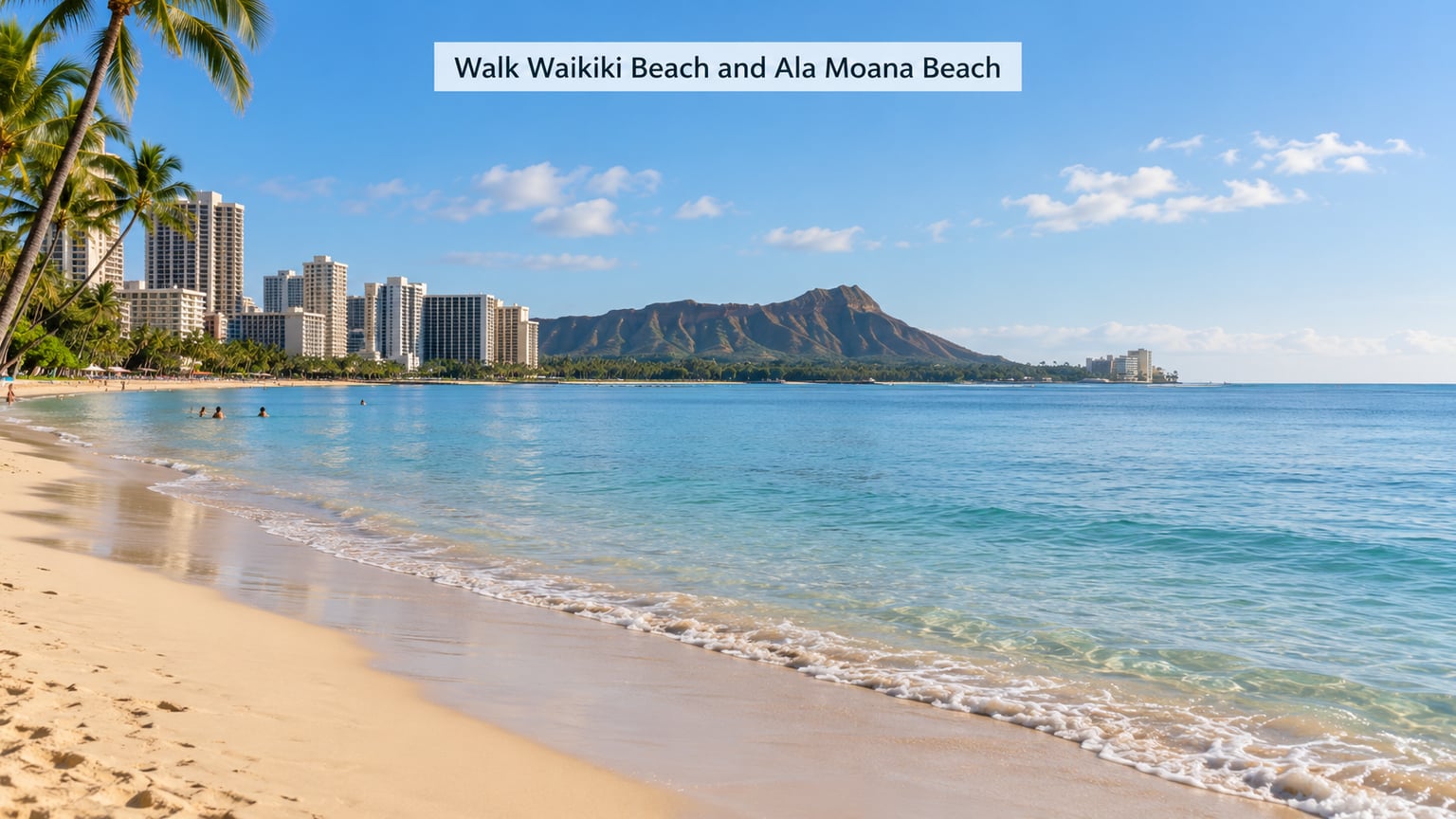
Two urban beaches in a row is the easiest free morning in Honolulu, and neither requires a ticket or a reservation. Waikiki is busy and commercial, but Ala Moana Beach Park two blocks around the point is wide, calm and much easier to actually swim in.
Start at Waikiki before seven, walk the sand past the Duke Kahanamoku statue, and keep going until the shoreline curves around to Magic Island and the lagoon. Restrooms, outdoor showers and lifeguard towers are available along the way at no charge, and the free city bus runs the length of the strip if you would rather not walk.
Bring your own breakfast and eat it on the sand, which is what most people do. The one thing that costs money here is parking, so use the bus, a hotel shuttle or a paid lot and skip trying to find a free space.
Free things to do on a Hawaii vacation by the water
Shoreline access in Hawaii is public land, and no island charges admission to a beach. Swimming, sunrise walks, watching surfers line up at the breaks, picnicking and tide-pool viewing all cost nothing at any of them.
The distinction that matters is between free beach access and free everything else. Showers, parking, chair rentals, surfboard lessons and parking-lot fees are separate from the sand itself, so a stop can stay genuinely free as long as you plan to walk, bike or use the bus.
2. Visit Lanikai and Kailua Beaches
Lanikai and Kailua form one connected outing on Oahu’s windward side, and the pair of small islands offshore is the reason most people drive out here. Lanikai’s water is usually calm enough for swimming, while Kailua is the broader beach with more space and more surf.
There is no admission fee at either beach, but parking is the real constraint: roadside spots near the Lanikai Boat Club are few and fill by mid-morning on calm days. Arrive early, park legally, and walk rather than circling for a better space.
The trail crossing to the Mokulua islands has required a reservation through the state parks system at different points in recent years, so check the current rule before you plan around it. Either way, view the islands from the sand. Wildlife disturbance rules are strict, and approaching them is not worth the fine.
3. Hike to Makapu’u Point Lighthouse and Halona Blowhole
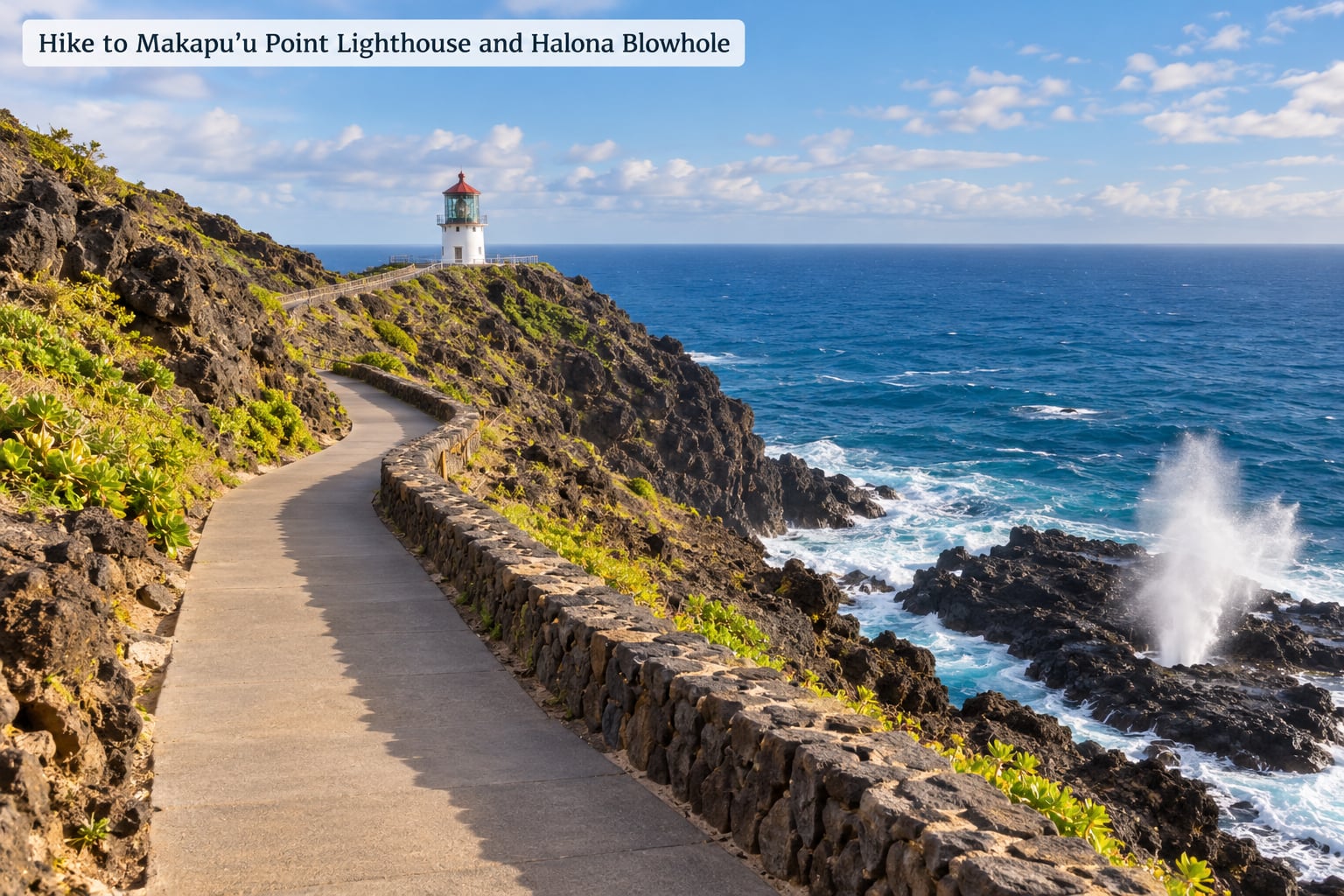
Makapu’u Point is the best free hike on Oahu for almost anyone, because it is paved, wide and only about a mile each way along the shoreline. The payoff at the end is a 1900s lighthouse, a cliffside view of the open Pacific, and usually sea turtles resting on the rocks below.
Pair it with a short stop at Halona Blowhole further around the same coast. The blowhole is a roadside feature with its own small viewing area, but the ledge beside it is narrow, undercut and slick, so it is a look, not a place to stand for a photo.
Expect sun with no shade, and expect limited roadside parking. Go in the morning, carry water, and keep the whole walk to about two hours including the drive back.
4. Explore Ho’omaluhia Botanical Garden and Nu’uanu Pali Lookout
These two stops work well together because they solve opposite problems: the garden gives you shade and calm, and the Pali lookout gives you the drama. Both are free to enter, and they sit on opposite ends of an Oahu driving day.
Ho’omaluhia is a state botanical garden on the windward side with paved paths, benches and a big lawn that works well for a picnic. Open gates and shaded structures make it a decent rainy-morning substitute for a hike, though tropical rain can arrive fast regardless of the forecast.
At Nu’uanu Pali, the lookout faces a cliff wall nearly 1,000 feet high, and on clear mornings you can sometimes see Moloka’i across the channel. The pullouts are small, so slow down, and skip it when the trade winds are strong enough to slam car doors.
5. Remember Pearl Harbor’s Free Visitor Areas
The visitor center, the shoreline memorial grounds and the outdoor exhibits at Pearl Harbor can be visited with no general admission charge, so you can still see the harbor and the historic sites without buying a ticket. The catch is that the most requested piece, the USS Arizona Memorial, is handled separately.
Boats to the Arizona Memorial are managed through a recreation system that charges a reservation service fee, and those tickets are limited each day. Walk-ups are accepted when seats remain, but in peak season they can be gone by early morning, so reserve in advance if this stop matters to you.
Plan the free part first, then decide about the memorial separately. That way a sold-out reservation does not strand you, because the grounds, the visitor center and the shoreline are worth an hour on their own.
6. Tour Akaka Falls and Hilo’s Rainforest on the Big Island
The Big Island’s north Hilo coast packs several free stops into a short drive, and Akaka Falls is the anchor. The state park has no entrance fee, paved paths lead to viewing platforms, and the surrounding rainforest stays damp and green most of the year.
Pair the falls with a slow drive through the tunnels and sugarcane country inland, or with the public shoreline in Hilo for a walk at the water’s edge. Rain here is normal rather than a problem, so a packable shell beats an umbrella you cannot use in wind.
Swimming below waterfalls and in stream pools near Hilo carries a real health warning, so treat those pools as look, not as a swim. Parking at Akaka is straightforward and free, and most visitors are in and out within the hour.
7. Visit Makena Beach and Waianapanapa State Park on Maui
Makena Beach, often called Big Beach, is a wide half-mile of sand with no admission fee, and it is one of the few places in Hawaii where you can genuinely walk away from a crowd. Waianapanapa, reached by paved road on the far side of the island, adds black sand, lava rock and coastal caves.
Parking at both has tightened in recent years, and Waianapanapa has run on a reservation system during busy periods. Confirm what is required before you drive out, because the fee rules and booking windows have changed more than once.
Black sand has sharp edges and a powerful undertow, so this is a place for walking barefoot carefully and swimming only where the water is calm and clearly marked. If a booking slot is unavailable, the public shoreline around Makena is still worth the drive.
8. Walk Lydgate Beach Park and Hanalei Town on Kaua’i
Lydgate Beach Park gives you a long, open shoreline and a protected lagoon where kids can splash without ocean swell, and entry costs nothing. Hanalei Town a short drive north is the easy second half of the day, with public sidewalks, galleries and a working town to walk through.
Both spots are free. Parking is the item to plan around, since Lydgate’s lot is small and Hanalei’s fills with beachgoers by late morning on weekdays and weekends alike.
Reef and stream conditions vary with rainfall, so treat the lagoon water as swimmable only when conditions look calm, and stay out of marked restricted beach entrances where nesting or restoration work is underway.
9. See Papohako Beach and the Fluted Rock on Moloka’i
Moloka’i rewards travelers who are comfortable improvising, and its two best free sights are Papohako Beach and the Fluted Rock on the southern coast. Neither has an entrance fee, and together they cover the island’s best swimming beach and its most photographed cliff.
Treating the island as a day trip from Maui works, but the driving is longer than most visitors expect. Fuel up before you leave town, carry more water than you think you need, and know that the small towns have limited services and no late-night anything.
The main lookout at Fluted Rock sits on a cliff edge with no barrier, so give it room. If sea turtles show up on the beach below, stay where you are and watch from a distance rather than approaching, which is both the rule and the better experience.
10. Look for Le’ahi, the Lanai Lookout
Le’ahi is a clifftop viewpoint on Lanai that costs nothing to reach and looks across the channel toward Maui and the smaller islands. On a clear day the view is wide enough to make a five-minute stop feel worth the drive.
Getting there is the harder part. Lānaʻi has limited services, so plan for a full fuel tank before you leave and treat the visit as a stop rather than a destination.
People often add a steep scramble down toward the water from the nearby shoreline. Only do it if you are confident on loose rock, and expect reef and current below, not a swimming beach. Watch the surf from above instead.
11. Visit Free Cultural and Community Landmarks
Some of the best free things to do on a Hawaii vacation are cultural, and the most welcoming ones are places where visitors are genuinely expected. Active Buddhist temples on Oahu and Kaua’i maintain open temple grounds, walled gardens and quiet courtyards that cost nothing to walk.
Market streets add more without any ticket price. A community market gives you the local produce, plate lunch stands and crafts that a shopping mall cannot, and public art or sculpture installations around town are free by default because they are simply outside.
Two rules keep these experiences open to everyone. Dress modestly and keep voices low, and skip anything marked kapu or closed. Places that sell admission, or that discourage casual wandering, are not what this section is about.
12. Drive Scenic Highways and Volcanic Landscapes
Driving is the free activity on any island, and the payoff is the scenery that a tour would otherwise charge you to see. The Kohala Coast on the Big Island is the easiest day trip, with a string of lookouts and a coastal road that takes about an hour end to end.
Hawaiʻi Volcanoes National Park is the other headline, and the overlooks along the crater rim are the part that matters. The park itself charges a per-vehicle entrance fee for seven days, which is a good argument for spending the day at the overlooks and the visitor center rather than on paid ranger programs.
Maui’s Road of Hana is free to drive and unforgettable, but it is a full-day commitment with narrow sections and one-way backtracking if you go past Hana. Fuel stops and no services for long stretches are normal, and one honest caveat: this is scenic driving, not the easiest free activity with small children or a low tolerance for switchbacks.
Frequently Asked Questions
Are there genuinely free things to do on a Hawaii vacation?
Yes. Beaches, public shoreline areas, botanical gardens, scenic lookouts, community landmarks and visitor centers are free. Some parks now use reservations or charge for parking, and national parks charge a per-vehicle entrance fee, so check current rules before driving out.
Which Hawaiian island offers the most free activities?
Oahu usually offers the greatest variety because its beaches, paved trails, lookouts, cultural sites and bus network are easy to combine in one day. The Big Island, Maui and Kauai offer more driving and fewer crowds, while Lanai and Molokai are rewarding if you are self-sufficient.
Do you need reservations for free things to do in Hawaii?
Some places are free but require advance booking, including popular state parks, beaches with controlled parking, and the USS Arizona Memorial, which uses a recreation system with a service fee. Ordinary public beaches and trails need nothing, so most of the stops on this list work without booking.
What can I do in Hawaii for free on a rainy day?
Choose the leeward side of an island, where rain is far less likely, and pick short covered stops. Good options include botanical gardens, visitor centers, active temple grounds, community markets and mall or museum courtyards, all of which cost nothing to enter.
Is there free transportation between free activities?
On Oahu, the public bus reaches Waikiki, Honolulu and many beach areas for a small fare that is far below taxi pricing, and the elevated airport line is similarly cheap. Other islands have no equivalent system, so plan fuel and rental car costs there instead of assuming free rides.
Conclusion: Start With One Island and Build From There
Pick one island and pick two stops that sit close together, rather than trying to cross an island for every item on this list. Check the current parking and reservation rules that morning, since those are the details that change.
Then add the paid parts of your trip around that core. Free things to do on a Hawaii vacation are best used as the spine of a day, with a meal, a tour or a longer excursion filling in around them, and they leave room in the budget for the parts of the trip that genuinely cost money.