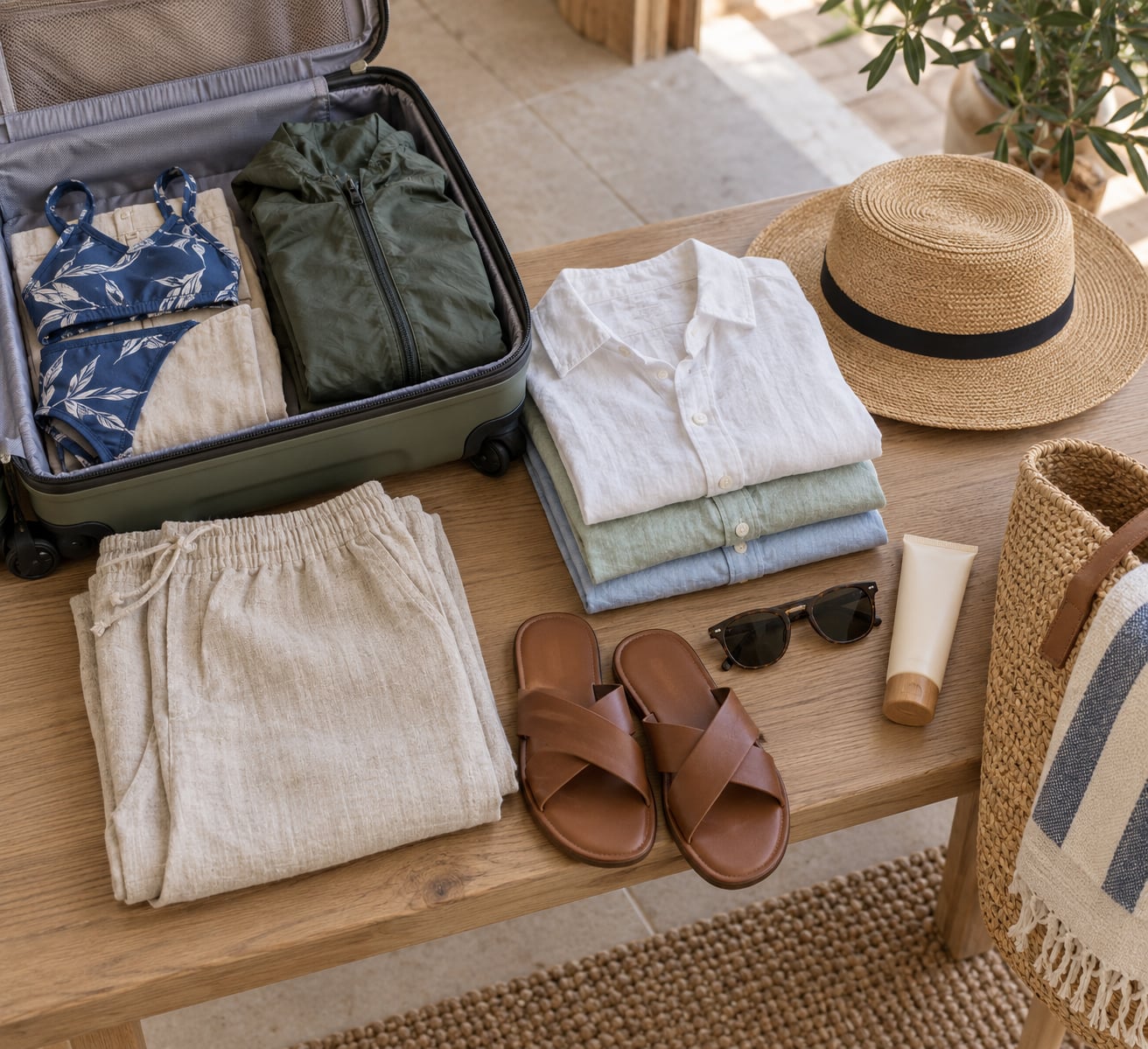
Hawaii runs on lightweight, breathable clothing: linen and cotton shirts, quick-drying swimwear, sandals, a sun hat, and one light layer for rain or strong air conditioning. That short list covers almost every day of a trip, whether you are men or women, from a sunrise hike to a waterfront dinner. The trick is packing fewer things that work together rather than one heavy outfit for every occasion.
Most visitors underestimate two things: how hot the pavement gets at noon, and how quickly a tropical shower can soak a cotton shirt. The sections below break the wardrobe down by weather, by gender, and by activity so you can build a bag that actually gets used.
Table of Contents
- What to Wear in Hawaii for Men and Women: Quick Packing Guide
- How Does Hawaii’s Weather Affect What You Wear?
- What to Wear in Hawaii for Men
- Shirts that work in every heat
- Bottoms and swimwear
- Footwear and layers
- What to Wear in Hawaii for Women
- Dresses that do the most work
- Swimwear and cover-ups
- Tops, bottoms, and layers
- Footwear
- Beach and Resort Wear for Men and Women
- For swimming and lounging
- For walking on hot sand and boardwalks
- What to carry
- What to Wear for Hiking and Outdoor Activities in Hawaii
- Coastal walks and easy trails
- Longer hikes and summits
- Water shoes and reef areas
- What to Wear in Hawaii in the Rain
- What to Wear for Dinners, Shows, and Casual Island Evenings
- Waterfront and nicer restaurants
- Luaus and shows
- Nightlife and casual evenings
- Packing Checklist by Trip Length
- Day trip
- Weeklong visit
- Longer stays and multi-island trips
- Frequently Asked Questions
- How do you dress in Hawaii and not look like a tourist?
- What should a woman pack for a trip to Hawaii?
- What should men wear in Hawaii?
- What not to wear to a luau?
- Do I need a rain jacket in Hawaii?
- What shoes work in Hawaii besides flip-flops?
- Conclusion
What to Wear in Hawaii for Men and Women: Quick Packing Guide
The table below is the short version. Pick one item from each row, and you have a workable wardrobe for a week on any island.
| Category | For men | For women | Best use |
|---|---|---|---|
| Everyday top | Linen or cotton short-sleeve shirt | Loose rayon blouse or tee | Walking around town, shopping, daytime excursions |
| One dressy piece | Aloha shirt or lightweight button-up | Sundress or muumuu | Dinners, luaus, luau shows, sunset cruises |
| Swimwear | Board shorts, plus a rash guard for boat days | One-piece or two-piece, plus a cover-up | Pool, beach, snorkeling, surfing |
| Bottoms | Linen pants or chino shorts | Linen trousers or a midi skirt | Restaurants, casual evenings, cooler evenings |
| Layer | Packable windbreaker | Light cardigan or kimono-style cover-up | Rain showers, cool summit mornings, strong airplane air |
| Footwear | Sandals plus trail runners or water shoes | Flat sandals plus water shoes | Beach walks, hikes, rocky shoreline |
| Sun protection | Baseball cap, polarized sunglasses, UPF shirt | Wide-brim hat, sunglasses, UPF cover-up | Long days outdoors, boat tours where water reflects sun |
| Bag | Woven tote or dry bag | Woven tote or dry bag | Beach gear, sunscreen, phone pouch |
How Does Hawaii’s Weather Affect What You Wear?
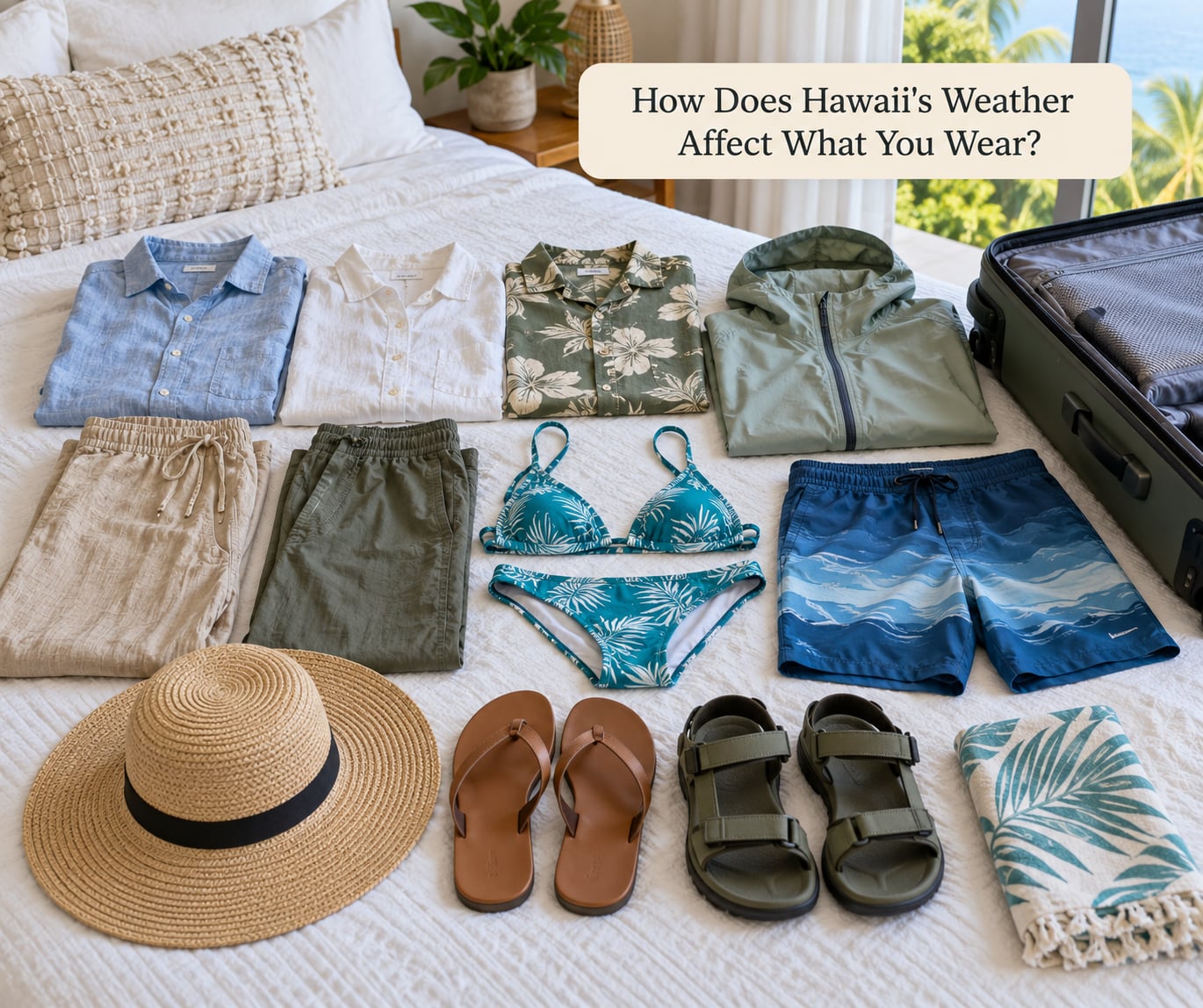
Temperatures sit in the mid-70s to mid-80s Fahrenheit all year, so heat is not really the variable. What changes your clothing needs is humidity, sun, wind, and elevation.
Humidity is the big one. Salt air holds moisture, and cotton that feels fine in dry air clings to you here. Linen, lightweight rayon, and moisture-wicking synthetics dry faster and let air move, which is the difference between comfortable and soaked by noon.
Then there is the sun. Tropical sun is stronger than most visitors expect, and it reflects off sand, water, and pale concrete. That is why a UPF shirt or rash guard does more work than any amount of sunscreen alone, especially on boat tours and snorkeling trips where you are sitting in reflected light for hours.
Trade winds pick up in the late afternoon, and showers arrive in short, intense bursts rather than all-day soaks. A packable rain shell in your day bag handles it, and it doubles as a layer for Haleakala at sunrise or the airplane cabin, which can be genuinely cold.
Elevation changes the picture quickly. Waikiki beach sits at sea level and feels like summer. Drive up to a summit trailhead and the same afternoon can be cold enough for long pants and a fleece, which is why one warm layer belongs in every bag no matter the forecast.
Two rules follow from all of this. Dress in layers you can add and remove in under a minute, and favor fabrics that dry overnight instead of holding water until morning.
What to Wear in Hawaii for Men
Men do best here with a small number of breathable pieces that mix with each other. Two good shirts, two pairs of shorts, and one pair of lightweight trousers cover more days than you would expect.
Shirts that work in every heat
Linen and cotton short-sleeve button-ups are the workhorse. One plain white or light blue shirt handles dinner, a rental car, and a restaurant where the air conditioning is aggressive. One aloha shirt handles luaus, casual evenings, and the times you want to look dressed without trying.
Polos and unlined shorts are the safe middle ground between beachwear and business casual. In Hawaii, an aloha shirt is treated as smart casual, so a tucked or untucked version of one works in an office or a nicer Waikiki restaurant without a tie.
Bottoms and swimwear
Board shorts with a drawstring waist are the local standard for the water. Chino shorts or lightweight linen trousers handle sightseeing days. Leave heavy denim at home, and pack only one pair of jeans at most for a single evening out.
A rash guard earns its space even if you never plan to surf. On a boat tour or a long snorkeling session, sun reflects off the water straight into your face and chest, and sunscreen alone rarely keeps up.
Footwear and layers
Sandals are the default everywhere, including restaurants and shops. If they bother your feet, packable slip-on sneakers or leather thong sandals work just as well and locals wear both without comment.
Add trail runners or hiking shoes if you have any hike on the itinerary, and water shoes if you plan to walk on rocky or coral shoreline. Most resort beaches are fine barefoot, but a surprising number of Hawaii beaches are lava rock rather than sand.
One packable windbreaker and a pair of long pants handle Haleakala sunrise, a volcano trail, or a rainy stretch of the Road to Hana. Without them you will be freezing at 10,000 feet in shorts.
What to Wear in Hawaii for Women
The easiest Hawaii wardrobe for women is built around three sundresses and two pareos. Those five pieces create far more day-to-evening combinations than they look like they will.
Dresses that do the most work
A knee-length sundress in rayon or cotton with a relaxed fit works for breakfast, a museum, a shopping run, and dinner with a swap of sandals. A muumuu is the island’s version of a little black dress: loose, floor-length, and appropriate for luaus, shows, and nicer resort restaurants.
A maxi or midi dress in a breathable weave handles the same range. Choose fabric over style, because something that holds sweat will show it by the afternoon.
Swimwear and cover-ups
Bring a swimsuit you can actually move in, plus a cover-up that dries fast. A crochet or mesh cover-up over a simple two-piece works everywhere from the pool to a walk through town.
The pareo, a simple rectangular piece of fabric, is the most versatile item in a Hawaii bag. Tie it as a skirt over swimwear, throw it over shoulders when the sun gets aggressive, or wear it as a beach cover-up that dries in minutes.
Tops, bottoms, and layers
Loose blouses, fitted tees, and crop tops pair with linen trousers, shorts, or a midi skirt. Linen trousers are the piece that makes a casual outfit look considered without any effort.
A light cardigan, a sheer kimono-style layer, or a lightweight button-down handles rainy evenings, restaurant air conditioning, and windy afternoons. Choose something you can roll into a small bag.
Footwear
Flat leather sandals or flip-flops for most days, water shoes for rocky beaches and reef areas, and one pair of shoes with a little more support for long sightseeing days or a Valley of the Temples walk.
Heels are the one item to leave behind. Cobblestone paths, uneven lava rock, boardwalks, and sand all argue against them, and locals rarely wear anything with a hard heel.
Beach and Resort Wear for Men and Women
Beach days need less than people think. A swimsuit, a cover-up, sandals that can get wet, a hat, and reef-safe sunscreen cover the whole day, because most Hawaii beaches have shade, loungers, or a walk into town nearby.
For swimming and lounging
Men: board shorts and a rash guard if you will be in the water for a couple of hours. Women: a swimsuit and a quick-dry cover-up. The cover-up matters because you will want something on when you walk to a restaurant or back to the room, not a wet swimsuit.
For walking on hot sand and boardwalks
Sand gets hot enough to be uncomfortable by midday, and anything with a flat sole handles it better than a narrow flip-flop. Leather sandals with a back strap work for both beach and street, which is why they are worn so widely here.
What to carry
A dry bag keeps a phone, a towel, and a change of clothes protected from surf and sand. A small woven tote is better for town, and a waterproof phone pouch earns its space on any snorkel or boat trip.
Sunscreen that is reef-safe, meaning mineral-based and free of oxybenzone and octinoxate, is the legally required option in Hawaii and the right choice around coral and tide pools. Apply it generously and reapply after swimming, and pair it with a hat and sunglasses.
What to Wear for Hiking and Outdoor Activities in Hawaii
Hiking outfits in Hawaii split into two very different categories: easy coastal walks, and real trails with elevation, mud, and sun. Most visitors only need the first kind, and overpacking for the second is a common mistake.
Coastal walks and easy trails
For paved paths, boardwalks, and short lookouts, athletic sandals or trail runners with a moisture-wicking shirt are plenty. Add a lightweight long-sleeve for sun protection rather than warmth; it also helps with mosquitoes in wetter areas.
Longer hikes and summits
Trail runners with real grip, quick-drying pants or shorts, a packable rain shell, and one warm layer. Haleakala sunrise, the trails in Hawaii Volcanoes National Park, and the coastal cliffs on Kauai all start cold and end warm within the same few hours.
Bring more water than you think you need, and check trail conditions locally, because rain can turn muddy trails into slippery ones within a day. Storms build quickly in the afternoon, so start early.
Water shoes and reef areas
Grippy water shoes matter at places with coral, lava rock, or shallow reefs where a cut can turn into an infection. They also help on slippery entry points into Hanauma Bay and similar protected bays.
What to Wear in Hawaii in the Rain
Rain in Hawaii is usually brief and heavy rather than continuous, which makes a light packable shell the right answer. A heavy rain jacket is the wrong one, because it is bulky and too warm in the humidity.
A shell that folds into its own pocket and weighs almost nothing is the most useful single layer you can carry. It handles the afternoon shower, the windward side of the islands where rain is more frequent, and the cool air at elevation.
Quick-drying clothes matter more here than in most places. Skip heavy denim and thick cotton, and favor pieces that dry overnight on a hotel rack. A change of shirt in your day bag saves the whole rest of the day.
Footwear should handle wet surfaces. Shoes with mesh drain and a grippy sole beat smooth leather, and sandals with a heel strap stay on when a wave hits. A compact umbrella works for town, though a shell is better on trails where you need both hands free.
A waterproof pouch or dry bag protects a phone, a camera, and a set of keys during exactly the kind of tropical burst nobody wants to ruin a phone in.
What to Wear for Dinners, Shows, and Casual Island Evenings
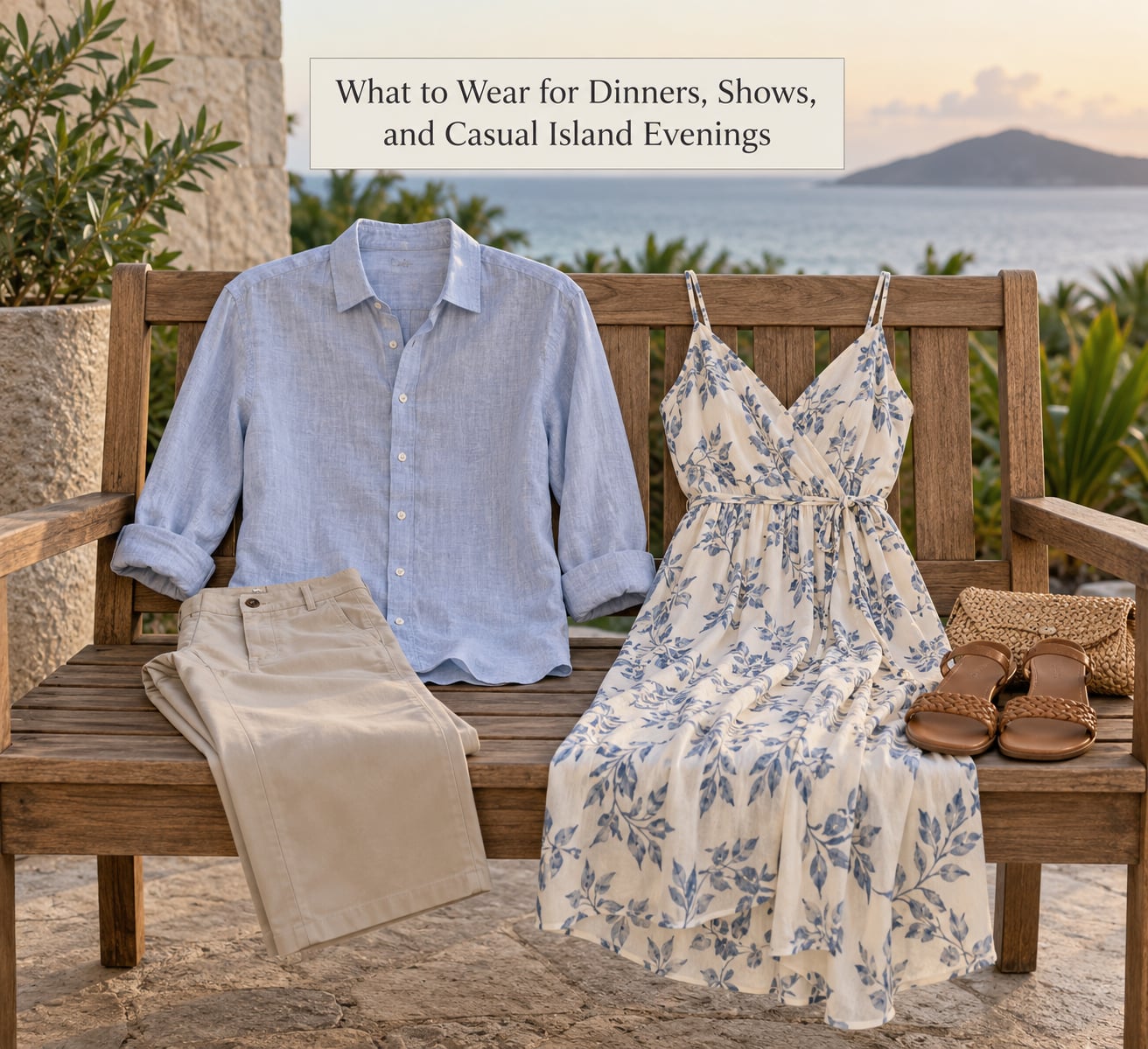
Island evenings are relaxed, but they are not swimwear. Waterfront restaurants, luaus, and shows lean toward smart casual in a warm-weather key, which means breathable fabric instead of structure and stiffness.
Waterfront and nicer restaurants
Men: an aloha shirt or a lightweight button-up with linen trousers or clean chinos. Women: a sundress or midi dress with flat sandals or low wedges. Both work with nothing more complicated.
Skip dark, heavy, or tailored eveningwear. It is technically fine and visually wrong in a place where the dress code is warm and relaxed.
Luaus and shows
A luau is a casual cultural event, not a formal one. Men generally wear a short-sleeve shirt with nice shorts or trousers. Women wear a sundress, a muumuu, or a blouse and skirt. Anything that reads as beachwear underneath is fine.
Leave camera straps that swing into other people, and pick footwear you can slip off, because you will be on sand or lawn more often than you expect.
Nightlife and casual evenings
For bars and live music, keep it easy: a patterned shirt, a clean T-shirt, or a two-piece set with sandals. Add a light layer for air conditioning, which is frequently colder than the street outside.
A useful trick is picking one outfit that works at four in the afternoon and again at nine at night. That way you are not changing in a hotel bathroom between a beach afternoon and dinner.
Packing Checklist by Trip Length
Once you have the categories, the only hard part is matching them to how long you are there. Laundry is cheap and common, so a week does not need a week’s worth of clothes.
Day trip
One swimsuit and cover-up, two breathable tops, one pair of shorts or a skirt, sandals, a hat, reef-safe sunscreen, and a packable rain shell. Add a light layer if you are heading up to a summit.
Weeklong visit
Five or six tops, two pairs of bottoms, two or three dresses or shirts for evenings, two swimsuits so one is always dry, one shell, one warm layer, two pairs of sandals plus hiking shoes, a hat, and sunglasses. Laundry on day three keeps the count down.
Longer stays and multi-island trips
Add nothing dramatic. Pack the weeklong list, then repeat your favorite pieces on rotation and wash them more often. Laundromats and resort laundry services handle small loads cheaply, and quick-dry fabrics dry fast in the humidity.
If the trip involves several islands, remember that one island’s beach weather is not another’s. Big Island summit and volcano trails need a warm layer, Kauai’s Na Pali coast is wet and muddy in places, and Oahu’s North Shore surf and snorkel trips call for a rash guard. If you pack the section-above basics, all of it is covered.
Frequently Asked Questions
How do you dress in Hawaii and not look like a tourist?
Aim for fabrics and colors locals actually wear. Choose linen, cotton, and rayon in bright tropical prints, keep footwear to sandals, sneakers, or bare feet, and skip resort-logo tees, all-black outfits, heels, and souvenir clothing. Wearing aloha shirts and muumuu is normal here, not a costume. Buying from a Hawaiian brand rather than an airport rack is the detail people notice most.
What should a woman pack for a trip to Hawaii?
Three breathable dresses, two pareos, two swimsuits with cover-ups, four or five tops, one pair of lightweight trousers or shorts, and a light cardigan or kimono layer. Flat sandals for daily wear plus water shoes for rocky beaches finish it. Swap a dress for a sundress and change your sandals, and the same pieces cover beach days, sightseeing, luaus, and dinners without a second bag.
What should men wear in Hawaii?
Two short-sleeve breathable shirts, one of them an aloha shirt, two pairs of shorts or lightweight trousers, board shorts, a rash guard, sandals, and hiking shoes if you plan a trail. Add a packable rain shell and one warm layer for summit mornings and airplane air. Keep a plain light-colored shirt for restaurants with serious air conditioning.
What not to wear to a luau?
Skip anything formal like suits, cocktail dresses, or dark eveningwear, and skip swimwear. Luaus are casual, so a short-sleeve shirt with shorts or trousers works for men, and a sundress, muumuu, or blouse and skirt works for women. Flat sandals you can remove are more useful than heels, since luaus often happen on sand or lawn.
Do I need a rain jacket in Hawaii?
Bring a light one. Rain usually arrives as short, heavy bursts, and a packable shell that folds into its own pocket handles it without adding bulk. The same layer covers windy afternoons, cool air at elevation, and strong air conditioning on the plane or in restaurants. Heavy waterproof coats are unnecessary and uncomfortably warm in the humidity.
What shoes work in Hawaii besides flip-flops?
Packable slip-on sneakers, leather thong sandals, espadrilles, or athletic sandals all work and are worn by locals without comment. For trails, use trail runners with real grip, and for coral, lava rock, or shallow reefs use water shoes with drainage. If sandals rub between your toes, a cushioned pair solves it faster than any other single fix.
Conclusion
Start with breathable, quick-drying basics you can wear twice without it feeling like a repeat, then add one light layer that handles rain, wind, and aggressive air conditioning. Pick footwear that works on a beach walk and on an excursion, and keep a shell and a hat within reach rather than buried in a suitcase.
That is the whole decision. Everything else on your list should earn its space.