A half day beach itinerary in Hawaii is a 4 to 6 hour block with a hard start time and a harder finish time. If you are searching for how to plan a half day beach itinerary, the whole method is short: pick one beach, decide before you leave what you want to do there, and build in shade, food and a swim so the hours do not evaporate in a parking queue.
Most half days go wrong for the same reason: too many beaches and not enough planning. Two hours of setup, an unplanned lunch search and a slow rinse shower turns a six hour window into three hours of actual beach time.
Below is the method I use. It works on any island, any beach, and it scales down to four hours if that is all you have.
Table of Contents
- What You Need
- Step-by-Step: How to Plan a Half Day Beach Itinerary
- 1. Choose One Main Beach and Set a Realistic Start Time
- 2. Build a Simple Four- to Five-Hour Timeline
- 3. Decide What You Will Do at the Beach
- 4. Plan Shade, Food, and a Comfortable Break
- 5. Check the Route Home and Leave Before the Day Gets Hot
- Common Mistakes
- Frequently Asked Questions
- How long should a half day at the beach be?
- What time should I arrive at the beach to get a good spot?
- Is 4 hours enough time at the beach?
- What should I pack for a half day at the beach?
- Can I get to the beach without a rental car?
- What do you do at the beach if it starts raining?
- Conclusion
What You Need

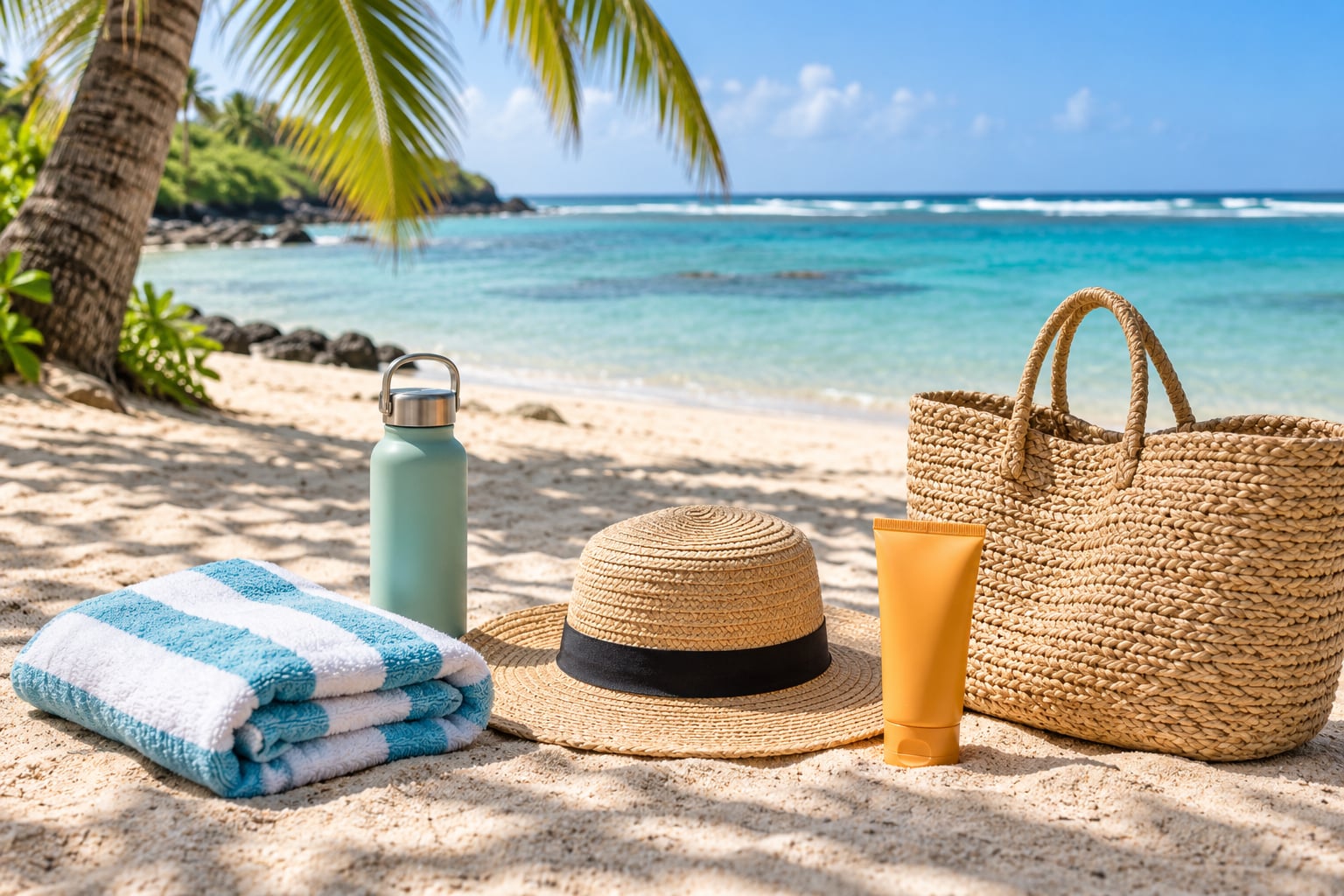
You need very little, and all of it fits in one tote. The list below is scoped to a half day rather than a full vacation, so there is no cooler the size of a suitcase and no inflatable flamingo.
- Water. A refillable bottle per person, filled before you leave. Hawaii runs hot and you will drink more than you expect.
- Sun protection. Reef-safe sunscreen, a hat that stays on in wind, and sunglasses with a strap so they do not end up in the surf.
- A base layer. Towel or sand blanket, a change of clothes, and a dry bag for wet swimwear.
- Food. Something that does not need a knife and a cooler: fruit, wraps, crackers, a sandwich. If you plan to eat at a table nearby instead, carry water and a snack only.
- Footwear and a cover-up. Sandals for hot pavement at the car park, plus something light for the walk from the car to the sand.
- A transport plan. Park-and-walk directions or the bus route saved on your phone before you set off, plus an offline map of the area.
Two things to check before you load the car: whether your beach has restrooms and an outdoor rinse shower, and what the surf and tide conditions are that morning. Local rules differ between islands and counties, so check the local beach authority or visitor centre rather than assuming last season’s rules still apply.
Step-by-Step: How to Plan a Half Day Beach Itinerary
1. Choose One Main Beach and Set a Realistic Start Time
Pick one beach and commit to it. Half days are too short for beach-hopping, because driving between two beaches on the same island can eat an hour of your window on its own.
Choose based on what you actually want to do. Calm water and a sandy entry suit families with small children. Reef and clear water suit snorkelling. A long walk with fewer people suits couples and solo travellers. A resort beach with rentals suits anyone who does not want to carry shade.
Then set a start time that works backwards from your finish time. If you need to be at dinner at 7:00 pm and the drive back takes 30 minutes, you are off the sand by 5:30 pm. Pick the arrival that makes that arithmetic true, then add 20 minutes for parking.
2. Build a Simple Four- to Five-Hour Timeline
Write the plan down as clock times before you leave. A five hour version looks like this, and you shift the whole thing earlier or later to match the sun and your window.
- 8:00 — Leave. Fill water bottles, confirm the route.
- 8:45 — Arrive and park. Do not rush this; parking is part of the day.
- 9:00–9:30 — Walk to the sand, set up base, apply sunscreen, get in the water.
- 10:30 — First break in the shade. Water, snack, sit down properly.
- 11:00–12:30 — Second block: swim, snorkel or play. This is the block that fills when shade is scarce.
- 12:30–13:30 — Lunch in the shade. This is your longest stationary hour.
- 13:30–14:30 — Flexible block: walk the shoreline, take photos, or a second short swim.
- 14:30 — Rinse, change, pack. Set an alarm for the last 20 minutes.
- 15:00 — Depart.
For a four hour window, cut the second water block and keep setup, one swim, lunch and one walk. For six hours, add an evening block at the other end of the day rather than stretching the middle, because the middle is when the sun is worst.
3. Decide What You Will Do at the Beach

Decide before you arrive. Half days have no time for a long debate about what to do next, and boredom at 11:00 is what pushes people into an early, unhappy exit.
Match the activity menu to the conditions and the group:
- Swimming or wading when surf is calm and there is a sandy bottom.
- Snorkelling or reef walking on a reef beach, ideally with fins rather than bare feet.
- Walking the shoreline at low tide, which is the best window for shells and for kids who hate deep water.
- Reading, cards or a nap under shade for anyone who has had a long morning already.
- Photography in the early light or the last hour, not at midday.
- Watching and eating for the group member who is perfectly happy doing nothing.
A rough split works well: about 40 percent water time, 30 percent shade, food and sitting still, and 30 percent that stays open. Families with toddlers want the open third reserved for naps. Keep one thing bookable as a fallback, since water conditions change.
4. Plan Shade, Food, and a Comfortable Break
The break plan is what separates a relaxed half day from an exhausting one. On a Hawaiian beach you have a short comfortable window for direct sun and a long one that needs shade, so shade is the resource you manage.
Look for natural shade first: a tree line, a lava wall, a building on the inland side of the beach. Umbrella and chair rentals are the fallback, and they work better when you reserve them before you set up rather than after.
Drink on a cadence, not when you feel thirsty. A few mouthfuls every 20 minutes does more than waiting until you are dry, and it matters more on a hot day with no breeze.
On food, eat at the sand only if you brought something simple. Eating at the sand when you did not bring food means paying a meal price, carrying it back through the sand, and losing 45 minutes. That is an expensive trade for a half day, so decide which one you are doing before you leave.
5. Check the Route Home and Leave Before the Day Gets Hot
Look at the exit before the entrance. Parking lots near the most popular beaches fill up well before they fill up at the beach itself, and leaving at peak hour can cost you more time than the whole drive out.
Check three things: whether parking is metered or permit-based and how you pay, whether the lot has a rinse shower or hose, and what the bus timetable looks like if you are not driving. Save the map offline, because mobile coverage is patchy on many beaches.
Then leave earlier than feels necessary. Heat peaks in the early afternoon, so a 2:00 pm exit is usually easier than a 4:00 pm one. If you have a flight, a dinner booking or a ferry in the evening, build a 30 minute buffer for the rinse and change, plus 20 minutes more than the usual drive for traffic near popular beaches.
Rinsing off matters more than it sounds. Dry sand on a car seat or in a suitcase is a problem you deal with for the rest of the trip, and a rinse shower at the car park takes two minutes.
Common Mistakes
Planning two beaches. Fix it by picking one and treating the second as a bonus only if the first runs early.
Scheduling every hour. A half day needs slack. Leave one open block and treat it as real time, not a gap to fill.
Forgetting water and sunscreen. Pack both before you leave the house, and reapply sunscreen every two hours and after swimming.
Ignoring surf conditions. Check the flags when you arrive and follow them. A double red flag means the water is closed to swimming, and rip currents do not care how strong you feel.
Assuming rules carry over from another island. Lifeguard hours, dog rules and access permits differ by county and beach. Ask locally.
Relying on a fixed clock. Tide, wind and crowd patterns shift. Keep the shape of the day and adjust the times.
Leaving no pause. Half days without a real seated break turn into the drive home feeling longer than the day did.
A few habits help more than any single trick. Pack the bag the night before. Set a single alarm for the pack-up window rather than a dozen reminders. Bring more water than you think. And decide the departure time first, since every other decision gets easier once the end of the day is fixed.
Frequently Asked Questions
How long should a half day at the beach be?
Four to six hours is the right window for a half day beach itinerary in Hawaii, and that figure includes the drive each way. Inside those hours, aim for roughly 90 minutes of water time, 60 to 90 minutes in the shade eating and resting, and the remainder as walking, photos or a second swim. Under four hours feels rushed once parking is counted.
What time should I arrive at the beach to get a good spot?
Arrive 20 to 30 minutes after the beach opens if you want a good stretch of sand without competing for it, and add more time on weekends and holidays. Beaches with rentals are easier at any hour since your spot is reserved. Mid-morning crowds peak between roughly 10:00 and 14:00, so if you dislike crowds, come early or plan your arrival for the last two hours before sunset instead.
Is 4 hours enough time at the beach?
Yes, four hours works well if you plan it tightly. Keep arrival and setup to 30 minutes, swim for 60 to 75 minutes, take a shaded lunch break of at least 45 minutes, then use the final stretch for a walk or a second short swim before rinsing off. Four hours gives you one proper swim rather than several, so choose a base spot close to parking to protect the window.
What should I pack for a half day at the beach?
Ten items cover almost every half day: water, sunscreen, a hat, sunglasses with a strap, a towel or sand blanket, a change of clothes, a dry bag for wet items, snacks, sandals, and a light cover-up. Add a rash guard and spare swimsuites for children, water shoes for rocky or reef beaches, and a jacket if you are staying past sunset. Keep it in one tote so pack-up takes two minutes.
Can I get to the beach without a rental car?
On most of the big islands the main beaches are reachable by public bus, and some beach areas have a free shuttle from resort and shopping centres. Buses are slower than driving and run less often, so factor extra time into a half day and check the return timetable before you commit. Taxis and rideshares fill in the gap when the last bus lands after you want to leave.
What do you do at the beach if it starts raining?
Rain in Hawaii is often short, so wait it out under an umbrella or at a sheltered table rather than driving home immediately. Heavy rain means check flash flood alerts and stay out of valleys, streams and low-lying coastal areas. Your fallback is the second half of the day: an air-conditioned attraction, a shopping centre, a museum, or an early sit-down meal on the far side of the weather.
Conclusion
Planning a half day beach itinerary comes down to five decisions made before you leave the house: one beach, a fixed window, a departure time, what you are doing there, and where the shade and food come from.
Start tonight. Pick the beach, check the tide and the surf flags, fill the water bottles and set a pack-up alarm. The rest of the day takes care of itself.