The best way to stay awake on a long night drive is to sleep a full night beforehand, stop for a real break every two hours, and pull over the moment you feel drowsy rather than waiting to see if it passes. Caffeine, cold air and loud audio buy you minutes, not safety, and none of them replace sleep.
Drowsy driving is genuinely dangerous, not just uncomfortable. The CDC estimates that roughly 15 to 33 percent of fatal crashes involve a drowsy driver, and the NHTSA reported about 91,000 police-reported crashes in 2017 involving drowsy driving, with around 50,000 injuries and 800 deaths. The uncomfortable part is that drivers usually cannot tell it is happening to them.
That last point deserves a name. A micro-sleep is a lapse lasting a few seconds to a few minutes during which you are not fully conscious and do not remember the road. You may come out of one fully alert, with no sense of having drifted, missed a turn or let the truck beside you drift too.
This guide walks through the practical routine: what to do before departure, how to pace the trip, what caffeine can and cannot do, and how to recognise the moment you should stop driving entirely. It is general road-safety information, not medical advice.
Table of Contents
- What You Need
- Step-by-Step
- How to stay awake on a long night drive before departure
- Use caffeine carefully
- Take a real break every two hours
- Keep the cabin bright and the route engaging
- Know when fatigue means stop
- Common Mistakes
- Frequently Asked Questions
- Can caffeine keep me awake while driving?
- How often should I stop during a long night drive?
- What are the warning signs that I am too tired to drive?
- Should I take a nap in my car during a road trip?
- Is loud music or an open window enough to prevent drowsiness?
- What should I do if I miss an exit or start drifting in my lane?
What You Need
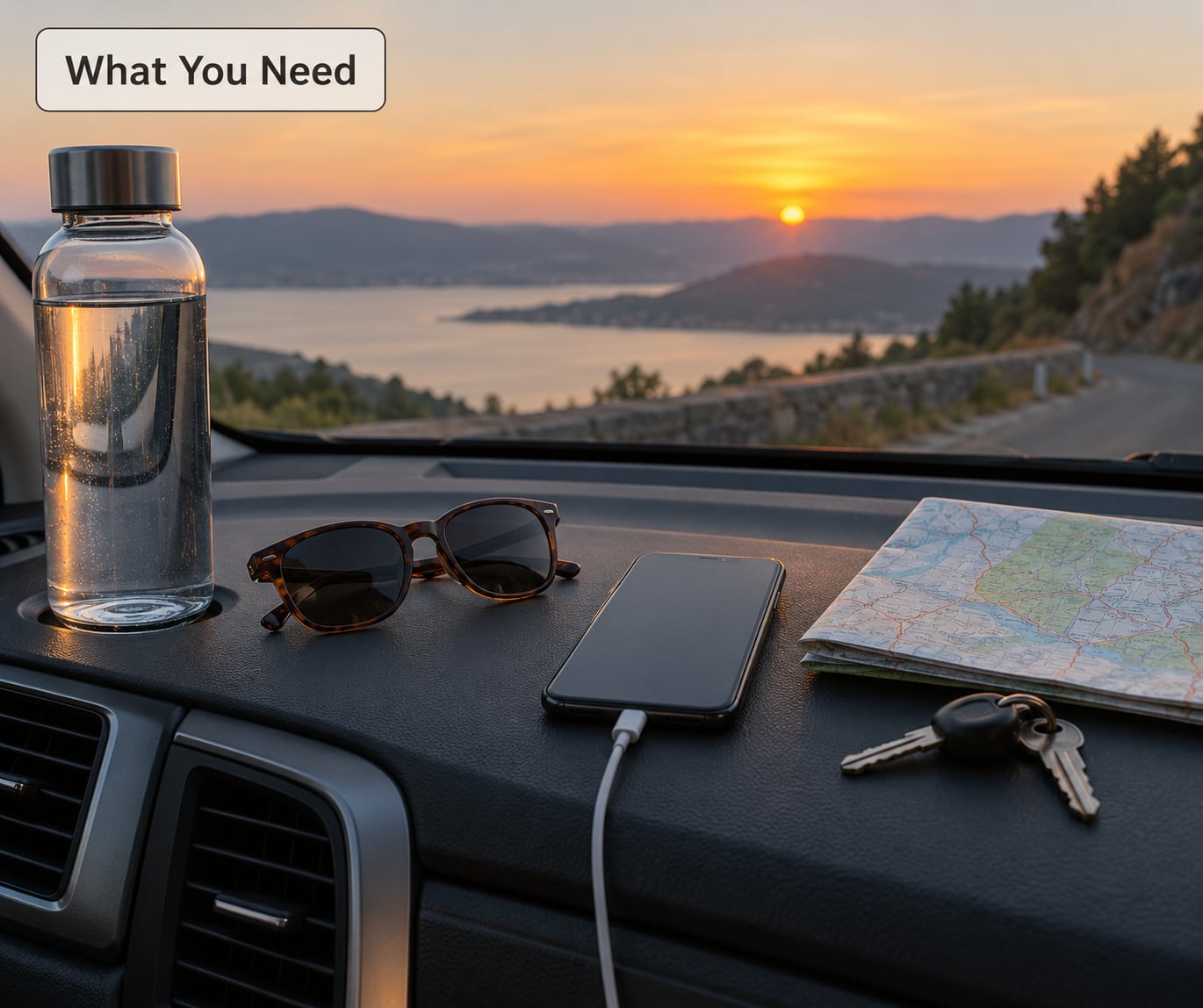
Most of the fight against drowsiness happens before the engine starts. Pack for alertness and the trip becomes much easier to manage.
- A rested schedule. Seven to eight hours of real sleep the night before. A short nap is better than nothing, but it is not the same thing.
- A checked vehicle. Tyre pressure, working headlights, fuel above a quarter tank, and a roadside assistance number saved in your phone.
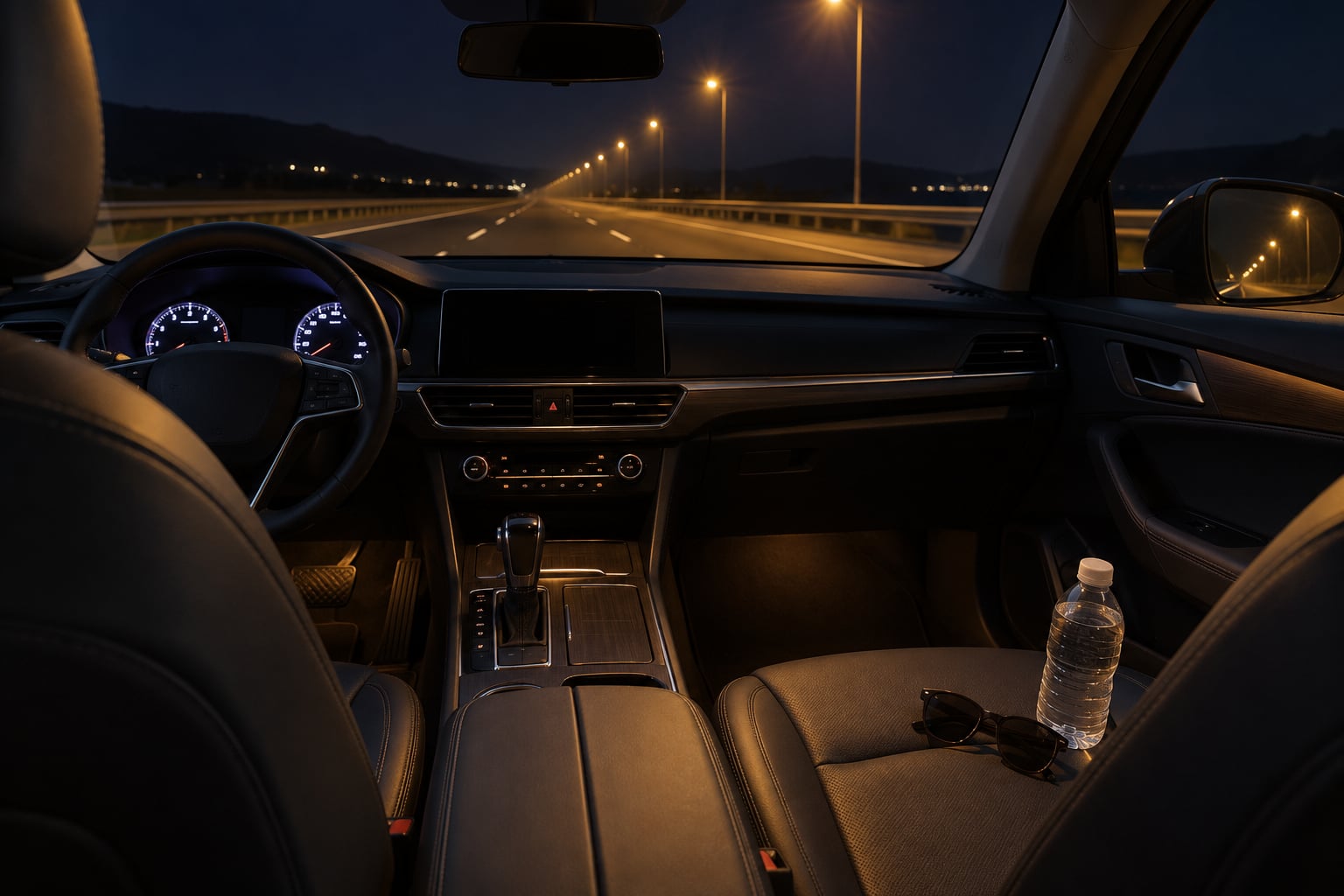
- Water. A litre per person for every two hours of driving, plus more if it is warm. Dehydration and drowsiness feel remarkably similar.
- Light food. Protein, complex carbohydrates, fruit. Nothing greasy, nothing heavy, and no large sugary meal right before you leave.
- Sunglasses. Even on an overcast night, glare off oncoming headlights is tiring, and squinting uses energy.
- A charger and a cable long enough to reach the back seat. A phone that dies is a navigation, music and emergency-contact failure at once.
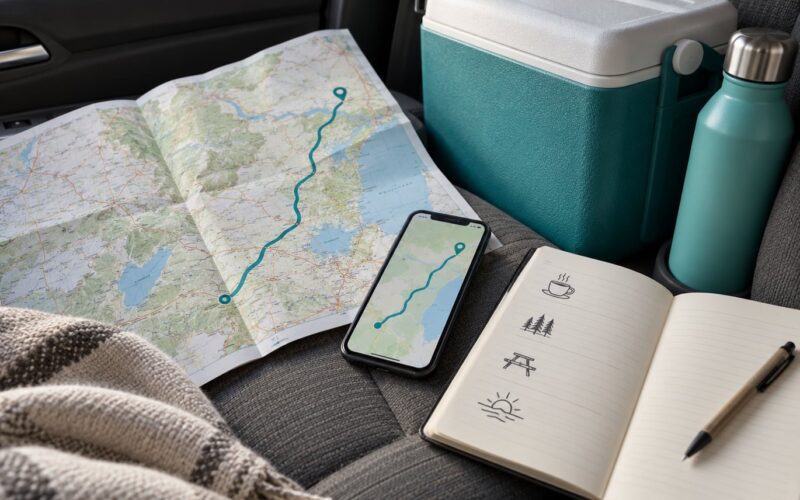
- A route shared with someone. Text a contact your route and your planned arrival time. Then set a check-in text a third of the way in and one at the two-thirds mark.
Spend five minutes on the tyre and light check. A breakdown at 2am is a much bigger fatigue risk than a missed exit, because it turns a two-hour stop into a four-hour one.
Step-by-Step
How to stay awake on a long night drive before departure
Leave at the right time and half the problem disappears. If you normally sleep between 11pm and 7am, starting your drive at 2am means fighting your own body chemistry for the entire trip.
Time the route so the genuinely hard stretch falls inside your waking hours where possible, and split anything past eight hours across two days with a real overnight stop. Eat a normal meal an hour or two before leaving rather than a fast-food stop at the kerb.
Before you pull away, tell someone where you are going and when you expect to arrive. If a check-in text goes unanswered, that person knows to raise it rather than assume you fell asleep at the wheel.
Use caffeine carefully
Coffee, tea and energy drinks take roughly 20 minutes to reach your system, which is why a cup poured right before a pit stop sometimes seems to do nothing at the time.
It buys alertness, not judgement. Moderate caffeine before a drive is a reasonable part of the plan, but it does not restore the reaction time that sleep provides, and its effect fades after a few hours. Drivers routinely describe feeling wired at 1am and then crashing hard on the last stretch.
Two rules keep it useful. Never combine it with alcohol, and never use it to argue your way past severe sleepiness. That second one is the dangerous habit, because caffeine is exactly what makes a microsleep feel like you are managing fine.
| Option | When it helps | The catch |
|---|---|---|
| Coffee then a 20-minute nap | You feel drowsy at a rest stop and have 20 spare minutes | Needs a real rest stop, not a shoulder at a junction |
| Coffee before departure | Early evening departure, driving into the small hours | Effect fades around three to four hours, often into a crash |
| Energy drink | Almost never worth it on a long drive | Sugar spike followed by a sharper drop |
| No caffeine at all | You are a light sleeper, or already past the point of usefulness | Harder, but you avoid the post-drive crash |
The coffee nap is the best-timed trick drivers use: drink the coffee, then nap for about 20 minutes so the caffeine starts working as you wake up. It reliably leaves you more alert than either the coffee or the nap alone.
Take a real break every two hours
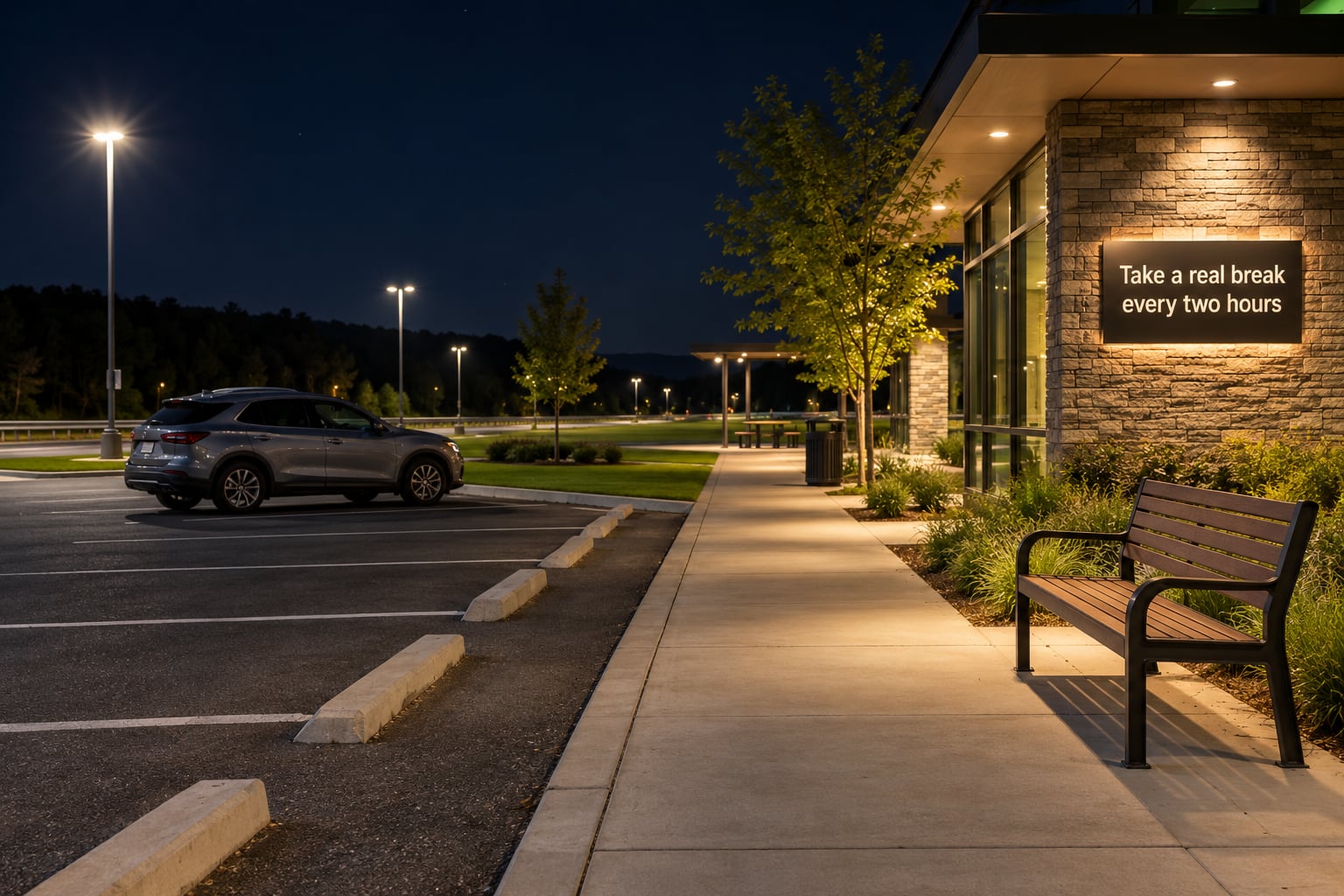
Stop every two hours, or roughly every 100 miles, whichever comes first. The point of the stop is to get out of the car, not to shift in the seat and change the radio station.
A useful break is 15 to 20 minutes of walking, daylight and water. Even in the dark, stepping outside resets posture, gets blood moving and gives your eyes a change of distance. Skipping a stretch because you are 20 minutes from the next town is a common and expensive mistake.
If you can pull into a rest area at about 4am, treat that as the nap opportunity. Set an alarm for 20 minutes so you do not slide into an hour of deep sleep and then drive groggy.
Keep the cabin bright and the route engaging
Crack the window or run the ventilation for fresh air, and keep the cabin cool rather than warm. Warm, still, stale air is a drowsiness recipe, and a little cold on your face genuinely helps for a short while.
Pick audio that uses the brain rather than backgrounding it. An audiobook, a podcast with a host you find interesting, or a long story all hold attention better than instrumental music or a playlist on shuffle. Singing along works too, especially on solo drives.
Clean, clear windows matter more than most people expect. A smeared windshield at night with oncoming headlights behind it is genuinely fatiguing to look through.
On a solo drive, the enemy is silence, so plan for it. Make a hands-free call, argue with a radio host, or run a quiz game. Whatever you choose, keep your hands on the wheel and your eyes on the road; the moment your attention moves from the road, the break has become a danger.
Know when fatigue means stop
Drowsiness does not arrive gradually enough to be reliable. It usually shows up as a series of small errors you explain away. Treat any one of these as a reason to pull over at the next safe place.
| What you notice | What it usually means | Do this now |
|---|---|---|
| Repeated yawning | Your body is trying to force a sleep cycle | Pull over and nap for 20 minutes |
| Heavy eyelids, eyes closing for a second | Micro-sleeps have already started | Stop driving immediately |
| Drifting toward lane lines | Attention lapsing for several seconds at a time | Safe stop now, not at the next exit |
| Missing exits or turnings | You were not processing the road | Pull over, reassess honestly |
| Blurred vision, trouble focusing | Sleep pressure is winning | Stop and sleep properly |
| Cannot remember the last stretch of road | A micro-sleep you did not notice | Do not resume driving tonight |
| Cold, clammy, irritable | Fatigue, sometimes mistaken for alertness | Rest, hydrate, then reassess |
Pulling over safely means easing off the accelerator, using the hazard lights, and getting out on the passenger side away from traffic if it is a dark or busy lay-by. Sit or lie down for 20 to 30 minutes; longer invites sleep inertia, the groggy stage that makes the first minutes after waking worse than not napping at all.
If you cannot remember the last few kilometres, do not start driving again. That gap in memory is the clearest signal there is.
Common Mistakes
Relying on loud music. Volume is not alertness, and after an hour it becomes white noise. If the music is the only thing standing between you and nodding off, you need a stop, not a louder playlist.
Cold air alone. A blast from the vent or an open window helps briefly and then wears off, and on a cold night it makes you stiffer and less responsive.
Skipping food or water. An empty stomach and mild dehydration both make the 3am stretch much harder. Sip steadily rather than downing a litre at one stop.
Mixed caffeine and alcohol. A single drink at a rest stop can undercut the caffeine entirely, and the combination is dangerous well beyond the point where you feel affected.
Pushing through drowsiness. This is the mistake that matters. Drivers who press on after noticing lane drift or a missed exit are the ones in the NHTSA numbers above. Being able to argue that you are fine is not evidence that you are.
Treating a break as a refuel stop. Two minutes at the pump does not reset anything. Get out, walk, drink water, and see some distance.
Starting a long drive on five hours of sleep. No amount of coffee offsets it. Delay the trip, share the wheel, or add an overnight stop. That is the only real fix.
A rough guide for planning: a 15-hour drive is manageable for a rested driver with planned stops, and a poor idea for anyone who has had a long shift, a flight, small children in the car, or an evening of drinks. In those cases, splitting it over two days usually costs less time than a crash does.
Frequently Asked Questions
Can caffeine keep me awake while driving?
Partly, and only for a while. Caffeine takes about 20 minutes to act and its effect fades over the following hours, often ending in a crash. It can improve alertness briefly but it does not restore the reaction time that sleep provides, so it is a support, not a substitute for rest. Never combine it with alcohol.
How often should I stop during a long night drive?
Every two hours, or about every 100 miles, whichever comes first. Make the stop 15 to 20 minutes long and get out of the car rather than staying seated. Walking, daylight and water do more for alertness than an audio change at the wheel. On an overnight run, plan the 4am window as your main nap stop.
What are the warning signs that I am too tired to drive?
Repeated yawning, heavy eyelids, eyes closing for a second, drifting toward lane lines, missing exits, blurred vision and cold clammy hands. The most alarming sign is not remembering the last stretch of road, which suggests a micro-sleep you never noticed. Any one of these means pull over at the next safe place.
Should I take a nap in my car during a road trip?
Yes, a 20 to 30 minute nap at a rest stop is one of the most reliable countermeasures to drowsiness. Set an alarm, recline the seat, and keep it under about 30 minutes so you avoid deep sleep and the grogginess of sleep inertia. Waking sharp from a short nap is usually safer than continuing when your attention has already started lapsing.
Is loud music or an open window enough to prevent drowsiness?
No. Loud music becomes background noise within an hour and masks fatigue rather than fighting it. An open window or air conditioning gives a short burst of alertness that fades quickly, and on a cold night it leaves you stiff. Both are reasonable additions to a planned stop, but neither replaces stopping every two hours or sleeping before departure.
What should I do if I miss an exit or start drifting in my lane?
Do not wait to see if it happens again. Ease off the accelerator, move to the nearest safe stopping place, and take a real 20 minute break with water and a walk. If you cannot remember the road you have just driven, do not resume the journey tonight. Share your route and arrival time with someone so someone else knows to check on you.
Start with the night before: seven or eight hours of sleep, or delay the trip. Then stop every two hours, get out of the car, and treat the first yawn or lane drift as the signal to pull over rather than something to push through. Everything else on this list is there to keep you comfortable while you do those three things properly.