A quiet place to work while traveling is any venue with a low noise floor, few people seated near you, dependable Wi-Fi, and a table you can spread a laptop across, ideally with somewhere private enough to take a call. In a city you have never visited, finding one takes about ten minutes of research and five minutes on the ground, and it starts by deciding what quiet means for the work in front of you.
Most guides answer with a destination list. That doesn’t help when you land in a place on a Tuesday for three days and need four focused hours before a meeting. This guide is about the process instead: how to scout, vet, test, and leave a quiet workspace you could go back to tomorrow.
Table of Contents
- What You Need
- Step-by-Step: How to Find a Quiet Place to Work While Traveling
- 1. Define what ‘quiet’ means for your work
- 2. Check the practical basics before committing
- 3. Search in the right order
- 4. Test the space with a short work block
- 5. Have a backup plan for bad connectivity or noise
- Common Mistakes
- Frequently Asked Questions
- Are libraries really the best free place to work while traveling?
- Is it okay to work from a café for several hours at a time?
- Is a coworking space day pass worth it on a short trip?
- How quiet does a place need to be for a video call?
- How do I tell if Wi-Fi will hold up before I buy a drink?
- Can I just work from my hotel room instead?
- Conclusion
What You Need
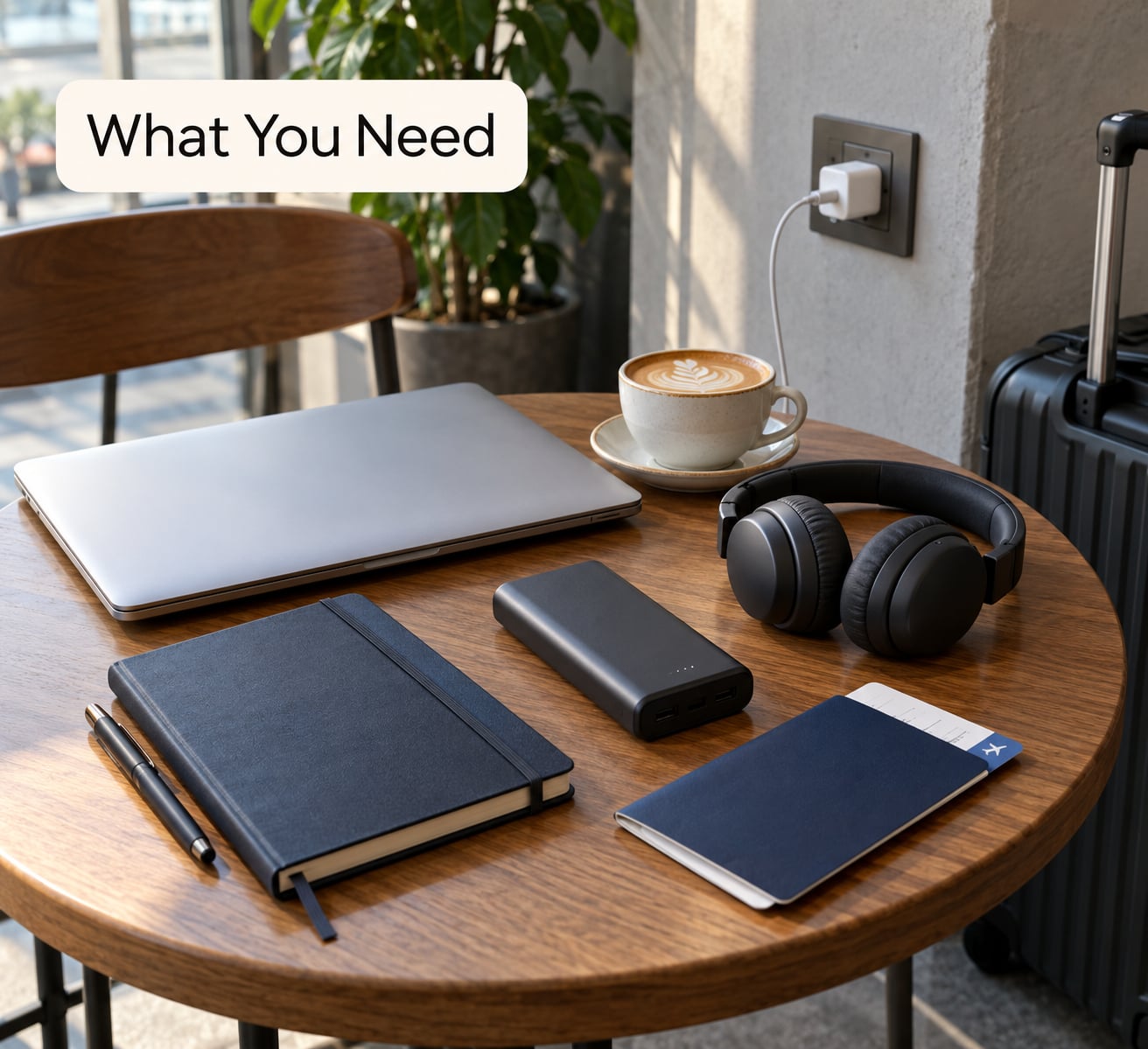
You do not need much, but you do need a few things that decide whether a venue works or wastes your morning.
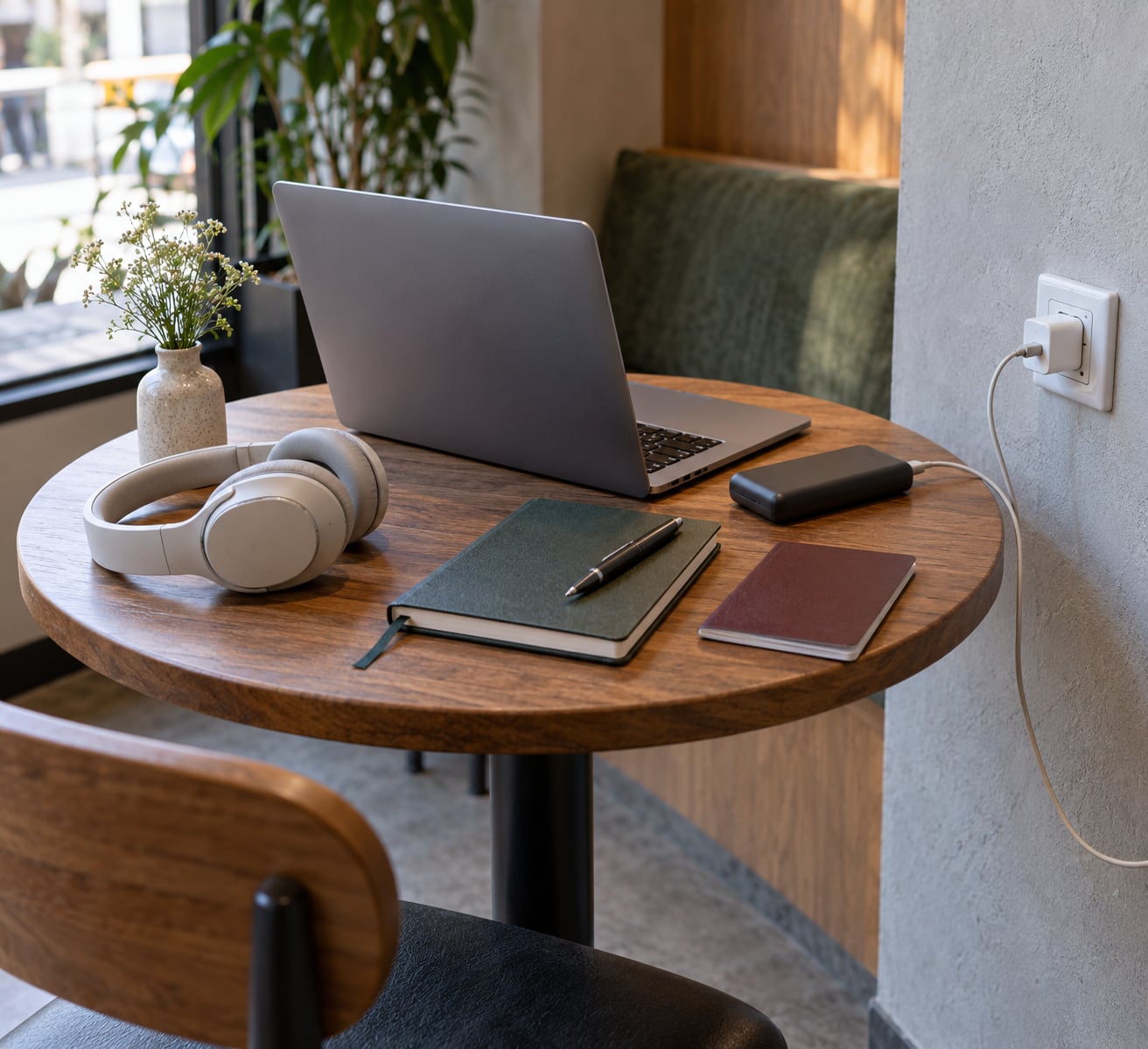
- A device with a full charge and a cable long enough to reach the floor. Seat position rarely lines up with the wall, so a short cable is the most common reason a session ends early.
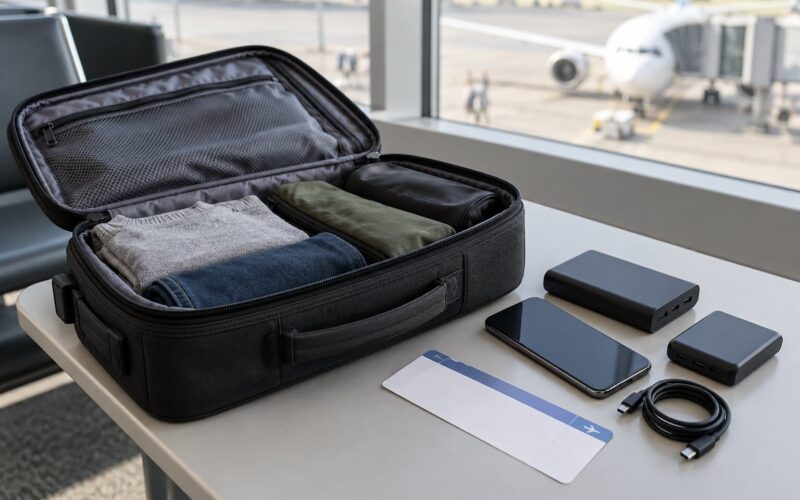
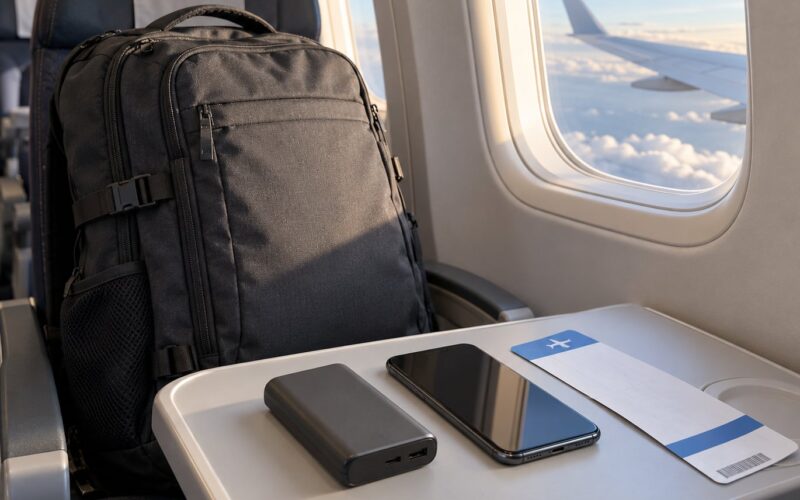
- A power bank as a backup. Venues without outlets will let you stay, they just will not let you charge.
- A second line of connectivity. A phone hotspot ready to switch to in about ten seconds turns a lost session into a slow one.
- Noise control. Noise-cancelling headphones for a café, plus a low background track or white noise app, because masking keyboard and chair noise works better than blocking it.
- A shortlist of venue types, not venue names. Decide now which categories fit your day so the on-the-ground search takes minutes, not an afternoon.
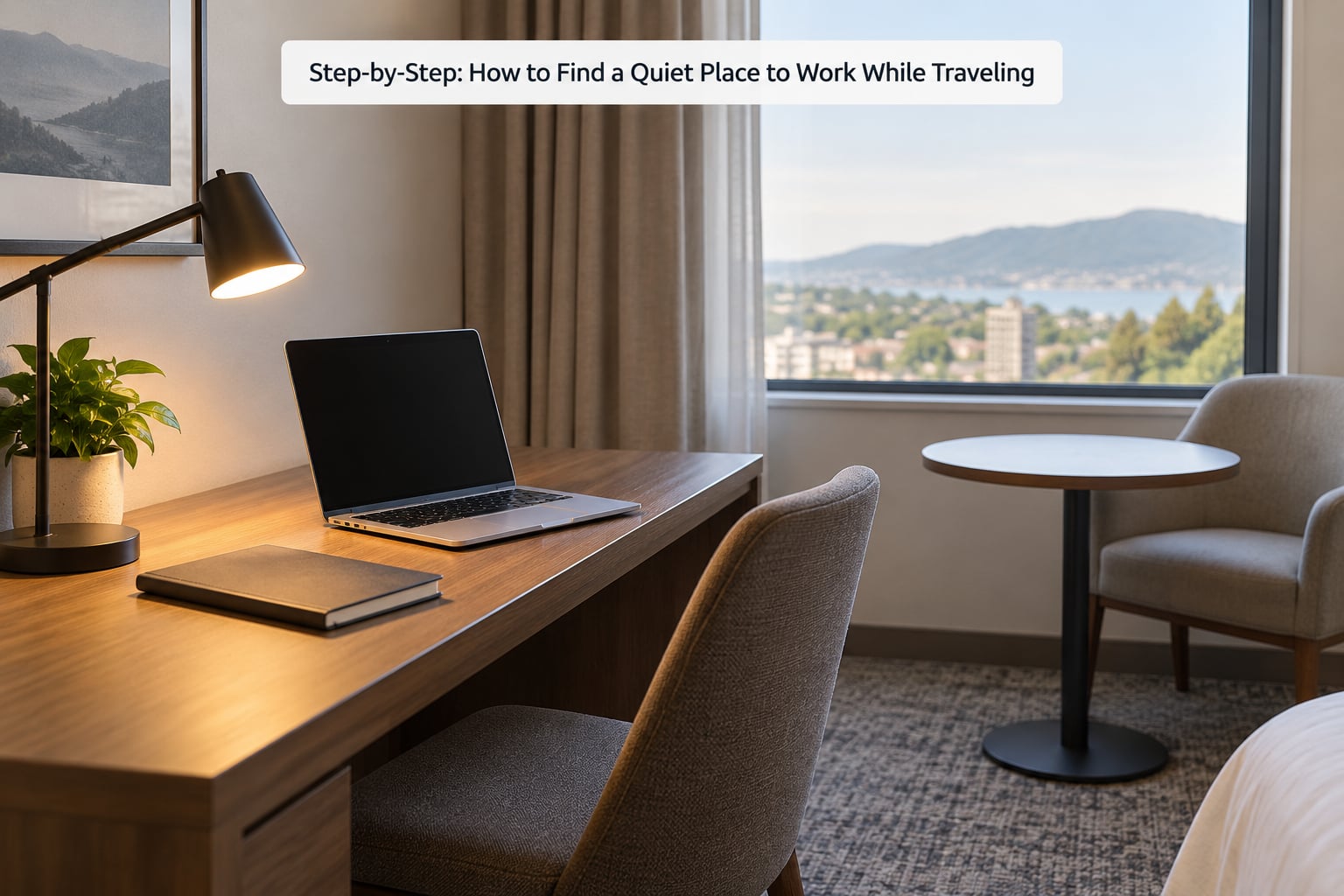
Two other preparations save the most time. First, find out whether your accommodation already has a usable desk; a hotel room or apartment with a real chair and a door is your free fallback and your call spot. Second, know how many hours you actually need. Two hours and six hours are completely different venue problems.
Step-by-Step: How to Find a Quiet Place to Work While Traveling
1. Define what ‘quiet’ means for your work
Quiet is not one thing. Before you search, name the session type, because the venue that suits a writing block will ruin a video call.
For writing, editing, or spreadsheet work, you want a low noise floor and you can tolerate a background hum. That opens up almost every café, most library reading rooms, and hotel lobbies after the breakfast rush clears.
For calls, you need a different thing entirely: somewhere your voice will not compete with a four-top argument or an espresso grinder. Look for a room, a corridor with a dead spot, a corner table against a solid wall, or simply the ten minutes between a peak and the next rush.
Write down three numbers before you leave the accommodation: how long you need, whether calls are involved, and how much noise you can tolerate. Everything after this step gets easier.
2. Check the practical basics before committing
Verify six things before you settle in: connection, power, seating, hours, time limits, and call policy.
Connection comes first because everything else is wasted without it. Run a speed test on the venue network rather than trusting the sticker, and pay attention to upload speed and latency if you will be on a call, since those are what break down first.
Power decides your ceiling. Find an outlet before you unpack the laptop, because a table near a window is no use at ninety minutes with eighteen percent battery.
Seating means a real chair, a surface that fits a laptop plus a notebook, and ideally a wall behind you. Hours and time limits decide whether you can finish a session, and many laptop-friendly cafés apply a soft limit that nobody enforces until they decide to enforce it. Call policy is the one people skip and regret: a venue can be genuinely quiet and still be a bad place to take a client call.
3. Search in the right order
Start with what is most reliable and work down to what is most flexible.
Your accommodation is first because there is no commute, no drink to buy, and no chance of being asked to leave. The second stop is the public library, which travelers consistently treat as the default free answer: usually quiet, staffed, and indifferent to how long you stay. Bring headphones anyway, because keyboards and phone calls are the two things a reading room tolerates worst.
Third is a coworking space with a day pass. Coworking is the only option that gives you a quiet floor, a phone booth, and a closed door for calls, and directories like Coworker and Desktime let you check the floor layout, the reported connection, and the hours before you walk across town.
Cafés come fourth. They are everywhere, they are flexible, and the good ones are genuinely laptop-friendly, but the variance between them is enormous. A university-area café around a library tends to be calmer than a train-station branch. Bookshops with reading areas and museum cafés sit between the library and the café and are often overlooked.
Last are outdoor and transit options: a park table, a hotel lobby, an airport lounge during a long layover. Lobbies work because nobody notices you, but check whether that lobby has a no-laptop rule. Hotels vary wildly, and the grand ones usually say yes while the small ones may not.
4. Test the space with a short work block
Give any candidate twenty minutes before you commit the afternoon to it.
Start with a real task rather than a test page. Open the document, the deck, or the repository you actually need and work for fifteen minutes. A slow connection shows up when you load something heavy, and a bad chair shows up by minute twenty, not minute five.
Then check the noise floor by turning your sound off for one minute. That is the honest reading of how loud the room is, without music covering it. If you need calls, walk the room now and find where you would stand, whether that is a corner, a stairwell landing, or a phone booth.
Finally, note the closing time and the minimum spend. A café that closes at six is useless for a late block, and a venue where a single coffee buys unlimited hours is a very different proposition from one where you are expected to keep ordering.
5. Have a backup plan for bad connectivity or noise
Assume the first venue will fail, because on most trips one of them does. Have a second option identified before you commit to the first.
If the connection drops, switch to the hotspot and move to text-based work rather than calls until it settles. If the room is too loud for the task you are on, move rather than fight it: a library reading room beats a café with a flat white, and the change costs ten minutes.
If a call lands badly, take it somewhere with a door and come back. If none of that works, do the offline part of the job: writing, outlining, reading, editing a document you already have locally. Travelers keep a deliberately offline block in the day for exactly this reason.
Once you find a spot that passes the test, save it. Note the name, the block of time it was quiet, and whether you had to wait for a seat. The second visit takes ninety seconds instead of an hour.
Common Mistakes
Choosing a venue from photographs. A styled interior tells you nothing about the noise at three in the afternoon or whether the outlets work. Photos sell rooms; reviews from locals sell working conditions.
Ignoring the call policy. This is the mistake that gets people asked to move or to leave. If a venue prohibits calls, do not plan to take one there, and do not quietly speak into a laptop at full volume in a reading room.
Arriving at the wrong hour. Most urban cafés are calm mid-morning before the lunch rush and loud at noon. Weekday mornings are the quietest hours a business district offers, and weekend mornings are usually the worst because families and tour groups have the same idea you did.
Missing the time limit. Some venues publish a limit, some enforce it informally, and a few enforce it only for people who never order a second drink. Ask at the counter when you arrive rather than finding out at closing.
Depending on a single connection option. The failure point on most trips is Wi-Fi, not noise. Keep a hotspot ready and know the mobile data situation before you land, since roaming and local plans behave very differently across borders.
Over-scheduling the venue on day one. Coworking day passes add up fast on a long trip, and members get irritated when tourists take the best seats all day. Use coworking for the day you truly need a phone booth, and use the library or your accommodation for everything else.
Treating your hotel desk as a workspace. Bedside tables and soft chairs wreck your back over a six-hour session. If you will be at the accommodation all day, bring a folding setup or move one block to a café for the long block.
Frequently Asked Questions
Are libraries really the best free place to work while traveling?
Yes, for most sessions. A public library usually has free Wi-Fi, real tables and chairs, and staff who do not mind how long you stay, and travelers consistently treat it as the go-to free option. The catch is a reading-room rule against food and drink, so plan your coffee break for outside. Hours are shorter than cafés and staff will ask you to pack up when they close, so save it for daytime work rather than an evening block.
Is it okay to work from a café for several hours at a time?
Usually, but it depends on how the café sees laptops. Look for one that describes itself as laptop-friendly or has a work area, ask at the counter about time limits on arrival, and order something and keep it going. What gets people moved on is taking calls at full volume, spreading across a small table for one drink, or staying through the rush without a second order. Give back more than you take in noise.
Is a coworking space day pass worth it on a short trip?
Worth it on the days you need privacy, and not much else. A day pass buys you the two things cafés cannot give you: a quiet floor where phone calls are expected and a phone booth or meeting room for client calls. If your trip is two or three days with mostly writing and editing, the library and a café will carry you. If you have several calls in one day, or need a reliable upload for a demo, the pass pays for itself in saved hours.
How quiet does a place need to be for a video call?
Quiet enough that your voice is the loudest thing in the room. Ambient hum from a café will not ruin a headset call, but a conversation at the next table will, because listeners pick up voices faster than broadband noise. Sit with your back to a wall, avoid tables under speakers or the espresso machine, and check whether the venue has a booth or back room before your call, not during it.
How do I tell if Wi-Fi will hold up before I buy a drink?
Run a speed test on the venue network before you order, and read upload speed and latency rather than download. Download looks fine and then a video call stutters because the upload side is thin. If the connection is capped or shared with every other guest, assume it will degrade as the room fills. Some venues throttle after a block of time, so for a long session a hotspot on your own plan is the safer bet.
Can I just work from my hotel room instead?
For calls and admin, yes, and it is the safest option in an unfamiliar city. For deep work across a full day, a soft chair and a bedside table will catch up with you, and the room’s tight for calls if anyone is sharing it. The best pattern is a hybrid: hotel for calls and short blocks, a library or café for the long focus stretch, and the room for anything sensitive that you would not want on a café screen.
Conclusion
Start with the one reliable quiet option nearest your accommodation and test it before you need it. Check the connection, find an outlet, listen for one minute without sound, and write down when it is calm. Once that one works, you have a shortlist of fallbacks for every kind of bad day, and finding a quiet place to work while traveling stops being the thing you plan around.