Learning how to budget for a cross country drive comes down to three numbers: total miles, your real cost per mile, and the number of days you will be on the road. Get those settled first, price the big categories against them, hold back a contingency reserve, and you will know what the trip costs before you commit a dollar to a nonrefundable booking. The whole exercise takes one evening with a spreadsheet.
Most budgets fall apart in the same places: mileage is underestimated, lodging taxes and parking never make the list, and the emergency money quietly gets spent by day four. The method below fixes each of those before you leave.
Table of Contents
- What You Need
- Step-by-Step: How to Budget for a Cross Country Drive
- 1. Estimate the Route and Total Mileage
- 2. Price the Vehicle and Fuel Costs
- 3. Budget for Overnight Stops and Lodging
- 4. Estimate Food, Activities, and Local Transportation
- 5. Reserve the Big Expenses
- 6. Add an Emergency Fund and a Daily Cap
- 7. Recheck the Budget Before and During the Trip
- Common Mistakes
- Frequently Asked Questions
- How much should I budget per day for a cross country drive?
- Should I budget for hotels or campgrounds on a road trip?
- How much money should I keep as an emergency fund for a long drive?
- How do I account for tolls when budgeting a road trip?
- What costs should I pay for before leaving on a cross country drive?
- Conclusion
What You Need
None of this is complicated, but every item has to be settled before the costing works. Gather these ten things and the arithmetic takes about an hour.
- A fixed route with your origin, your destination, and the realistic overnight stops between them.
- Travel dates, including exactly how many nights you will spend on the road rather than at the destination.
- Your vehicle’s real highway fuel economy, not the number on the window sticker.
- Current average fuel prices for the states you will cross, not a single national figure.
- A lodging plan showing which nights are booked, which are flexible, and what you will pay at each.
- A daily mileage cap that reflects what a driver can genuinely handle, not what the schedule allows.
- Insurance and roadside assistance details, so you know which costs are already covered.
- Two emergency contacts who know your route and your vehicle.
- A spreadsheet with one column per cost category and a running total column.
- A fixed currency amount for the reserve that stays out of the daily spending pool.
Step-by-Step: How to Budget for a Cross Country Drive
Seven steps, in this order, produce two outputs: a route-level cost estimate and a daily spending limit. Do them in sequence, because each step feeds the next. Mileage drives fuel, fuel plus nights drives the daily split, and the daily split is what you actually live within.
1. Estimate the Route and Total Mileage
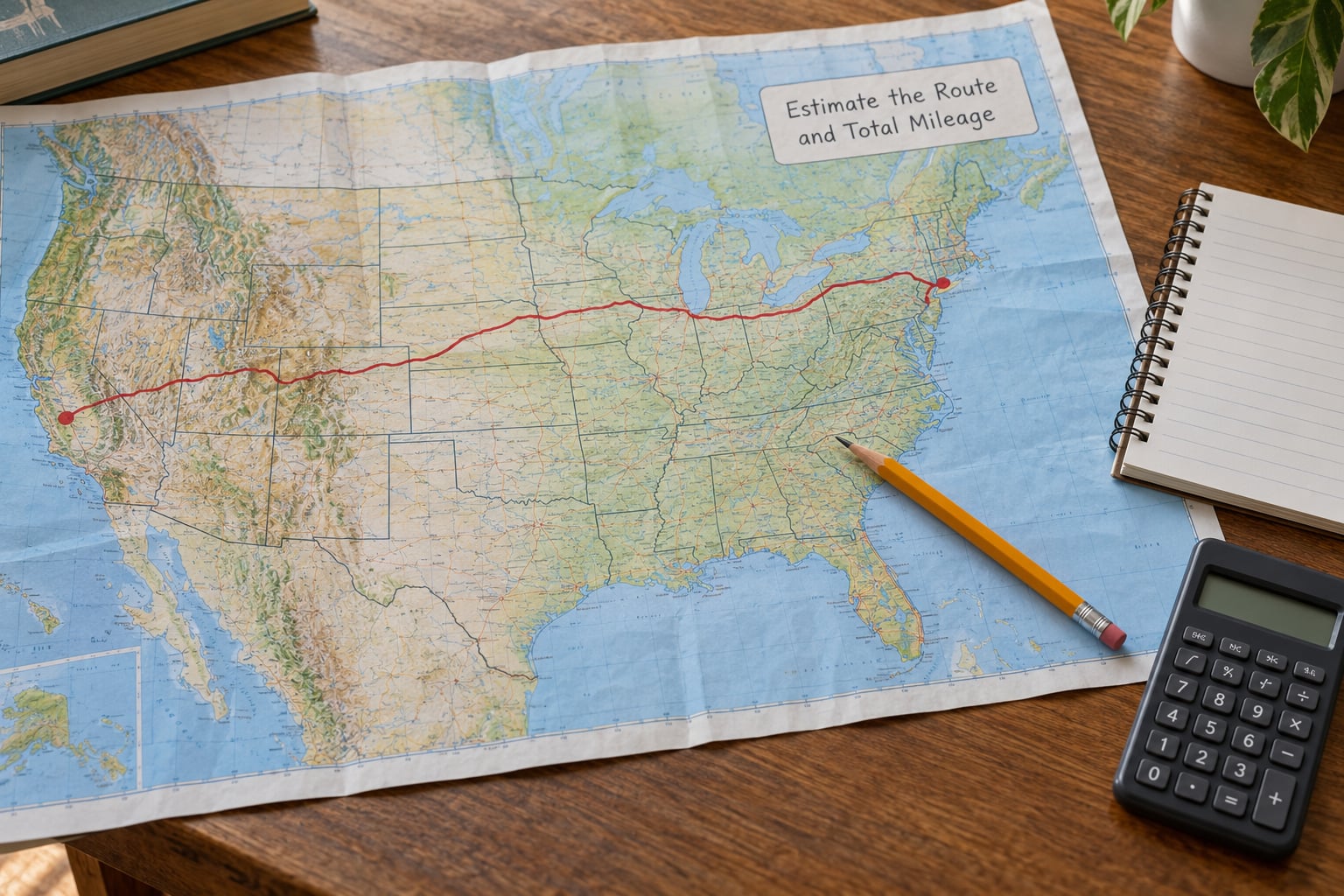
Plot your origin, your destination, and the towns you realistically want to sleep in between them. The route planner gives you the driving distance; that number is your base mileage.
Then add an allowance. Most cross-country itineraries pick up eight to fifteen percent in detours, city traffic, grocery runs, a detour to see something worth seeing, and the odd wrong turn at night. A base figure of 3,200 miles becomes 3,500 or so once that allowance is applied, and fuel, wear, and toll exposure all follow from the larger number.
Write the adjusted mileage down once. Every cost per mile calculation in the rest of the budget divides into it, and that keeps your numbers consistent.
2. Price the Vehicle and Fuel Costs
Fuel is the easiest line to calculate and the easiest to get wrong, because most people use the sticker economy figure. Use the real one. Fill the tank, drive a long highway stretch, fill it again, and divide the miles between them by the gallons used. That is your working highway number.
The formula is simple: total miles ÷ miles per gallon = gallons needed. At 3,500 adjusted miles in a car that returns 25 miles per gallon, you are looking at 140 gallons. Multiply by the average per-gallon price along your route and you have a fuel line.
Use regional averages rather than one national number. West Coast and Mountain West fuel typically runs a dollar or two per gallon above Midwestern fuel, and fuel taxes vary state to state, so a route through expensive states deserves a higher line than a Midwestern route of the same length. Price tracking apps show current station-level prices along your route and have saved travelers several tenths of a gallon consistently.
Add ten percent to the fuel line for idling in traffic, climbing grades, cold weather, headwinds, and the vehicles that never quite match their rated economy. Electric drivers use the same structure in reverse: estimate kilowatt-hours consumed, multiply by the network rate at your charging stops, and add the session fees that many networks charge per hour or per visit.
3. Budget for Overnight Stops and Lodging
Work down a tier list rather than picking a single nightly rate. Dispersed camping on public land sits at one end with no charge and no services; established campgrounds with showers and hookups sit above that; roadside motels and budget chains sit in the middle; mid-range hotels and vacation rentals with kitchens sit at the top.
The number of nights multiplies the nightly rate, so this is usually the largest single line in the budget. Pick your tier, count the nights, and multiply. Then add what the advertised rate leaves out: lodging taxes, resort or destination fees, parking charges, pet fees, and booking service charges can add twenty to thirty percent on top of the nightly figure, especially in tourist-heavy destinations.
Balance cost against rest and safety. A driver who sleeps four hours in a parking lot to save one night’s lodging will blow the budget on fatigue-related mistakes later. Set a maximum nightly rate in advance and let that number, not the scenery, decide where you stop.
4. Estimate Food, Activities, and Local Transportation
Budget food per day rather than per meal. A grocery-and-cook day runs a fraction of a day spent eating at every stop, and a traveler who eats out three times a day can spend several times more than one who splits the difference. Pick one sit-down meal a day as your rule and treat the rest as groceries, fast stops, and snacks.
Include the small stuff that quietly adds up: coffee, water, snacks, an ice cream stop, and the occasional treat that keeps a long day bearable. For a family, multiply the per-person figure by the number of eaters, then add a shared grocery run.
Local transportation is its own line. Cover parking and tolls, plus rideshare or transit in cities where you park once and walk, and any attraction you plan to visit. Buy park and attraction passes before you go rather than at the gate, where you pay the highest rate and sometimes the next tier up.
5. Reserve the Big Expenses
Some costs land before departure, and those are the ones that catch people out because they never appeared in a daily estimate. Set aside funds for the rental vehicle if you are renting, including the one-way return charge, which is typically several hundred dollars. Budget a pre-trip inspection, an oil change, and tire service if either is due, and check that your spare or repair kit is sound.
Tolls deserve a line of their own. Some corridors are toll-free, others can run fifty to a hundred dollars across a single state, and the Northeast, Chicago, and Florida are the usual offenders. If you have a transponder, budget it.
Depreciation is the cost nobody budgets and everybody pays. A typical used vehicle loses roughly eight to twelve cents per mile, so 3,500 miles carries a real cost that will show up at trade-in or sale. Dividing that by your days makes it feel honest, and it also settles the question of whether renting or shipping your car makes more sense for a relocation. One analysis posted in r/TransportSupport laid out the driving-versus-shipping math for a California-to-New-York move and found that once depreciation is counted, driving and shipping plus a flight land in the same territory.
Decide what to prepay and what to leave flexible. Insurance, nonrefundable lodging, annual passes, and rental vehicles go on the card early. Fuel, food, parking, and attractions stay flexible until the day you spend them.
6. Add an Emergency Fund and a Daily Cap
Set a contingency reserve equal to ten to fifteen percent of everything above, then move it out of reach. A separate account or an envelope is the simplest way; the point is that it is not part of your daily number.
Then compute the daily cap: (total funds minus the reserve minus prepaid costs) ÷ number of days. That figure is what governs a normal day, and it covers fuel, food, parking, and the small purchases that never make a plan.
Track against it nightly, not weekly. Weekly checks let a bad Tuesday hide inside a good weekend. And never trim the cap to cover essentials, which means never trading away fuel, food, shelter, or maintenance to fund an evening out. If the cap is genuinely too low for the route, fix the route or the number of days rather than the safety items.
7. Recheck the Budget Before and During the Trip
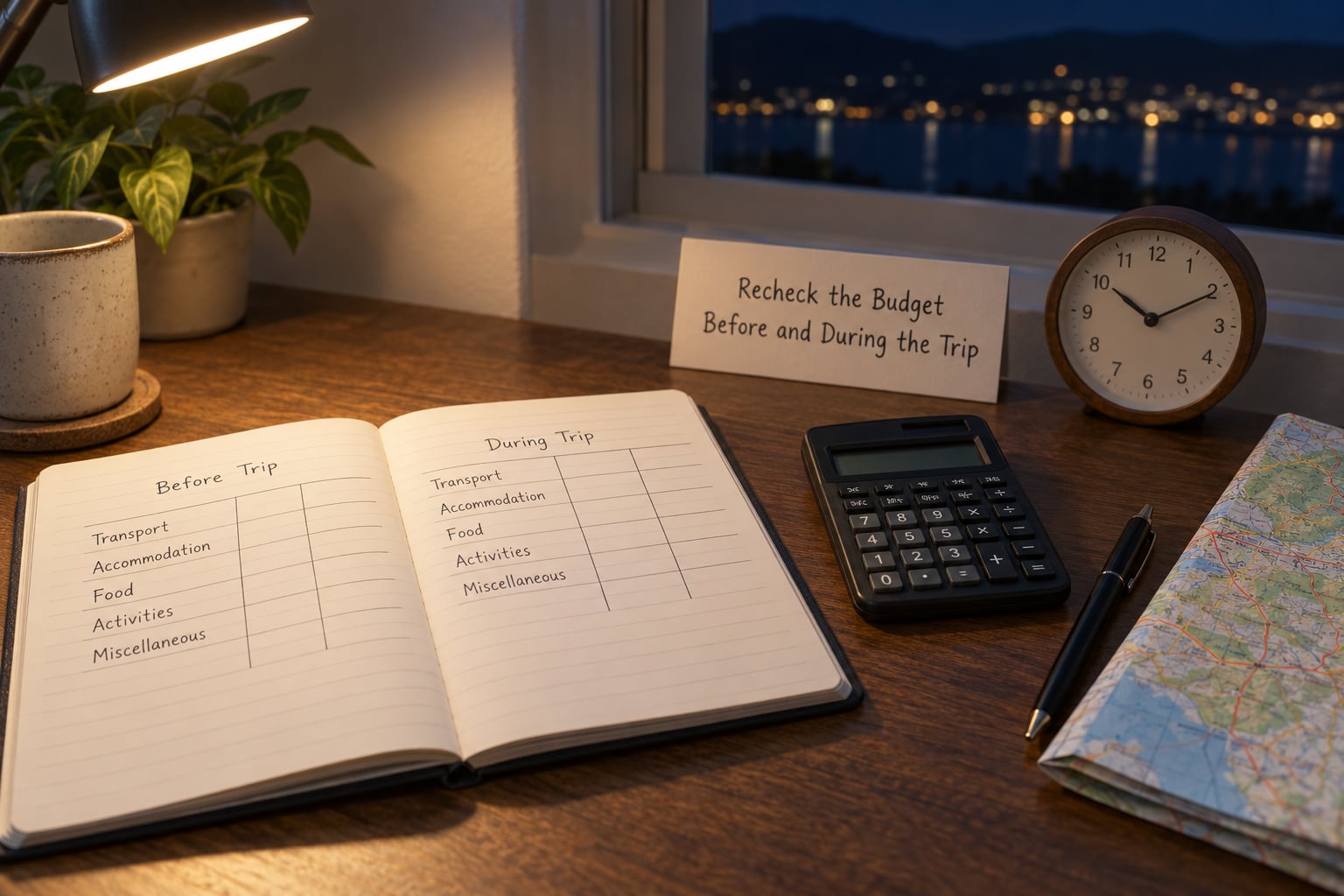
Seven days out, refresh the fuel averages and re-check lodging for any night that is still flexible. Fuel prices move weekly in most regions, and a reservation you can still cancel is worth repricing against a cheaper option down the road.
Each evening, compare what you actually spent against the daily cap and log it in one column. Two things matter: categories that run consistently over, and categories you never spend anything on. Correct the first by adjusting later days, and the second by moving that money into the reserve.
Protect the tail of the budget. The last two days of a cross-country drive are the most expensive per day because you are tired, you want a nice dinner, and you still need gas to get home. Keep enough untouched to cover fuel, food, shelter, and a safe route back, and if you are running low, cut the optional line rather than the return.
Common Mistakes
Every one of these shows up in the same shape across trip forums, including r/roadtrip and r/solotravel threads where travelers post their final numbers after the fact. Each has a straightforward fix.
Underestimating mileage. People budget the number on the map and then drive fifteen percent more. Fix: add your detour allowance before you divide anything, and re-estimate each morning from that night’s actual position.
Using sticker fuel economy. The window sticker is optimistic, and highway driving with a loaded car and roof gear is worse. Fix: track two full tanks yourself and use that number. If you never get around to it, use the more conservative figure from the beginning.
Forgetting taxes, fees, and parking. The advertised nightly rate is not what you pay, and city parking has blindsided travelers in the $30-to-$50-per-night range. Fix: add a quarter on top of lodging and keep parking as a visible line rather than an afterthought.
Booking too many expensive nights. A single resort weekend in the middle of a two-week trip skews the average badly. Fix: set a nightly ceiling and treat it as a routing rule, not a preference.
Budgeting nothing for vehicle trouble. Tires, air conditioning, and brakes fail far from home, and labor runs higher out there. Fix: reserve a specific amount in step five before departure, not from what is left over at the end.
Spending the contingency early. It becomes a nice dinner in day four, and then the reserve is gone with half the country left. Fix: hold it in a separate place, and treat any use of it as a signal to re-plan rather than a spending category.
Ignoring fatigue and safety. Pushing for extra miles to save a night’s lodging trades money for risk. Fix: cap daily mileage in the plan, count overnight stops around that cap, and accept that the shelter line is a safety purchase.
Frequently Asked Questions
How much should I budget per day for a cross country drive?
Work it out from your own route rather than a generic figure. Cost the whole trip first: fuel from miles divided by MPG, lodging from nights multiplied by your nightly rate, food from a daily per-person number, plus vehicle costs, tolls, parking, and activities. Then subtract your reserve and prepaid costs and divide the remainder by your days. That daily number is your real limit, and it will vary a lot between a camping trip and one with mid-range hotels.
Should I budget for hotels or campgrounds on a road trip?
Budget the tier you will actually use, all the way through, and mix them if you want. Campgrounds and dispersed camping on public land cost less and often cost nothing, but they add setup time and rarely include hot showers. Budget motels are the middle path and usually include parking. Hotels and rentals with kitchens sit at the top but buy you rest and the ability to cook. Add taxes, resort fees, and parking on top of any nightly rate you price.
How much money should I keep as an emergency fund for a long drive?
Ten to fifteen percent of your total trip budget is a sensible reserve for a multi-day cross-country run, and more if you are driving an older vehicle, travelling solo, or routing through remote stretches. The most common claims are tires, air conditioning, and unplanned repairs, which cost more away from home. Keep the reserve separate from your daily spending pool so it survives the trip instead of disappearing in the first week.
How do I account for tolls when budgeting a road trip?
Check your route for tolled sections before you leave, then price the worst plausible total rather than the optimistic one. The Northeast, the Chicago area, and Florida tend to be the expensive ones, and some corridors add fifty to a hundred dollars in a single state. Budget the higher of your two route options, use a transponder if you have one, and keep cash or a second card in the car for lanes that reject cards.
What costs should I pay for before leaving on a cross country drive?
Pay for anything nonrefundable or price-sensitive in advance: rental vehicles and their one-way return charge, travel insurance, prepaid lodging for the nights you know you need, annual park or attraction passes, and any vehicle service that is due. Leave fuel, food, parking, and day-to-day spending flexible until you actually spend it. Booking early locks the large fixed costs and frees your attention for the route.
Conclusion
Start by confirming your route and your adjusted mileage, then price the two variables that dominate: fuel and overnight stops. Add vehicle costs, tolls, food, and activities, set aside a ten to fifteen percent reserve you cannot reach, and divide what is left by your days to get a daily cap. Do that before you book anything nonrefundable, and you will know exactly which bookings are safe to make and which ones to hold until the numbers settle.