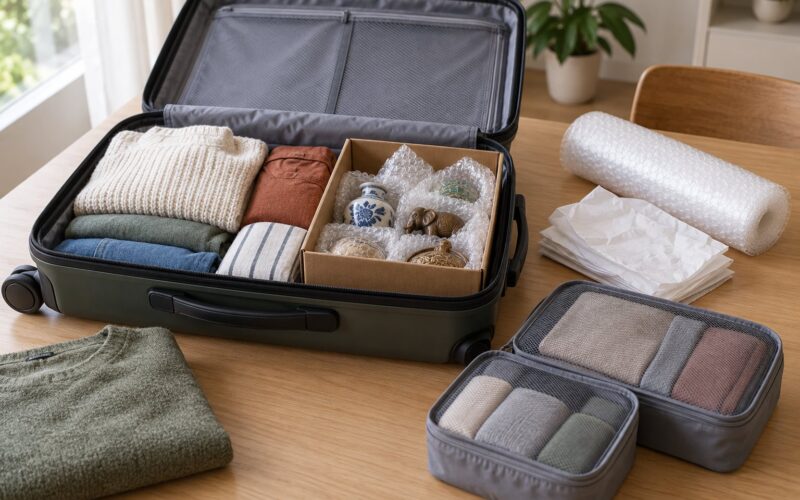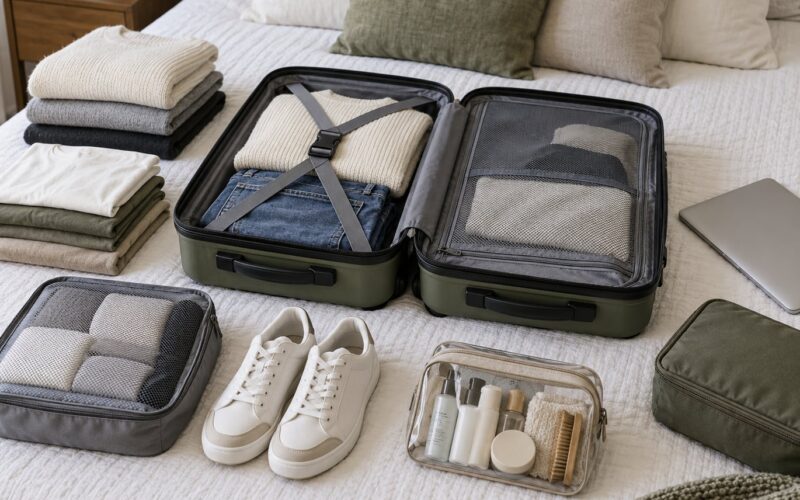
Planning a beach vacation with a baby is mostly about building the trip around one small person who cannot regulate heat, cannot complain about a sunburn, and naps on a schedule you do not control. Pick a destination with calm shallow water, reliable shade and a short journey from your bed, book accommodation with a kitchen and flexible cancellation, then plan two short beach sessions a day instead of one long one.
The whole thing takes about two weeks of planning before you leave. A day trip to your local shore needs less. The difference is usually transport and shade, not the packing list.
Table of Contents
- What You Need to Plan a Beach Vacation With a Baby
- Paperwork and practical details
- Health and medication
- Shade and sleep gear
- Clothing
- Step-by-Step
- Step 1: Choose a Baby-Friendly Beach Destination
- Step 2: Pick Dates and Book Around Your Baby’s Routine
- Step 3: Confirm Transportation and Baby Equipment
- Step 4: Pack a Lightweight Baby Beach Kit
- Step 5: Build a Flexible Beach Day
- Common Mistakes
- Frequently Asked Questions
- When is it too soon to take a baby to the beach?
- How do you get a baby to nap at the beach?
- What should I pack for a beach day with a baby?
- Where can I take my baby on vacation?
- Can beach sand affect a young baby?
- What is the 3 6 9 rule for babies?
- Conclusion
What You Need to Plan a Beach Vacation With a Baby
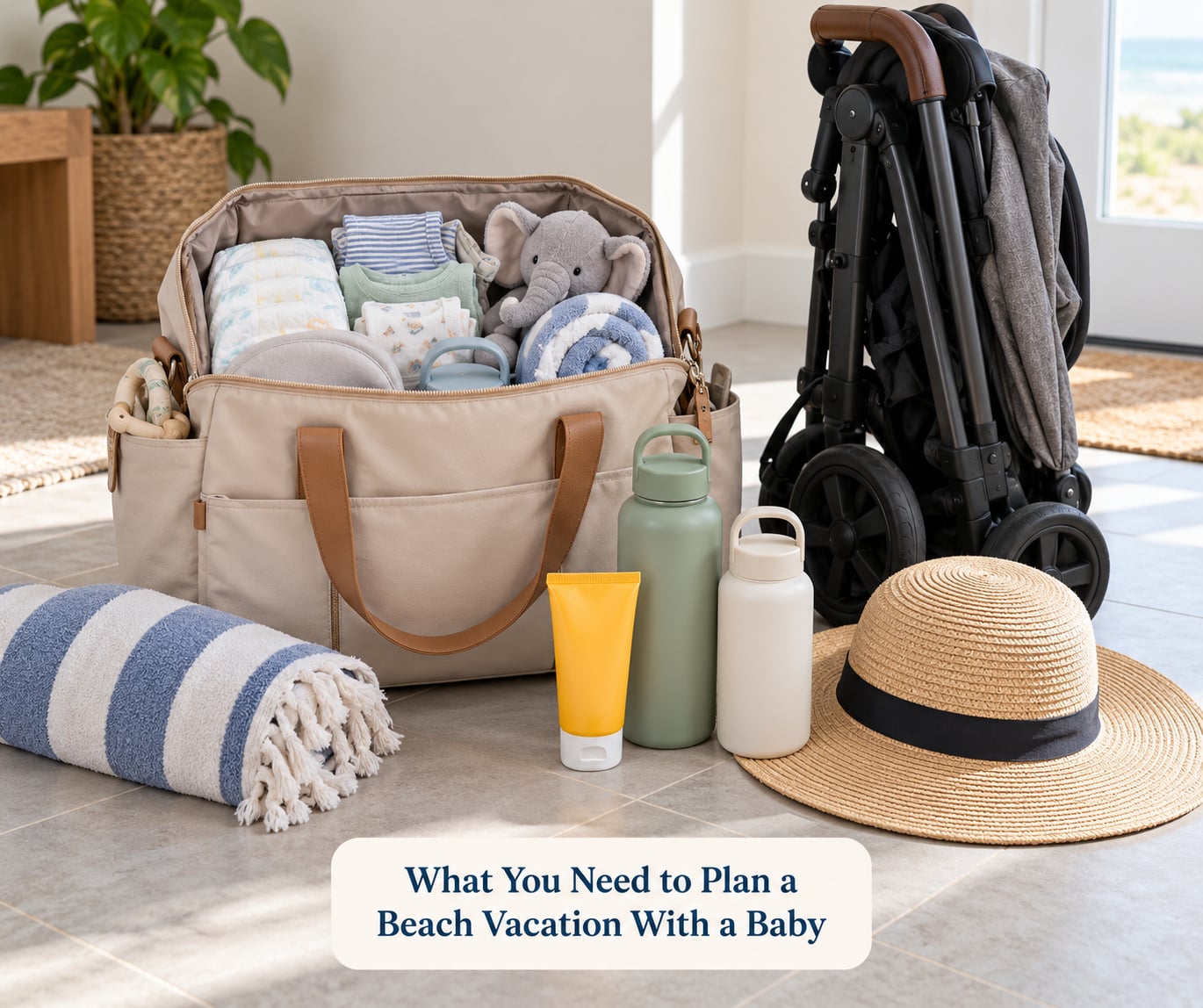
You need four things sorted before you book anything: paperwork, health information, gear, and a written plan for shade and transport. Most beach trips fall apart because one of those four is missing on arrival.
Paperwork and practical details
- Passport or birth certificate copies, kept separately from the originals.
- Health insurance details and the address of a pediatric clinic near where you are staying.
- Your baby’s feeding schedule in writing, so a partner, grandparent or resort staff can follow it.
- The address of your accommodation, the nearest hospital, and the local emergency number saved in your phone.
- Airline and hotel confirmation details, offline in case you lose signal.
Health and medication
Pack enough of every regular medication for the trip plus three extra days, in original packaging with labels. Include any antihistamine, saline drops, teething gel or paracetamol suspension you have already used and discussed with your pediatrician, plus a small first aid kit with plasters, antiseptic wipes, sterile gauze, tweezers and a digital thermometer.
Photograph the medication box so a pharmacist or urgent care can read the dose if the original gets lost. For anything specific to your baby, ask your pediatrician before you go and note the answer.
Shade and sleep gear
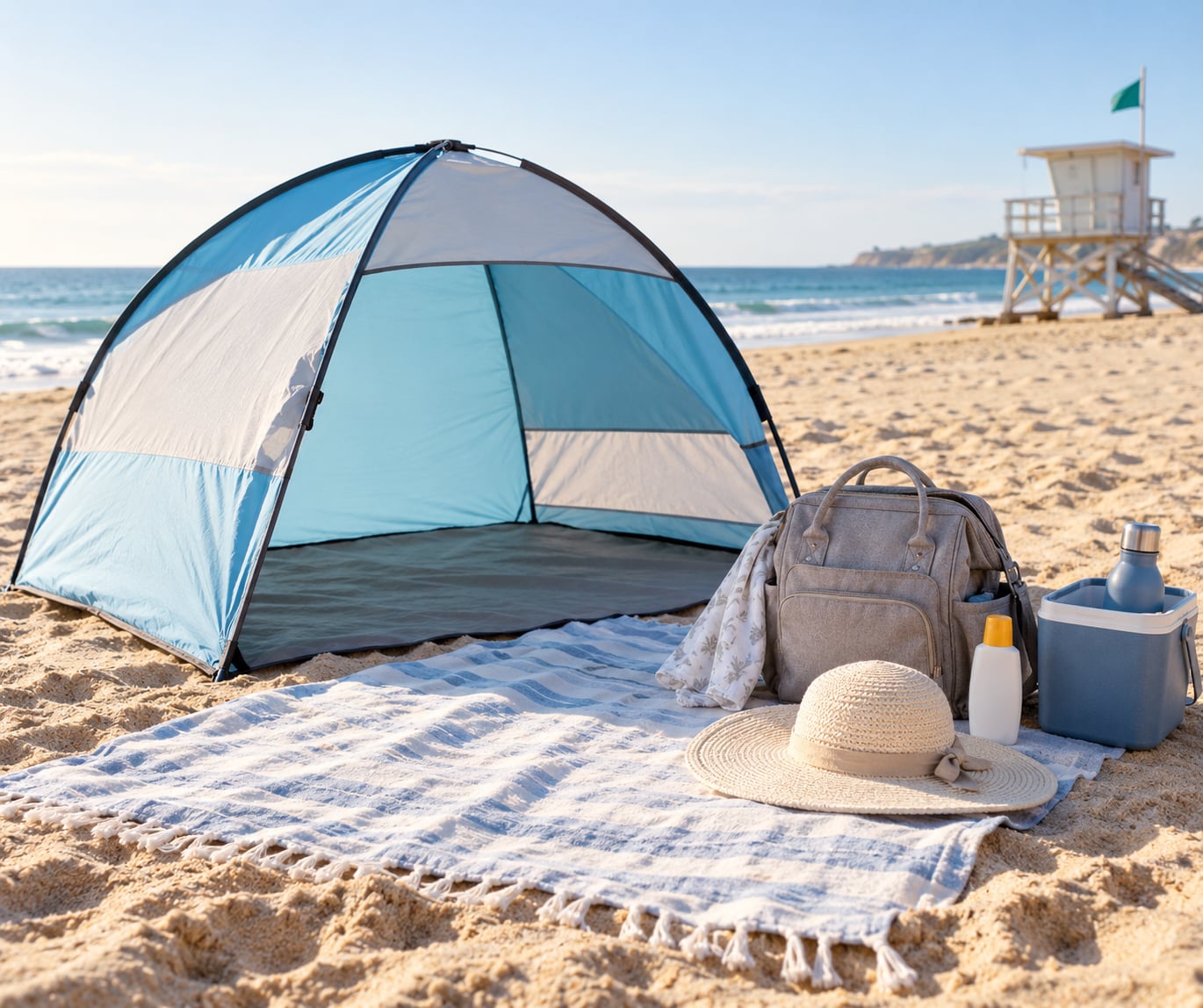
A pop-up beach tent that both adults can sit inside is the single most useful item. Add a small clip-on fan with bendable legs, a fitted sheet for the cot, and a light blanket for air conditioning and evening wind. Skip the full canopy; parents on forums repeatedly report umbrellas and canopies flipping in wind while pop-up tents stay put.
Clothing
Lightweight long sleeves with a UPF rating, one or two wide-brim hats with adjustable chin straps, a sun hat that fits over the baby’s head, and swim diapers. Bring one more outfit than you think you need, because everything gets wet twice a day.
Step-by-Step
Step 1: Choose a Baby-Friendly Beach Destination
A baby-friendly beach is not about sand quality. It is about short travel time, calm water, shade you can rely on, and medical care within a short drive.
Work through these factors in order:
- Travel time. Anything under three hours door to door changes the trip. Parents on r/Parenting and community.whattoexpect.com repeatedly describe short road trips as the trips that worked, while long-haul flights turned into a week of jet-lagged feeding.
- Water conditions. Check for lifeguards, gradual entry, minimal shore break and a flag system. Red flag days mean no water, so know your indoor backup before you fly.
- Shade. Look for lifeguard stations with canopies, a beach with trees or dunes, or a wide, deep stretch of sand that holds a tent at the edge.
- Facilities. Public restrooms with a changing table, drinking water, and somewhere to wash hands decide how many hours you actually spend on the sand.
- Medical care. Within 30 minutes is comfortable for most families. If your baby has any ongoing condition, get the name and address of the nearest children’s hospital before you book.
- Room size and kitchen access. A room with a fridge, a kettle and a laundry room means you can sterilise bottles, store formula and wash salty swimsuits instead of living out of a minibar.
Step 2: Pick Dates and Book Around Your Baby’s Routine
Choose dates that avoid school holiday crowds and that give you a spare day after arrival. The single most common mistake is landing at 6pm after a full travel day and then trying to enjoy a holiday nobody slept through.
Book accommodation with free cancellation until a week before arrival, so you can shift dates if your baby has a cold, a teething spike or a vaccination appointment. Ask for a room away from lifts, corridors and a restaurant terrace if your baby is a light sleeper.
Check the weather history for your target week before you commit. A trip with two indoor fallback options beats a perfect forecast you cannot rely on.
Step 3: Confirm Transportation and Baby Equipment
Transport is where most family trips go wrong, so decide it before you pack. Keep a small day bag with everything you reach for in the first hour, and put the rest in checked luggage.
For flying, check whether your car seat can fly in an aircraft seat or has to be gate-checked, and read the airline’s allowance for that. Strollers are usually gate-checked free of charge, so pack it as a last-minute item rather than a checked one. Parents recommend wearing the baby in a front carrier through the airport so your hands stay free, and warn against front-row seats because there is no floor space for the bag you dig through thirty times.
For driving, bring a travel bag that attaches to the car seat harness so nothing has to be handed back to you at a border or car park.
On the ground, check three things: is there a lift or ramp from the lobby to your room, how do you get from the room to the sand, and what is the backup when the shuttle stops running. Single-wheel beach strollers roll well on packed sand and hard-packed lines close to the water; they sink in soft dry sand. Strollers on boardwalks and paved paths are easier than carrying everything.
Step 4: Pack a Lightweight Baby Beach Kit
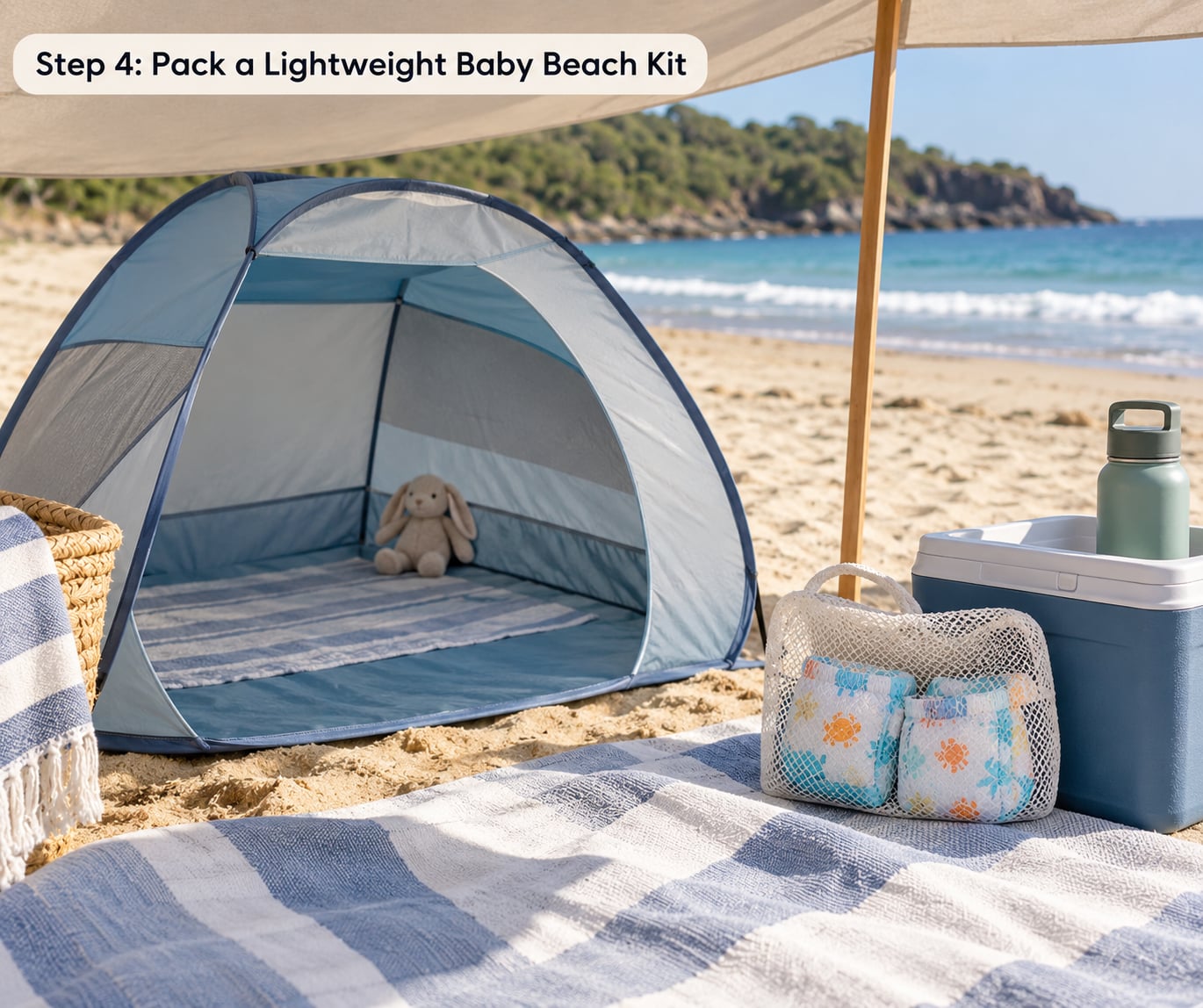
The kit is one tote bag. If an item does not fit in it, it stays home. Overpacking is the thing parents regret most, because carrying more gear means less time actually at the beach.
Group the pack by what you will reach for:
- Feeding. Enough bottles or formula for the day plus two spare, a feeding pillow, insulated bottle, and a bottle of water for you.
- Diapering. Diapers counted for the day plus four, wipes in a plastic dispenser, a changing mat that folds flat, swim diapers, talc-free baby powder for a dry change, and a mesh laundry bag so damp gear lives in one place.
- Sleep. Your usual white noise machine if your baby uses one, a travel blanket, a sun hat, and a light muslin for shade. Freezing water bottles overnight into solid blocks doubles as extra shade and a cold surface to set a cooler on.
- Sun protection. Wide-brim hat, UPF long sleeves, and sunscreen. For babies under 6 months, the American Academy of Pediatrics recommends shade and protective clothing as the first line; ask your own pediatrician about sunscreen on exposed skin before you go.
- Comfort. Cool washcloths, a misting fan, water shoes for shells and hot sand, a change of clothes, and a small first aid kit.
- Clean-up. A fitted sheet thrown over the beach blanket to catch sand, a broom or brush for the cot, and cornstarch for dry sand in the car seat grooves.
Step 5: Build a Flexible Beach Day
A beach day with a baby runs on two short sessions, not one long afternoon. Sixty to ninety minutes of sand and water, then a long shaded break, then an optional second session before the evening feed.
Arriving before 10am gets you cool air, calmer water and a nearly empty beach. Set up base camp once: tent anchored on the windward side, blanket underneath, cooler and diaper bag inside the tent rather than at the tent edge, which is where sand ends up.
Keep the first ten minutes for water. Fill the bottle, change a diaper, apply sun protection to exposed skin, and check the lifeguard flag. Then let your baby dig with a shovel and a cup while you sit in the shade. Sand in the mouth is a constant; a wide-brim hat and a firm “no” work better than cleaning it out.
Build a feeding and nap break into the middle of the day, in the tent, not the car. Many babies will fall asleep anywhere they have been a few times, so the tent is where practice happens. When wind rises, rain moves in or the temperature climbs, switch to the indoor plan without treating it as a failed day. The aquarium, a museum, a shaded promenade lunch and a nap are all legitimate beach-day content.
Common Mistakes
Packing like you are moving house. Overpacking is the most common regret in beach parent forums. One tote bag per baby, and anything that needs a separate bag stays home. You can buy sunscreen, nappies and water anywhere near a beach.
Building a schedule with no slack. An itinerary built hour by hour fails the first time a nap runs late, which it will. Plan the shape of the day and let the timing move inside it.
Counting on resort childcare. Resort kids clubs are usually age-banded and often exclude children under three, and drop-off times rarely fit a feeding schedule. Confirm the minimum age and the ratio in writing before you book anything, and plan to keep your baby with you.
Choosing a beach for the photos instead of the baby. A wide empty stretch of sand 20 minutes from anywhere beats a famous beach with a two-hour transfer and a car park fee.
Skipping the water and sun rules. Babies under 6 months should stay out of direct sun and use shade and clothing. Once sun protection is in use, reapply on schedule rather than when skin looks pink. Stay within arm’s reach of your baby in the water, and remember that a calm-looking shoreline can drop away fast. Lifeguarded, flagged and shallow-entry beaches are worth the extra drive.
Not planning breaks. A fussy baby in the heat is usually overheating, not spoiling. Shade, a cool washcloth on the neck and wrists, and a feed fix most of it in minutes.
Frequently Asked Questions
When is it too soon to take a baby to the beach?
Babies can visit the beach from the first weeks, as long as they stay out of direct sun and are kept in shade. The American Academy of Pediatrics advises shade and protective clothing as the first line of defense for babies under 6 months, so plan short morning sessions, bring a pop-up tent and ask your pediatrician about sunscreen on exposed skin. There is no medical rule against the beach itself; the care needed is about heat and ultraviolet exposure.
How do you get a baby to nap at the beach?
Naps happen at the beach more often than parents expect, because the movement, sound and warm air are all mildly sleepy. Set up a pop-up tent, bring your usual blanket or white noise machine, and use the rest time after the first beach session as nap time in the tent rather than fighting for a car seat. Keeping naps close to your home schedule helps, and most babies will sleep through white noise and gentle breeze without noticing the sand.
What should I pack for a beach day with a baby?
Pack one tote bag with feeding supplies, diapers plus four spares, wipes in a dispenser, a folding changing mat, swim diapers, a wide-brim hat, UPF long sleeves, sunscreen, a pop-up tent, a water bottle, cool washcloths, water shoes, a change of clothes and a small first aid kit. A fitted sheet over your blanket catches most of the sand, and a mesh laundry bag keeps damp gear in one place. Anything that needs its own bag can be bought near the beach instead.
Where can I take my baby on vacation?
Pick somewhere within about three hours of home, with calm shallow water, lifeguards, reliable shade, restrooms with a changing table and a children’s hospital within roughly 30 minutes. Warm shallow water in the shoulder season works better than a long flight to somewhere exciting, because travel time is the part babies handle worst. If you fly, choose a direct route and give yourself a recovery day on arrival before doing anything planned.
Can beach sand affect a young baby?
Sand is not usually harmful, but grains irritate skin and eyes, and everything ends up in the mouth. Brush dry sand off before rinsing, use a cool washcloth for the face and hands before every feed, and keep a hat on to reduce the sand that falls in. Choose a fitted sheet or sand-free mat as the play surface, and offer a shovel and bucket so digging replaces hand-to-mouth exploration. Rinse off before bed so grit does not end up in the diaper.
What is the 3 6 9 rule for babies?
The 3, 6, 9 rule is a screen-time guideline for development, not a beach travel rule. It describes what many babies are typically able to do at three months (track a face and focus on colors), six months (roll over, sit with support, babble) and nine months (crawl, pull to stand, understand simple words). Parents often meet it in search results while researching the first ocean trip. It is worth knowing, but it does not change when a baby can go to the beach.
Conclusion
Planning a beach vacation with a baby comes down to three decisions: a calm destination within a short journey, accommodation with shade and a kitchen that you can cancel cheaply, and a beach day shaped around one nap and two short sessions. Everything else is a detail you can buy sunscreen, nappies or water for on the day.
Start tonight by picking two candidate beaches and checking the medical care and shade for each. Once the base is booked, pack one tote bag and let the rest go.