How to avoid jet lag on a westbound flight comes down to four things you can time, not four things you can buy: delay your body clock deliberately, switch to destination time at the gate, chase light at the right end of the day, and protect your first night on the ground. Start three to five days out and most travelers arrive functional.
Westbound means flying into a time zone behind you, so your clock has to move later rather than earlier. That single fact changes everything about the advice. The generic “stay hydrated and get some sun” lists out there are mostly written for people flying east, and they are close to backwards for you.
Table of Contents
- What You Need Before You Fly West
- Why Westbound Flights Are Different From Eastbound
- Step-by-Step: How to Avoid Jet Lag on a Westbound Flight
- Shift Your Sleep Before the Flight
- Set Your Watch to Destination Time
- Use Light and Caffeine Deliberately
- Plan the In-Flight Day Around Your New Clock
- Protect Your First Night at the Destination
- Know When Jet Lag May Need Medical Advice
- Your Day-by-Day Adjustment Timeline
- Common Jet Lag Mistakes on a Westbound Flight
- Frequently Asked Questions
- How long should I adjust my sleep schedule before a westbound flight?
- Should I stay awake for the entire destination day after landing?
- Does sleeping on the plane always help with westbound jet lag?
- Can melatonin reduce jet lag on a westbound flight?
- How can travelers prevent jet lag on a long flight with a stopover?
- When are jet lag symptoms serious enough to see a doctor?
- Conclusion: Start With the First Two Adjustments
What You Need Before You Fly West
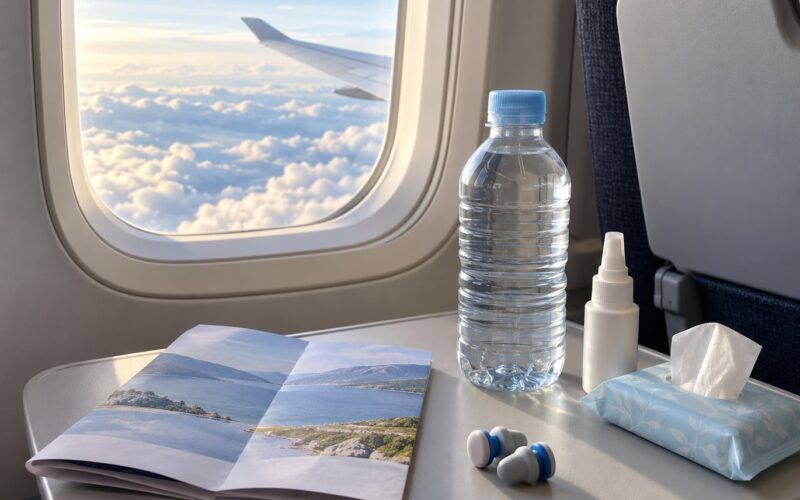
Nothing here is exotic. Every item below exists to buy you control over light, sound and time, which are the three things that actually move a circadian rhythm.
- An adjustable alarm. This is the single most useful thing on the list, because you need to wake at deliberately awkward hours.
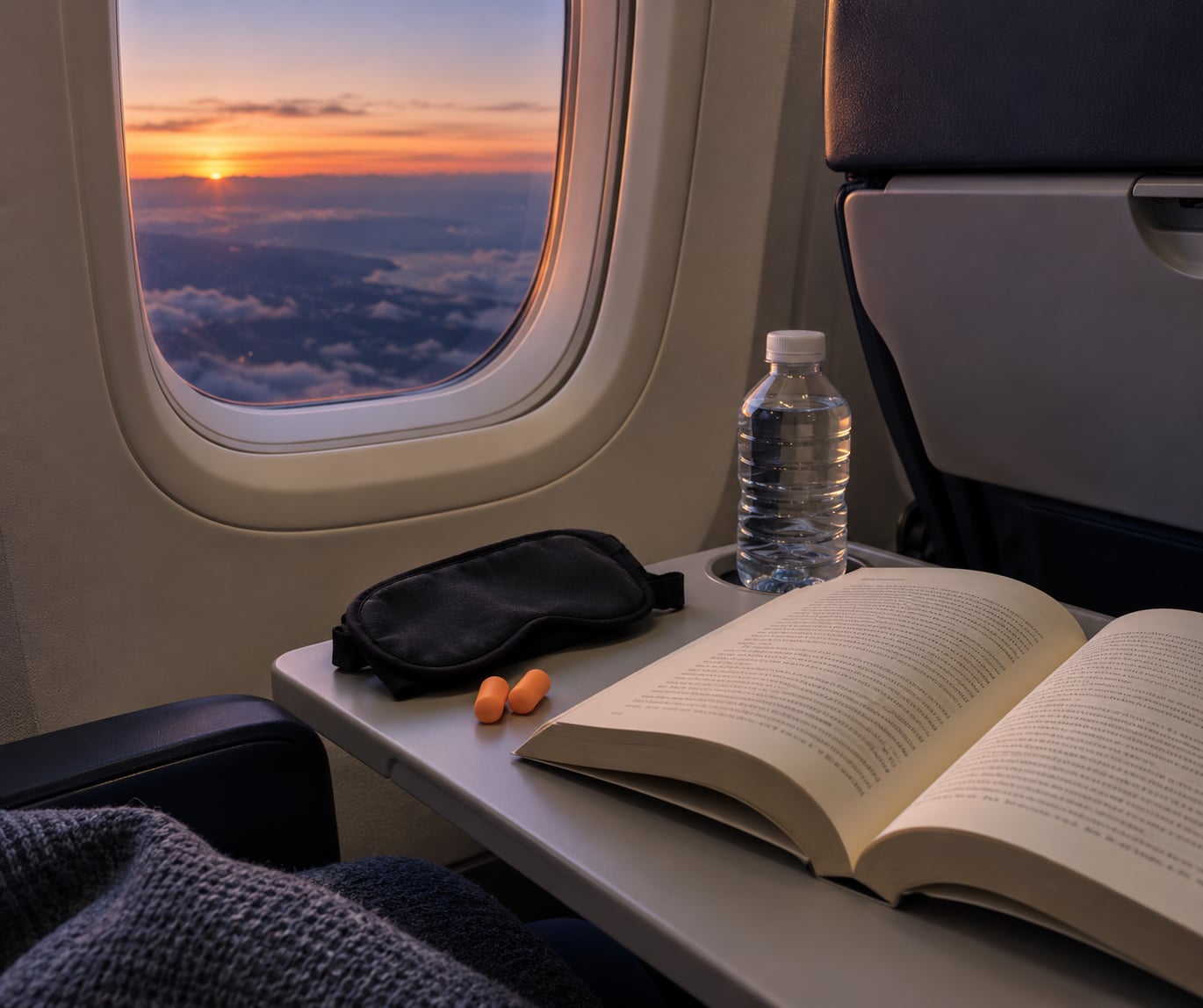
- A blackout eye mask. A good one seals out the cabin’s early-morning light, which is the main thing waking you at 3am local time on arrival night.
- Earplugs or noise-cancelling headphones. Cabin noise is a sleep-quality problem more than a jet lag problem, and poor sleep makes the adjustment slower.
- Sunglasses. You will wear these at a specific, counter-intuitive time, explained below.
- A water bottle. Fill it after security so you start the flight hydrated. Dry cabin air does not cause jet lag, but it makes the first day feel worse.
- A phone with a world clock app. Several can build you a personal light and sleep schedule from your origin, destination and dates.
Melatonin is optional and worth considering, but treat it as a conversation with a pharmacist or doctor rather than a self-prescribed dose, especially if you take other medication, are pregnant, or have a seizure, autoimmune or blood-thinning condition. Anything prescription-strength is a clinician conversation, full stop.
Why Westbound Flights Are Different From Eastbound
Which way of flying is worse for jet lag? Westbound, without much argument. Your body adjusts at roughly one hour per day when you travel east and closer to two hours per day when you travel west, so a flight home from Asia to the US takes about twice as long to shake off as the outbound trip did. Eastbound also pushes your bedtime earlier, which is socially easy. Westbound pushes it later, which fights you at exactly the wrong moment of the evening.
| What changes | Flying west | Flying east |
|---|---|---|
| Direction of body clock shift | Delayed, later bedtime | Advanced, earlier bedtime |
| Approximate adjustment rate | About 2 hours per day | About 1 hour per day |
| Signature symptom | Waking at 3am local, or nodding off at 7pm dinner | Waking at 2am with the sun not up yet |
| Light that helps | Late afternoon and early evening at destination | Early morning at destination |
| Light to avoid | Bright morning light for the first few days | Late evening light |
| Meal timing | Front-load breakfast, keep dinner light | Load up at breakfast, skip evening meals |
Both travellers get symptoms; they just fail in different places. Eastbound insomnia is a complaint about waking. Westbound is a complaint about being sleepy too early and then unable to stay asleep when the night finally arrives.
Step-by-Step: How to Avoid Jet Lag on a Westbound Flight
Shift Your Sleep Before the Flight
Move your bedtime and wake time later in the days before departure, by 30 to 60 minutes at a time rather than one brutal jump. Aim to be roughly one to two hours closer to destination time on the day you fly, and pair the later bedtime with bright light in your evening and a dim, screen-down hour before bed.
You will notice it is working when you fall asleep without lying awake for an hour, even though the bedtime is unfamiliar. A better-rested start measurably softens the arrival, because the first 48 hours are when most people lose the most sleep.
If the trip is short, two or three days, this is where I would put nearly all my effort. Adjusting before you fly means you arrive partly adapted instead of starting from zero.
Set Your Watch to Destination Time
Switch to destination time the moment you are airborne, or at the gate if you are already flying overnight. Everything after that follows the new clock: when you eat, when you sleep, when you take caffeine.
The edge case that trips people up is a westbound red-eye that departs before the local destination date has even started. Your old evening at home is still an early morning where you are going. That is fine and it is the point. Eat breakfast when the destination says it is breakfast, even if your stomach is at dinner.
Travel forums rarely disagree on this one, and their summaries are unglamorous: get as much sleep during the flight as you reasonably can, then push through the arrival day and either skip the nap entirely or keep it very short and very early in destination time.
Use Light and Caffeine Deliberately
Light is the strongest signal your body clock responds to, and on a westbound trip the timing runs later. At your destination, seek bright outdoor light in the late afternoon and early evening. That is the light that pushes your clock in the direction you need.
For the first couple of days, protect the morning. Keep the bedroom dark with closed blinds, wear sunglasses in the early hours if you have to be up, and use an eye mask if you’re still sleeping past sunrise. Morning light is the enemy on this trip, which is the opposite of almost every piece of jet lag advice you have read.
Caffeine works in a narrow window here: it helps on the destination’s morning and early afternoon, and it hurts anywhere near your destination bedtime. Set yourself a cutoff about six hours before you intend to sleep, because caffeine’s half-life runs five to six hours and a late-afternoon coffee can still be working at 1am. Staying upright and moving also keeps you awake past the point where a heavy dinner would put you under.
On meals, shifting food earlier in the day — breakfast heavy, evening light — speeds adjustment, and it is an easy thing to test on yourself with no downside.
Plan the In-Flight Day Around Your New Clock
Work backwards from destination bedtime and protect it. If you land at 9pm local, aim to be asleep by 10:30pm and therefore asleep on the plane for the three or four hours before landing.
Concretely, on a long westbound flight:
- Set your watch to destination time before takeoff and treat that as the only real time.
- Sleep when the destination says it is night, in a window, not for the whole flight.
- Skip the alcohol. It fragments sleep, worsens dehydration and lands you awake at your destination bedtime rather than asleep.
- Keep the cabin dark with the eye mask from the moment you want to sleep, even if the light outside says otherwise.
- Move around every hour or two. Long stillness is uncomfortable and dulls the arrival day.
- Eat on the new schedule. If the destination is having lunch, have lunch.
- Drink water steadily rather than in one go at the end.
Headphones and a neck pillow are comfort items rather than circadian tools, and comfort does help, but do not expect them to move your body clock. Light and meal timing do that.
Protect Your First Night at the Destination
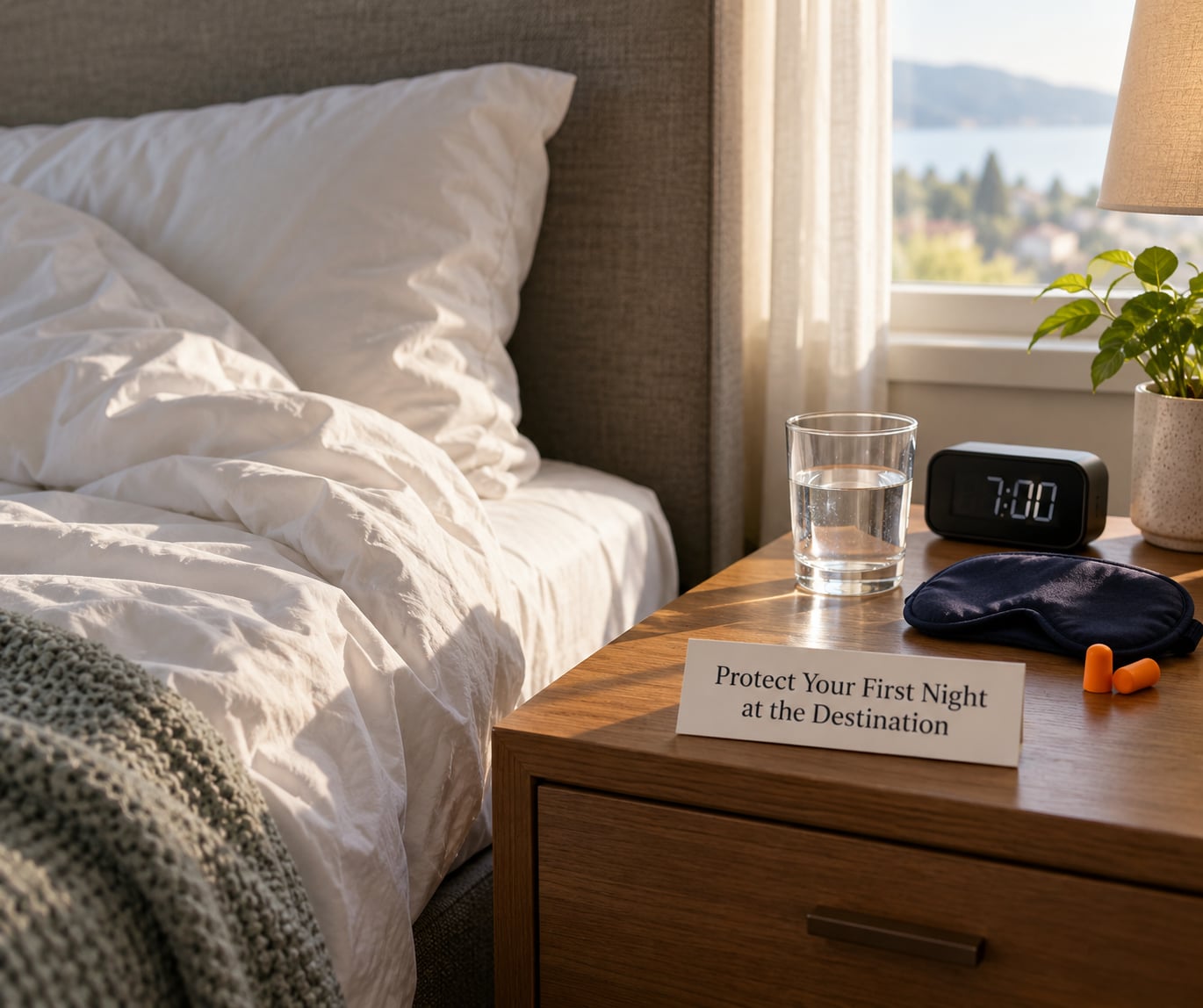
Your first local night is the one that determines how day two feels. Go outside into daylight as soon as you wake and stay out for real exposure, not ten minutes from a hotel door. Have your biggest meal at breakfast and keep dinner small, which stops the 7pm crash that usually ends with you falling asleep during the main course.
Dim the room before your destination bedtime, keep the phone out of it, and be in bed on schedule even if you are not asleep. The old advice to stay in bed on arrival day works if you are genuinely tired, and it works badly if you are merely restless, because lying awake for hours trains your bed to mean something other than sleep.
Avoid the nap. If you have to, keep it under 20 minutes and before 3pm destination time. A mid-afternoon nap on arrival day is the single most common reason people describe feeling fine on day one and then collapsing on day two.
Know When Jet Lag May Need Medical Advice
A realistic travel plan handles ordinary fatigue. It does not handle insomnia that persists for weeks, sleep problems that continue after you would expect adjustment, or symptoms that feel like more than a time zone problem. Anyone with a heart, clotting or seizure history should talk to a clinician before a long-haul flight in the first place.
Treat a recurring 3am waking pattern that does not soften after three to four days as a prompt to talk to your doctor rather than to keep adjusting with supplements. The same goes for mood changes, confusion or chest symptoms. It may not be jet lag, and a travel adjustment plan is not the right tool for it.
Your Day-by-Day Adjustment Timeline
What is the hardest day of westbound jet lag? For a six-time-zone crossing it is usually day three. You arrive functional, feel fine on day one, then hit a wall as your body clock tries to hold two schedules at once.
| Day | What usually happens | What to do |
|---|---|---|
| Day 0 (in flight) | Adopting destination time feels strange; sleep timing is wrong | Switch clocks at the gate, sleep in a window, no alcohol |
| Day 1 (arrival) | Manageable, especially if you slept on the plane | Outdoor light late afternoon, light dinner, no nap, in bed on local time |
| Day 2 | Evening sleepiness hits, waking at 3am is common | Keep mornings dim, hold the caffeine cutoff, no late naps |
| Day 3 | The wall, if it is coming | Light exposure at the right end of the day, no caffeine after early afternoon |
| Day 4 to 5 | Body clock largely aligned, roughly one to two hours gained per day | Resume normal routine, add back exercise intensity |
| Day 6+ | Most travellers are close to fully adapted | Short trips can end before this, which is why planning matters |
That is the other reason to shift your sleep before departure. Every day you pre-adjust counts against the six or eight you would otherwise spend climbing back from.
Common Jet Lag Mistakes on a Westbound Flight
Changing your watch at the destination instead of at the gate. You then eat and sleep on two clocks for six hours. Fix: switch the moment you sit down on the plane.
Sleeping through the whole destination day. You skip the light and the meals your clock needs, then cannot sleep at night. Fix: stay upright and outside through the arrival day, even if it is uncomfortable.
Using alcohol as a sleep aid on board. It shortens time to sleep, ruins the second half of the night, and dehydrates you. Fix: eye mask, earplugs, neck pillow, and a deliberate sleep window.
Wearing sunglasses all day on arrival. Blocking light is only useful in the morning, when it would pull your clock earlier. Blocking it in the evening blocks the light you need. Fix: dim mornings, bright evenings.
Chasing daylight with caffeine until 6pm. The coffee that gets you through the afternoon is the reason you are awake at midnight. Fix: six-hour cutoff from destination bedtime.
Expecting one strategy to work overnight. Even the short domestic hop, six hours from New York to Los Angeles, leaves plenty of people wrecked on arrival day. The first night is the make-or-break, and the fix is refusing to snooze until 9pm while staying active. There is no switch that flips.
Napping hard on arrival day. It feels good and it guarantees a worse night. Fix: under 20 minutes, early in the day, only if you truly cannot hold out.
Frequently Asked Questions
How long should I adjust my sleep schedule before a westbound flight?
Three to five days works best, shifting bedtime and wake time later by 30 to 60 minutes a day. Getting one to two hours closer to destination time before takeoff means you arrive partly adapted. On a short trip of two to four days, this pre-shift is where most of the benefit comes from.
Should I stay awake for the entire destination day after landing?
Yes, for the first day, and this is the rule people break most often. Stay upright, get outdoor light in the late afternoon, and keep naps short and before 3pm. The pattern people describe is feeling fine on day one and then crashing on day two, and that nap is usually why.
Does sleeping on the plane always help with westbound jet lag?
Not always, but it helps when the timing is right. Sleep during the window that matches destination night, ideally the three or four hours before landing, and keep it blocked out with an eye mask. Sleeping the whole flight tends to leave you awake at destination bedtime.
Can melatonin reduce jet lag on a westbound flight?
Melatonin is a timing signal more than a knockout pill, and its usefulness depends on when you take it relative to destination bedtime. Because dosing interacts with other medication and with pregnancy, seizure, autoimmune and blood-thinning conditions, ask a pharmacist or doctor for a dose that suits you rather than copying one.
How can travelers prevent jet lag on a long flight with a stopover?
Treat the layover as part of the adjustment. Stay on destination time through it, get outside for light if the connection is long, and avoid sleeping through the whole stopover. Adding a time zone change mid-journey resets the clock you spent the flight setting.
When are jet lag symptoms serious enough to see a doctor?
Speak to a clinician if insomnia lasts beyond the expected adjustment window, continues for weeks, or comes with mood changes, confusion or chest symptoms. Anyone with a heart, clotting or seizure history should get advice before a long-haul flight. Constant 3am waking that does not soften after three to four days is worth a call.
Conclusion: Start With the First Two Adjustments
Learning how to avoid jet lag on a westbound flight comes down to two things: move your sleep and light exposure earlier, then stay on destination time from the gate. Shift bedtime and wake time later over the three to five days before departure, seek bright light in the destination’s late afternoon and evening, keep mornings dim, and protect your first local night without a long nap.
For melatonin, prescription sleep aids or any symptom that outlives the expected adjustment, the right move is a pharmacist or doctor rather than another internet thread.