Most airlines will let you pick your seat for free, and the ones that charge for it treat the choice as a paid upgrade rather than part of the ticket. How airline seat selection fees work comes down to one simple idea: you always have a seat when you hold a ticket, and the fee buys you control over which one.
That distinction matters more than it sounds. A seat charge is optional, the price swings widely by flight and by fare, and paying does not lock the seat in forever. Here is what the charge actually covers, what it costs, and when it is worth paying.
Table of Contents
- How Airline Seat Selection Fees Work
- How Airline Seat Selection Fees Vary by Flight
- Are Seat Selection Fees the Same on Every Airline?
- What Can You Get for an Extra Seat Fee?
- How Much Do Airline Seat Selection Fees Cost?
- How to Decide If a Seat Is Worth the Fee
- When Can You Select a Seat for Free?
- Can You Change or Refund a Seat Selection Fee?
- How to Avoid an Unnecessary Airline Seat Fee
- Frequently Asked Questions
- Why does one airline charge more to choose the same seat on another flight?
- Does a basic economy ticket always have to pay for seat selection?
- Can I get a refund if I change my paid airline seat?
- Does paying for a seat guarantee extra legroom?
- Should I wait until check-in to choose a seat for free?
- Conclusion
How Airline Seat Selection Fees Work
An airline may charge a separate fee for letting you choose your own seat, and the price depends on the airline, the flight, where the seat sits, the fare you bought and how early you decide. Free seat assignment, complimentary advance selection and paid seat selection are three different things, and a ticket includes a seat either way.
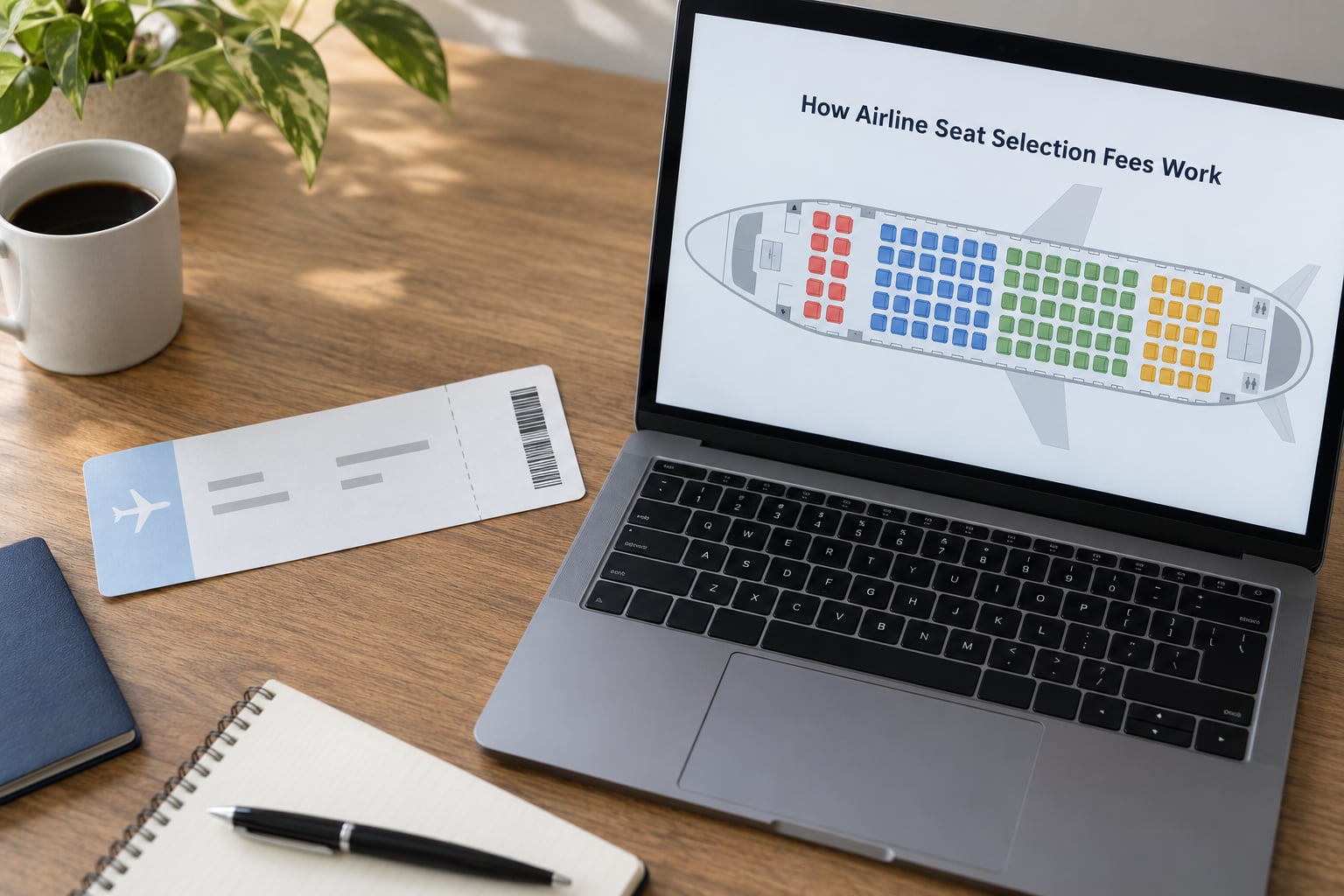
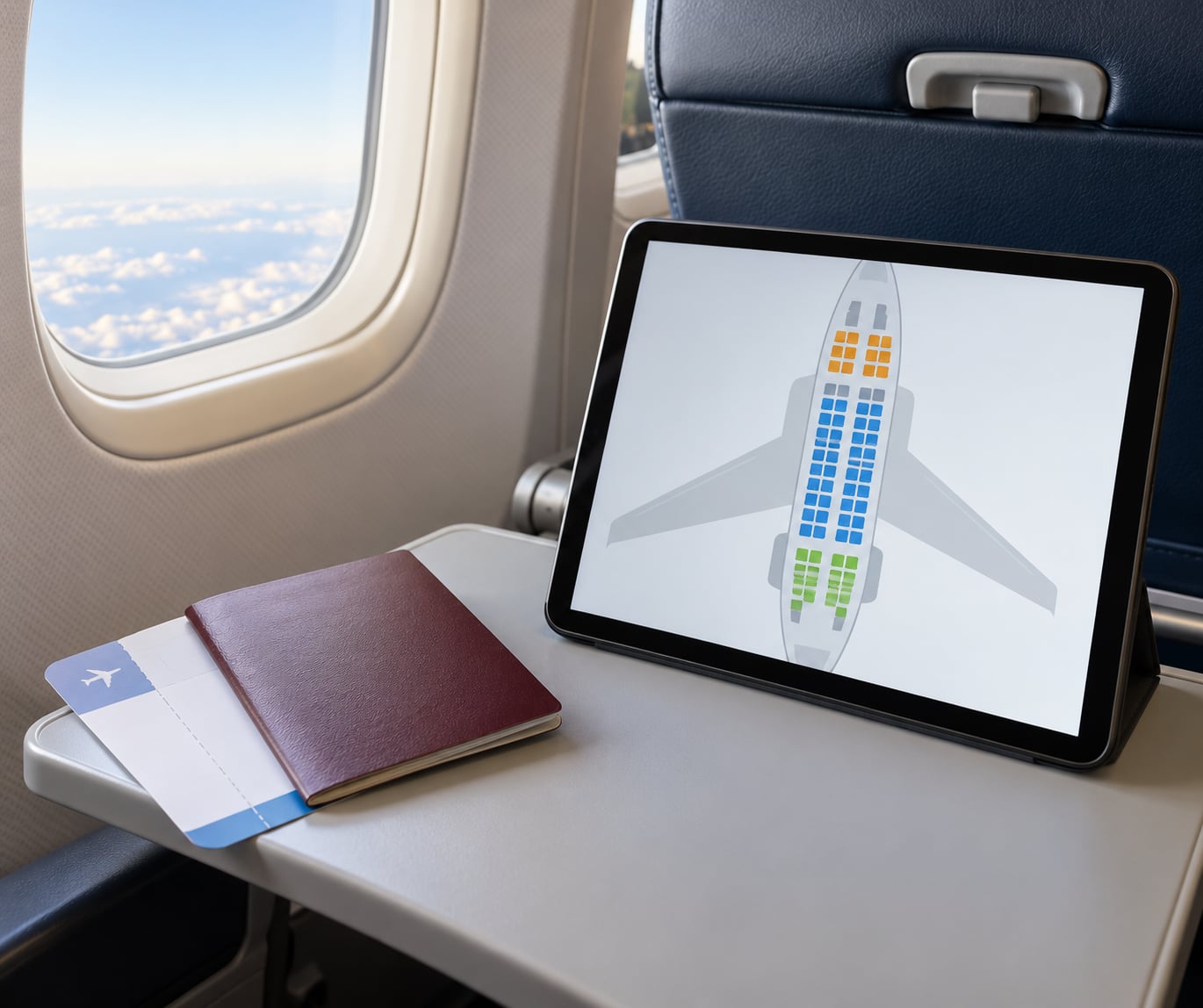
When you book, most airline websites show a seat map on the flight page. Most seats carry no extra charge at all. A smaller set carry a fee, and the fee is attached to the seat, not to your ticket, which is why it can differ between two flights the same airline sells.
The fee buys selection, not the seat itself. Skip it and the system still places you somewhere on the aircraft, usually at web check-in when you get a boarding pass. Skip it and you also give up the ability to pick a window or an aisle, sit near family, or claim an extra-legroom row.
Here is the plain reassurance most travelers need: if you have a ticket on a flight, you have a seat. Airlines cannot sell a flight without room for the passengers who bought it.
How Airline Seat Selection Fees Vary by Flight
Seat prices are set the same way the fare itself is set, from live demand. A window seat on a full Friday-evening transcontinental flight and the same seat on a mid-afternoon regional hop can be priced very differently on the same airline, because the second aircraft may have empty rows the airline wants to fill.
The main variables are the airline’s own policy, whether the flight is domestic or international, the cabin, the fare family you booked, the route, the aircraft layout, how much of the cabin is already sold, and when you are looking at the map.
Layout matters as much as demand. A narrowbody with three seat rows and a galley at the back has fewer desirable seats in total, and the airline prices each one accordingly. An exit row on one aircraft can be a basic-economy inclusion on another, because the two carriers price the same physical seat differently.
Timing does the rest. Most carriers open the seat map the moment you book and adjust prices as departure nears. Most cheap seats are gone first, so the map you see days before a flight is not the map you see the night before.
Are Seat Selection Fees the Same on Every Airline?
No. There is no universal seat charge, and two airlines flying the same route with similar aircraft can price the same window seat very differently. Policies fall into a handful of models.
| Booking model | How it usually works | Common exceptions | What to verify |
|---|---|---|---|
| Assigned seating, no charge | Any open seat may be selected at booking or at check-in | Busy routes may still price preferred rows | Whether the map shows any priced seats |
| Optional paid selection | Standard seats free, preferred and extra-legroom seats priced | Basic-economy fares often lose advance selection | What your fare includes before you pay |
| Restricted basic economy | Seat assigned at check-in, no map until the day of travel | Changing the seat may cost a change fee plus a fare difference | Whether advance selection is blocked on your fare |
| Premium cabin charges | Extra space and special seats sold inside business or first class | Travelers find charging inside a paid cabin confusing | What your cabin ticket already includes |
Airlines such as Japan Airlines, Qatar Airways and Virgin Atlantic have been widely cited as carriers where seat selection has generally come without a separate charge, while the largest US carriers now run priced seat maps on most flights. Treat both as tendencies, not guarantees, because policies change by route and fare.
Two words settle most of the confusion: operating carrier. The airline selling you the ticket may not be the airline flying the aircraft, and the seat map belongs to the one actually flying it.
What Can You Get for an Extra Seat Fee?
You are paying for a location, and the benefit depends entirely on which location you buy. Some are purely cosmetic, some come with real space, and some carry rules that can remove the very comfort you paid for.
| Seat type | What it gives you | Restrictions | Benefit guaranteed? |
|---|---|---|---|
| Standard aisle or window | Direct access to the aisle or the outside view | Varies by aircraft, legroom unchanged | Yes, the location is held |
| Preferred seat | A better spot at a modest premium, often toward the front | Legroom is usually the same as standard | Yes |
| Extra legroom | More knee and foot space on longer flights | Some rows only, often at the front or over wing exits | Yes, though seat pitch varies |
| Bulkhead row | Legroom and sometimes a bassinet or baby seat fitting | Legroom can shrink if the galley moves forward | No, it depends on load |
| First row | Widest space and no seat in front, often no tray table | Limited quantity, exit-row rules may apply | Yes |
| Exit row | Extra legroom and a large window | Children cannot occupy these seats; crew may reseat you | No, crew can move you for safety |
Read the restriction column before you pay. An exit row fee that a crew member can undo at the door is a very different purchase from an extra-legroom seat you keep for the whole flight.
Families should know that a paid seat is still not a guarantee of adjacent seating for a whole party. Only the seats you paid for are held.
How Much Do Airline Seat Selection Fees Cost?
There is no fixed price, so treat any number you see as a typical US range that shifts by region, route and season. On most domestic flights, choosing any unoccupied standard seat is free, and many preferred rows sit in the low double digits. Premium locations on a full flight can run several times that.
International and premium-cabin selections cost more again, and so do last-minute purchases, when only the expensive rows are still available. A half-empty aircraft does not guarantee cheap seats either. Travelers report paying well above the usual range to sit beside a spouse on a full long-haul flight, which tells you the price tracks demand, not how many empty rows are left.
Check the current price on the airline site or booking engine for your specific flight. Those figures move daily, and the map at checkout is the only accurate number for your booking.
How to Decide If a Seat Is Worth the Fee
Pay when the seat changes how the trip feels, and skip it when it does not. The deciding factors are trip length, mobility, children, cabin size, how much rest you need and whether you care about the aisle or the view.
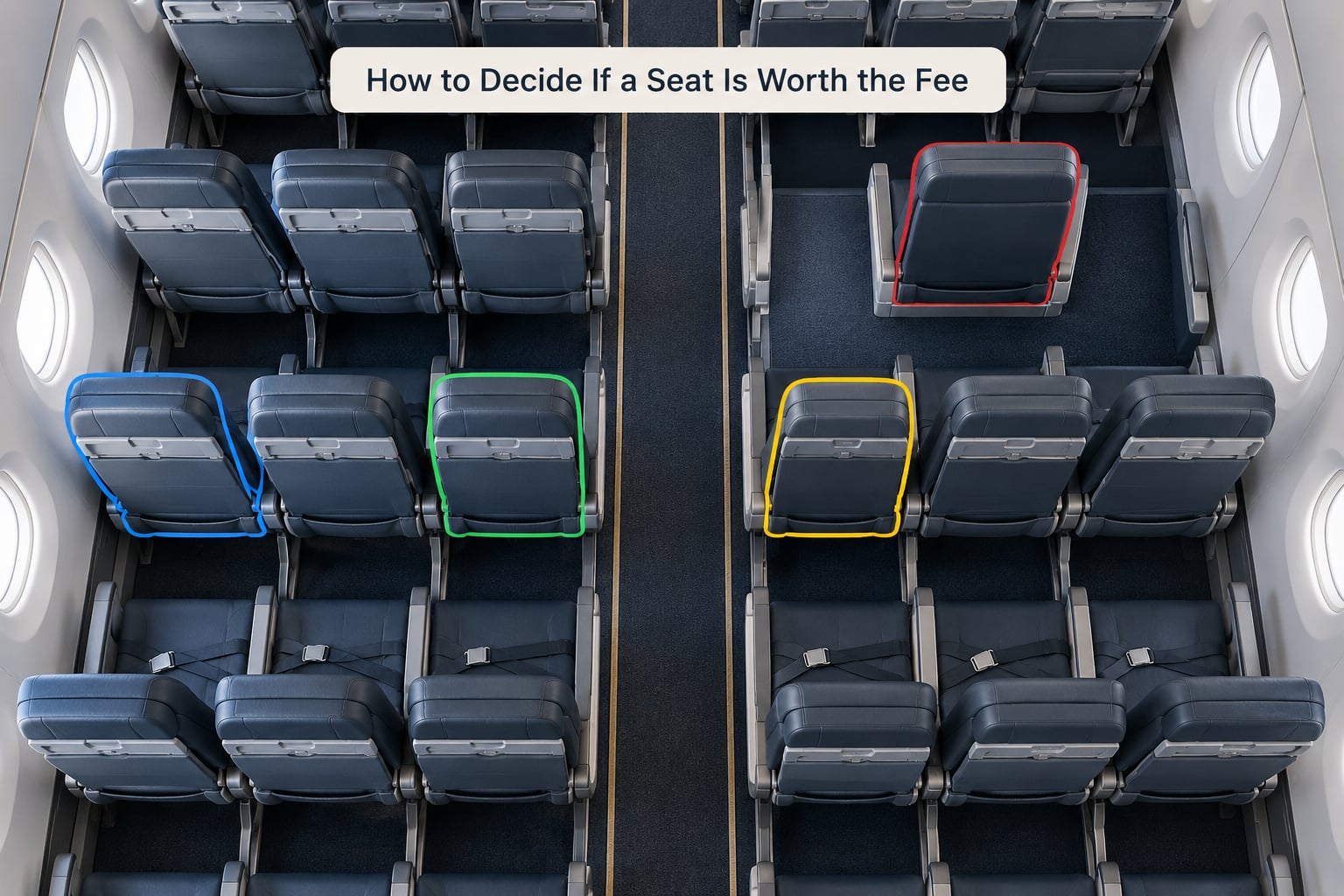
Worth paying: a long flight where you cannot sleep in economy, an aisle seat when you have a tight connection, a window when you fly solo and want the view, a bulkhead row with a toddler, extra legroom if you are tall or if your knees already ache, and any situation where sitting beside someone specific matters.
A standard seat is enough: a flight under two hours, a red-eye where you plan to sleep anyway, and a row where the only difference is two inches of pitch.
Skip it entirely when budget is tight and you plan to arrive, sit down, and read. A paid seat does not get you priority boarding, a free drink or a better meal. The only thing it changes is where you sit.
One more factor worth weighing: paying does not guarantee you keep that seat on a full flight. Travelers report paid seats being reassigned at the gate, and crews can reseat anyone for weight and balance. That is rare, but it is why an expensive seat is a comfort purchase rather than a promise.
When Can You Select a Seat for Free?
Free selection happens automatically more often than travelers expect. Many carriers leave seat choice open to every passenger on standard fares, so a free seat is often one click away.
Routes to free selection include booking directly with the airline rather than a third-party site, choosing any unpriced seat on the map, checking in online as early as your airline opens check-in, and holding frequent flyer status. Airline-branded credit card travel portals are another reliable route, since many let cardholders pick a seat or clear the fee.
Elite members and passengers in premium cabins usually get advance access to the whole map. Families can also ask, and crews will frequently seat a group together even when the seats are priced, though it is a favor and not a rule.
One reassurance that travelers on r/TravelHacks and r/Flights repeat constantly: web and app check-in still assigns a free seat. The fee is for choice, not for a seat.
Can You Change or Refund a Seat Selection Fee?
Changing a seat on the same itinerary and getting your money back are two different things, and the airline controls both. Most carriers let you switch to another seat later and pay a difference or nothing at all.
Refunds are where it gets uneven. Some airlines return the fee if you cancel, some credit it back as travel credit, and some treat a seat fee as non-refundable once paid. Refund denials after an involuntary cancellation or a downgrade come up often enough in traveler forums that you should ask before you click, not after.
Fare terms and seat-purchase terms are printed separately, so check both before paying. A flexible fare does not automatically make its seat fee flexible.
How to Avoid an Unnecessary Airline Seat Fee
Look at the seat map before you pay for anything. If the seat you want is unpriced, take it. If the fee is higher than the value of the seat to you, decline it and let the airline assign one.
Use the airline app rather than a third-party booking site. The airline’s own map shows the current price for your fare, and third-party sites often hide seat selection until later in the flow. Do not assume a prepaid seat fee is bundled into your airfare, either. It is a separate line item that does not transfer to another flight.
Check exit-row eligibility and blocked seats before paying, and watch for a second payment prompt during check-in. Some carriers reopen the map at web check-in with different prices, so a decision at booking is not always the final one.
On a flight you have taken before, sit where you sat last time for nothing. On a new aircraft, check a seat map before you pay, because layouts change between equipment swaps.
Frequently Asked Questions
Why does one airline charge more to choose the same seat on another flight?
Seat prices are set by demand on each flight, not by the physical seat. How airline seat selection fees work comes down to how full the aircraft is, the fare you booked and the layout. A window seat on a full evening flight can cost several times what the same seat costs on a quiet midday hop, and the fee can even differ between two aircraft on the same route.
Does a basic economy ticket always have to pay for seat selection?
Usually, yes. Basic economy fares commonly block the seat map entirely, so the airline assigns a seat at check-in at no extra cost. You can often still pay to select a seat later, but the price then is whatever is left, which is usually the expensive rows. Some carriers also charge more to change a basic-economy seat.
Can I get a refund if I change my paid airline seat?
That depends entirely on the airline. Many let you move to another seat on the same flight and pay only the difference, while some keep the original fee. Refunds vary more: a few return the amount, many issue travel credit instead, and some treat the fee as non-refundable. Check the fare terms and the seat purchase terms separately before you pay.
Does paying for a seat guarantee extra legroom?
Only if the seat description says so. Preferred seating often means a better location with the same legroom as a standard row, while extra-legroom, bulkhead and exit rows are the ones with real extra space. Exit row seats carry conditions: children cannot sit there, and a crew member can reseat you at the gate for safety or weight and balance reasons.
Should I wait until check-in to choose a seat for free?
It depends on your fare. On standard fares at carriers that allow free selection, choosing as soon as the map opens gives you the widest pick of unpriced seats, because the good ones go first. On basic economy you usually cannot choose at all until check-in. Checking in early is still the best free fallback when you declined a paid seat at booking.
Conclusion
Open the seat map before you pay for anything, and compare the fee against what the seat actually gives you. Check whether a free seat will be assigned automatically, whether your fare blocks advance selection, and what happens to the fee if you change plans.
Seat prices and airline rules move often, so treat any figure here as a typical range and confirm the real number on the airline or booking engine for your flight. Rules and protections vary by country, and fee-disclosure proposals aimed at separating families have been under discussion in the US, so current policy is worth verifying for your itinerary.