Learning how to fly with a cold or sinus congestion is mostly about timing, not willpower. Most people can travel safely with a stuffy nose, but the pressure drop during takeoff and the pressure rise during landing force air against a blocked Eustachian tube, and that is what causes the sharp ear pain people remember. Prep your medicines and your hydration in the 24 hours before the flight and the trip is usually uncomfortable rather than miserable.
This guide covers the practical side: what to pack, what to do at each stage of the journey, and the symptoms that mean you should see a doctor instead of boarding. It is general information, not medical advice — your own clinician or pharmacist should confirm anything that applies to your health history or your medicines.
Table of Contents
- What You Need
- Step-by-Step: How to Fly with a Cold or Sinus Congestion
- 1. Check whether flying is appropriate
- 2. Prepare before leaving for the airport
- 3. Manage the airport and boarding process
- 4. Handle pressure changes during the flight
- 5. Watch symptoms during the flight and after landing
- Common Mistakes
- Frequently Asked Questions
- Is it okay to fly with sinus congestion?
- How can I relieve nasal congestion before flying?
- Why do my ears hurt so much when I land with a cold?
- Do decongestants help with flying ear pain?
- Should I use Flonase before flying?
- Can I fly with a fever?
- Conclusion
What You Need
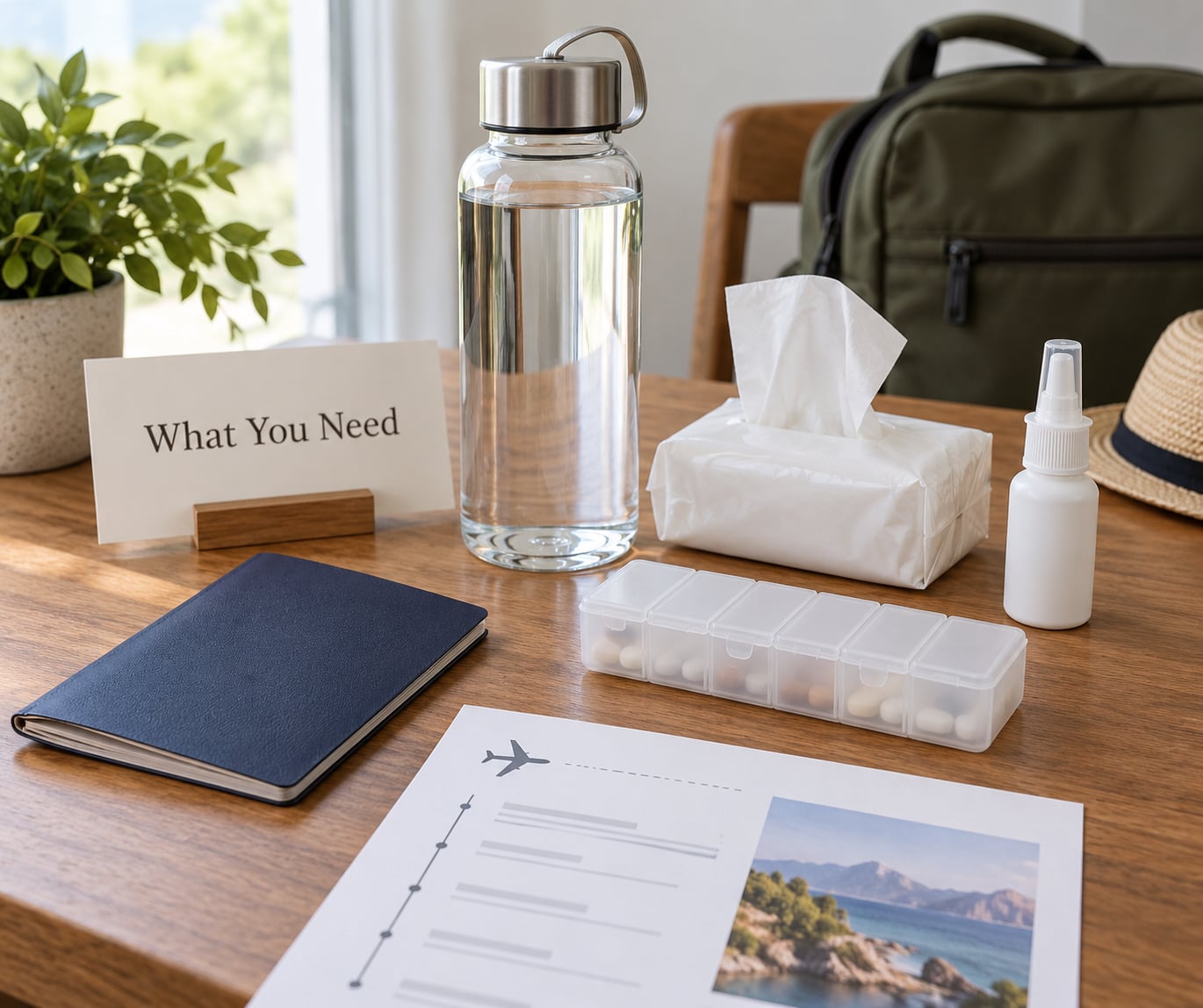
Almost nothing on this list costs money or takes an afternoon to gather, and each item earns its place during a specific part of the flight.
- Your itinerary and the airline’s rules. Check cancellation or change terms before you decide whether to travel at all, and note whether your fare is refundable or credit-only.
- A plain read on your symptoms. Note when they started, whether you have a fever, whether one ear feels blocked or painful, and whether they are improving or worsening.
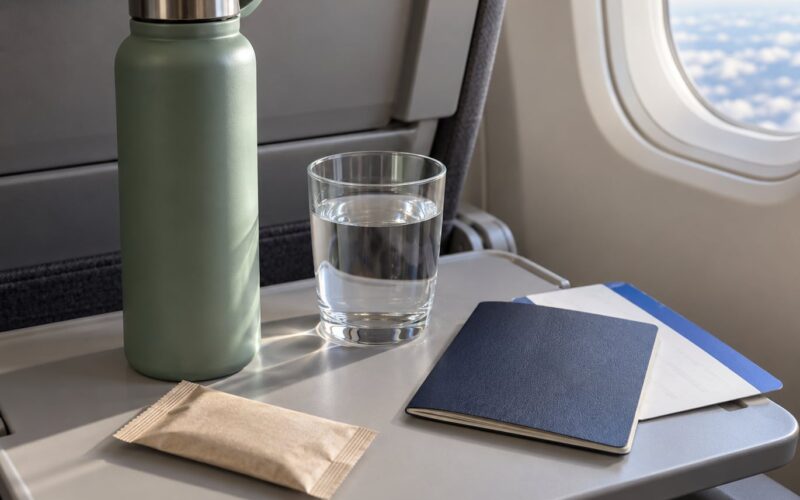
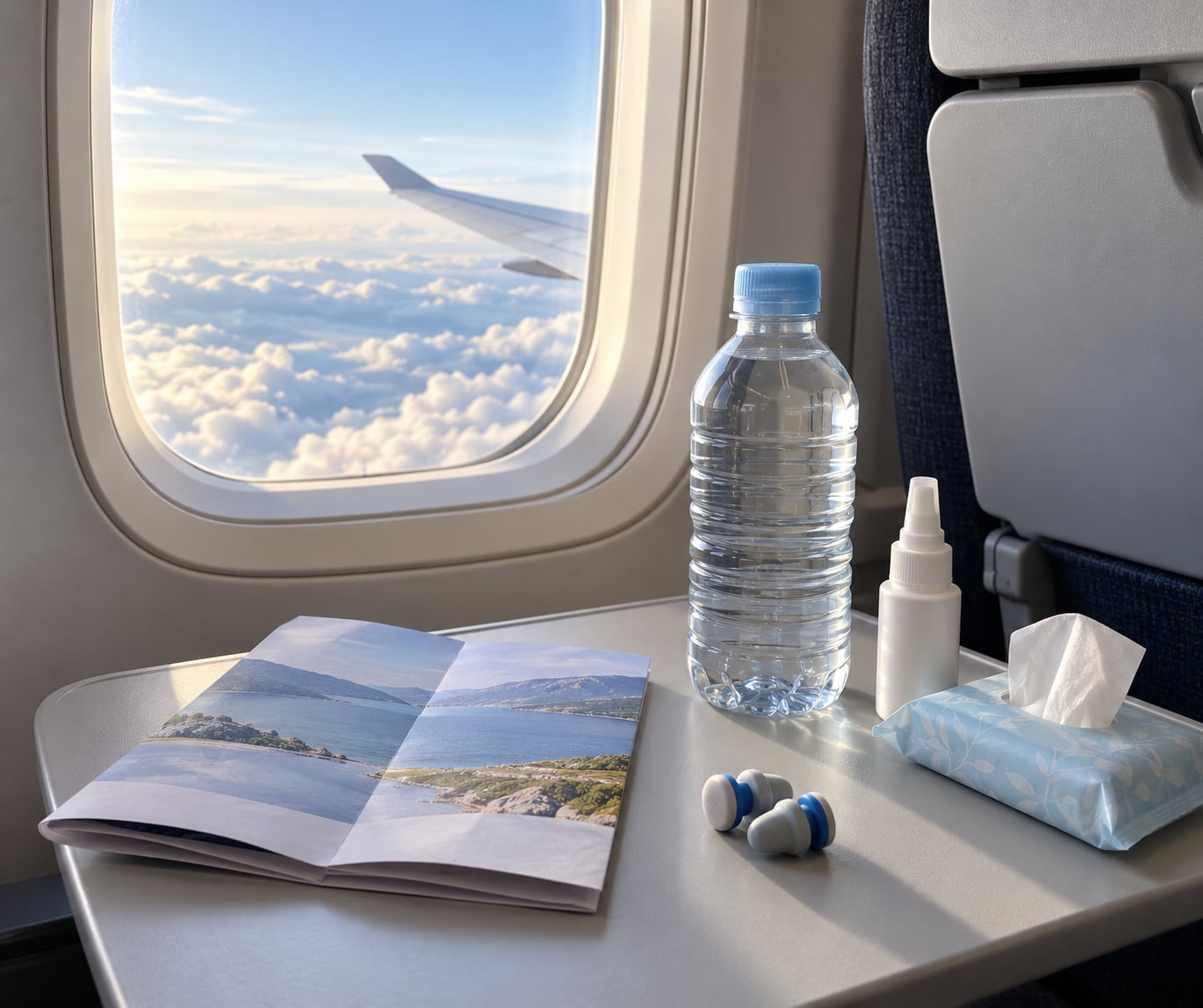
- A water bottle with a real lid. Cabin air is dry, and dehydration thickens the mucus that is clogging your tubes in the first place.
- Medicines you already use, or that a clinician or pharmacist has recommended for you. Bring them in their original packaging so the label is readable.
- A travel-sized saline nasal spray. It clears mechanically, with no drug involved, and it is safe to use more than once.
- A pressure-regulating earplug pair, if you already own them. They slow the pressure change rather than blocking the canal.
- A copy of prescriptions and any clinician’s notes. Useful if you need to buy replacements abroad or see a doctor at your destination.
- Someone who can be reached. A family member or your primary care clinic number, for the awkward case where symptoms get worse 20,000 feet up.
Step-by-Step: How to Fly with a Cold or Sinus Congestion
1. Check whether flying is appropriate
Most congestion is a common cold or mild viral sinusitis, and flying with either is generally fine. A few symptoms are different in character, though, and they deserve a decision before you get to the airport rather than at the gate.
Think twice, and check with a doctor, if you have a fever, chills, or feel genuinely unwell; if you have a known or suspected ear infection; if you have had ear tube surgery, a perforated eardrum, or sinus surgery in the recent past; if you have chest pain, wheeze, or trouble breathing; or if your symptoms are getting steadily worse rather than settling. If you are pregnant, have a lung condition, or take regular medicines that interact with cold remedies, ask your clinician rather than improvising.
Fly with sinus congestion, but postpone when the illness is the story rather than the background. If you are genuinely torn, a telehealth appointment is often faster and cheaper than a clinic visit and gives you a documented answer to show the airline.
2. Prepare before leaving for the airport
Start a day or two ahead if you can. This is the part nearly every guide skips, and it is where most of the benefit comes from: a decongestant taken on the morning of travel has barely begun to work by the time the doors close.
- The day before: extra fluids through the day, a long warm shower to loosen the mucus, and gentle nose-blowing — one nostril at a time, softly, so you do not force air through a swollen passage.
- Nasal irrigation, if you already do it. A neti pot or squeeze bottle flushes the sinuses mechanically. Use distilled, sterile, or previously boiled and cooled water only, never straight from the tap.
- Sleep and food. A short night and an empty stomach are a bad combination; travellers have fainted mid-flight after flying while still recovering from an infection, and eating something solid before boarding is simple insurance.
- Confirm your medicines. Use what has already been prescribed or recommended for you, and take it as directed rather than doubling up in an attempt to be “clear” by takeoff.
- Pack a small cold kit in your carry-on: saline spray, any decongestant you have been advised to use, a pain reliever you normally take, tissues, a travel hand sanitiser, a spare mask, and hard sweets or gum for equalizing.
It also helps to know roughly what you are dealing with, because the three usual suspects call for different emphasis. A common cold comes on over a couple of days with a runny nose, sneezing, and a sore throat. Viral sinusitis adds facial pressure, tenderness over the cheekbones or forehead, and thicker discharge, often after a cold. Allergic rhinitis itches, sneezes in bouts, and waters the eyes without the fever or body aches. Only a clinician can tell you which you have, but noticing the pattern helps you describe it accurately to a pharmacist.
3. Manage the airport and boarding process
The terminal is where a lot of people catch whatever they are already carrying. A mask, a little distance from the queue, and a bottle of water do more good than most people expect.
- Keep the nasal passages moist. A saline spray a little before boarding keeps the mucosa comfortable while you sit through a delay.
- Use the last ten minutes on the ground. Time a bathroom break so you are settled and not rushing when the doors close, since pressure changes start at the gate with the initial climb.
- Start equalizing early. Swallow, yawn, or chew from the moment the aircraft begins moving rather than waiting for the first twinge.
- Keep the mask on. It protects other passengers from whatever you are carrying and, frankly, lowers the awkwardness of coughing in a packed row.
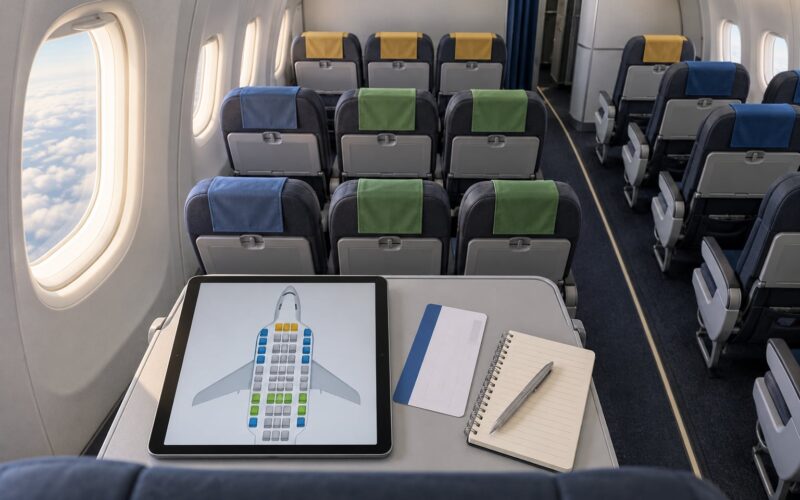
- Ask for an aisle seat if you can. You will get up more often with a blocked nose than you expect, and the walk also helps your ears equalize. A window seat is quieter and better if you are self-conscious about coughing; either is defensible.
- Travel with a congested baby or young child? Keep them upright and awake through the descent, feed on the bottle or breast during the pressure change so swallowing does the work, and bring a paediatric pain reliever you have already used before, in the dose the label or your clinician specifies. If they have an ear infection or are feverish, check with a paediatrician first.
Air travel is also the one part of the day you cannot pause. If a connection is tight, a second takeoff and descent is a second round of pressure change on tissues that are already irritated, so ask for a single longer itinerary or a later departure when you can.
4. Handle pressure changes during the flight
Descent is the harder half of the flight, and the reason is physical. During climb, the pressure around you falls and air tends to escape out of the middle ear fairly easily. During descent, outside pressure rises faster than the Eustachian tube can vent, so the pressure difference is trapped and presses the eardrum inward. That asymmetry is why people often fly up fine and land in pain.
- Swallow and yawn. These open the tube. Sipping water and chewing gum produce the swallowing reflex without thinking about it.
- Equalize gently. Pinch your nostrils shut, close your mouth, and make a gentle push, as if blowing up a balloon. Force makes it worse, and a forceful Valsalva manoeuvre can injure the eardrum.
- Use saline during the flight. A blocked, swollen tube is usually a mucus problem, and a spray addresses the cause rather than the symptom.
- Use pressure-regulating earplugs, not ordinary foam ones. Airplane-style plugs slow the pressure change reaching the eardrum. Standard foam plugs seal the canal, which can make the squeeze worse rather than better.
- Do not force a blocked ear. Severe pain that will not settle with gentle attempts is a reason to stop trying and to seek care after landing, not to push harder.
5. Watch symptoms during the flight and after landing
Symptoms often look worse on the ground than they did in the air, because the pressure has returned to normal and the swelling is now obvious. Knowing that in advance stops an hour of panic after a long-haul arrival.
- Keep sipping water through the flight and after. Skip alcohol and limit coffee, both of which work against hydration.
- Set a second reminder for landing. On a long-haul or overnight flight, the descent can arrive while you are asleep. An alarm, a boarding-pass note, or asking a neighbour is the difference between a comfortable landing and a jolt of pain.
- Ask the cabin crew for water and for help with the timing of a dose. Telling them you are dealing with congestion and carrying a nasal spray is normal, and they hear it many times a week.
- For the first evening after landing: a warm shower, one more saline rinse, a humid room if you have a humidifier, and staying upright rather than lying flat.
- If the ear has not popped within a few hours of landing and the pain is dull or ringing rather than sharp, book a doctor rather than waiting it out.
Common Mistakes
Almost every unpleasant flight with a cold comes down to one of these, and each has a straightforward fix.
- Flying at the peak of the illness. If you have a choice between two departure dates, take the later one. Fix it by deciding early, while change terms are still in your hands, rather than at the counter.
- Taking a decongestant for the first time on the flight path. Oral decongestants need a lead time, and US regulators have questioned how well several oral decongestants work. Fix it by using only what your clinician or pharmacist has advised, taken on the schedule they gave you.
- Reaching for coffee, whisky, or wine to “beat the dry air”. Both caffeine and alcohol increase fluid loss in a cabin that is already at low humidity. Fix it by drinking water steadily and saving the drink for after you land.
- Blowing the nose hard, both nostrils at once. It pushes mucus and air into an already swollen tube. Fix it by blowing gently, one side at a time.
- Assuming a tight connection is safer than postponing. A second takeoff and descent means a second round of pressure change, and a delay on a sick day can leave you rebooking in a rush. Fix it by asking for a single longer itinerary or a later flight.
- Grinding through worsening symptoms. Worsening ear pain, bleeding, hearing loss, or breathing difficulty mid-flight is a reason to tell the crew immediately. Fix it by speaking up early rather than waiting to land.
Frequently Asked Questions
Is it okay to fly with sinus congestion?
Yes, for most people it is safe. Congestion alone rarely makes flying dangerous, but it makes takeoff and landing painful because pressure cannot equalize through a blocked Eustachian tube. Treat symptoms early, stay hydrated, and use pressure-relief techniques. Fly with caution, or not at all, if you also have a fever, a suspected ear infection, recent ear or sinus surgery, or trouble breathing.
How can I relieve nasal congestion before flying?
Start the day before. Drink extra fluids, take a warm shower to loosen mucus, and irrigate your sinuses with a neti pot or squeeze bottle using distilled, sterile, or boiled and cooled water. Blow your nose gently, one nostril at a time. On the day, use a saline spray about 30 minutes before boarding and take any approved decongestant on the schedule your pharmacist gave you.
Why do my ears hurt so much when I land with a cold?
Because descent squeezes rather than releases. As the aircraft comes down, the pressure around you rises, and if your Eustachian tube is blocked with mucus the middle ear cannot catch up, so the eardrum is pulled inward. That trapped difference causes sharp pain, and in some cases barotrauma. Swallowing, yawning, chewing, gentle pressure equalization, and a decongestant spray before landing all reduce the squeeze.
Do decongestants help with flying ear pain?
They help by shrinking the swollen tissue lining your nose and throat, which unblocks the Eustachian tube so pressure can equalize. Nasal sprays work fastest and are usually taken about 30 minutes before takeoff and again before landing; oral decongestants need several hours of lead time. Ask a pharmacist before using oral decongestants, since their effectiveness has been questioned by US regulators and they interact with some medicines.
Should I use Flonase before flying?
Fluticasone is a steroid nasal spray that reduces inflammation over hours or days rather than minutes, so it is a poor last-minute fix for a single flight. It can be a sensible addition if your congestion is allergy-driven, since it targets the swelling rather than the mucus. Start it well before travel if you already use it, and ask a pharmacist or doctor to confirm it suits your situation.
Can I fly with a fever?
No, not while you have a fever. A raised temperature usually points to an infection your body is still actively fighting, and flying adds dehydration, disrupted sleep, and a dry cabin on top of that. Tell your employer or travel partner, and ask a doctor when you are likely to be well enough to travel and whether your symptoms need checking first.
Conclusion
Start by checking your airline’s change terms and by being honest about your symptoms. If there is a fever, a suspected ear infection, recent surgery, or breathing trouble, postpone the trip and speak to a doctor first.
If you are flying, work backwards from the landing time: approved decongestant on the schedule your clinician or pharmacist gave you, a saline spray about 30 minutes before takeoff and again before landing, steady water, and gentle equalizing through descent. That sequence handles how to fly with a cold or sinus congestion for most people, and it is the difference between a noisy, mildly sore flight and three hours of regret.