How to handle motion sickness on planes and boats comes down to three things: shrink the sensory conflict before you leave, sit where movement is easiest to anticipate, and act within the first minutes of nausea. Seat choice, light food, fresh air and a steady horizon do most of the work; a pharmacist-approved option covers the trips where that is not enough.
Motion sickness is nausea, dizziness and sometimes vomiting that happens when your eyes and your vestibular inner ear report conflicting information about how your body is moving. That mismatch is why a smooth cabin with no window is often worse than a bumpy one with a view. Roughly a quarter of air travellers and a bit over a third of cruise passengers report motion sickness, with children aged 2 to 12, pregnant travellers and migraine sufferers most often affected.
This guide is for independent travellers who want a plan before and after they book. It is general information, not medical advice, and nothing here stops you from seeing a doctor about your own situation.
Table of Contents
- What You Need
- Step-by-Step: How to Handle Motion Sickness on a Plane and a Boat
- Step 1: Plan Ahead When Booking
- Step 2: Reduce Your Triggers Before You Travel
- Step 3: Choose a Stable View and a Helpful Seat
- Step 4: Use Small, Simple Strategies During Travel
- Step 5: Know When to Stop Traveling and Get Help
- Common Mistakes
- Frequently Asked Questions
- How do I calm motion sickness on a plane?
- How do I stop motion sickness after it starts on a boat?
- Which plane seat is best for motion sickness?
- Can I take Dramamine while wearing a scopolamine patch?
- How long does motion sickness last after a flight or cruise?
- Conclusion: What to Do First
What You Need
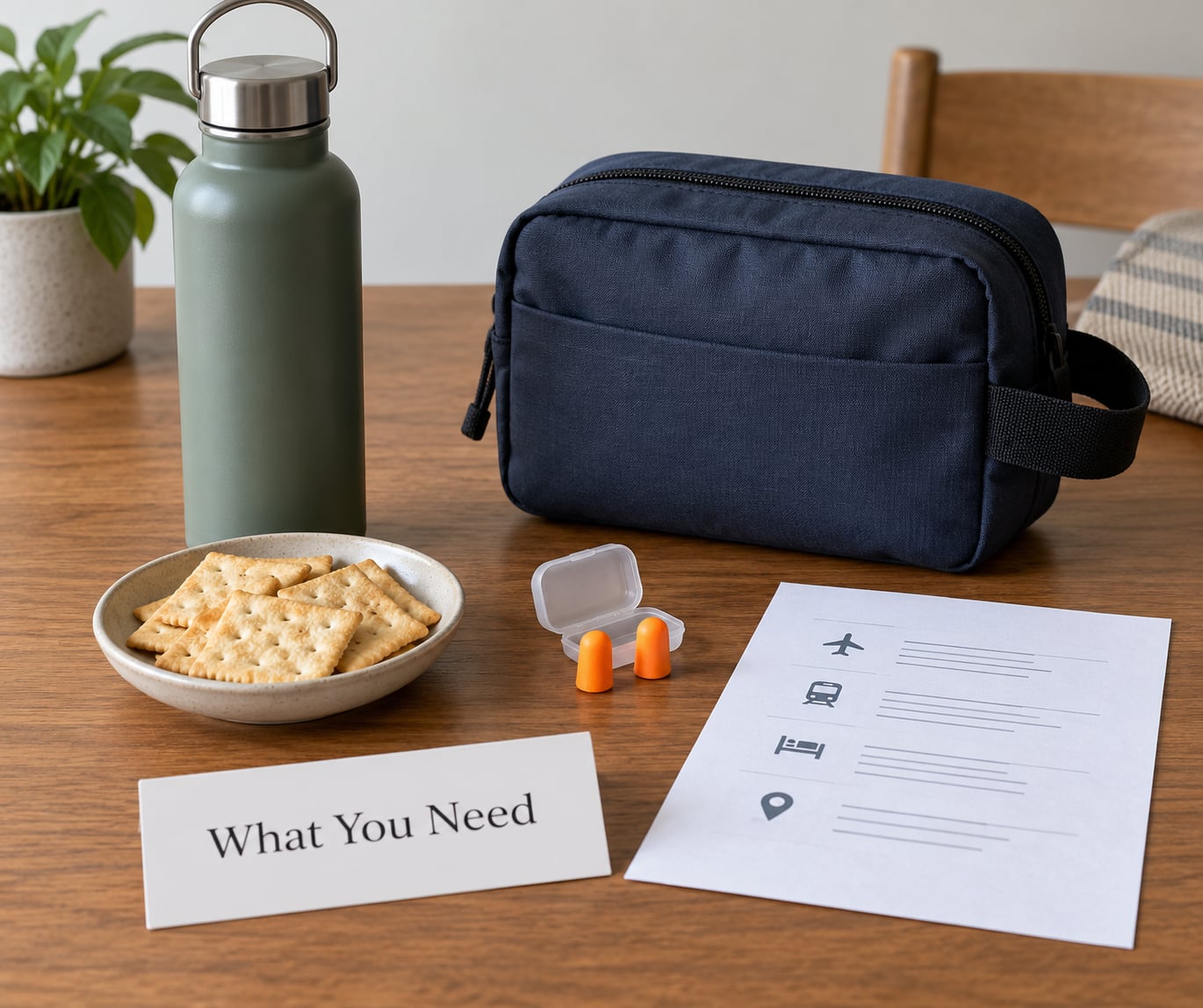
A short list covers most of what you need, and none of it is complicated.
- Water and plain crackers. Dry, salty food settles a stomach better than a full meal, and sipping water keeps dehydration from making nausea worse.
- Ginger in some form. Chews, candies or tea give you something to do with your mouth during the worst stretch.
- An acupressure wristband. Cheap, reusable and harmless, whether or not it does anything for you.
- Headphones and something to listen to. Audio distracts without locking your eyes onto a moving screen.
- A light layer. A cabin or deck gets cold quickly once you start sweating, and a chill makes nausea feel worse.
- A route to a doctor or pharmacy. If you get sick regularly, or you are pregnant, have glaucoma, take other medicines or have a vestibular condition, ask a pharmacist or doctor about options before you travel rather than in the air.
That last item matters more than people expect. Travellers often assume they can sort it out at a pharmacy abroad, and some prescription options are not available in every country, so the conversation is easier to have at home.
Step-by-Step: How to Handle Motion Sickness on a Plane and a Boat
Step 1: Plan Ahead When Booking
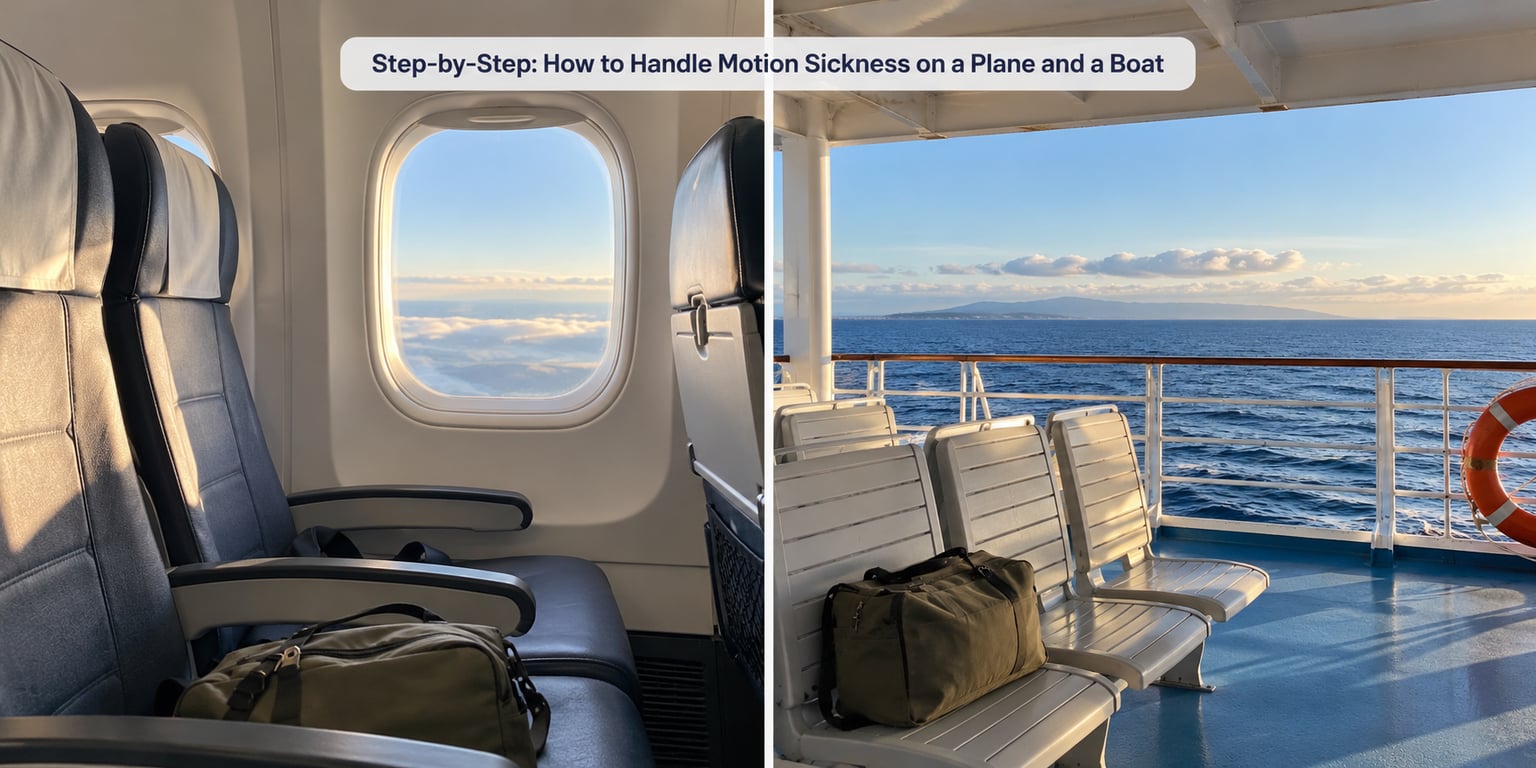
Where you sit is decided long before you feel sick, and it is the single cheapest fix available. On a plane, pick a window seat over the wing where you can. On a boat, pick a cabin near the middle of the vessel and close to the waterline, and avoid the extremes where roll is strongest.
A few other decisions help. If you can choose, look for a larger boat or a better-equipped one for open water, since a bigger hull rides swell more gently. If your plane itinerary has a long layover, that break is a gift, because you can stand up, walk and reset before the next leg. Booking a seat in advance also removes the gamble of boarding onto whatever is left.
Step 2: Reduce Your Triggers Before You Travel
Do not travel on a full stomach, and do not travel on an empty one. A light meal a few hours before departure is easier to handle than a heavy one, and greasy or spicy food is a bad idea. Skip alcohol before and during the trip, keep caffeine moderate, and sleep if you can.
Screens and close reading are the other half of the problem. Your eyes lock onto something unmoving while your inner ear reports movement, and that contradiction is exactly what makes you ill. Save the movie for after landing, and skip the VR headset demonstration that runs before a boat departure.
Step 3: Choose a Stable View and a Helpful Seat
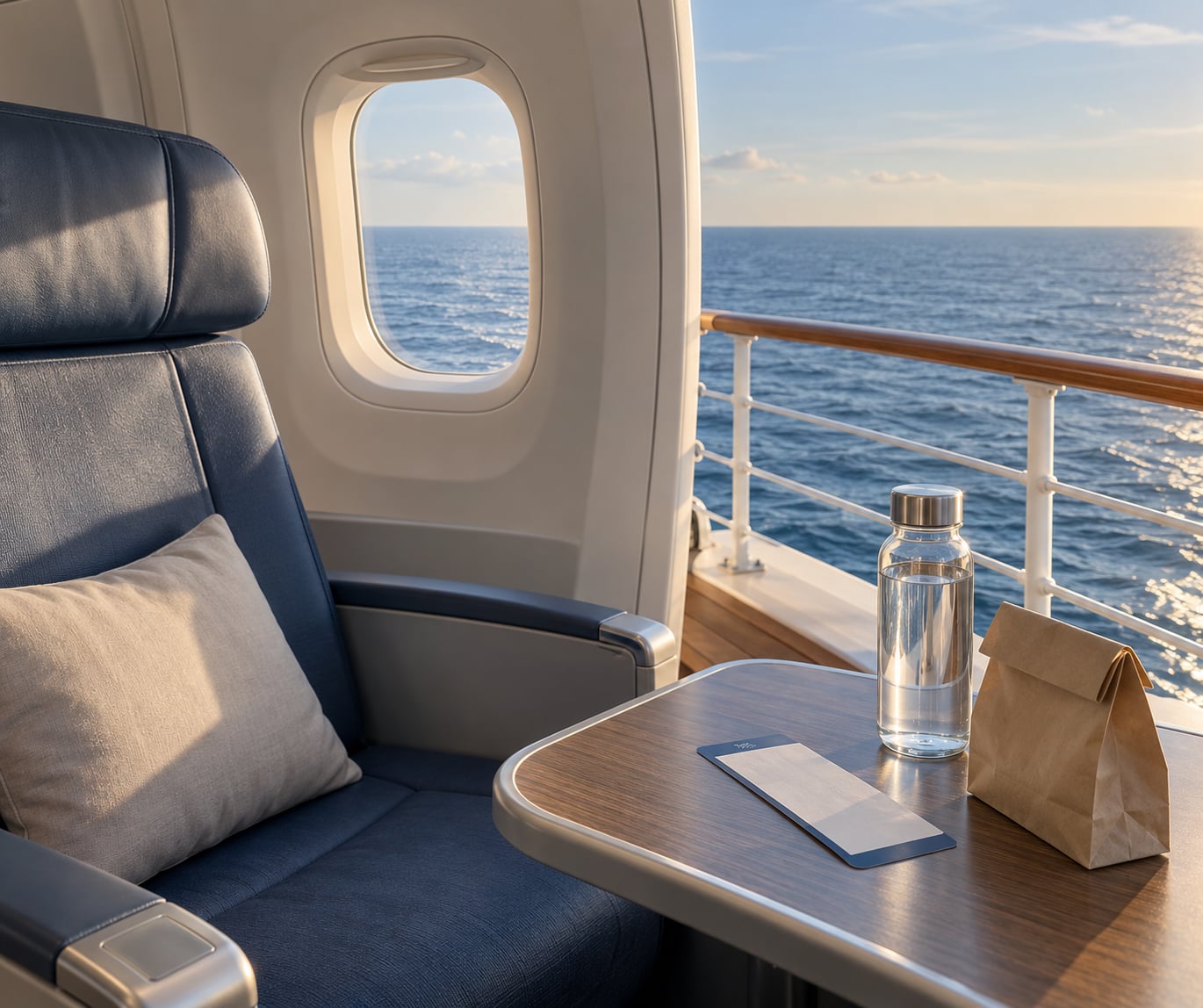
The strongest trick is a fixed point your eyes can trust. On a plane, put the tray table up, turn to face forward and look out at the horizon or at something far away on the ground. On a boat, go out on deck early, before your stomach settles, and watch the horizon rather than the bow or the deck below you.
Cool airflow helps too. A seat near an air vent, or stepping out into fresh air on deck, cools the face and gives you something concrete to feel. On smaller craft, sitting near the middle of the vessel and facing the direction of travel is calmer than sitting at the back or watching the water rush past the window.
Step 4: Use Small, Simple Strategies During Travel
Break the trip into pieces. Stand up and walk the aisle when the seatbelt sign is off, or move around the deck between activities, because motion is easier to tolerate when you expect it. Shift the screen to a larger, brighter setup, or put it away entirely and listen to music or a podcast instead.
When nausea arrives, nibble plain crackers, sip cool water or a carbonated drink slowly, and press the wristband or massage the inside of your wrist in the spot about two fingers above the wrist crease. Get into fresh air. If you take anything for it, that is a question for your pharmacist, especially if you plan to drive after landing, take other medicines or travel with a child.
Step 5: Know When to Stop Traveling and Get Help
Most travel nausea is uncomfortable, not dangerous. Some signs are not: fainting, chest pain, confusion, severe abdominal pain, a headache that feels unlike your usual migraines, or vomiting that will not stop and leaves you unable to keep fluids down.
If you cannot keep water down, you have gone pale and clammy with a fast heartbeat, or symptoms build steadily instead of settling, stop travelling and ask for medical help. On a boat, tell a crew member rather than sitting quietly in your cabin, because they can bring a doctor and move you somewhere stable. A doctor or urgent service is the right call for anything on that list, and for symptoms that hang around for more than a day after you dock.
Common Mistakes
Most people manage the trip badly in the same handful of ways.
- Trying to outlast it. Travellers describe going from fine to sick in ten or twenty minutes with no warning. The fix is to act the moment you notice the first queasiness, not when you are certain it is real.
- Staring at a phone. A close screen is the worst visual input you can choose in a moving space. Fix: put it away and look far away instead.
- Skipping food because an empty stomach feels safer. It rarely is. Fix: eat something plain and small before you travel and snack in flight.
- Drinking alcohol to relax. It adds to drowsiness, dehydration and imbalance. Fix: water, and a nap if you can get one.
- Taking medication unfamiliar to you, or combining options, without asking. Fix: a pharmacist conversation before departure, and never combine sedating products with alcohol.
- Believing one trick has to work. Ginger, wristbands and peppermint help some people and do nothing for others. Fix: layer small strategies instead of betting on one.
- Ignoring symptoms after the trip. Nausea can linger for hours after landing or docking. Fix: lie down somewhere quiet, keep sipping water, and get advice if it will not settle.
One habit worth borrowing comes from people on cruise forums who have made the mistake repeatedly: they take their over-the-counter antihistamine every evening through a multi-day cruise instead of only on the worst day. Check the label, confirm it is suitable for you, and clear the plan with a pharmacist before you leave.
Frequently Asked Questions
How do I calm motion sickness on a plane?
To calm motion sickness on a plane, face forward, raise the tray table and look out at a fixed distant point, ideally the horizon. Turn the airflow up on your vent, keep your eyes off the phone, sip cool water and nibble plain crackers. Stand and walk the aisle when the seatbelt sign is off, and if you take an antihistamine, plan it with a pharmacist first because it can make you drowsy and can affect driving after landing.
How do I stop motion sickness after it starts on a boat?
Once motion sickness starts on a boat, get outside into fresh air and fix your eyes on the horizon rather than the bow or the water below. Move toward the middle of the vessel if the motion allows, lie down if you can, and stop reading or scrolling. Small sips of water or a carbonated drink and a few plain crackers help. Persistent vomiting, fainting or chest pain means you need a doctor, not another remedy.
Which plane seat is best for motion sickness?
A window seat over the wing is usually the best choice, because your eyes get a stable view of the horizon and the wing is one of the calmer parts of the cabin. An aisle seat near the wing works too if you value being able to stand and walk. Avoid rear-facing seats and back rows if you can, and aim the air vent at your face once you are seated.
Can I take Dramamine while wearing a scopolamine patch?
Do not combine an over-the-counter antihistamine such as dimenhydrinate with a scopolamine patch without medical advice, because both can cause drowsiness, blurred vision and dry mouth, and stacking them often makes the side effects worse rather than the nausea. Scopolamine is a prescription and its availability varies by country. Ask your doctor or pharmacist whether the combination is appropriate for you before you travel.
How long does motion sickness last after a flight or cruise?
Symptoms often ease within a few hours of landing or docking, but some people feel queasy, tired or off-balance for the rest of the day, and a minority carry symptoms for a day or two. Resting somewhere quiet, sipping water and eating small bland meals helps. If the nausea will not settle, you cannot keep fluids down, or it lasts beyond a day, speak to a doctor.
Conclusion: What to Do First
Book the stable seat: a window over the wing on a plane, a mid-vessel cabin near the waterline on a boat. Eat lightly before you go, keep water with you, skip alcohol, and put the phone away so your eyes have a real horizon to work with.
Then treat the first hint of nausea as the cue it is. Fresh air, a fixed distant view, small sips and a plain cracker, and movement in short stretches. If that is not enough, talk to a doctor or pharmacist before the trip rather than at the gate, and never combine sedating medicines or drive after taking one.