Yes, you can drive on almost every US toll road without a transponder. Cameras read your licence plate instead, the toll authority bills the vehicle’s registered owner, and you pay the charge later online or by mail. It is legal, it takes no equipment, and it costs more than the transponder rate.
The catch is who gets the bill. In your own car, it lands in your postbox weeks later. In a rental, the rental company is the registered owner, so it collects the toll, adds its own administrative fee, and charges your card days after you return the keys. Learning how to use toll roads without a transponder is mostly about knowing which of those two situations you are in before you drive.
Everything below assumes US toll roads, since that is where the licence-plate billing system is standard. Fees, deadlines and payment windows vary by state and change often, so treat the numbers here as typical and confirm them with the toll authority for your route.
Table of Contents
- What You Need
- Step-by-Step: How to Use Toll Roads Without a Transponder
- Check Whether the Toll Road Accepts Your Payment Method
- Use Plate-Based Billing or an Online Account
- Pay Cash or by Card at a Toll Booth
- Check Rental-Car Policies and Administrative Fees
- Verify the Charge and Keep Your Records
- Common Mistakes
- Frequently Asked Questions
- Can I use toll roads without a transponder?
- How do rental cars charge tolls when I do not have a transponder?
- What happens if I accidentally drive through a toll lane without paying?
- Can I pay a toll with cash or a credit card instead of a transponder?
- How long do I have to pay a plate-based toll charge?
- Will using a toll road without a transponder affect my credit score?
What You Need
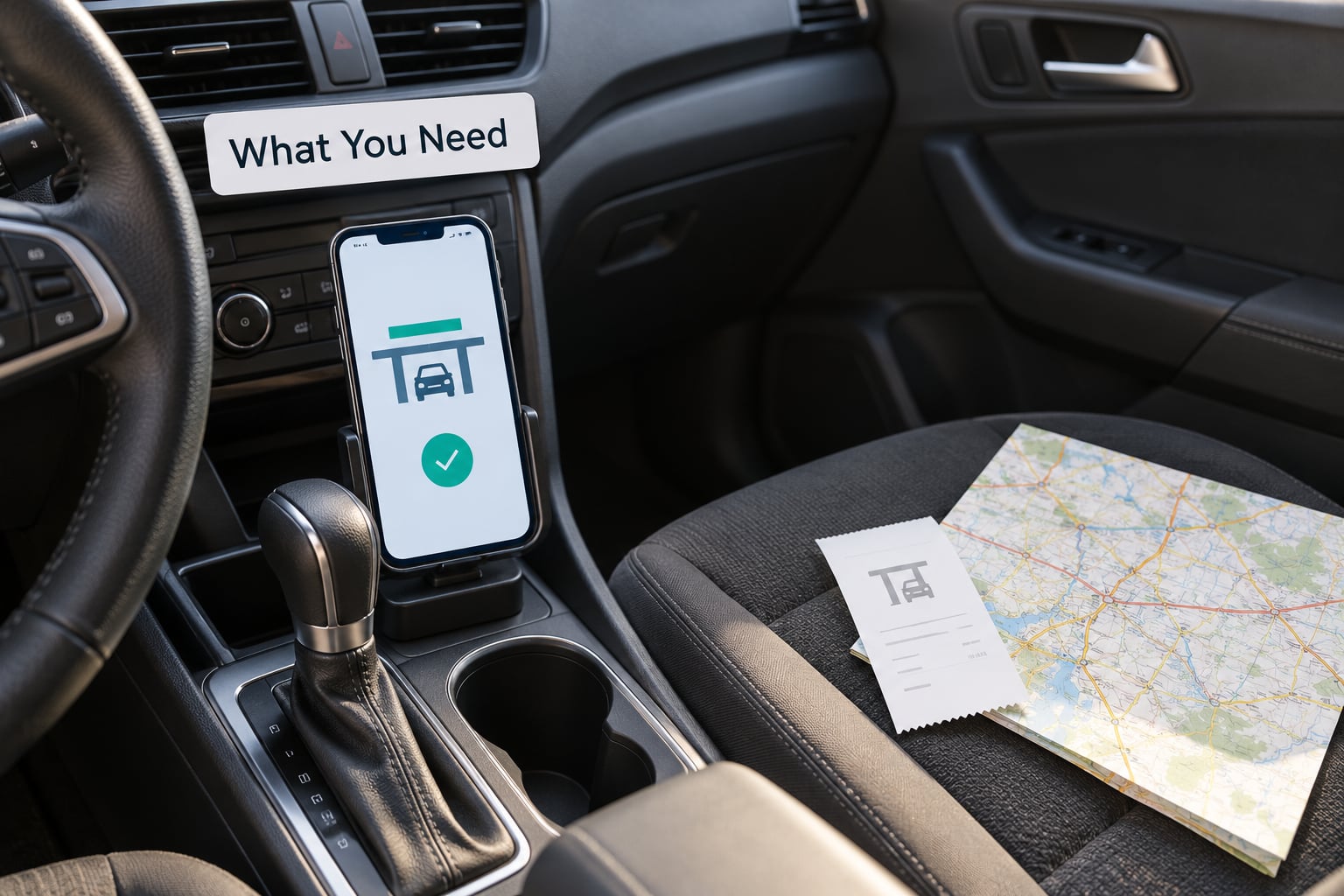
Before you enter a toll road, you need four things sorted. Miss one of them and the charge either costs more than it should or arrives with a penalty attached.
The right plate details. Write down your plate number, the state it belongs to, and your vehicle class. Payment portals ask for all three, and a single wrong character is enough for the lookup to fail, which turns a normal pay-by-plate charge into a violation. Check the plate itself rather than your memory of it, especially if you have moved between states recently.
A payment method that works on that road. A credit card is the safest default because it covers pay-by-plate invoices, online accounts and many toll booths. Cash is the least reliable, since a growing number of roads are fully cashless. Carry a card and a small amount of cash, and you cover almost everything.
The name of the toll authority. Each region runs its own system with its own rules, rates and deadlines. Knowing whether you are on an E-ZPass road, a FasTrak road, SunPass territory, a TxTag or TollTag road in Texas, or the Peach Pass system in Georgia tells you which website to pay through and how long you have to act.
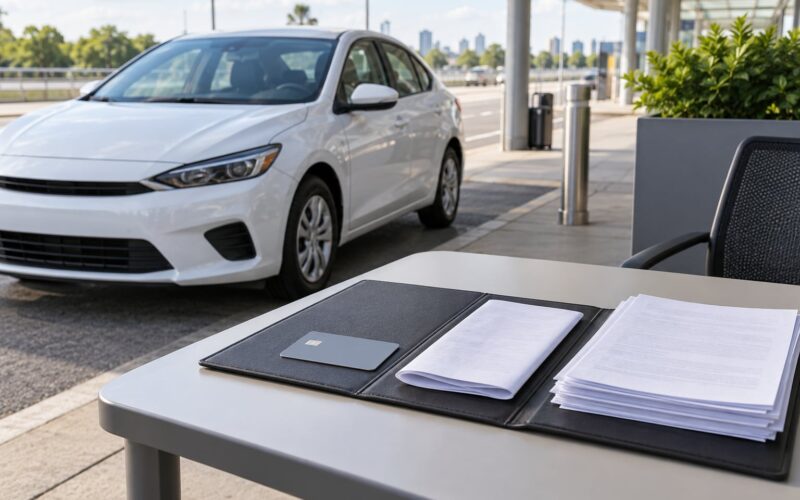
Your rental agreement, if you are driving a rental. This is the single most useful document to have on the passenger seat. It names the toll programme, states the daily fee, and lists a phone number you can call before you drive to ask whether tolls are already covered.
Privately owned vehicles and rental cars behave very differently here, and it is worth saying plainly. With your own car, the toll authority holds your registration details, so a plate-billed invoice reaches you directly and you pay the authority’s charge plus its own administrative fee. With a rental, the authority bills the rental company, and the rental company adds a per-toll handling fee plus a daily convenience fee that can run for every day of the rental once triggered. Both routes work. One is a lot cheaper when something goes wrong.
Step-by-Step: How to Use Toll Roads Without a Transponder
Check Whether the Toll Road Accepts Your Payment Method
Most US toll roads now fall into one of four groups, and knowing which one you are on before you drive saves the whole problem.
Transponder-only or transponder-preferred roads. These read a tag or account number from a windshield-mounted transponder. You can still drive them without one, because a camera records your plate, but you should expect to be billed by plate.
Cashless roads with plate billing. Overhead gantries photograph the plate, match it to vehicle registration records, and mail an invoice. There is no booth to stop at and no way to pay on the spot.
Mixed roads with staffed booths. These still take cash and cards at staffed lanes, and often run a separate electronic-only lane for tag and plate readers. Choose the staffed or card lane, not the electronic one.
Express lanes. These are optional fast lanes alongside a free road, often with a toll that changes with traffic volume. They usually accept plate billing, but some states require a registered account or a transponder before you may enter. Read the sign before the lane, not after.
| Toll system | Where it runs | Without a transponder |
|---|---|---|
| E-ZPass | Northeast and mid-Atlantic, plus Ohio, Pennsylvania, Illinois, Indiana, Michigan, West Virginia, Virginia, North Carolina | Plate is photographed and billed by mail, usually at a higher rate |
| FasTrak | California, including many Los Angeles express lanes and bridges | Plate billed, but many express lanes require an account or transponder to set a clean rate |
| SunPass | Florida, including the Turnpike and bridges | Toll-by-plate invoices to the registered owner |
| TxTag, TollTag and EZ TAG | Texas, including the toll lanes around Houston, Dallas and San Antonio | Mail-by-pay option available; invoices carry an added service charge |
| Peach Pass | Georgia, mostly the express lanes around Atlanta | Plate billed at a higher rate; some lanes accept payment by plate |
Two details catch people out here. Express lanes charge a variable rate, so the price at the sign may not be the price you are billed. And a rental car in a state that does not issue tolls can still cross a toll bridge in a neighbouring state, where your out-of-state plate gets looked up through that state’s registration records.
Use Plate-Based Billing or an Online Account
This is the standard way to use toll roads without a transponder, and it has two flavours: pay-as-you-go plate billing, where each invoice arrives separately, and a registered account, where the toll authority has your plate on file and bills you at the lower rate.
For a one-off trip, a registered online account is almost always the better deal. Sign up on the toll authority’s own site rather than a third-party site, enter your plate, state and vehicle class, add a payment method, and add the specific plates you expect to drive. A personal account also works in a rental car, which is the trick most travellers miss. Register the rental plate before you pick the car up, or as soon as you know it, and the charge is billed to you at the standard rate instead of triggering the rental company’s programme.
A few rules keep this from going wrong. Register the plate before you drive through, not after. Remove the plate from your account the day you return the car, so you are not billed for someone else’s trip. And check whether the account charges a per-toll administrative fee, because several do, which can erase the savings for a route with only two or three tolls.
If you would rather not open an account, pay by plate instead. The toll authority photographs your plate, looks it up, and sends an invoice with a payment deadline. It works everywhere, it costs more, and the deadline is short enough that a missed one turns into a violation with fees on top.
Pay Cash or by Card at a Toll Booth
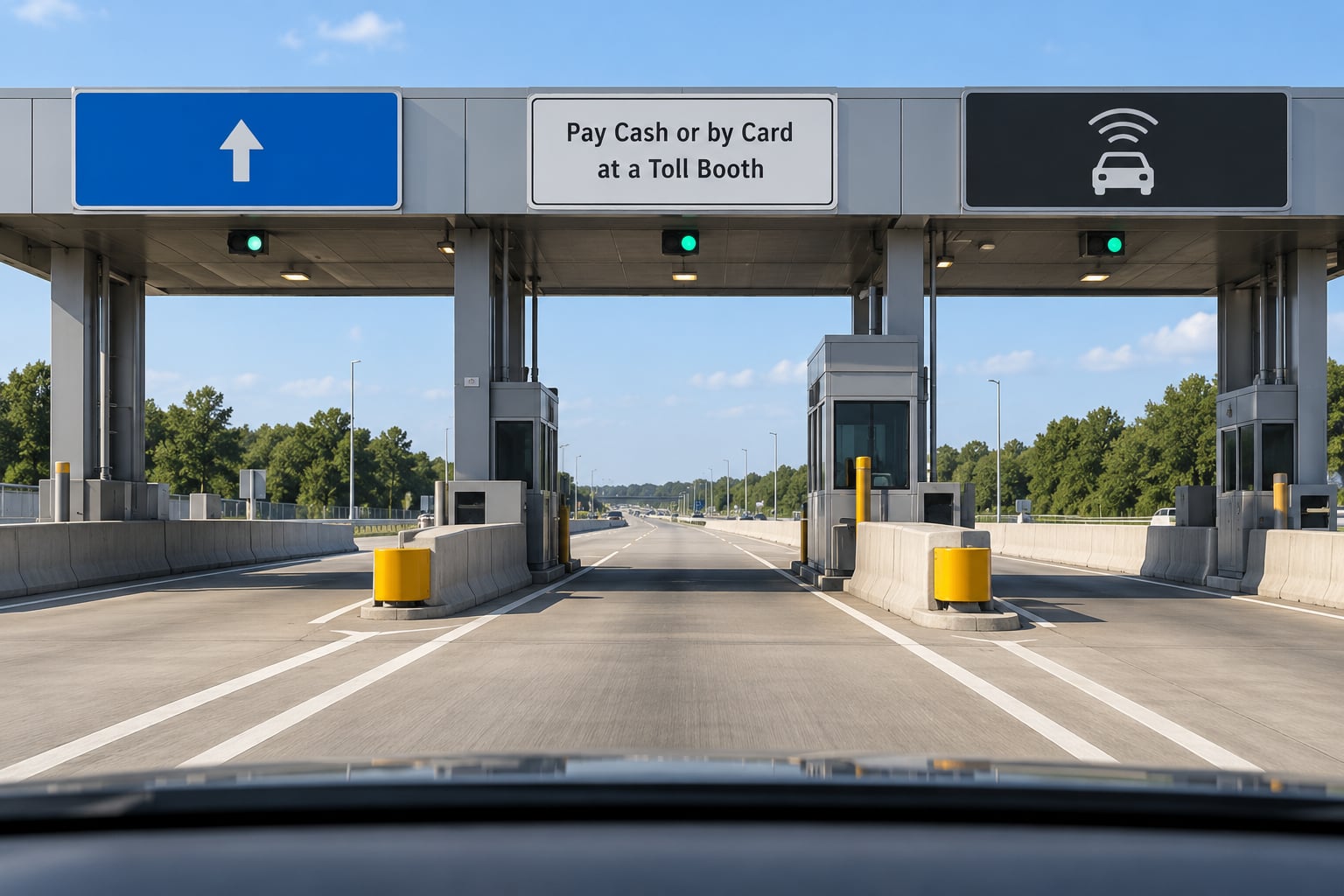
Plenty of toll roads still have staffed booths, and on those, cash and cards work fine. Some modernised plazas are cashless, which usually means they are also cardless, so there is nothing to pay with if you arrive with nothing but folding money.
Read the lane signage before you commit. Lanes marked with a coin symbol or a cash icon take bills and coins. Lanes marked with a card symbol take chip or contactless cards, sometimes with a small convenience fee. Lanes marked with a tag or transponder symbol are electronic-only and expect a transponder, a plate reader, or both.
Cash is worth carrying anyway. It settles the toll at the booth with no record of your plate on file anywhere, which removes the chance of a duplicate charge arriving later. It also protects you on the older bridges and ferries that have not converted yet.
The reason cash is no longer the default is speed. A gantry reads hundreds of plates per minute, and cashless collection is cheaper to run than staffing a booth. That is why an increasing share of roads have dropped cash entirely, and why you should assume any given toll road will not take it.
Check Rental-Car Policies and Administrative Fees
Rental cars are where toll handling gets expensive, and it is worth understanding the structure before you drive rather than after the charge lands.
Most major rental companies offer a toll programme. You sign up at the counter, the company registers its plate with the toll authority, and it deducts the toll plus a per-toll handling charge. Many programmes add a daily convenience fee on top, which some charge only on days when a toll is actually used, and which some apply retroactively across the whole rental period. That structure is the reason a single bridge crossing can turn into a line item several times larger than the toll itself.
Decide deliberately between three options, which is exactly the choice Los Angeles visitors face with FasTrak and rental cars:
Use the rental programme. Simplest, and the default when you do nothing. Best when you expect many tolls, because the daily fee spreads over a lot of charges.
Rely on pay-by-plate. Often costs the least when you cross only one or two toll roads. The rental company passes the authority’s invoice plus its own administrative fee, and the daily fee usually does not apply, because the company was not the one reading the toll for you.
Register the rental plate on your own transponder account. Gives you the standard rate and full control of the records, but you must add the plate before you drive and remove it afterwards, or you will be billed for other people’s trips.
Whatever you pick, do not use two at once. Running your own registered account while the rental programme is also active is the most common cause of double billing, and the duplicate charge is usually the harder of the two to refund.
Verify the Charge and Keep Your Records
A toll paid correctly should be traceable from end to end, and you should be able to prove it without help. That matters because charges arrive weeks later, sometimes after the trip is long finished.
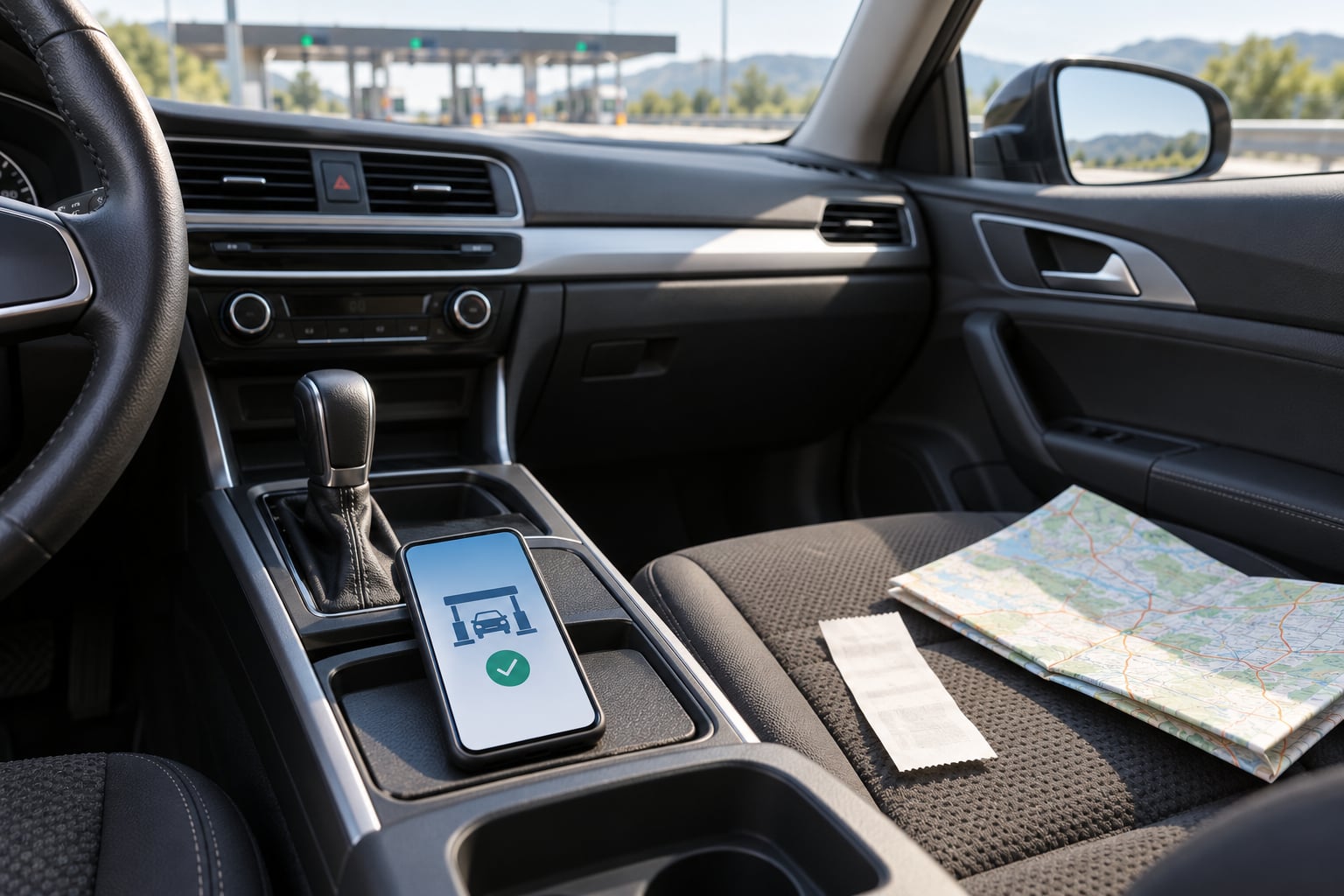
Save three things: the date and route, the toll point or bridge you crossed, and the payment confirmation. For pay-by-plate invoices, that means a screenshot of the paid portal or the emailed receipt. For account-based tolling, it means the account activity page showing the transaction in the days after you drove. For booth payments, it means the receipt, and for cash payments, a photo of your route and the time.
Then check that nothing is missing or duplicated. Most toll authorities show recent transactions in your account, so a quick weekly glance during a long trip catches problems while the evidence is still fresh. Photograph your vehicle’s odometer and rental agreement on day one, and note the plate number, because rental companies do hand off unpaid charges to collections agencies and those charges carry your contract details with them.
If a charge is wrong, act early. Toll authorities routinely waive fees when a driver has a valid transponder account that simply failed to read, and drivers on forums report that a phone call with the account number on hand resolved the charge outright. The same call resolves the accidental pass-through case, as long as you explain that you never had an account for that plate.
Common Mistakes
Entering the wrong plate number. A single wrong digit and the lookup fails silently, so the charge becomes a violation. Read the plate, photograph it on day one, and check the state field too, since portals default to the state you set at signup rather than the state on the car.
Paying twice. Most common when someone opens an account mid-trip without removing an earlier payment, or when both a personal account and a rental programme read the same toll. Pick one method per toll point and check the transaction list after the first crossing.
Missing the payment deadline. Plate invoices usually give a short window, often around ten days, and some states add an escalating penalty per unpaid toll on each notice. Pay the first notice the day it arrives rather than the second one.
Using a personal account for a rental without registering the rental plate. A personal transponder account bills only the plates on it. An unregistered rental plate is invisible to the account, so the toll falls through to the rental company and you get their fee instead of your own rate.
Assuming every toll road takes cash. Cash lanes are disappearing fast, and some roads are entirely cashless. Carry a card, and treat cash as a backup rather than a plan.
Going into a transponder-only express lane without one. Some express lanes let you in on plate billing, others will not. When in doubt, stay on the free lanes beside it and add travel time instead of risking the fee.
Forgetting to remove a rental plate from your own account. Leaving it registered keeps charging you, and keeps flagging charges when a different renter drives the same car. Remove it the day you return the vehicle.
Ignoring the first notice. Drivers on r/NewJersey and r/boston describe the same pattern repeatedly, where a transponder misread turns into escalating fees because nobody called. Fees have been reported climbing from a single unpaid toll into the hundreds after several notices went unanswered.
Paying an invoice for a trip you never made. Cloned plates, sometimes called ghost cars, produce invoices for journeys you were not on. Contest these through the toll authority with your rental agreement or registration record, and report them, because the same plate can keep generating charges.
Frequently Asked Questions
Can I use toll roads without a transponder?
Yes. Nearly every US toll road photographs your licence plate when no transponder is read, matches it to vehicle registration records, and sends an invoice to the registered owner. You pay the toll plus an administrative fee through the toll authority’s website or by mail. It is fully legal, and it costs more than the transponder rate. A personal online account registered to your plate is the cheapest way to do it.
How do rental cars charge tolls when I do not have a transponder?
The rental company is the registered owner, so the toll authority bills them. They pass the toll to your card with a per-toll handling fee, and many programmes add a daily convenience fee once any toll is used. Some apply that daily fee across the whole rental period. Ask for the programme terms at the counter, or register the rental plate on your own account before you drive.
What happens if I accidentally drive through a toll lane without paying?
A camera captures your plate and the authority sends an invoice with a payment deadline, usually about ten days. Pay within that window and nothing else happens. Ignore it and each notice adds an administrative fee, with some states escalating per toll on every letter. Because the authority looks up your registered address, the bill still finds you even if the car is long gone.
Can I pay a toll with cash or a credit card instead of a transponder?
Yes, where the road accepts it. Many staffed booths still take cash and cards, and card acceptance is now common at modernised plazas. Cashless roads have no booth at all, so there is nothing to pay on the spot, though you can usually pay the invoice by card online. Bring both, and read the lane signs before you commit to a lane.
How long do I have to pay a plate-based toll charge?
It depends on the toll authority, but many give roughly ten days from the date on the invoice before penalties start. Some states allow longer, some much less. Pay the first notice as soon as it arrives rather than the second one, because fees usually attach per notice and per unpaid toll, which is how a single crossing turns into a large balance.
Will using a toll road without a transponder affect my credit score?
Not on its own. A toll charge is a civil debt owed to a toll authority or a rental company, not a credit report entry. It can affect your credit only indirectly, if it goes unpaid and ends up in collections or is written off by the company you owed. Unpaid rental charges are more likely than a single toll to create that kind of problem.
Start by checking who owns the vehicle. If it is yours, register the plate on the toll authority’s website before you leave, which gets you the standard rate and clean records. If it is a rental, register that plate on your own account or take the rental company’s programme deliberately, and write down the date you drove so you can check the charge when it arrives.