Most highway rest areas do not have showers. They have restrooms, vending machines, sometimes a picnic shelter, and that is where the list ends. The reliable shower on a highway route lives at a truck stop or travel plaza near an exit, so learning how to find showers at highway rest stops is really about knowing which sources to check, what to verify, and what to do when the stop you planned turns out to have a broken shower and a long line.
This guide covers the whole routine: finding candidates along your route, confirming they are open and usable, and keeping a backup plan. It takes about ten minutes of planning and works whether you drive a sedan, a van, or an eighteen-wheeler.
Table of Contents
- What You Need Before You Search
- Step-by-Step: Finding a Shower You Can Actually Use
- Use Your Route and Direction of Travel
- Search Official State and Highway Websites
- Check Maps, Apps, and Reviews Together
- Confirm Before You Rely on It
- Use a Backup Shower Plan
- Common Mistakes
- Frequently Asked Questions
- Can I take a shower at a highway rest stop?
- Do non-truckers pay to use truck stop showers?
- Which app shows which rest stops have working showers?
- What are the alternatives when a rest area has no shower?
- How long can you stay at a rest area overnight?
- Conclusion
What You Need Before You Search
You need four things, and three of them are about information rather than gear.
- A smartphone or computer with current maps. Offline map downloads matter more than people expect, since cell coverage disappears exactly where rest areas tend to sit.
- Your route and direction of travel. Divided highways are the single biggest cause of a wasted detour, because facilities are built on one side and you may be passing on the other.
- The agency responsible for the road. For an interstate, that is the state department of transportation. For a national park road or a scenic byway, it is the park service.
- A way to check the details that change. Hours, fees, accessibility, seasonal closures and repair status. All of these shift, and none of them are permanent.
Worth adding to the list: a shower caddy with soap, a towel and a change of clothes. Finding the shower is the hard part. Being stuck in a plastic stall in a business suit is a different problem.
Step-by-Step: Finding a Shower You Can Actually Use
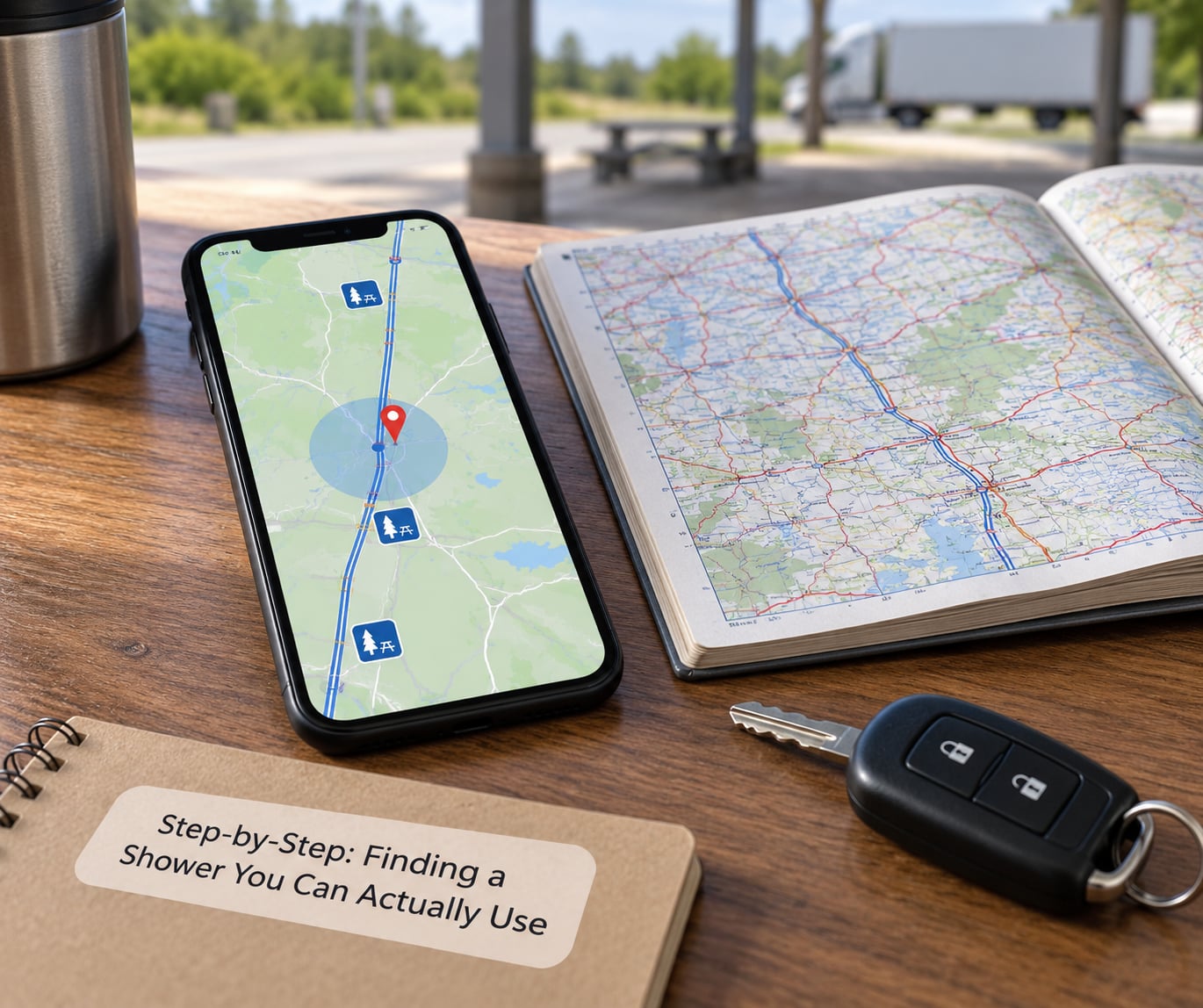
Use Your Route and Direction of Travel
Start from where you actually are, not from a list of the best showers in the country. Open your navigation app, look at the next planned fuel or meal stop, and search for facilities within a short drive of that point rather than halfway across the state.
Then check which side of the road you are on. Rest areas and travel plazas are built for one direction, and many divided highways force a full turnaround at the nearest interchange to reach them. A ten-minute detour to reach a shower is usually worth it. Twenty minutes of backtracking because you misread the entrance is not.
Pay attention to entrances too. Large travel plazas often have separate truck and car entrances, sometimes on different roads entirely. If you are driving a smaller vehicle, the car entrance is usually the quicker one and it leads to the same shower counter.
Search Official State and Highway Websites
After you work out how to find showers at highway rest stops on your specific route, the state transportation department site for that state is the most authoritative source you can check. Most states publish a rest area list with location, direction of travel, number of spaces and which amenities each site has.
That list tells you the truth about what a state-run site contains. Restrooms are standard. Showers are rare, because most states fund parking, lighting and restroom maintenance rather than a building with hot water and a fee counter. Reading the official amenity list saves you from assuming.
Park agencies publish similar information for national parks and forest roads, often with a separate note about showers at campgrounds, which do tend to have them. If your route crosses one of those, that is a different search than a highway rest area search.
Check Maps, Apps, and Reviews Together
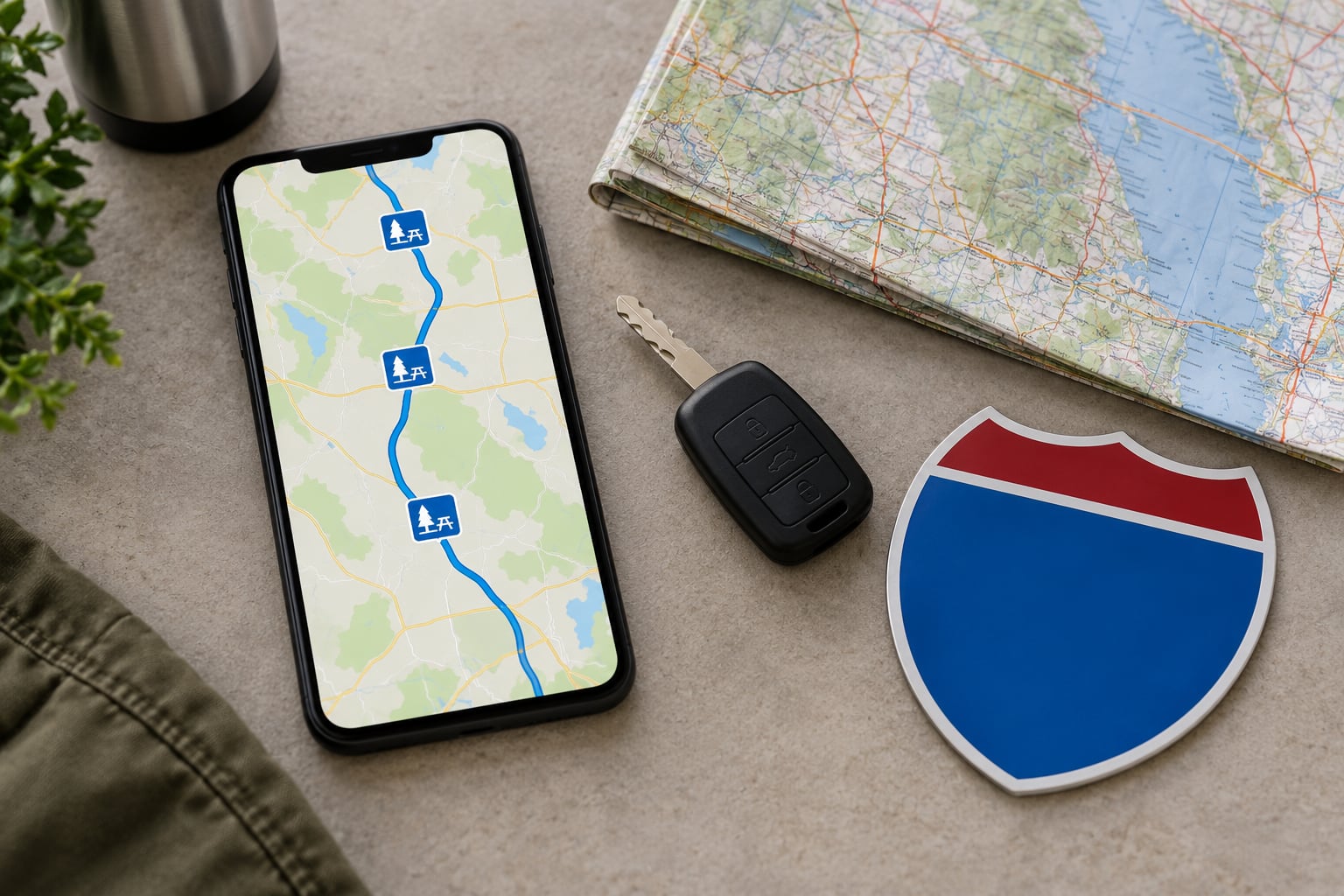
Truck-focused navigation apps carry the amenity detail that general maps skip. Trucker Path lists truck services with an amenity filter that includes showers. iExit builds a catalog of the businesses along an interstate, organized by exit, with fuel, food, parking and shower notes. Hammer and Find Truck Service work from the same premise in different ways.
Use one to build the candidate list and another to sanity-check it. Pull up the same stretch of highway in two apps. If a location appears in one and not the other, that is your cue to verify it by phone or on the official site before you commit to the stop.
Then read recent reviews. Look at the most recent two or three, not the overall score. What you want is practical detail: private or shared stalls, water temperature and pressure, how clean the floor was, whether the shower was out of order, and whether anyone was turned away for parking in the wrong area. Old reviews describe a different place.
General map apps also carry user-contributed notes with photos, which are useful for the same reason. Treat all of it as secondary evidence that points you toward a phone call, not as the final word.
Confirm Before You Rely on It
Before you drive to a shower, confirm five things: whether the site is open at your arrival time, whether showers are seasonal or fee-based, whether you need a key or a code from the cashier, whether the facility is accessible if you need step-free access, and whether there is another water source nearby if the shower fails.
The access detail matters more than most people expect. Older travel plazas built in an era of long truck parking often have showers at the back of a narrow building reached by a step or a ramp, while newer builds include accessible stalls. Where the shower building sits relative to the parking lot tells you a lot about parking rules too.
A quick call to the fuel desk is the cheapest verification there is. Ask whether the showers are working, what the fee is, and how long a car is allowed to park. You will get a straight answer in thirty seconds, and it saves a wasted stop.
Use a Backup Shower Plan
Have a second option mapped before you leave. When the first shower is closed or the line runs out the door, you want an alternate that is already on your route rather than a frantic search from a parking lot.
Travel centers near the next two or three exits usually give you more than one option. State parks and campgrounds along the route may have shower buildings open to day users for a small fee. Gym day passes are an underrated fallback in towns just off the highway, as are community pools during posted hours and YMCA facilities in the same buildings. If your route passes near a marina or a marina-style boat ramp with shower facilities, that is worth checking too.
And if no backup works out, a portable gravity shower bag hung from a tree or an awning handles a basic rinse. It is not the same as hot water, but it is the fallback that keeps a long trip workable. A shower caddy and a two-gallon water container take up less space than most people expect.
Common Mistakes
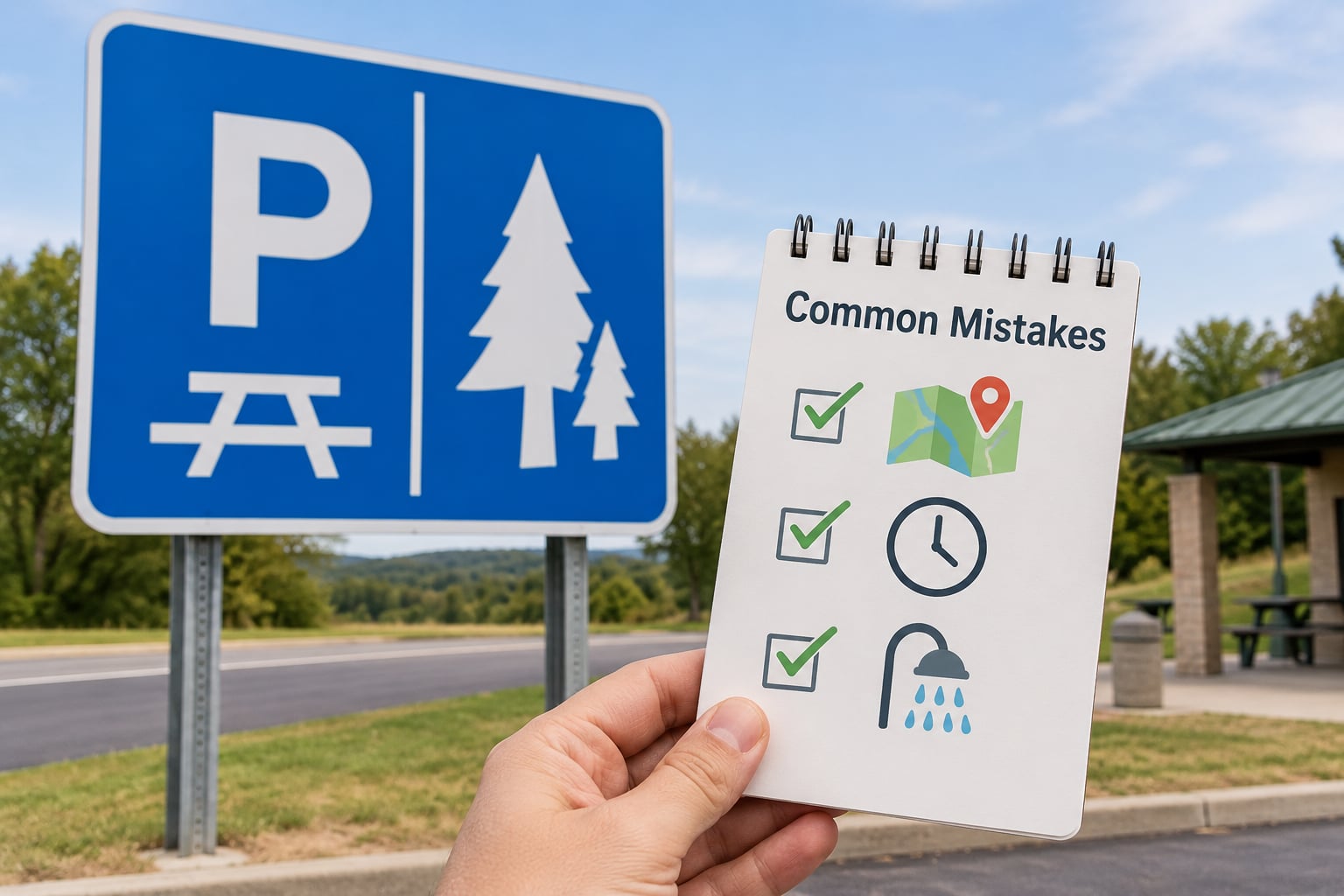
Assuming every listed rest area has showers. This is the most common error and the most expensive one, because a wasted stop costs you driving time twice. Fix: check the official amenity list for that specific site, not the general description of what rest areas offer.
Forgetting which side of the divided highway you are on. Fix: read the direction of travel field on the official list before you choose a stop, and compare it against your route heading.
Confusing a travel plaza with a public rest area. A public rest area is state-operated and free to use. A travel plaza is a business, and its showers cost money. Fix: if the name is on the map but not on the state list, it is a private facility, so expect a fee and expect parking rules to apply.
Trusting a listing you have not checked recently. Shower buildings get closed for repairs, and app data lags behind reality. Fix: check the review date and look for a photo of the shower itself, not just the fuel canopy.
Ignoring overnight parking rules when you plan to sleep there. Many states post time limits at rest areas, and some restrict overnight parking to commercial vehicles or carve out exceptions for severe weather. Fix: read the posted sign at the entrance, and verify the current rule on the state transportation department site before planning to sleep there.
Arriving at peak time. Shower demand spikes when drivers change shifts, mostly late evening and early morning, which is exactly when parking gets difficult too. Fix: aim for a mid-morning stop if your schedule allows, or plan a facility with more than one shower building.
Using a car in the truck parking field. Some plazas will direct you to the car side and some will not, and the conversation at the fuel desk is an unpleasant way to find out. Fix: use the car entrance, ask about parking when you call, and never park across truck bays.
One more thing worth doing on every long trip: check the state transportation department site ahead of each state you cross rather than in the middle of a rest area. It is the one source that stays accurate through policy changes, closures and construction.
Frequently Asked Questions
Can I take a shower at a highway rest stop?
Almost never at the state-run facility itself. Public rest areas are built for parking, lighting and restrooms, and showers are uncommon because they require hot water, maintenance and staffing. The realistic plan is to shower at a truck stop or travel plaza near an exit, where showers are a paid service with attendants or a cashier. Some rest areas that adjoin a travel plaza share the same building, so check the exit rather than the rest area alone.
Do non-truckers pay to use truck stop showers?
Yes. Anyone can buy a shower at a truck stop, and you do not need a semi to do it. The cashier hands you a key or a code and you pay per use. The friction is parking rather than access: use the car entrance, park in the car area, and ask how long you are expected to stay if you plan to sleep in the lot overnight.
Which app shows which rest stops have working showers?
Trucker Path, iExit and Hammer all let you filter locations by amenity, including showers, and each is more useful for this than a general mapping app. Cross-check two of them before you drive, because amenity data goes stale and shower buildings go out of service. Read the two or three most recent reviews for a candidate and look for recent photos of the shower interior.
What are the alternatives when a rest area has no shower?
A travel center at the next exit is the first option. Beyond that, campground shower buildings open to day users, gym day passes, community pools during posted hours, YMCA facilities, and marina shower houses are the ones that show up most often in practice. Keep a second candidate mapped before you need it, because searching for a shower from a full parking lot is how you end up skipping it entirely.
How long can you stay at a rest area overnight?
It depends entirely on the state. Many states post a time limit at the entrance, and some restrict overnight parking to commercial vehicles, sometimes with a weather exception. A few states allow longer stays on a case-by-case basis. Read the sign when you arrive, check the current rule on your state transportation department site, and treat posted signage as the answer that outranks any advice you get online.
Conclusion
Knowing how to find showers at highway rest stops comes down to four moves in order. Know your route and which direction you are travelling in, check the official state transportation department page for that highway, confirm the hours and the shower situation there, and keep a second facility mapped near the next exit.
The rest areas themselves will almost never hand you a shower. The travel plaza at the exit will, and a two-minute check before you leave saves you the hour you would otherwise lose finding out the shower is closed.