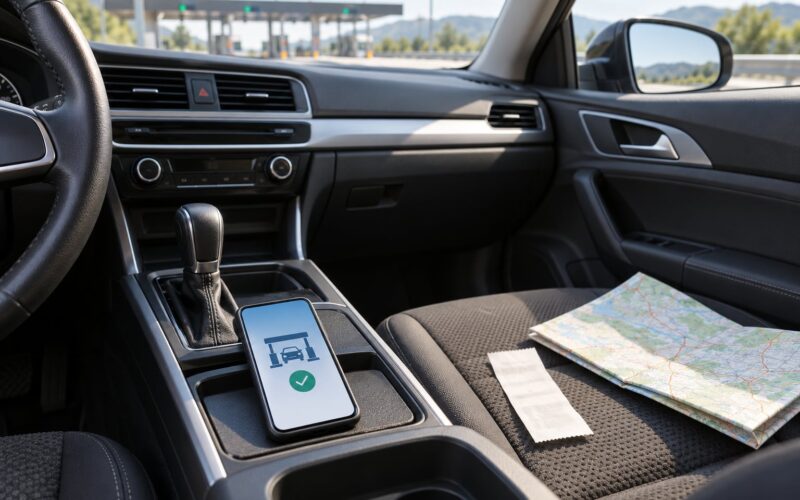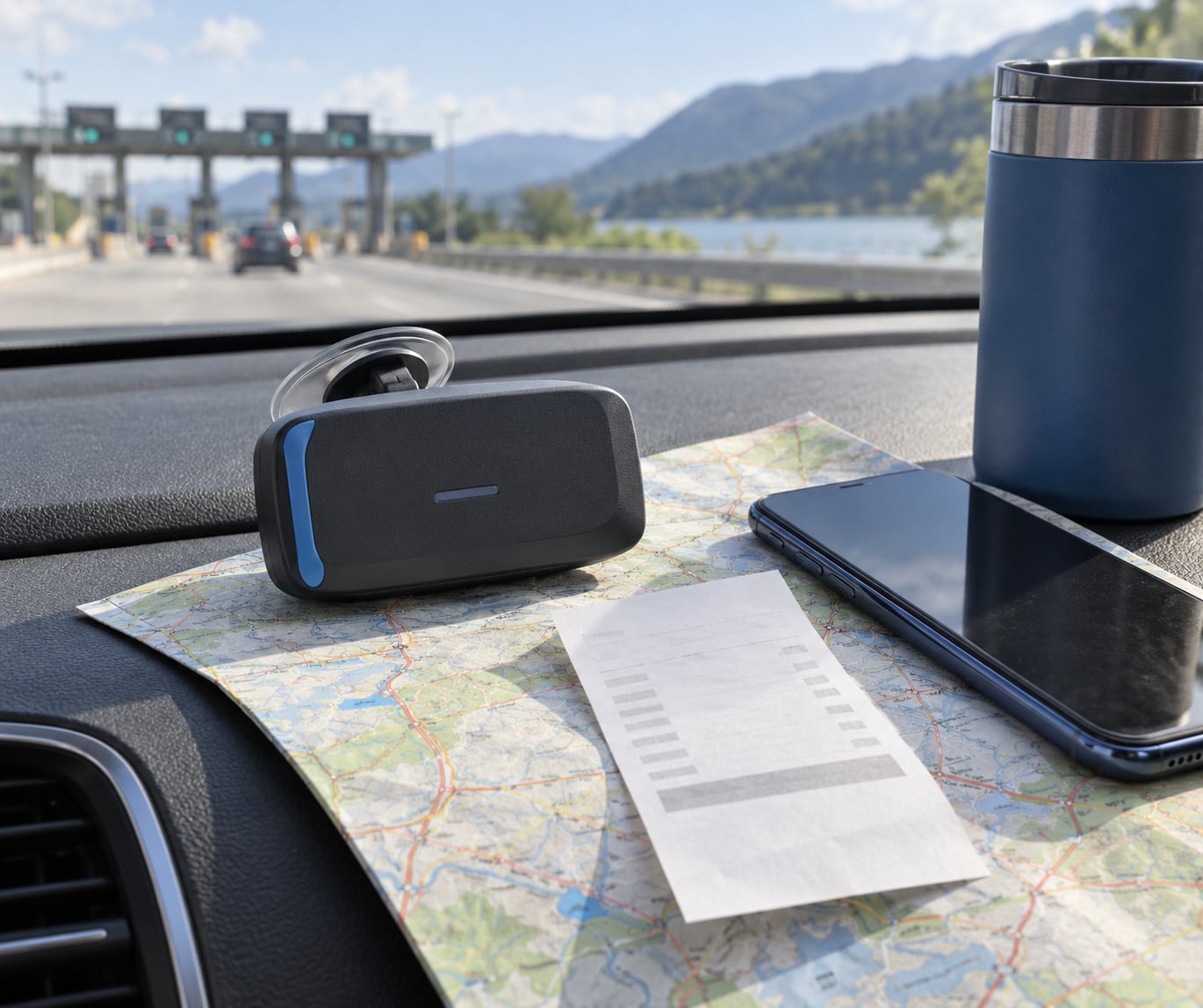
An electronic toll system charges a rental car by reading the vehicle’s transponder or license plate at a toll point, then billing the rental company as the registered owner. The company matches that toll record to your rental agreement and passes the toll plus its own administrative fee to the card you used at the counter.
That chain explains almost every surprise bill people argue about. You never stopped at a booth, so it feels like the charge came from nowhere — and it often shows up weeks after you turned the car back in.
Below is how the billing actually works, who can charge what, and what to check before you drive away.
Table of Contents
- How Electronic Toll Systems Charge Rental Cars: Quick Guide
- What Is an Electronic Toll System?
- How Does the Toll System Identify a Rental Car?
- What Happens When a Rental Car Passes Through a Toll?
- Who Pays the Toll and Administrative Fee?
- How Are Rental-Car Tolls Different From Ordinary Tolls?
- Can Rental Companies Charge a Toll Fee After You Return the Car?
- How to Check Your Rental Agreement Before Driving
- What Is the Cheapest Way to Deal With Rental-Car Tolls?
- How to Dispute an Electronic Toll Charge
- Frequently Asked Questions
- How do car rental companies charge for tolls?
- What happens if I use tolls on a rental car without a toll pass?
- Why does my rental company keep charging me for tolls after I returned the car?
- Can I use my own E-ZPass or SunPass in a rental car?
- Do rental car toll fees have a cap?
- How do I dispute an electronic toll charge on a rental car?
- Conclusion: Check the Toll Policy Before You Drive
How Electronic Toll Systems Charge Rental Cars: Quick Guide
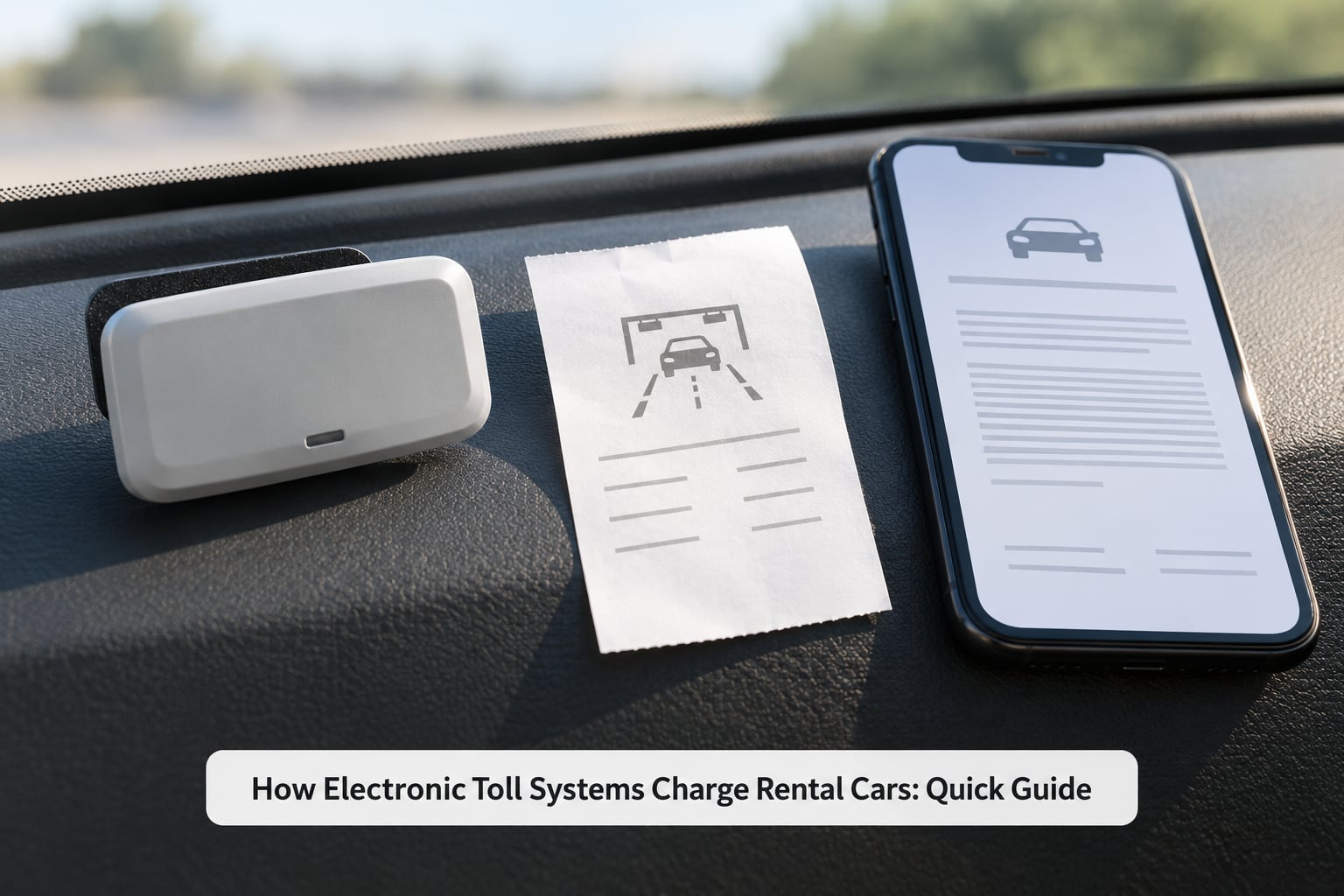
The whole process takes six steps, and every one of them happens without a human involved.
- The toll point records the crossing. A gantry over the road photographs the plate, reads a transponder, or both, and logs the time, location and direction.
- The toll authority matches the record to an account. For a transponder read, that is the transponder’s account. For a plate read, it is a photo and a search against registered-owner records.
- The authority bills the registered owner. On a rental, the registered owner is the rental company, not you.
- The rental company matches the toll to your rental agreement. They use your dates, your vehicle and your contract to decide who owes what.
- Program fees get added. Depending on the program you accepted, that is a daily fee, a per-toll administrative fee, a violation fee, or some combination.
- The total posts to your card. The statement line often shows a toll charge and a separate service or administrative charge from the rental company.
Steps one through three happen in seconds. Steps four through six can take weeks.
What Is an Electronic Toll System?
An electronic toll system charges vehicles without cash and without a booth operator. A physical structure over the lane — a gantry — carries cameras, sensors and readers, and the charge is created from the data it captures rather than from a person.
Traditional toll roads work the other way around: you slow down, you hand over money or a card, and you get a receipt if the booth gives one. Cashless lanes are faster because nothing physical has to move between the driver and the road.
Four charge methods show up most often in the United States:
- Transponder reads. A small RFID device on the windshield broadcasts an account number as you pass. This is the E-ZPass, SunPass, TxTag and PlatePass family of systems.
- License plate recognition. Cameras read the plate and the authority looks up the registered owner. Most authorities treat an unreadable or unmatched plate as a toll violation with a penalty attached.
- Toll-by-plate. In this model the plate photo itself becomes the invoice, billed to the registered owner. Florida runs toll-by-plate on many roads for exactly this reason.
- Online payment. Some authorities let you pay a toll by plate number through a website or app within a short window after you cross.
Interoperability is the part travelers trip over. A transponder works across participating facilities in a region, but a device issued for one agency’s roads may not be honored everywhere, so drivers who do not know the local rules can cross the wrong type of lane without noticing.
How Does the Toll System Identify a Rental Car?
There are only two ways a toll point can know a car exists: it reads a transponder mounted in the windshield, or it reads the license plate.
Transponder identification happens when the rental company supplied the device. The car arrives with a unit already mounted or stuck to the glass, pre-programmed to the fleet’s account. The toll is charged to that account, and the company later allocates it to your contract. Most rental programs are built this way, and many bill a flat daily fee for the privilege whether or not you cross a toll point that day.
Plate identification needs no device at all. The cameras photograph the plate, and the authority searches its records. Because a rental car is registered to the rental company, the bill lands on the fleet, then gets passed to you with fees attached.
This is why a charge can reach you with no booth, no operator and no transaction you remember. A camera works the same whether the car belongs to you, your neighbour or a rental fleet of several thousand vehicles.
Some facilities record both the transponder and the plate on the same pass. That is normal system behaviour, and it is also the root of the double billing described later in this guide.
What Happens When a Rental Car Passes Through a Toll?
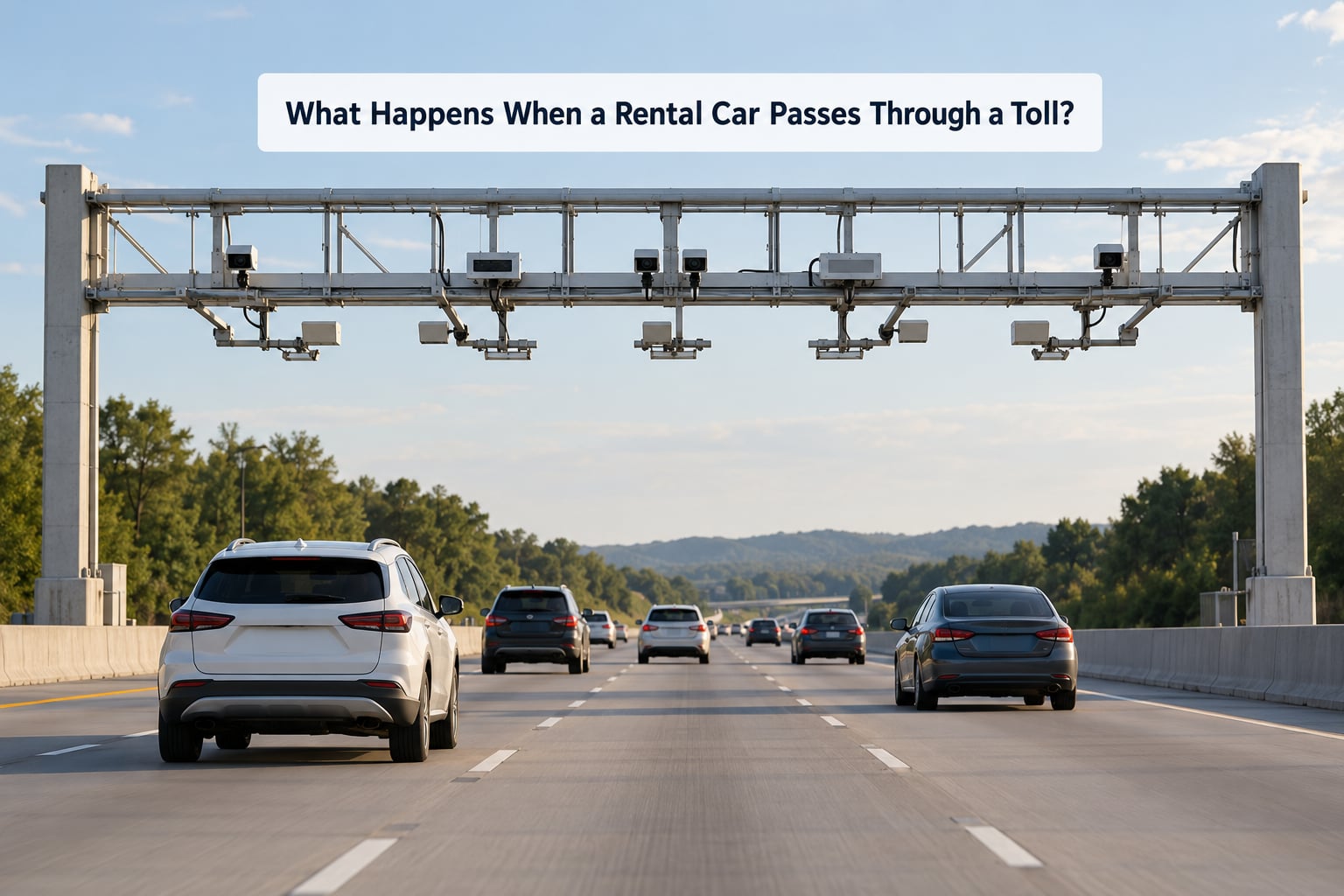
Here is the sequence in the order it runs.
- You cross the toll point. Most cashless lanes do not require slowing down. Some — usually managed express lanes — post a higher rate if the system cannot confirm a valid transponder, and toll agencies treat those charges as violations rather than simple unpaid tolls.
- A record is created. The system stores the plate image, the transponder ID if present, the timestamp, the facility and the direction of travel.
- The authority sends the invoice. Transponder reads go straight to the toll agency. Plate reads go through the agency’s billing contractor, which researches the registered owner.
- The rental company receives it. The bill comes to the fleet, usually with the agency’s own service charge on top of the toll.
- The company applies your contract terms. This is where a daily convenience fee, a per-toll administrative fee or a violation charge gets added, depending on the program you accepted.
- Your card is charged. The payment instrument you gave at the counter is billed after a review period. Review periods vary widely, which is why some statements arrive within days and others arrive after the trip is over.
The record that eventually reaches you usually contains a toll amount, a location, a date and a time. Keep those four details — they are exactly what you need if the charge turns out to be wrong.
Who Pays the Toll and Administrative Fee?
Four parties are involved, and each one earns something in the process.
- The toll authority owns the road and sets the actual toll rate. Some also add their own penalty when a vehicle does not pay by the expected method.
- The billing service provider is the company that reads plates and chases the registered owner. It is paid by the authority to collect what it is owed.
- The rental company is the registered owner in the eyes of the toll authority, so the bill legally arrives there first. It then applies the terms of your rental agreement and recovers its costs from you.
- You owe the toll under your agreement, plus whatever administrative fees that agreement allows.
The important detail for a renter: administrative fees are not set by the toll authority. They are set by the rental company and they vary by contract, by brand, and sometimes by the state or facility region where you drove.
Rates and fee rules change, and they differ by location, so read your own agreement rather than assuming a standard amount. Our advice is not legal or financial guidance — for a specific charge on a specific invoice, ask the rental company to point you to the clause in your contract that applies.
How Are Rental-Car Tolls Different From Ordinary Tolls?
Paying a toll in your own car and paying one in a rental car feel identical at the point of crossing. The billing afterwards could not be more different.
Paying at a cash booth or online yourself. You pay the face amount, you may receive a receipt, and the transaction is finished before you leave the facility. This is the cheapest path when it is available and you know how to do it.
Using a personal transponder. Your own device bills your own account at the negotiated rate, and you get a statement afterwards. Many rental agreements permit this, though some restrict it, and some states require the rental car to be listed on your transponder account before you drive.
Letting the rental company handle it. The charge is simple at the crossing and complicated at the invoice. You may have accepted a program that bills a fee every rental day regardless of use, or a program that only bills per toll crossed.
Two risks come with the third option. The first is a fee for days you never drove on a toll road. The second is a device fee added because the transponder was not returned or was reported missing, which can be added as a separate line weeks later.
Can Rental Companies Charge a Toll Fee After You Return the Car?
Yes. Most of these charges arrive after the vehicle is back in the lot, and that delay is the single biggest reason renters dispute them.
The sequence is straightforward. Plate-based tolls often take several days to be researched by the billing contractor before they even reach the rental company. The rental company then holds the charge internally for a review window before billing the card on file. Add a card statement that needs time to post, and a one-week toll can surface as a statement item three or four weeks after the trip.
What you can do is keep the record. Note the pickup date, the return date and the time, the odometer reading if you took one, and the route you drove. Your own phone navigation history is a surprisingly solid reference, because it timestamps your movements without any help from the rental company.
Also keep the toll receipts you paid yourself. A cash toll you paid and a plate toll billed separately is a duplicate charge, and receipts are the fastest way to show that.
How to Check Your Rental Agreement Before Driving
Five minutes at the counter can save the entire problem. Ask these questions and get the answers written down or shown on your copy of the agreement.
- Is a toll program included automatically? Some brands pre-enroll you at checkout. Find out whether you can decline it, and whether declining is even possible at that location.
- How is the program billed? Daily fee, per-toll fee, or a flat all-inclusive rate. Also ask what the cap is and whether the cap applies per rental or per month.
- Is a physical transponder in the car right now? If yes, ask whether it is active and whether you are being billed for it daily. A car can arrive with a mounted unit that was not switched on.
- Can I use my own transponder? Ask specifically about your device and your state. Some agreements permit personal devices only if the car is registered to your account first.
- What happens to a device fee? Ask what happens if the transponder is missing or damaged at return, and what documentation you need if you dispute a charge later.
Also confirm whether the vehicle may be used on toll roads, bridges and tunnels at all. Some fleet vehicles are restricted from certain facilities, and a breach of that restriction can void insurance coverage rather than just create a fee.
What Is the Cheapest Way to Deal With Rental-Car Tolls?
There is no single cheapest option, because the answer depends on where you are driving and for how long. Match the strategy to the trip.
- Short city trips with no toll roads. Pay nothing and take no program. Set your navigation to avoid tolls, and you keep the whole topic out of your trip entirely.
- A weekend trip with one or two toll crossings. Pay each toll yourself at a booth or through the authority’s own app where available. This keeps the cost at the face amount with no rental-company layer on top.
- A week with several crossings. Compare the per-toll program against your own transponder. Do the arithmetic on the toll routes you actually plan to drive, not the whole region.
- A month-long rental. An all-inclusive or capped program usually wins here, because daily fees add up faster than the tolls themselves. Long rentals also make a personal transponder harder to justify unless your account is portable.
- Roads with mandatory electronic tolling. There is no paying yourself option. In Florida’s cashless network and on many managed express lanes, the only choice is a valid transponder or a plate bill, and the plate bill is the expensive path.
Whatever you choose, tell the navigation app to avoid tolls and check the route before you leave the lot. Several travelers have found that a toll-avoiding setting adds a surprising amount of time on secondary roads, which is its own kind of cost.
How to Dispute an Electronic Toll Charge
Work through this in order, and stop as soon as the charge comes off.
- Pull up the record. Compare the plate, date, time and toll location against your trip. A single mismatched digit in a plate is a common cause of a charge that is simply misassigned.
- Check for duplicates. Look for two charges for the same crossing on the same day. A transponder read plus a plate read shows up as a toll line and a service line, and both can be billed to you.
- Separate the toll from the fee. Often only the administrative fee is being challenged. Some rental companies will adjust a fee without removing the toll itself.
- Contact the rental company first. Use the number on your agreement or your statement. Give them the rental agreement number, the dates and the toll details. Ask for the fee clause they are relying on.
- Escalate to the toll authority if the toll itself is wrong. If the charge came from a facility you never used, raise it with the authority that billed the registered owner, and give them your rental dates. Provide your returned rental agreement when you file the dispute.
- Keep a written trail. Reference numbers, dates and names. Consumer protection agencies and credit card issuers can act on a paper trail, and some issuers will dispute a service charge that a merchant will not remove.
Disputes that name a specific state you never visited are worth filing. Plate misreads and system errors do happen, and a rental fleet of similar vehicles in one color is not always a help when a camera makes a call at a distance.
Frequently Asked Questions
How do car rental companies charge for tolls?
The toll point reads a transponder or photographs your plate, then bills the rental company as the registered owner. The company matches that record to your rental agreement and charges the card you used at the counter, adding whichever program fees your contract allows, such as a daily convenience fee, a per-toll administrative fee, or a violation charge.
What happens if I use tolls on a rental car without a toll pass?
Nothing stops at the crossing. The facility records your plate or transponder and bills the rental company, which then applies the terms of your agreement. You may end up owing the toll plus a per-toll administrative fee, or a flat daily fee for every day of the rental if your contract enrolled you in a daily program automatically. The charge usually reaches your card weeks later.
Why does my rental company keep charging me for tolls after I returned the car?
Because plate-based tolls take time to be photographed, researched and passed to the rental company, and companies normally hold charges for a review window before billing. A charge from a trip in one month can therefore appear on a statement in the next. Keep your pickup and return dates and your own travel records, since those are what you need to challenge it.
Can I use my own E-ZPass or SunPass in a rental car?
Often yes, but check first. Some rental agreements allow a personal transponder and others restrict it, and certain states want the rental vehicle listed on your account before you drive. The bigger risk is double billing: if the rental car’s own transponder is active at the same time, one crossing can be charged twice. Remove the rental unit or shield it before using yours.
Do rental car toll fees have a cap?
Many programs do, and the cap is one of the few numbers worth confirming at the counter. Caps usually apply per rental or per month rather than per day, and they may limit either the administrative fees or the total. Programs differ by brand and sometimes by region, so ask what the cap is on your specific contract rather than assuming a standard limit exists.
How do I dispute an electronic toll charge on a rental car?
Start by comparing the plate, date, time and location on the charge against your trip. Check for a duplicate, since a transponder read and a plate read for the same crossing can both be billed. Contact the rental company with your agreement number and ask which contract clause supports the fee. If the toll itself is wrong, escalate to the toll authority that billed the registered owner.
Conclusion: Check the Toll Policy Before You Drive
Electronic tolls charge a rental car in one predictable way: the road bills the fleet, the fleet bills you under your contract. Nothing about it is mysterious once you know where the invoice starts and who adds the fees on the way back.
Do three things. Ask at the counter whether a toll program was added to your agreement and how it bills. Write down your pickup and return dates so you can check any later charge against your actual trip. Then read your final statement carefully, because that is where duplicates and fees for days you never drove show up.
Rules and fee levels differ by state and change over time, so treat any figure you see elsewhere as a starting point and check your own paperwork.