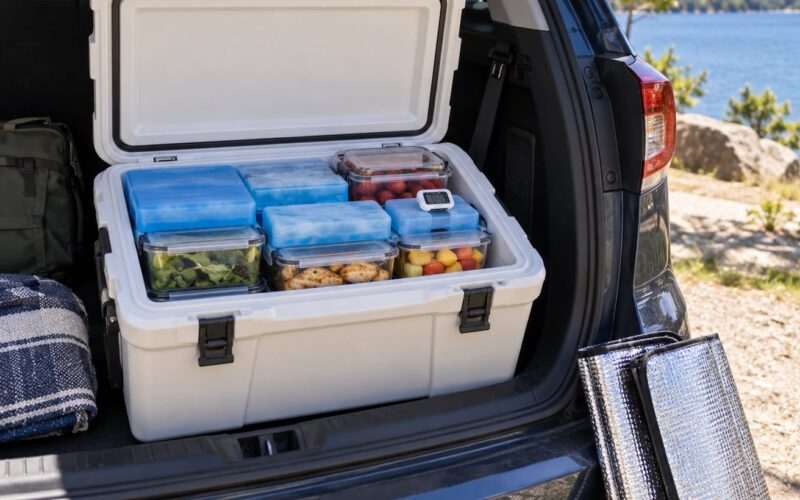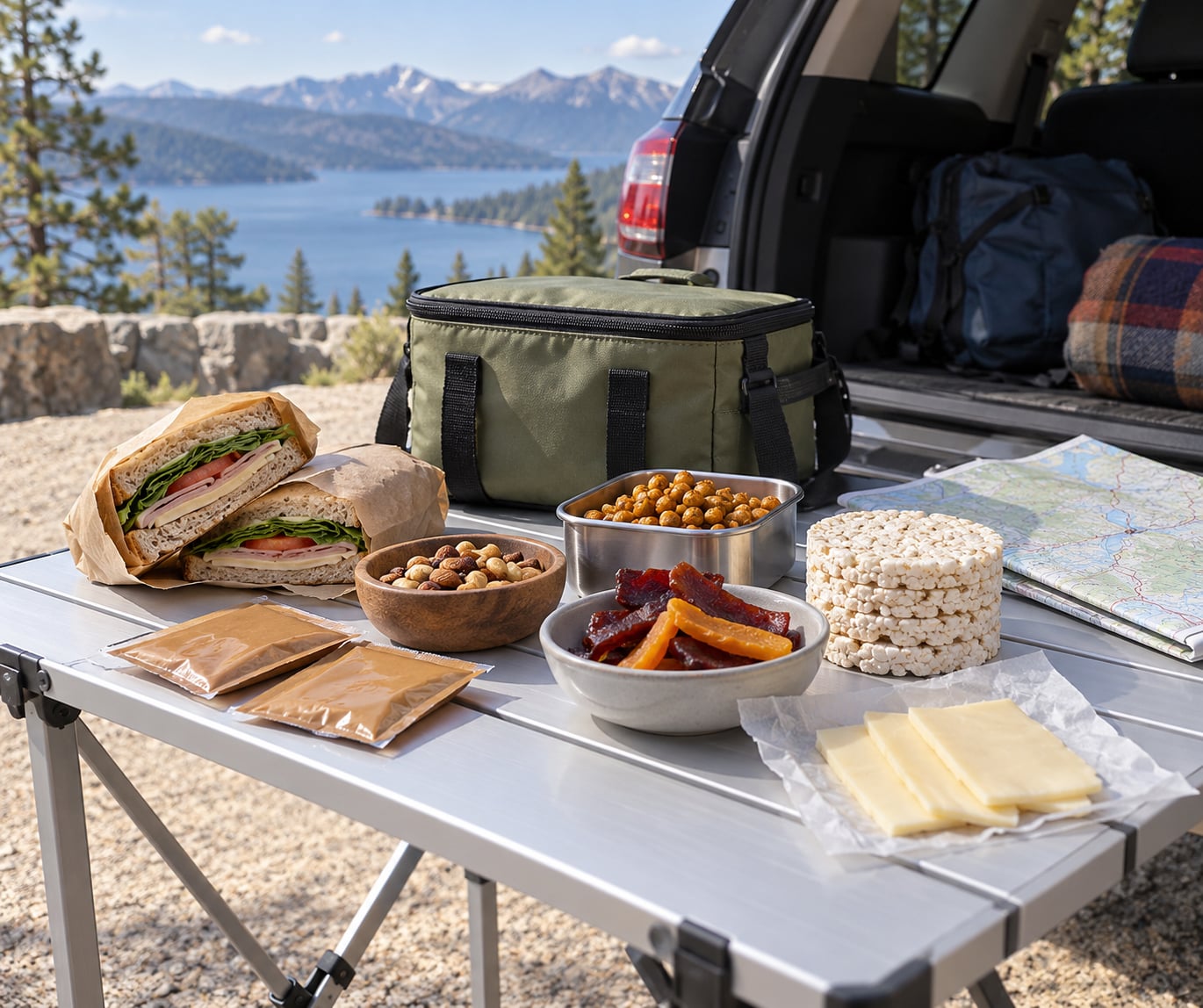
Road trip snacks that do not melt are low-moisture, shelf-stable foods that stay solid and safe in a parked car where summer interiors routinely climb past 120F: beef and plant-based jerky, nuts, roasted chickpeas, dried fruit, apple chips, crackers, rice cakes, gummies, popcorn and individually wrapped cheese.
The reason is simple physics. Water and fat decide almost everything, and the same rule explains why a bag of chips survives a July drive while a chocolate bar turns into a smear across the wrapper.
This list is built for summer trips specifically, when “does it need ice?” matters more than anything else. I have packed for desert crossings with two kids and a dog, and the snacks that survived were never the interesting ones. They were the boring shelf-stable ones in individual wrappers.
Two quick notes before the list. First, an item surviving heat does not mean it is good forever — some snacks fail through sogginess or staleness rather than melting, and those have different fixes. Second, nothing here requires you to buy anything online; every option is a normal grocery aisle or convenience store item you can pick up on one run before you leave.
Table of Contents
- Road Trip Snacks That Do Not Melt at a Glance
- Road trip snacks that do not melt share two traits: low water and stable fat
- How hot does a parked car actually get, and does food safety still apply?
- 1. Peanut Butter and Jelly on Whole-Grain Bread
- 2. Shelf-Stable Nut Butter Packets
- 3. Beef, Chicken, and Plant-Based Jerky
- 4. Waxed Paper-Wrapped Cheese Slices
- 5. Whole-Grain Crackers and Cheese Crackers
- 6. Dried Fruit, Veggies, and Fruit Leather
- 7. Mixed Nuts and Trail Mix Without Chocolate
- 8. Protein Bars Chooseable by Texture
- 9. Rice Cakes and Crispy Bread Sticks
- 10. Shelf-Stable Dips in Single-Serve Cups
- 11. Whole Fruit with a Knife and Napkin
- 12. Popcorn and Dry Cereal
- Frequently Asked Questions
- What are the best road trip snacks that do not melt without needing refrigeration?
- Are nut butter packets safe to keep in a hot car?
- How long can shelf-stable snacks stay unrefrigerated during a road trip?
- Can I bring cheese on a road trip without a cooler?
- What snacks are best for a long drive when I do not want crumbs or mess?
- How should I pack snacks so they stay fresh and do not break apart?
- Conclusion
Road Trip Snacks That Do Not Melt at a Glance
Each snack below gets a heat verdict, a texture note and the situation it works best in. Use the table to shortlist before you shop.
| Snack | Texture | Heat tolerance | Best for |
|---|---|---|---|
| Peanut butter and jelly sandwich | Soft, holds together | High if packed dry | Big drives, no cooler |
| Nut butter packets | Smooth, single serve | Very high | Mess-free protein on the go |
| Jerky, any variety | Dry, chewy or crisp | Very high | Saving fuel and staying full |
| Wrapped cheese slices | Firm, portioned | Moderate, cooler for long trips | Carb-light, kid friendly |
| Whole-grain crackers | Dry, brittle | High, keeps crunch | Pairing with spreads |
| Dried fruit and fruit leather | Chewy to sticky | Very high | Sweet, no refrigeration |
| Mixed nuts, no chocolate | Crunchy | Very high | Long stretches of highway |
| Firm baked protein bars | Dry, dense | High if uncoated | Sustained energy |
| Rice cakes and bread sticks | Light, very dry | Very high | Low calorie, low mess |
| Shelf-stable dip cups | Smooth, wet | High, check the label | Vegetable dips, protein |
| Whole fruit | Firm, juicy | Moderate, shade only | Hydration plus real food |
| Popcorn and dry cereal | Light, airy | Very high | Filling, cheap, quick |
Road trip snacks that do not melt share two traits: low water and stable fat
Water is what turns a snack into soup. A fresh grape is roughly 80 percent water, which is why it collapses into sticky nothing once it warms up. A dried mango slice has most of that water removed, so heat has almost nothing to work with.
Fat decides the rest, and not all fats behave the same. Cocoa butter holds its shape longer than the milk fat and sugar in a standard chocolate bar, which is why people on golf and fishing forums keep recommending dark chocolate as the summer-safe option while warning off coated bars and regular milk chocolate. Nut butters tolerate heat better than most people expect, since they soften before they liquefy.
On Reddit, r/TwoXPreppers threads about car survival kits converge on a strikingly short list: jerky, nuts in individual packets, peanut butter crackers, dried apricots and individual bowls of cereal. That is not a coincidence. It is exactly the low-water, shelf-stable profile above.
How hot does a parked car actually get, and does food safety still apply?
A lot, and yes. Interior temperatures in a parked car on a warm day routinely exceed 120F, and the USDA and FoodSafety.gov treat anything between 40F and 140F as the danger zone where bacteria multiply quickly. Their rule for picnics and road trips is straightforward: perishable food should not sit unrefrigerated for more than two hours, and only one hour when the air temperature is above 90F.
For reference when you are packing cooked meat: poultry needs 165F (74C), ground meat 160F (71C), and whole cuts of meat or fish 145F (63C) before they are safe. That is the argument for the jerky and nut butter approach — those foods need no thermometer and no cooler at all. Fresh cut fruit, cut sandwiches, dips with dairy and anything from a deli counter are the items to put on ice, not the trunk.
1. Peanut Butter and Jelly on Whole-Grain Bread
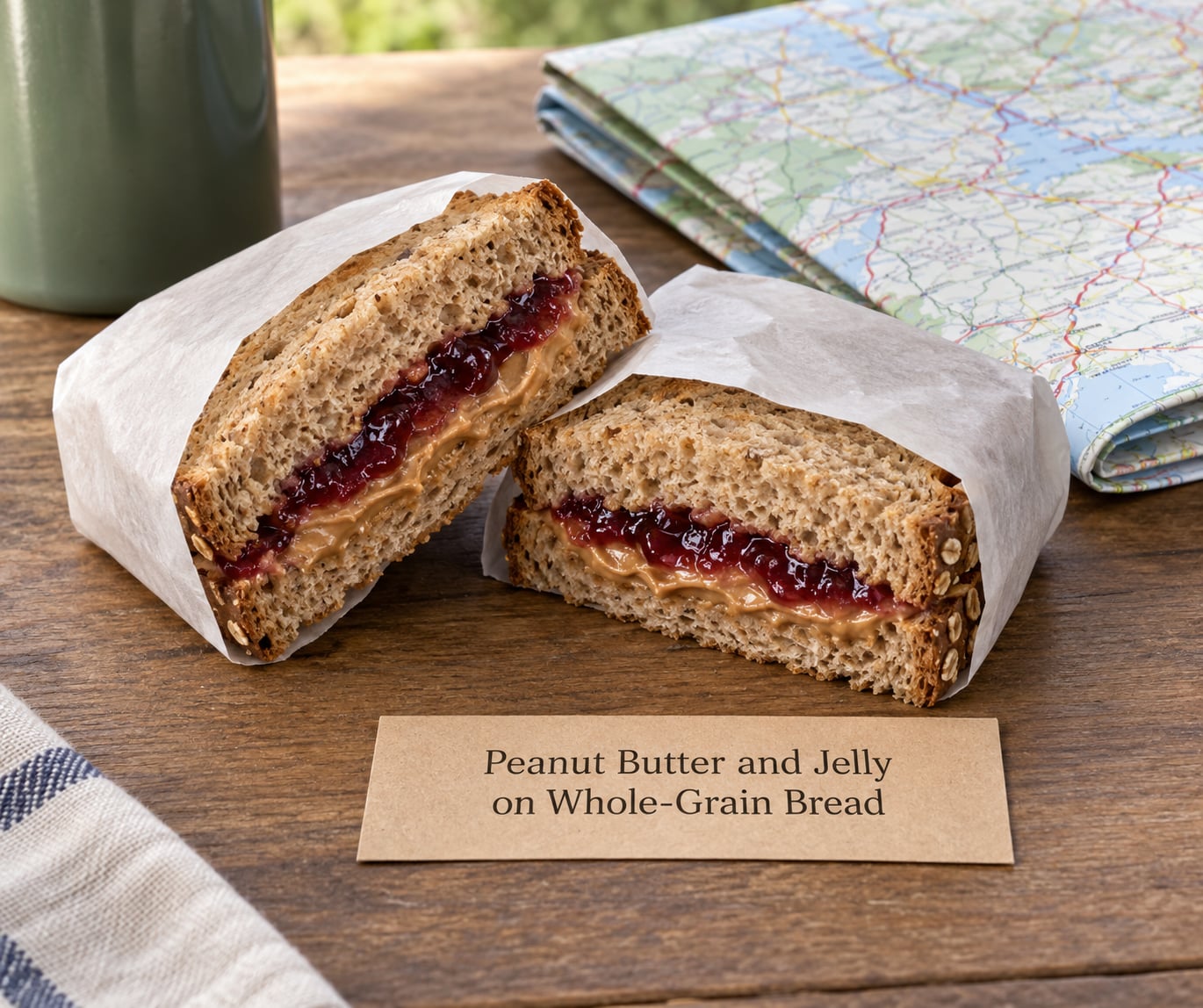
A peanut butter sandwich is the cheapest, fastest fix for a driver who is genuinely hungry, and it needs no ice. The catch is that heat turns bread soft and gummy long before anything melts.
Use bread that is not squishy to begin with, spread the butter thick and thin the jelly so it cannot seep through, and wrap each half in parchment or foil rather than plastic. Keep sandwiches in a hard-sided container or a cardboard carrier so nothing crushes them, and stash them in the coolest shaded part of the cabin instead of the dashboard.
2. Shelf-Stable Nut Butter Packets
Single-serve peanut, almond and cashew butter packets solve two problems at once: no jar to clean up, and no risk of a melted lid leaking oil across your bag.
They are also the most useful snack for dipping without a spoon. Pack apple slices, banana pieces, celery sticks or whole-grain crackers in a divided container and squeeze a packet over the top. Peanut and cashew butters soften in heat but do not spoil at car temperatures, so a packet left in a hot cabin for a few hours is still fine.
3. Beef, Chicken, and Plant-Based Jerky
Jerky is the most heat-proof protein snack there is, because the water is already gone. Traditional dried varieties last for months in a sealed bag; softer commercial styles are closer to a few weeks but still need no refrigeration.
Portions matter more than flavor here. Small pouches rather than one large bag mean a flat, boring, protein-heavy meal every few hours without the car smelling like a jerky factory for the next week — a problem people mention often. Check labels for chocolate-covered or heavily sauced varieties and skip those in summer, since the coating is the part that gives out first.
4. Waxed Paper-Wrapped Cheese Slices
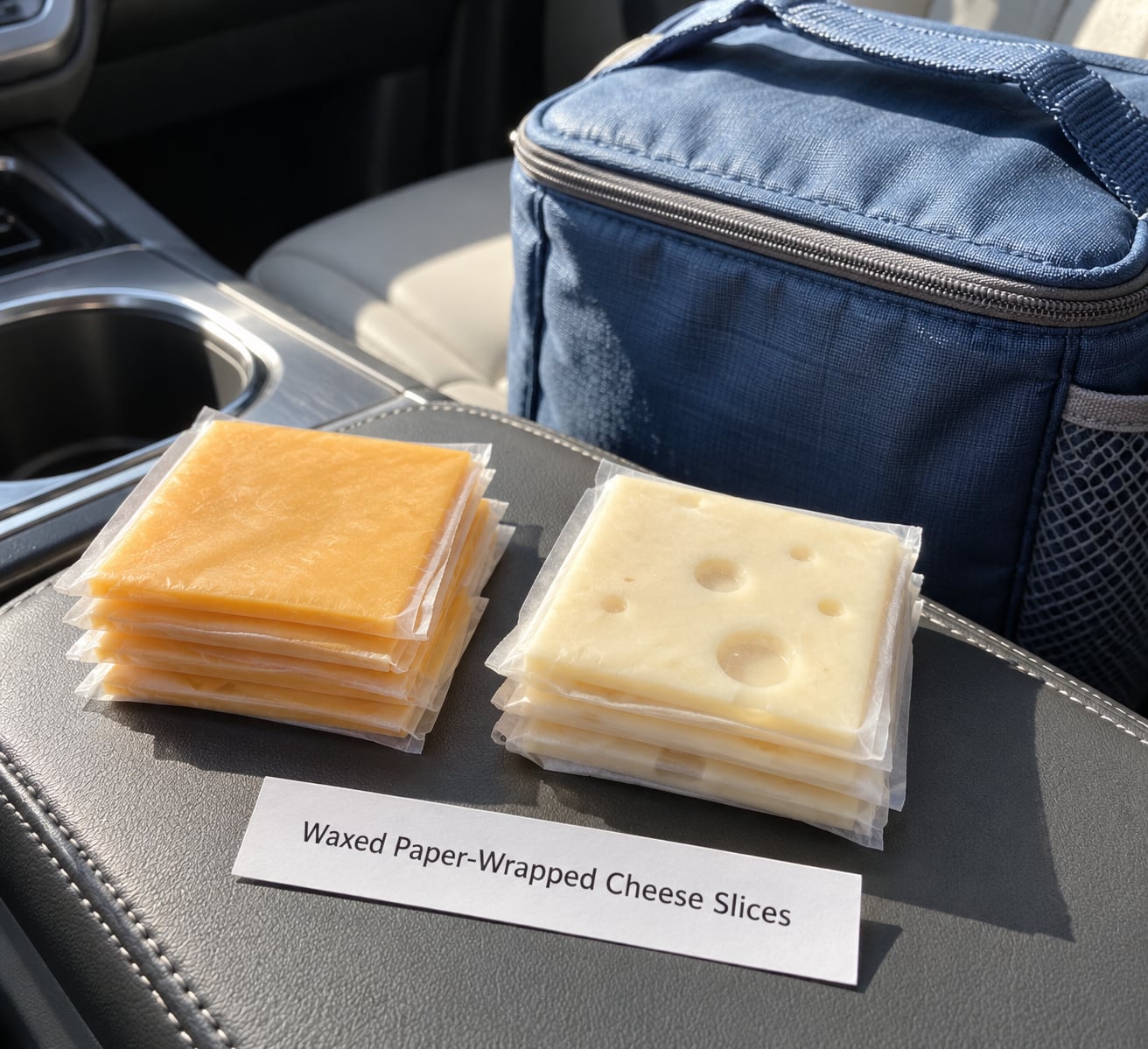
Individually wrapped cheese is the compromise between butter and crackers and a real cooler. Semi-hard slices like cheddar, Swiss and provolone tolerate a few hours at car temperature without spoiling, and string cheese is reported to hold up even better.
The honest caveat: cheese is perishable, so it belongs in an insulated bag with an ice pack if the drive runs long, the weather is extreme, or there are kids who will leave a wrapper open all afternoon. Stick to pre-sliced single servings instead of a wedge you have to cut, and pick up a small block of harder cheese for snacking rather than soft brie or fresh mozzarella.
5. Whole-Grain Crackers and Cheese Crackers
Crackers are more structurally reliable than potato chips, which arrive at the end of a trip as dust. The reason is moisture: crackers are baked until dry, so they hold their crunch, while chips are fried and absorb humidity from the air around them.
Pair them with nut butter packets, shelf-stable dip cups or thin slices of hard cheese. Stack them flat in the container rather than loose, and put a sheet of parchment or a napkin between layers so they do not fuse into one brittle brick on a jostling road.
6. Dried Fruit, Veggies, and Fruit Leather
Dried fruit is the most compact sweet option on this list. Apricots, mango slices, banana chips and unsweetened dried cranberries carry almost no water, so heat has no liquid to turn into paste.
Fruit leather is the exception to watch, since pure fruit leathers can fuse into one solid sheet in a hot bag. Break the sheets into strips before packing and slip a small piece of parchment between layers. If you want crunch instead of chew, apple chips and veggie chips hold up better than raisins, which reviewers often describe as the worst offender in a hot trail mix.
7. Mixed Nuts and Trail Mix Without Chocolate
Build your own mix instead of buying one, and skip anything chocolate-coated or heavy on raisins. Raw nuts and roasted chickpeas are stable in heat and keep a driver occupied for a long time, which matters more than nutrition on a six-hour run.
Do it in two small containers rather than one large bag. A bulk bag lets you eat by the handful without portioning, which means you finish it in the first hour. Portion cups stacked in a tackle box are the cleanest solution and they double as the box you hand to a kid in the backseat.
8. Protein Bars Chooseable by Texture
Bars fall into two groups. Soft fruit-and-nut bars like a dense fruit bar can slump in a hot car, while firm baked and raw bars hold their shape for hours — pick those for summer.
Skip anything with a chocolate or yogurt coating, since that is the layer that fails first. Read the ingredients list rather than the front of the pack: oats, dates, almonds and rice crisp are fine, and the word chocolate anywhere in the first three ingredients means it needs a cool bag.
9. Rice Cakes and Crispy Bread Sticks
Rice cakes are about as heat-proof as food gets — dry, airy and nearly weightless to carry. They make an excellent base for nut butter, canned fish spread or a slice of hard cheese, and they cost almost nothing to add to the bag.
The only real problem is breakage. Rice cakes shatter into dust in a loose bag, so pack them in their original sleeve or between two pieces of cardboard in a container. Bread sticks and melba toast are sturdier and better for dipping.
10. Shelf-Stable Dips in Single-Serve Cups
Hummus and bean dips are not all the same. Traditional refrigerated tubs spoil, but shelf-stable single-serve cups are formulated to sit at room temperature until opened, and some are safe after opening for a short window.
Always read the storage line on the specific cup before you buy it, since water content and preservatives vary by brand. Pack sturdy dippers — carrot sticks, cucumber rounds, endive leaves or baked pita chips — in a separate compartment so nothing goes soft on the way to the car.
11. Whole Fruit with a Knife and Napkin
Whole apples, oranges, clementines and grapefruit are the only fresh fruit that has a fighting chance in a hot car, because the peel protects the flesh and the fruit does not get cut until you are ready to eat it.
Bring a small knife or a folding fork, and park in shade rather than sun. Cut fruit that has already been sliced bleeds juice everywhere and turns to mush within about 90 minutes, which is the exact problem people describe on road trip forums. Keep bananas for the night before departure or for overnight stops, not for hour three of a hot afternoon.
12. Popcorn and Dry Cereal
Both are cheap, filling and completely immune to heat, which makes them the best fallback when the rest of the bag is crumbs. Air-popped popcorn stays light; kettle-popped holds up better.
Buy the single-serve cups or pour small amounts into jars with tight lids. Uncovered popcorn goes stale in a few days and picks up every smell in the car, and cereal needs its box or a sealed container so it does not break into dust in the backseat. Plain cereal with nut butter packets is a genuinely balanced snack, not a compromise.
Frequently Asked Questions
What are the best road trip snacks that do not melt without needing refrigeration?
Jerky, nuts in individual packets, roasted chickpeas, dried fruit, apple chips, whole-grain crackers, rice cakes, popcorn, dry cereal and firm uncoated protein bars are the strongest picks. All are low-moisture and shelf-stable, so they survive a parked car at 120F or higher without turning soggy or liquefying. Whole fruit such as apples and oranges also holds up well if it is kept whole and out of direct sun.
Are nut butter packets safe to keep in a hot car?
Yes. Commercial single-serve peanut, almond and cashew butter packets are shelf-stable and do not require refrigeration before opening. In a hot car they soften and become easier to spread, but they do not spoil. Keep packets sealed until you use them, since opened packets can leak oil onto everything else in the bag.
How long can shelf-stable snacks stay unrefrigerated during a road trip?
For properly shelf-stable items like jerky, nuts, crackers and dried fruit, the practical limit is quality rather than safety: expect them to stay edible for the length of a normal trip, and expect nuts and crackers to taste fresher in the first few days. Anything perishable follows the USDA two-hour rule, or one hour when the temperature is above 90F. Discard anything perishable that has sat in the heat past that window.
Can I bring cheese on a road trip without a cooler?
Semi-hard cheeses such as cheddar, Swiss and provolone, and string cheese, generally tolerate several hours at car temperature in wrapped single servings. For long drives in extreme heat, or for children who may leave a wrapper open, put them in an insulated bag with an ice pack. Soft cheeses, fresh mozzarella and anything cut and left out are not worth the gamble.
What snacks are best for a long drive when I do not want crumbs or mess?
Nut butter packets squeezed onto crackers, whole fruit eaten over a napkin, individually wrapped cheese slices, roasted chickpeas, dried mango slices and single-serve popcorn cups are all essentially crumb-free. The rule is simple: nothing that leaves dust in the seat liner and nothing that needs a knife while the vehicle is moving. Portion cups stacked in a tackle box also keep sticky fingers off the gearshift.
How should I pack snacks so they stay fresh and do not break apart?
Use rigid containers rather than zip bags for anything brittle, like rice cakes, crackers and bread sticks, and keep layers separated with parchment or a napkin. Portion nuts and cereal into small cups or jars instead of carrying one bulk bag. Store everything in an opaque insulated bag in the shaded footwell rather than the dashboard, and keep a second stash in the trunk so a single crushed box cannot end the trip.
Conclusion
If you only pack one thing, make it jerky and nut butter packets. Between them you have protein that will not spoil, no cooler, no utensils and nothing that melts or breaks.
Then fill in the gaps: something savory and crunchy like nuts or crackers, something sweet like dried mango or fruit leather, and one protein item you can eat one-handed. Everything on this list can be bought in a single grocery run before departure, which beats ten gas station stops in July heat.