To avoid pickpockets on crowded transit, wear your bag in front with the zip closed, keep your phone and wallet out of back pockets, and travel light. Almost every theft happens in a short window — boarding, passing the turnstile, and standing by the doors — not during the calm middle of the ride.
That is the part most guides get wrong. They tell you to be careful for your whole journey, which is impossible and mostly unnecessary. You really have about fifteen seconds of genuine exposure per trip, and you can prepare for them before you reach the station.
The advice below is current for 2026 and does not change much from year to year, because the mechanics of the theft do not change. What changes is which pockets people put things in.
Table of Contents
- What You Need Before You Board
- Step-by-Step: How to Avoid Pickpockets on Crowded Transit
- Step 1: Secure Your Valuables Before You Leave
- Step 2: Choose a Bag That Blocks Easy Access
- Step 3: How to Avoid Pickpockets Reaching Your Back Pockets
- Step 4: Plan Your Boarding and Route
- Step 5: Keep Valuables in Sight and Under Control
- Step 6: Do Not Distract Yourself With Your Phone
- Step 7: Move Securely Through Crowded Platforms
- Step 8: Respond Calmly to a Pickpocket or Suspicious Person
- Step 9: Check Your Belongings and Secure Any Loss
- Common Mistakes
- Frequently Asked Questions
- Do I need an RFID-blocking wallet to prevent pickpocketing?
- Is a money belt or a crossbody bag better against pickpockets?
- What should I do immediately if I get pickpocketed?
- Are pickpockets more active at certain times of day or year?
- Are pickpockets dangerous or likely to turn violent?
- Should I report a pickpocketing incident, and will travel insurance cover it?
- Conclusion
What You Need Before You Board
You need less gear than most packing lists suggest. A cheap crossbody bag will do more for you than any gadget.
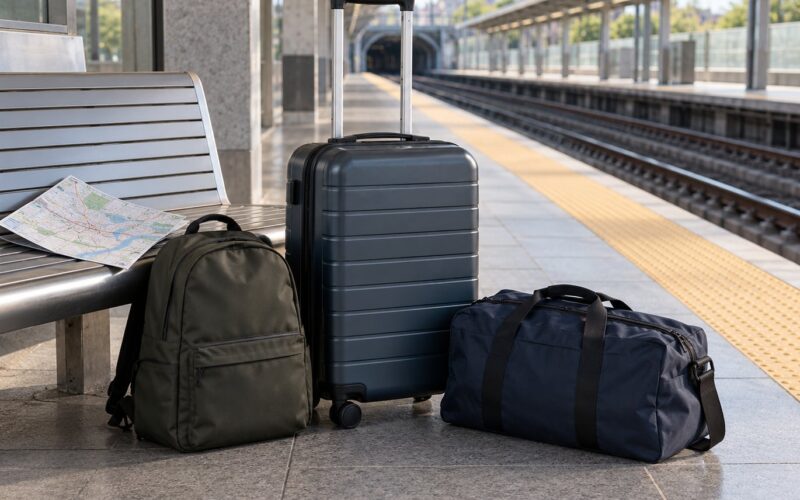
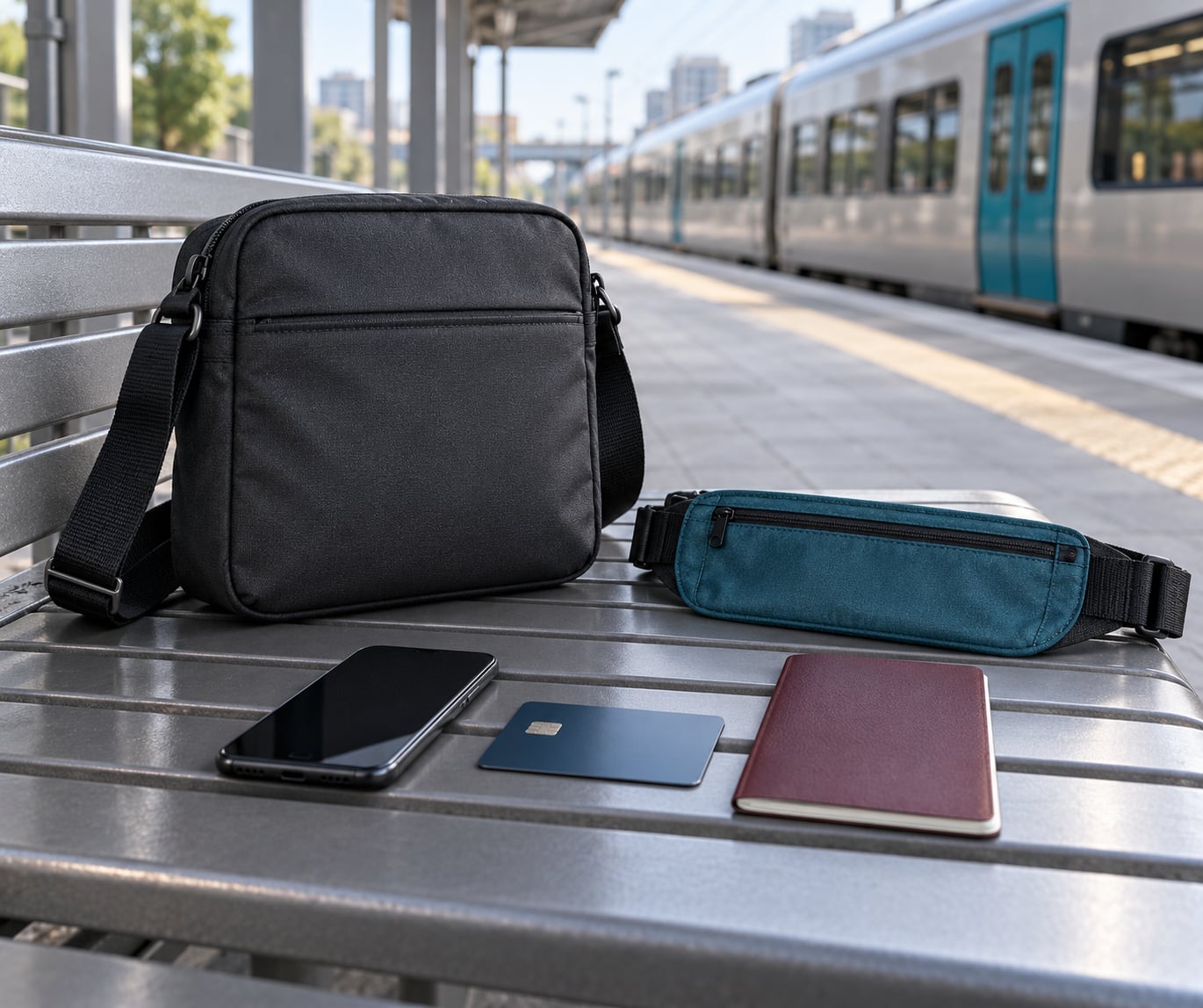
- A bag that closes and stays closed. A crossbody, hip belt bag, or a small backpack with real zippers. Open tote bags and flap purses fail on a moving train.
- A second hiding place for documents. A money belt under your shirt, or a zipped interior pocket in your bag, for your passport and one spare card.
- Less cash than feels normal. One day’s spending money, split between two places. Everything else lives in a hotel safe or a bank.
- One payment card for the day. If it goes, you lose one card, not your whole wallet.
- Your phone in a front compartment. Not loose, not in a hand, not in a back pocket.
- A carabiner or a couple of safety pins. Threaded through the zip pulls so a hand cannot open the bag unnoticed in a crowd.
- Your bank’s fraud number saved offline. Written on paper, because you will not have signal and a locked phone is a locked problem.
Skip the RFID-blocking wallet as theft protection. RFID shielding is aimed at wireless card skimming, which is a different crime from a hand in your bag, and the two are constantly confused. Shielding does nothing at all when someone lifts your wallet off a queue rail or takes your phone out of your hand.
What you do not need: a gadget. Every forum thread I read on this topic came back to the same conclusion — moving from a backpack to a front-worn bag was the change that actually helped people, and none of them credited a piece of tech.
Step-by-Step: How to Avoid Pickpockets on Crowded Transit
Pickpocketing is usually a two-person job. One person creates the moment — a dropped phone, a spilled drink, a loud argument, a friendly stranger asking for directions, a clipboard held out at the wrong height. The crowd compresses around the disturbance, contact looks accidental, and an accomplice works your bag while your attention is on the noise.
There are two techniques worth knowing. The slow lift happens to distracted people: an open jacket or a bag nudged aside, a hand lifting a phone or wallet over seconds. The snatch and run happens at doors and turnstiles: grab, bolt, gone before you can react. Both work best in the same places.
Step 1: Secure Your Valuables Before You Leave
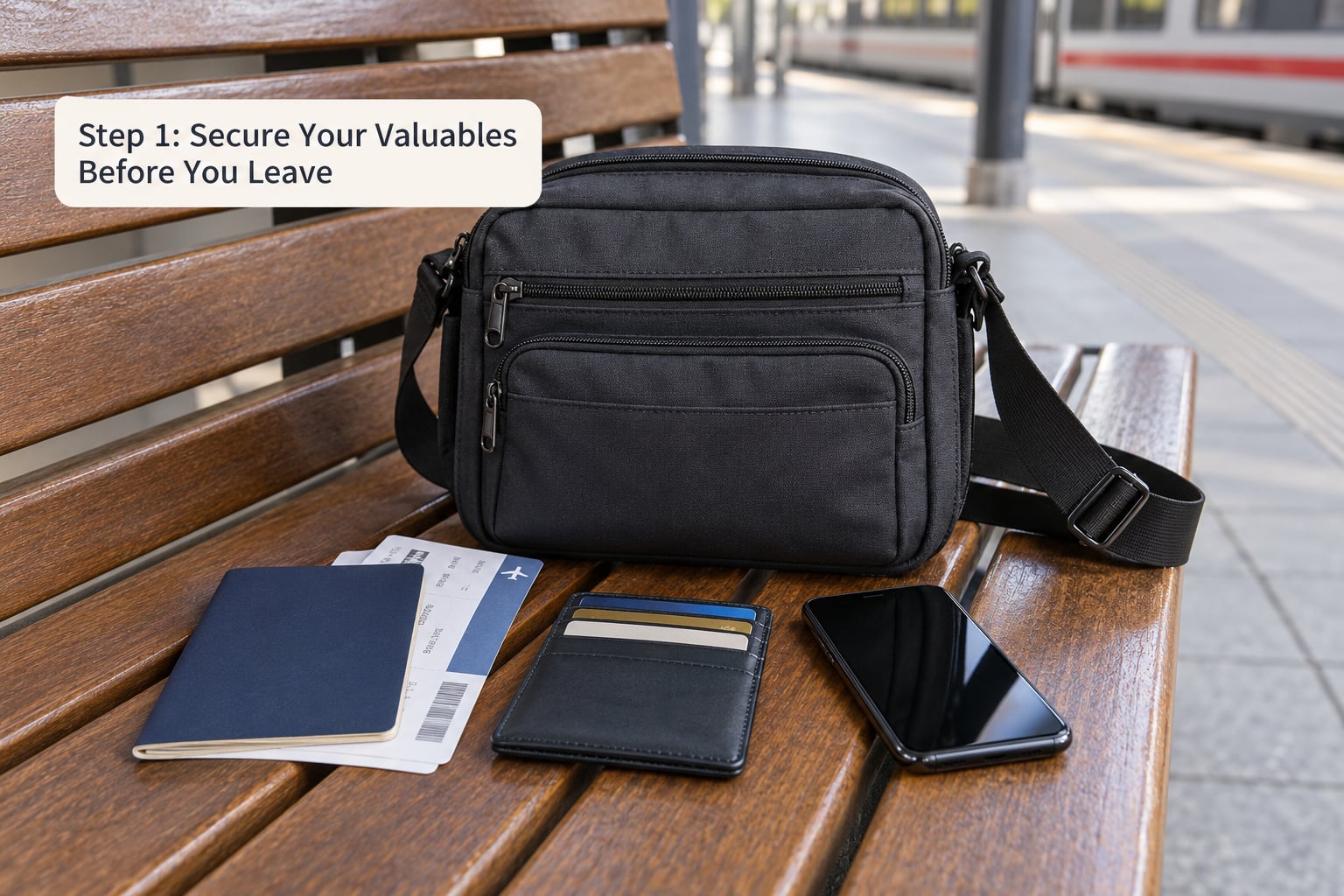
Sort your belongings at home, not at the station. Put passport, spare card, and the day’s cash in the bag’s zipped interior pocket or a money belt. Keep the phone in a separate front compartment. Leave the rest at the hotel safe.
Do this every time, so it becomes automatic. A routine you forget under stress is worth nothing at 8:15 on a Monday.
Step 2: Choose a Bag That Blocks Easy Access
Wear the bag across your body, on the side away from the platform edge and doors, with the zip pull facing inward toward your ribs. A carabiner through the zip pull adds a small delay that is often enough.
Backpacks are not useless, but they put your belongings behind your body, where you cannot see them and cannot reach them fast. If that is your only option, wear it high and tight against the back, never loose and low, and never set it on a seat or the floor.
For passports and cash in a serious-risk city, wear a money belt under clothing. Do not hang it around your neck — a cord or lanyard around the neck can be cut from behind while you are walking, and the belt ends up in someone else’s hand along with your documents.
Step 3: How to Avoid Pickpockets Reaching Your Back Pockets
Back pockets are the most common single mistake. A phone in a back pocket is a target that a stranger can reach without your body between them and it, and it signals that you are carrying something worth taking.
Move the phone to a front pocket or into the bag. Move your wallet to a zipped compartment, and split the contents. If someone gets to your bag during a staged commotion, an empty half-pocket and a folded transit card is a better outcome than a passport and a full bank card.
Watch the tell people on travel forums keep repeating: reaching for an empty pocket or patting a bag you are not carrying anything in tells a pickpocket you have something elsewhere. Do not do the phantom touch.
Step 4: Plan Your Boarding and Route
Where you board changes your odds. The middle of a platform or carriage is calmer than the end, where doors open and the crush forms. Aim for the middle of the carriage, and stand away from the doorway if you can.
Standing away from the doors is a small habit with a real reason behind it: a thief at the door can leave the instant they grab something, while someone mid-carriage is a thirty-second walk from a stop, an exit, and staff.
Travel off-peak when your day allows it. Rush hour and the summer holiday season are when crowds peak, and pickpocket activity tracks crowds more than any other factor.
Step 5: Keep Valuables in Sight and Under Control
You do not need to stare at people. That is uncomfortable for you and, more importantly, tells anyone working the carriage that you are onto them. Instead, run a slow check on your own gear every time the vehicle stops: is the bag still against my body, is the zip where I left it, is my hand on the strap.
Keep one hand on your bag or in the zip pocket through boarding and alighting. That single habit closes most of the window.
Sit with your bag on your lap or between your feet, not on the seat beside you or hanging off the back. In cafes and food courts, keep valuables on the floor between your legs rather than on a chair back.
Step 6: Do Not Distract Yourself With Your Phone
Checking directions on your phone at the platform is when most travellers enter a crowd already half-distracted. Look up the route before you reach the gates, or listen to audio with one earbud, so you keep one ear and part of your attention on your body.
Never hold your phone loose in your hand near a door or on a platform. Phones are grabbed out of hands in daylight, and off motorcycles at ride-share pick-ups, where a bag strap is the target rather than a pocket.
Same rule for a paper map. A map held open in front of your face is the classic marker that reads new in town, and people on buses and trams deliberately pose as fellow tourists holding maps and backpacks to blend into a carriage.
Step 7: Move Securely Through Crowded Platforms
Turnstiles and fare gates are the single best ambush point on any transit system. You are looking down, handling a card or a ticket, moving at walking pace, with a stranger directly beside you and a queue blocking your view of the exit.
Prepare before you reach the gate: bag in front, both hands free, ticket or card already in hand. Do not stop to search a pocket mid-gate. At the gate itself, keep your body square to it and your bag on the far side.
Escalators deserve their own warning. Travellers on travel forums describe a technique where someone hits the escalator emergency stop, leaving riders stranded on a moving step long enough to be picked at leisure. If an escalator stops, stand still, keep your bag pinned in front of you with a hand, and wait for it to restart rather than stepping off mid-ride.
On boarding queues, keep a small buffer — about a foot — rather than pressing flat against the person in front, and never let a stranger stand between you and the door as the train arrives.
Step 8: Respond Calmly to a Pickpocket or Suspicious Person
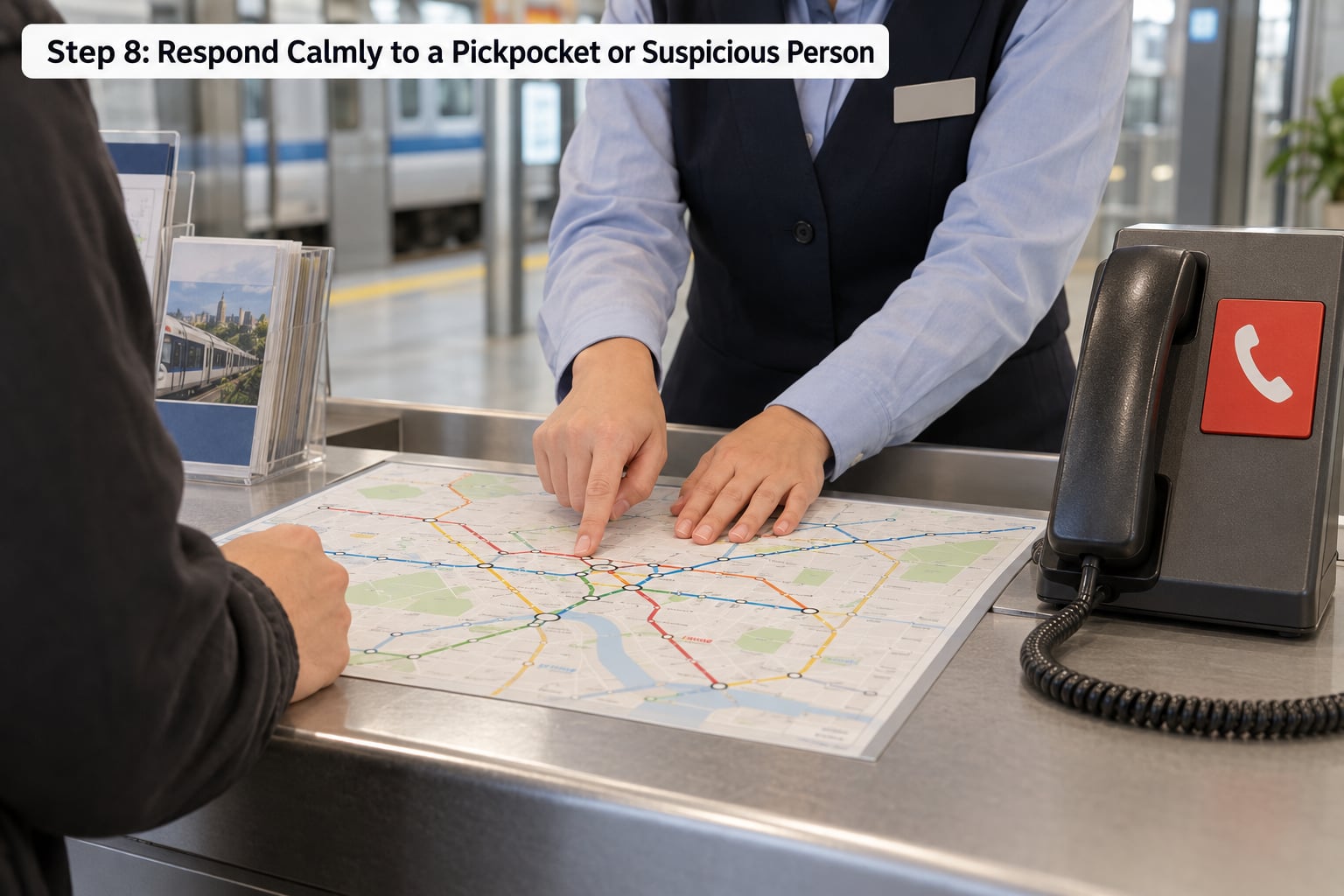
Most attempted thefts fail because the target reacts. If a hand goes for your bag, do not chase and do not start an argument. Step away from the spot first, then check what is missing.
The sequence that works:
- Move to a well-lit, populated area away from the doors — a staff booth, a ticket hall, an open shopfront.
- Check your bag and pockets before you react to anything. Some thefts are diversions for a second attempt.
- Cancel and lock your cards and your phone remotely. Do this first, before anything else. A frozen card stops a thief using it, and the recovery window matters more than the report.
- Alert transit staff or station control, then file a police report. Insurers and consulates generally want a written report, and it is far easier while you are still at the station.
- If your passport is gone, contact your embassy or consulate. Emergency travel documents need a police report number.
- Then file the insurance claim with the report number, receipts for emergency expenses, and proof of the loss.
Do not physically intervene, and do not accuse anyone loudly in a confined space. A shout brings attention to the victim rather than the thief, which is exactly what you want. If you see someone else being robbed, say it plainly and loudly — “attention, your bag” in whatever language you have — and keep your distance.
The pattern behind almost every incident is the same trio: a crowd, an opening, and a short escape route. A packed carriage supplies all three at once, and none of them has anything to do with whether your belongings are high-tech.
Step 9: Check Your Belongings and Secure Any Loss
Before you leave the station or get off the train, run a full check: front compartments, money belt, inside jacket pockets, phone. Most attempts are partial and go unnoticed for the rest of the journey, and the recovery window is much shorter if you catch it at the stop.
If something is gone, work the immediate area first — bins near the doors, the platform gap, the carriage end, the seat you were sitting in. Bystanders holding an unfamiliar bag are often carrying a dump target, and someone who is picked at the door has seconds, not minutes.
Then follow the order above: freeze the accounts, report it, get the documents replaced, claim the money. Doing the report last is the most common mistake, and it is the one that can cost you the claim.
Common Mistakes
These are the errors I see repeated in the same order, in every forum thread and every guide. Each has a simple fix.
Phone in a back pocket. The single most common target and the easiest to reach. Fix: front pocket or bag compartment, and never loose in your hand near a door.
Bag hanging on a seat, a hook, or the floor. Fix: on your body, or between your legs, or with a strap looped around your own leg while seated.
Counting cash openly at the ticket machine. It marks you as carrying something and it blocks your view of the platform. Fix: count it in the station hall, away from machines and queues.
Talking cash, a backpack with a travel brand, and a camera around your neck all at once. Three markers at once reads as a target. Fix: wear the local look, keep the gear plain, and put the camera away when you are not using it.
Buying an RFID wallet and feeling finished. Fix: understand that shielding is for wireless skimming, not hands. The bag position and the pocket rules are the protection that matters.
Wearing a money belt around your neck. Fix: wear it under clothing at the waist. A neck cord can be cut from behind.
Chasing or grabbing when you feel a hand. Fix: step away, check your belongings, then act. Confrontation in a carriage escalates and rarely recovers anything.
Never reporting it. Fix: report it at the station, even if you are not claiming anything. The written report is the piece every insurer, bank, and consulate asks for afterwards.
Leaving everything in one wallet. Fix: split it. Passport and spare card on the body, one card and a day’s cash in the bag. Losing the bag should not cost you your ability to get home.
Frequently Asked Questions
Do I need an RFID-blocking wallet to prevent pickpocketing?
No. RFID shielding blocks a wireless signal from a scanner reading a card at a distance, which is a different crime from someone opening your bag or taking your wallet from a seat. It does nothing in a crowd, at a turnstile, or at a door. Spend that effort on bag position, zipped pockets, and splitting your valuables instead, which is what actually changes the outcome.
Is a money belt or a crossbody bag better against pickpockets?
They solve different problems. A money belt worn under clothing is the safer choice for passports and spare cash, because it cannot be reached without someone touching your body. A front-worn crossbody is better for the phone, cards, and anything you need during the ride. Many travellers carry both, split by purpose.
What should I do immediately if I get pickpocketed?
Move away from the doors to a staffed, well-lit area, then freeze your accounts first: lock your cards and your phone remotely. Check nearby bins, seats, and the platform gap while you are still there. Report it to station staff and file a police report before leaving, because the report number is what your bank, insurer, and consulate will ask for next.
Are pickpockets more active at certain times of day or year?
They follow crowds. Rush hour, weekend market days, summer holidays, and major event days are all higher risk than the same route at midday on a Tuesday. Big transport hubs are elevated because arrivals with luggage are distracted and slow. If you can choose, travel outside the peak on the routes where you are carrying the most.
Are pickpockets dangerous or likely to turn violent?
The large majority of incidents are opportunistic theft and end when the target notices. Serious injury is uncommon, though fights do break out, particularly when a victim chases a thief or tries to grab a bag back. The safest response is to disengage, get to staff, and let authorities handle it. Disengaging costs you the item, not your safety.
Should I report a pickpocketing incident, and will travel insurance cover it?
Report it. Most insurers require a written police report, and cash theft claims are usually harder to settle than theft of a passport or a device. Take the report number, keep every receipt for emergency replacement documents, and file the claim soon after you return. Card and phone theft is usually covered faster, provided you reported and froze them promptly.
Conclusion
Start before you leave home: move the phone out of your back pocket, split your cash and cards, put the passport in a money belt or zipped interior pocket, and leave the rest at the hotel safe.
On the platform, wear the bag in front, keep a hand on it through the turnstile and the doors, and stand away from the doorway. If something feels wrong, disengage, check your belongings somewhere bright and staffed, freeze your cards, and get a written police report before you leave the station.