Last updated: October 2026. Exchange rates and card fees move constantly, so the figures below are typical ranges you should re-check against your own card terms rather than fixed numbers.
Dynamic currency conversion (DCC) is an optional service offered at card terminals, ATMs and online checkouts that lets you pay in your home currency instead of the local one. The terminal operator then applies its own exchange rate plus a markup, typically 3 to 6 percent, on top of whatever your issuer charges. Choosing that option is what creates the extra cost.
To avoid dynamic currency conversion charges, do three things every time: choose the local currency, ask what the local currency is when nobody offers it, and check whether your card adds a foreign transaction fee on top of the network rate. That is the whole method, and it costs about ten seconds of attention per payment.
Three habits cover almost every situation:
- Pay in the currency of the country, island or city you are standing in. Never pick your home currency because the amount looks familiar on the screen.
- Say the words out loud: “Local currency, please.” It ends the conversation faster than pointing at the terminal.
- Compare the offered rate against your phone before you confirm, using the mid-market rate, not a rate the terminal supplies.
Here is what the choice actually costs on a 4 percent DCC markup applied to a mid-market conversion. The exact rates move daily; the gap is the point.
- A 500 euro hotel bill costs about 545 USD at the mid-market rate, about 567 USD with the markup applied. Extra paid: roughly 22 USD.
- A 10,000 yen dinner for four costs about 68 USD at mid-market, about 71 USD with the markup. Extra paid: roughly 3 USD.
- 50 pound theatre tickets cost about 64 USD at mid-market, about 66 USD with the markup. Extra paid: roughly 2 USD.
- A 2,000 euro car hire with extras costs about 2,180 USD at mid-market, about 2,267 USD with the markup. Extra paid: roughly 87 USD.
Small purchases barely register. Big ones, especially car hire and hotel bills, turn a 4 percent markup into a number you would have noticed.
Table of Contents
- What You Need
- Step-by-Step
- Step 1: Notify Your Bank and Check Your Fees
- Step 2: Choose the Local Currency at Every Card Terminal
- Step 3: Use a Reliable Card for Larger Purchases
- Step 4: Avoid Dynamic Currency Conversion at ATMs
- Step 5: Check Online and App Purchases
- Step 6: Review the Statement After You Return
- Common Mistakes
- Frequently Asked Questions
- What are the typical fees for dynamic currency conversion?
- Why have I been charged a foreign currency conversion fee?
- What does u00221% on all DCC transactionsu0022 mean in my card’s terms?
- Can I get a dynamic currency conversion charge refunded after the fact?
- Does DCC apply if the merchant insists on being paid in dollars?
- Conclusion
What You Need
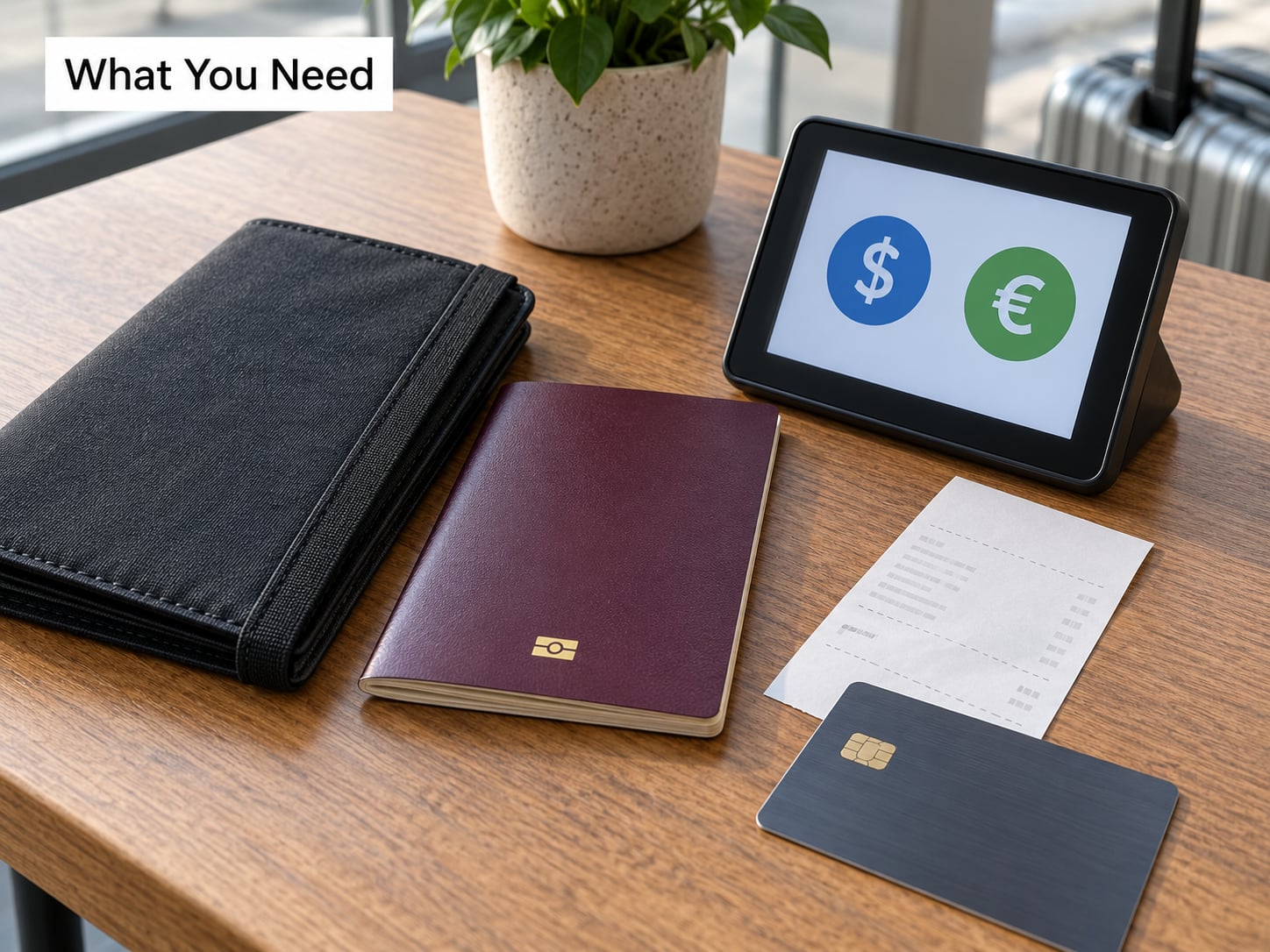
You need a card that works abroad and a clear idea of which currency you are about to be billed in. Everything else is habit.
A debit card or credit card that is enabled for overseas purchases is the baseline. Most modern cards work everywhere, but a few products are restricted, and a frozen card or an expired one will fail at the worst possible moment. Check the card, not the app, and take a backup card from a different network.
Then look at your issuer’s fee schedule and find the foreign transaction fee. It is often listed as a percentage, sometimes as a flat amount per transaction, and sometimes as nothing at all. Cards marketed as no foreign transaction fee or zero forex markup cards pass the network rate through untouched, which is why they matter for this topic.
Know your home currency and the local currency of your destination before you land. If you cannot name the local currency, the terminal decides for you, and that is exactly how DCC gets accepted by accident.
For the cash side, note your bank’s ATM partner network and any withdrawal fees. A screen showing a 220 baht fee in Thailand, for instance, does not tell you what the ATM will quietly do to the withdrawal amount when it converts to your home currency for the receipt.
Finally, know the mid-market rate. One search in a currency app before you confirm a large payment takes seconds and tells you immediately whether a terminal is offering you something reasonable or something ridiculous.
Step-by-Step
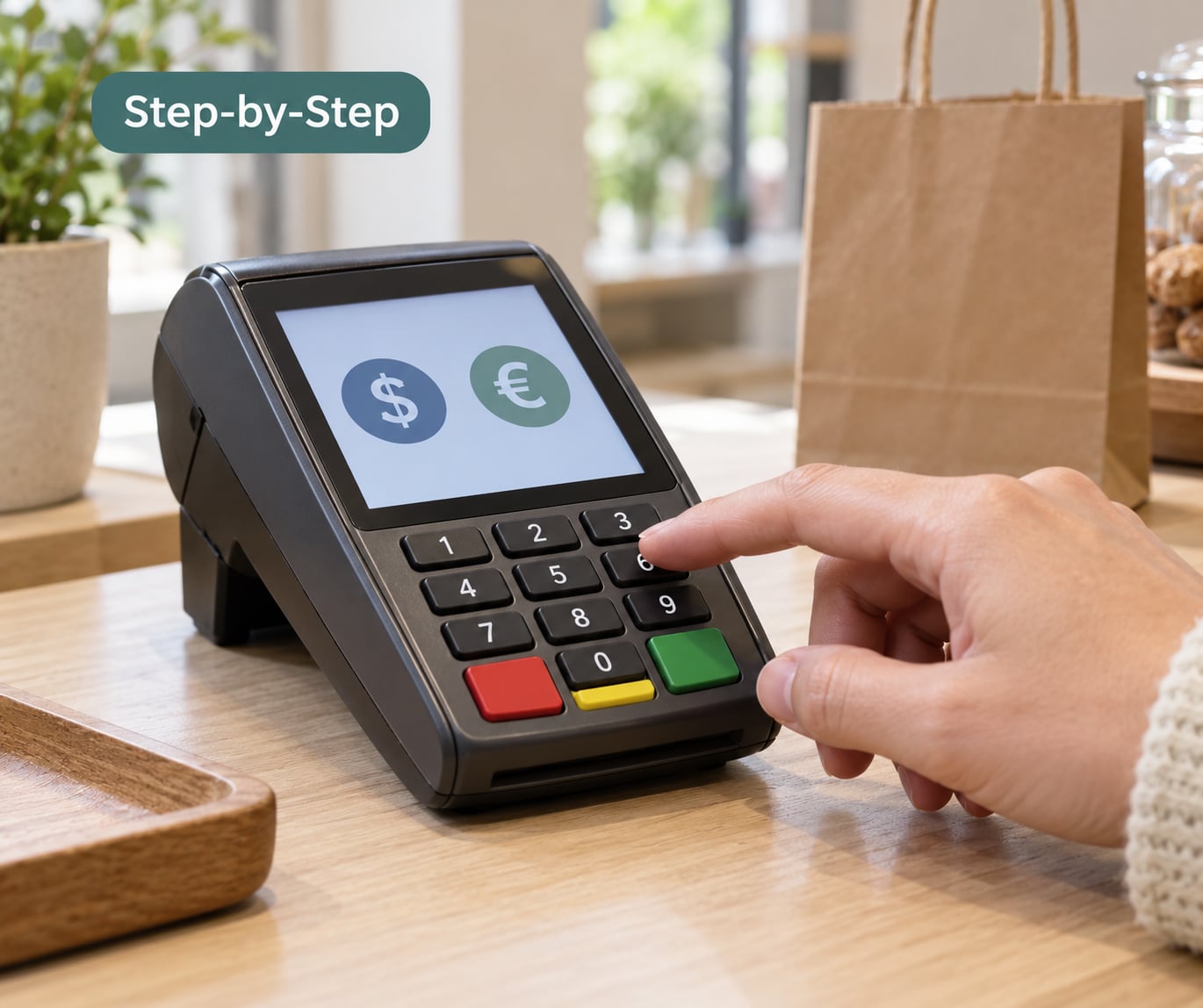
Work through this in order, before, during and after the trip. Six steps, and the fifth one is the one most people skip.
Step 1: Notify Your Bank and Check Your Fees
Contact your card issuer or check the fee schedule in your banking app before departure. You are looking for three things: whether the card is enabled abroad, whether a foreign transaction fee applies, and whether your plan charges a flat fee per cash withdrawal or a percentage of the amount.
Some issuers also let you set a travel notice or a spending limit for the trip. Turning on notifications is more useful than you would think, because a DCC charge is far easier to catch in the first few days than months later when a statement arrives.
Step 2: Choose the Local Currency at Every Card Terminal
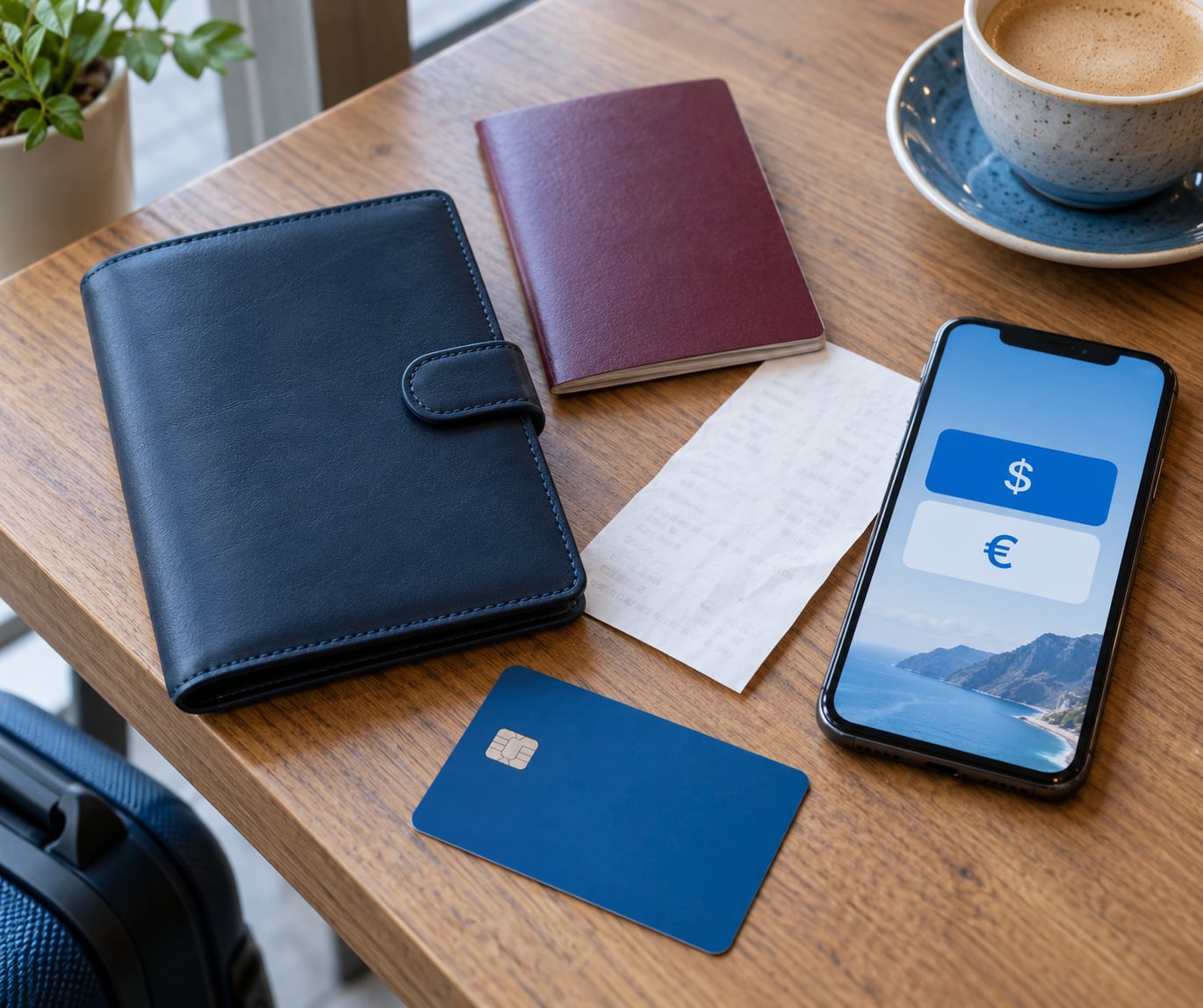
When a terminal detects a foreign card, it will often show two options: the local currency and your home currency, sometimes labelled with the words “pay in your currency” and sometimes with nothing but a flag and a currency code. The second option is the DCC offer, whatever it is called.
Choose the local currency. If the cashier says paying in your currency saves you money, it is polite phrasing for a worse exchange rate for you. Say “local currency, please” and let them run the charge. If they insist the terminal only supports their currency, ask for the local amount to be charged and see what happens; usually the machine has it.
Step 3: Use a Reliable Card for Larger Purchases
For big payments, the card matters as much as the choice at the terminal. Who sets which rate is worth being precise about. The merchant or terminal operator sets the DCC rate when it offers your home currency. When you pay in the local currency, the conversion is handled by the card network, Visa, Mastercard or American Express, at a rate close to the mid-market rate, and your issuer may add its own foreign transaction fee on top.
So the cost difference comes down to how many layers of markup sit between the mid-market rate and the number on your receipt. A no foreign transaction fee card gives you the network rate with nothing added. A card with a 2 or 3 percent forex fee adds that on every purchase, whether or not you accept DCC. Avoid DCC first; then the card choice decides how much is left over.
On a card with no foreign transaction fee, paying in the local currency is close to the best rate an ordinary traveller can get. Some multi-currency travel accounts hold several balances and convert between them, which lowers the cost of a mistake but does not remove DCC prompts at foreign terminals.
One thing worth checking on that card is whether it is a credit card or a debit card. Credit cards give you a dispute window and a chargeback route when something goes wrong, which matters more than a small rate difference once you are abroad and cannot simply return to the shop. A debit card draws straight from your account and offers less room to recover a bad conversion. If a large purchase is coming, a credit card with no foreign transaction fee is the safer pairing.
Step 4: Avoid Dynamic Currency Conversion at ATMs
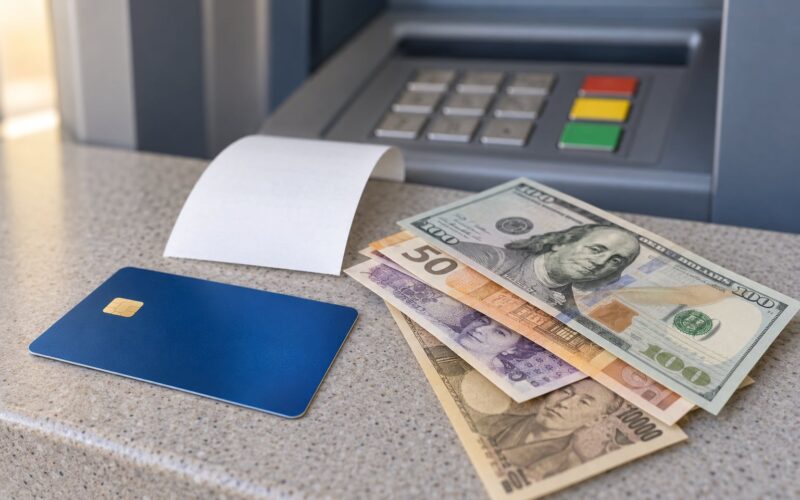
ATM screens ask the same question as shop terminals, usually with a countdown timer, and often with the option placed first so that a distracted traveller presses enter. Decline the ATM’s own conversion and let your own bank do it, because your bank’s rate is normally far closer to the mid-market number.
The screen fee is also not the whole cost. One traveller on a Thailand forum thread reported withdrawing 8,000 baht, seeing a quoted ATM fee of 220 baht on screen, and then watching the balance fall by the equivalent of about 21 dollars once the machine converted the amount at its own rate. The visible fee and the invisible one are separate.
Use ATMs attached to banks rather than standalone machines in tourist areas, decline credit card cash advances entirely because they carry an upfront fee plus interest from the moment of withdrawal, and keep withdrawals moderate so one bad conversion does not stand out.
Step 5: Check Online and App Purchases
DCC does not need a terminal. Booking sites, hotel checkouts and airline pages often default to your home currency with a small dropdown that nobody notices. Look for the currency selector before you enter payment details, switch it to the local currency or the currency the hotel bills in, and confirm the total price changed in the expected direction.
The same applies to in-app purchases, digital subscriptions billed by a foreign merchant, and shopping from an overseas website. Once you have entered a foreign card, some checkout pages lock the currency to what your card is issued in. Changing your card’s billing currency in your banking app is not possible, so the fix happens at the site level, before you click pay.
For anything expensive booked ahead, a no foreign transaction fee card also protects the price you agreed to.
Step 6: Review the Statement After You Return
Once the statement lands, compare the line items against your receipts. A receipt printed in the local currency tells you what the real price was; your statement tells you what you paid. The difference, minus any foreign transaction fee your card charges, is roughly what DCC cost you.
If a charge looks unexplained, contact the issuer promptly with the receipt, the date, the amount and the terminal location. Merchants do not generally surcharge for offering DCC, since the network rules expect them to disclose it, so an undisclosed conversion is something your issuer can query. Whether a refund comes back depends on the issuer, but people who dispute quickly do better than people who write it off.
Save your receipts as you go rather than sorting them at the end of the trip. A photo in your camera roll is enough evidence, and it is the only thing that proves what the local price actually was when a statement line looks wrong three weeks later.
Common Mistakes
Accepting the home-currency option because the amount looks familiar. The screen showing dollars or pounds is not a convenience, it is a different exchange rate. Fix: choose the local currency every time, no exceptions.
Confusing a foreign transaction fee with DCC. They are different charges. Your issuer’s foreign transaction fee applies to foreign purchases under your card terms and is disclosed by your bank. The DCC markup is applied by the merchant or terminal and is avoidable in the moment. Paying in local currency does not erase a foreign transaction fee, and a zero foreign transaction fee card does not stop a cashier from offering DCC.
Assuming every card has the same exchange rate. The card network rate is close to mid-market, but your issuer’s foreign transaction fee varies widely by product, and some countries also levy their own taxes or charges on the conversion. Fix: read your own fee schedule rather than trusting a general rule of thumb.
Believing the ATM fee on screen is the whole cost. The machine can convert the withdrawal amount at its own rate on top of the displayed fee. Fix: decline the ATM conversion and read the post-transaction receipt if the machine offers one.
Leaving booking sites on their default currency. Travel pages frequently default to the cardholder’s home currency, and travellers only notice after the confirmation email. Fix: set the currency first, then enter card details.
Getting stuck when a cashier pushes back. Rental desks, parking attendants and airport counters are the most common places where travellers accept a worse rate because they do not know the phrase. Fix: “Local currency, please” works almost everywhere, and a polite repeat of it works nearly as well.
Not checking the merchant’s currency on the price tag. Some shops show prices in dollars while pricing the goods in local currency, which is a legal display practice in a few countries. It does not change the rule: ask what you are being charged in, and what you would owe in local money.
Frequently Asked Questions
What are the typical fees for dynamic currency conversion?
Most terminal operators and online checkout providers mark up dynamic currency conversion by roughly 3 to 6 percent above the mid-market rate, with the spread widening at kiosks, parking meters, rental desks and smaller merchants. In some countries a further tax or charge is applied to the conversion itself, so the effective cost can land higher. Paying in the local currency removes the markup entirely.
Why have I been charged a foreign currency conversion fee?
There are two separate charges that get confused. A foreign transaction fee comes from your card issuer under the card’s terms and applies to any purchase made abroad. DCC is added by the merchant or terminal when they convert into your home currency at their own rate. If you paid in the local currency, the extra amount is almost certainly your issuer’s fee rather than DCC.
What does u00221% on all DCC transactionsu0022 mean in my card’s terms?
It usually means your issuer takes a further one percent on top of the amount the merchant or terminal converted, as a penalty or pass-through for that service. Because the merchant already applied their own markup, the two stack, and the combined cost can be several percent above the mid-market rate. Paying in the local currency means the DCC clause never applies.
Can I get a dynamic currency conversion charge refunded after the fact?
Contact your card issuer with the receipt, the date and the amount as soon as you notice. Card networks expect merchants to disclose that they are offering conversion in your home currency, so an undisclosed conversion can be queried, and issuers can often refund a goodwill amount. Timing matters, and a dispute raised within days fares better than one raised months later.
Does DCC apply if the merchant insists on being paid in dollars?
Yes, and it is a common trap in places where tourists and expatriates pay in dollars, or where terminals default to the cardholder’s currency. That case is still a conversion by the merchant rather than by the network, so the same rule applies: ask to be charged in the local currency, and if the machine genuinely cannot do it, pay and note the rate for later.
Conclusion
Start with the card: check that it works abroad and that you know whether it charges a foreign transaction fee. Then the rule that does the work, at every terminal, every ATM and every checkout page: choose the local currency, say it out loud, and confirm before you approve.
Read your statement when you get home. The gap between the receipt and the charge is the number that tells you whether the habit stuck.