If a serious health problem hits while you are outside your home country, the order of your first moves matters more than anything you pack. Call the local emergency number, get to a facility that can treat the problem, then call your insurer’s assistance line and start collecting paperwork. Most of the mess comes from doing those things in the wrong order, or from skipping the paperwork until weeks later when the claim is already hard to prove.
Knowing how to handle a medical emergency abroad is not as complicated as it sounds, because the hard part is preparation you do at home, not improvisation at a hospital reception desk in a language you cannot read. Here is what to gather before you fly, what to do in the first hour, and what to sort out afterwards.
One note before anything else: this is general information, not medical advice. Any warning sign in this article means call local emergency services and let a qualified clinician make the diagnosis.
Table of Contents
- What You Need
- Step-by-Step
- Check Whether the Situation Is an Emergency
- Call the Right Local Emergency Number
- Get to Appropriate Medical Care
- Explain What Is Happening and Keep Records
- Contact Your Insurance or Travel Assistance Provider
- Arrange Follow-Up Care or Return Travel
- Common Mistakes
- Frequently Asked Questions
- What is the emergency number in most countries?
- How much does a medical evacuation flight cost?
- Does travel insurance cover a medical emergency abroad?
- What happens if I am hospitalized alone in a foreign country?
- Can I get my prescription medication in another country?
- Will my insurer reimburse me for care I paid for myself?
- Conclusion
What You Need
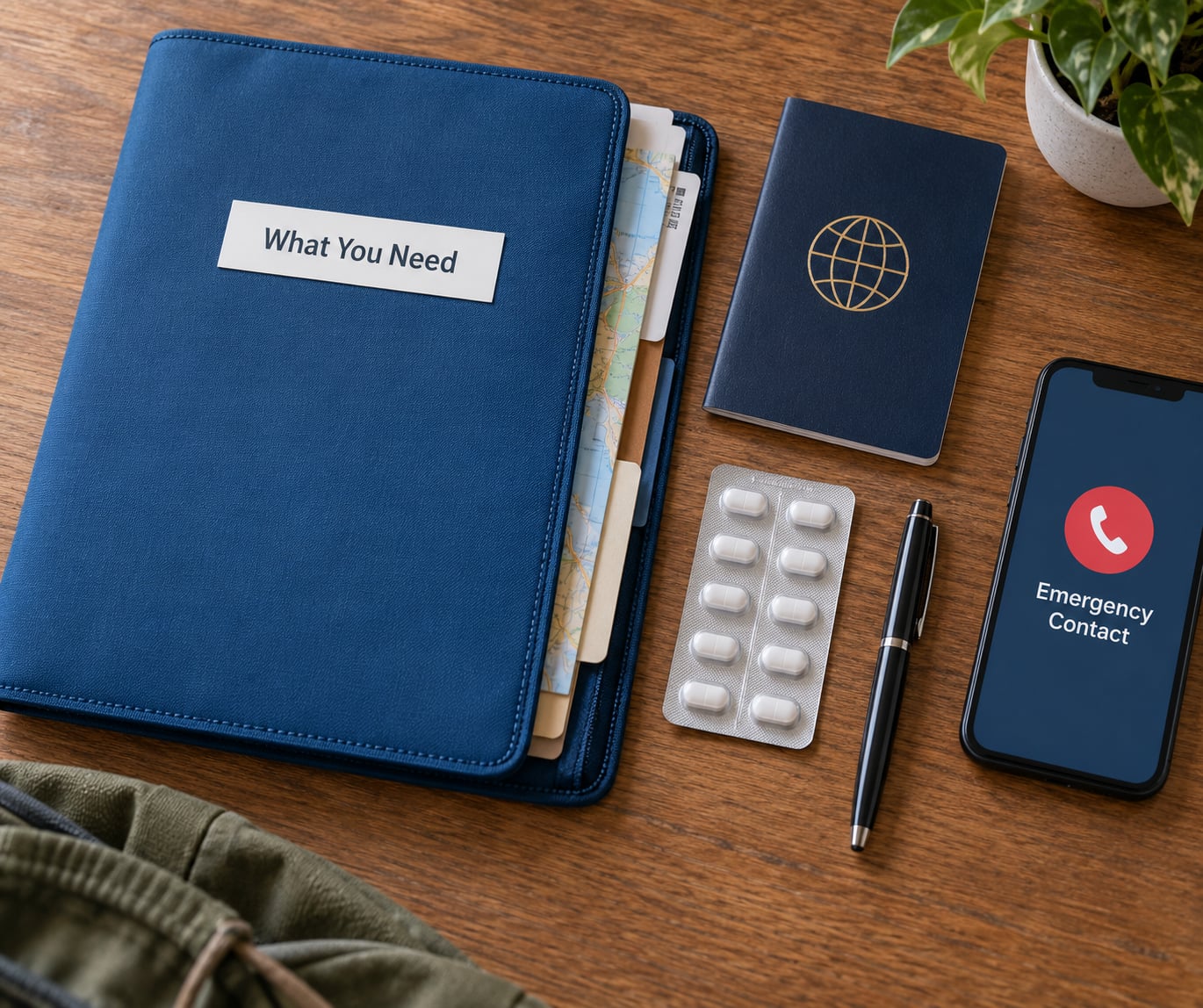
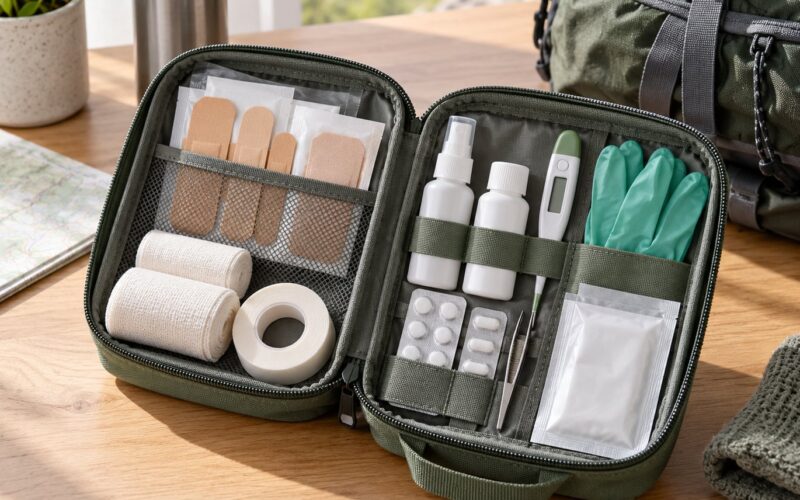
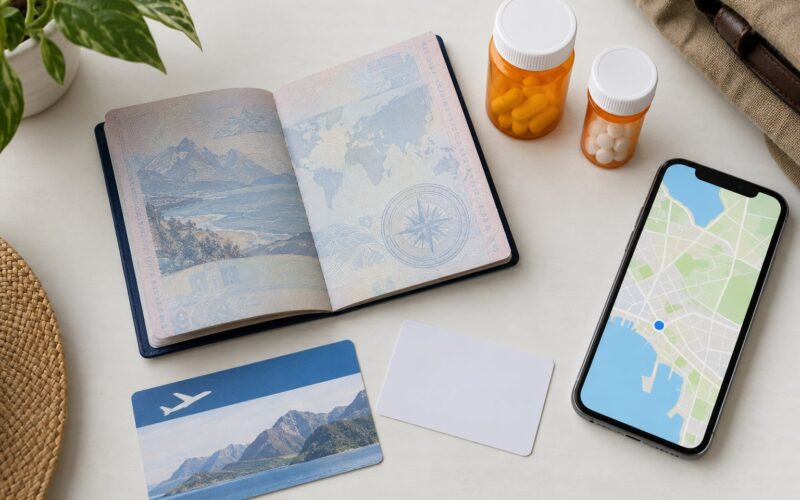
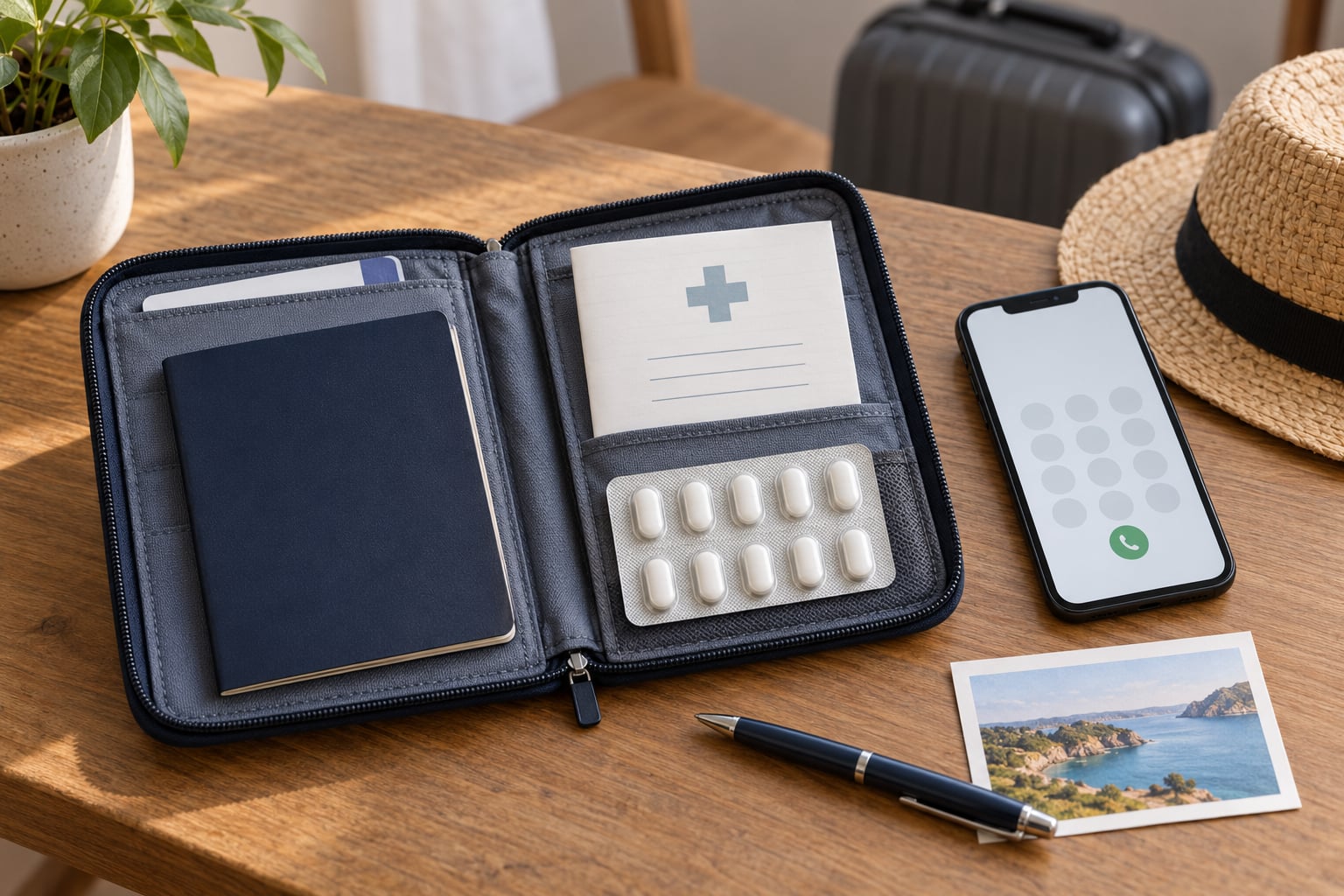
Assemble a single document set and carry a copy of it offline on your phone plus a paper version in your bag. If your phone is lost, stolen, or out of battery, the paper copy still works.
Your insurance details. Policy number, the 24/7 assistance hotline (usually a collect or international number, not the customer service line that only opens in domestic business hours), the medical coverage limit, and the evacuation limit. Photograph the policy schedule, not just the marketing summary page.
Your identification. Passport, a photocopy of the passport photo page, and the visa or entry stamp. In many countries the local hospital will ask for a passport number at triage, and searching a bag for a phone photo of a blurry page wastes time.
A medical history card. One card with your blood type if you know it, chronic conditions, allergies, current medications with both brand and generic names, your home physician’s phone number, and an emergency contact at home. People who carry this card consistently report that it removes the longest delay in emergency rooms: the endless question-and-answer round about what you take and what you’re allergic to. Tourists posting on travel forums describe exactly that problem, and describe the card as the fix.
Medications, in original packaging, with generic names written down. Brand names change across borders. Paracetamol, acetaminophen, and Tylenol are the same drug under three names, and a pharmacist abroad will not necessarily recognise the brand on your box. Bring enough supply for the trip plus a few extra days, since a replacement prescription can take days to arrange. Ask your own pharmacist for a written summary of anything that is hard to source internationally.
Payment methods and local cash. Many hospitals want a deposit or full payment up front before treatment. Card, a second card from a different network, and a small amount of local currency will cover most short visits. A traveller writing about a hospital stay in Canada said they had to pay cash upfront despite holding valid travel insurance, so treat this as a real possibility rather than a theoretical one.
Your phone, charged, with data. Add the local emergency number, the hotel or host phone, the insurer’s assistance number, and your embassy or consulate contact to your favourites before you need them. Download an offline translation app and a medical dictionary, since hospital staff will want details about symptoms, not general conversation.
Local-language emergency phrases, written down. Something like “I need a doctor,” “I cannot breathe,” “I am allergic to,” and “please call an ambulance” in the local language. Even a translated card you can show without reading is enough to get the response you need.
If you are travelling with children, a group, or anyone with a pre-existing condition, add the child’s or patient’s insurance details as a separate entry. One card covering multiple people gets confusing fast in a busy department.
It also helps to put the essentials on one printed card you can hand to someone, rather than expecting yourself to find things while stressed. A workable card carries the local emergency number, the nearest hospital address in the local language, your insurer’s assistance number, your passport number, your blood type and allergies, your current medications, an emergency contact at home, and the name of the person hosting you if you are not staying at a hotel. No competitor publishes a fill-in version of this, which is probably why a lot of travellers are still improvising one on the back of a boarding pass in a taxi.
Step-by-Step
Check Whether the Situation Is an Emergency
Treat it as an emergency and act immediately if someone has trouble breathing, chest pain, signs of stroke (face drooping, arm weakness, speech difficulty), severe bleeding that will not stop, a seizure, loss of consciousness, a severe allergic reaction with swelling or breathing trouble, or major trauma such as a fall from height or a road accident.
The same goes for anything that could turn serious in hours: high fever with stiff neck or rash, a severe abdominal pain, confusion, dehydration in an infant or older adult, or symptoms of a possible heart attack, including pain spreading to the arm, jaw, or back. A general rule helps: if you would take someone home to bed and watch them, you can afford a couple of hours. If you would call someone at home right now to say you are worried, call for help.
Two important limits. First, do not spend an hour researching symptoms online or hunting for an English-speaking clinic before calling; dispatchers handle language issues, and delaying the call is what causes harm. Second, do not self-treat serious symptoms with leftover medication, another traveller’s pills, or advice from a forum. A qualified clinician decides what the problem is. For anything borderline, get evaluated rather than guessing.
Call the Right Local Emergency Number
Know the number before you need it. Emergency numbers vary by country, and getting this wrong costs minutes.
- 112 works across the European Union and in many other countries, including much of the EEA. It also redirects to the right number in several countries outside Europe.
- 911 in the United States, Canada, and in parts of Mexico and the Caribbean.
- 999 in the United Kingdom, Republic of Ireland, and Gibraltar.
- 000 in Australia, 111 in New Zealand, 995 in Singapore and the United Arab Emirates.
- 119 in Japan for ambulance and fire, 108 in India, 190 and 192 in Brazil.
- 112 also connects from mobile phones in many countries that do not list it publicly, so it is a reasonable fallback.
Travellers posting on r/travel have reported that 112 connected reliably across EU countries, which is one reason it is a good default when you are unsure. If in doubt, dial the most commonly published number for that country and say clearly what you need.
When you call, give five things first: your exact location including floor, building, or hotel name; what is happening; how many people are affected; your age and callback number; and your nationality or language. If you cannot speak the local language, say “English, please” and then hand the phone to whoever is with you, or use a translated phrase. Stay on the line, and keep the phone free for the dispatcher to call you back.
Contact your embassy or consulate after the call, not instead of it. A consular officer can help locate an English-speaking doctor or contact your family, but cannot pay a bill or order treatment. Travellers have consistently found consulates helpful for the doctor list and useless for the money.
Get to Appropriate Medical Care
If you can travel, the fastest route is a taxi or ride-hailing driver to the nearest hospital emergency department. In much of Europe and elsewhere, the emergency department accepts walk-ins without an appointment. In some countries, though, you need a referral first or emergency care is arranged through a national hotline, so ask the dispatcher rather than assuming.
Call your hotel, host, tour operator, airline, or the building’s front desk when the patient cannot move on their own. Staff at these places often have the local number for a private clinic or ambulance service and can send someone to the room. If you cannot move but the situation is urgent, say so on the emergency call, and ask the dispatcher how they want you to wait.
A pharmacy is a reasonable first stop in a few parts of the world, particularly in much of Europe, where a trained pharmacist can assess and supply treatment for minor conditions. It is not an option for chest pain, breathing trouble, serious infection, pregnancy complications, or anything needing a doctor. People who have used the pharmacy route in Europe usually describe a fast, inexpensive fix for something minor and a clear transfer to a doctor when it turned out to be more.
If the patient has a chronic condition that needs ongoing technical care, such as dialysis or chemotherapy, tell the hospital immediately. International hospitals are used to patients who require these, but they need the records and lead time to arrange them.
Explain What Is Happening and Keep Records
Clear communication protects the patient. Write down, in order, when the problem started, what the symptoms are, what has already been taken, and any allergy. Show the medical history card. Ask the interpreter or staff member to repeat back anything you’re unsure of, and if you don’t understand a diagnosis or a medication name, ask for the generic name and write it down.
Start collecting records from the moment you arrive, not after you’re discharged. Take photos of every document: triage notes, the doctor’s notes, lab and imaging results, the diagnosis, medication names and dosages, discharge instructions, and every receipt. Ask for an itemised bill rather than a total, and request it before leaving the building, since chasing it after discharge can take weeks of phone calls and letters.
These documents are what turn a bill into a claim. Reimbursement policies almost always require itemised invoices, and most travellers who later complained about a denied claim or a slow one had not kept their paperwork organised at the time. Ask at discharge whether anything is still pending, and get the name of the department to contact for later records.
Contact Your Insurance or Travel Assistance Provider
Call the 24/7 assistance line as soon as you can, even if you have not yet been admitted. The call handler can tell you whether the hospital they are sending you to is covered, whether they can issue a guarantee of payment to the hospital so you do not pay upfront, and whether your policy requires a specific provider network.
Have ready: your policy number, the name and location of the hospital, the admitting doctor’s diagnosis if you know it, your estimate of costs, and details of any transport they think is needed. Ask them to note the call reference and tell you where the claim will be filed from.
A guarantee of payment is the document that tells a hospital to bill the insurer rather than you. It is not the same as a guarantee the insurer will pay the full claim. Every policy has limits, exclusions, and pre-existing condition rules, so ask about your specific limits rather than assuming. Costs such as a missed flight, a cancelled hotel, or a companion travelling home to help you are often covered under a separate trip interruption section, and are worth raising early.
People who claim successfully tend to follow the same order. Submit the notification first, while you still have the hospital’s contact details. Then assemble the itemised invoice, the medical report or discharge summary, proof of payment, and any police or accident report if the cause was not illness. Send the file through the claim portal or the email address your assistance handler gives you, and keep a copy of everything you submit. Follow up in writing every week or so until you get a decision, because claims that sit without a chase often stall. If a claim is denied, the letter must give a reason, and the usual remedies are a better medical report, a corrected invoice, or a pre-existing condition appeal, which is where a written record of your own travels and treatment history pays off.
One important distinction: evacuation and repatriation are not the same thing. Evacuation moves you to the nearest appropriate treatment, which may be a hospital a few hours away. Repatriation takes you home to a country where your insurance or public system covers you. Evacuation is a medical decision; repatriation is usually a financial one. If the insurer arranges evacuation, check whether they pre-authorise it before agreeing to anything a doctor recommends.
Arrange Follow-Up Care or Return Travel
Before leaving the hospital, get three things in writing: what was diagnosed, what medication to take and for how long, and what to watch for. Ask which symptoms mean you should return immediately. If a prescription is needed, ask the hospital or a local pharmacy for a paper prescription with the generic drug name, since many countries will not accept a foreign prescription.
If you plan to fly home soon, ask the treating doctor about the timeline. Commercial flights involve pressure changes, low cabin humidity, and limited medical help on board. A doctor may recommend waiting a set number of days, or arranging a medical escort instead. Most airlines need medical clearance in writing before they will accept a passenger who needs oxygen or a wheelchair, so contact the airline early rather than at the gate.
For medication you will continue at home, ask whether your home physician or pharmacist can obtain the same drug and whether a local prescription is needed. Chronic condition management on the road, such as dialysis or insulin schedules, is one of those details that gets forgotten in the panic and then causes real problems on flight day.
Medical evacuation can be arranged by your insurer, but you should know the ballpark. A short-haul ground or air transfer to a nearby country is one thing, and a long-haul air ambulance flight across continents with a medical crew is another entirely, routinely running into the tens of thousands of dollars and sometimes far beyond that. That is why evacuation coverage limits deserve a careful read before you buy a policy, since a low limit is worse than no limit at all because it creates false confidence.
Common Mistakes
- Waiting to see if it passes. Stroke and heart attack treatment windows are measured in hours. The fix is the emergency call described above, then reassurance later when you have real information.
- Hiding how bad it is. Underreporting pain or symptoms because you want to save money leads to worse outcomes and longer stays. Describe the worst it has been, not the current moment.
- Leaving without your paperwork. People discharged and flying home often cannot get records afterwards. The fix is asking for everything at discharge and photographing it while you are still there.
- Paying without asking for an itemised invoice. Cash paid with no matching invoice is hard to claim. Ask for the invoice first and the receipt second, every time.
- Taking medication that was not prescribed for you. Painkillers mixed together or someone else’s antibiotics can cause harm and muddy diagnosis. Take only what a clinician advises.
- Assuming credit card insurance covers everything. Card benefits usually carry low limits and often exclude pre-existing conditions, evacuation, and prolonged hospital stays. Read the certificate and buy a standalone policy if the stakes justify it.
- Assuming your home insurance travels with you. Domestic health plans are usually valid at home only. Check whether your plan has any overseas coverage before you rely on it.
- Letting the insurer’s requirements get lost. Travellers have had claims denied because they used an out-of-network hospital without approval. Call the assistance line first whenever the situation allows.
Mental health emergencies deserve their own note. A crisis abroad feels isolating and many standard policies exclude psychiatric care. Know a crisis line for your home country before you leave, and save the local emergency number for the country you are in. A hotel front desk or airline counter can usually reach a local mental health professional within hours.
Frequently Asked Questions
What is the emergency number in most countries?
112 works across the European Union and many other countries, and it often redirects correctly even where it is not the official published number. The United States and Canada use 911, the United Kingdom and Ireland use 999, Australia uses 000, New Zealand uses 111, and Japan uses 119 for ambulance and fire. Save the local number in your phone before you travel, not during the emergency.
How much does a medical evacuation flight cost?
A ground transfer or short air ambulance hop to a neighbouring country is usually modest, but a long-haul repatriation flight with a medical crew can run into the tens of thousands of dollars and sometimes well beyond that. That gap is why you should check the evacuation limit on your policy before you buy, and why an insurer arranges and pre-authorises evacuations instead of travellers booking them independently.
Does travel insurance cover a medical emergency abroad?
Most travel medical policies cover emergency treatment and, if the limit is high enough, evacuation and repatriation. They usually exclude pre-existing conditions unless you buy a waiver, cap the amount they pay, and often require you to contact the 24/7 assistance line before treatment. Credit card travel coverage tends to have lower limits and more exclusions, so read the certificate rather than the summary.
What happens if I am hospitalized alone in a foreign country?
The hospital will generally ask for your insurance details or payment upfront, and language can slow everything down. Call the assistance line early so a guarantee of payment can be sent to the hospital, notify your emergency contact at home, and keep a written list of medications and allergies. Your embassy or consulate can help locate an English-speaking doctor and reach your family, but it cannot pay your bill.
Can I get my prescription medication in another country?
Often, yes, but you need the generic drug name rather than the brand, since brands differ by country. Bring your medication in original packaging and a copy of the prescription, and ask your own pharmacist for a written summary. For controlled or specialist drugs, a local doctor normally has to write a new prescription, which can take several days and visits, so plan ahead.
Will my insurer reimburse me for care I paid for myself?
It depends on your policy, and many do reimburse out-of-pocket treatment as long as you had a genuine emergency and the provider was acceptable under the terms. That is why you keep itemised invoices, medical records, and proof of payment for everything, and why you notify the insurer rather than waiting for the bill. Denials most often trace back to missing documents or a prior notification call that never happened.
Conclusion
If a serious warning sign appears, call the local emergency number and get to care first, then call your insurer’s assistance line and start saving every document. Before you fly, put your passport copy, insurance details, medication list, and the local emergency number in one place you can reach without a signal or a charged battery.
Most emergency care abroad is unremarkable once you know the sequence. The preparation takes an hour of your time, and it is what makes the difference between a handled problem and a six-figure surprise.