The fastest way to visit a popular park without crowds is to arrive 30 to 60 minutes before the main entrance fills, walk past the first trailhead instead of stopping at it, and leave before the afternoon return surge builds. That works at any busy park. The rest is adjusting the plan when the day does not cooperate.
Most people treat a popular park like a shopping mall: they show up in the middle of the day, follow the crowd to the famous viewpoint, then spend an hour standing in line for something they could have seen quietly two hours earlier. Crowds at parks are remarkably predictable. Once you know the pattern, you can plan around it instead of inside it.
I have watched this work at gates across the country. The car park is the tell. If the lot is full when you arrive at 9 AM, you will not have a quiet day, no matter which entrance you use. If there is room, you probably have time for one good hour before the traffic arrives.
Table of Contents
- What You Need
- Step-by-Step: How to Visit a Popular Park Without Crowds
- 1. Check When the Park Is Quietest
- 2. Choose the Right Entrance and Parking Area
- 3. Start With a Less-Demanding Route
- 4. Visit the Main Attraction at the Right Moment
- 5. Use Breaks, Weather, and Real-Time Conditions
- 6. Have a Backup Plan and Leave Gracefully
- Common Mistakes
- Frequently Asked Questions
- What is the best time to visit a popular park without crowds?
- Are weekdays always quieter at popular parks?
- How do I choose a less crowded entrance without missing the main attraction?
- What should I do if a park is much more crowded than expected?
- Can I avoid crowds while visiting with children or someone with limited mobility?
- Should I reserve parking or admission in advance?
What You Need
You need very little, but you need it decided before you leave home. Operating hours, entrance rules, parking arrangements and reservation requirements all come from the official park website, not from a blog post or a three-year-old forum thread. Check it the week before and again the night before.
Next, pick two times. An arrival time, and a departure time. A firm cutoff is what stops a quiet morning from turning into a crowded afternoon, because you will walk past the busier route on the way out if you have decided where the day ends.
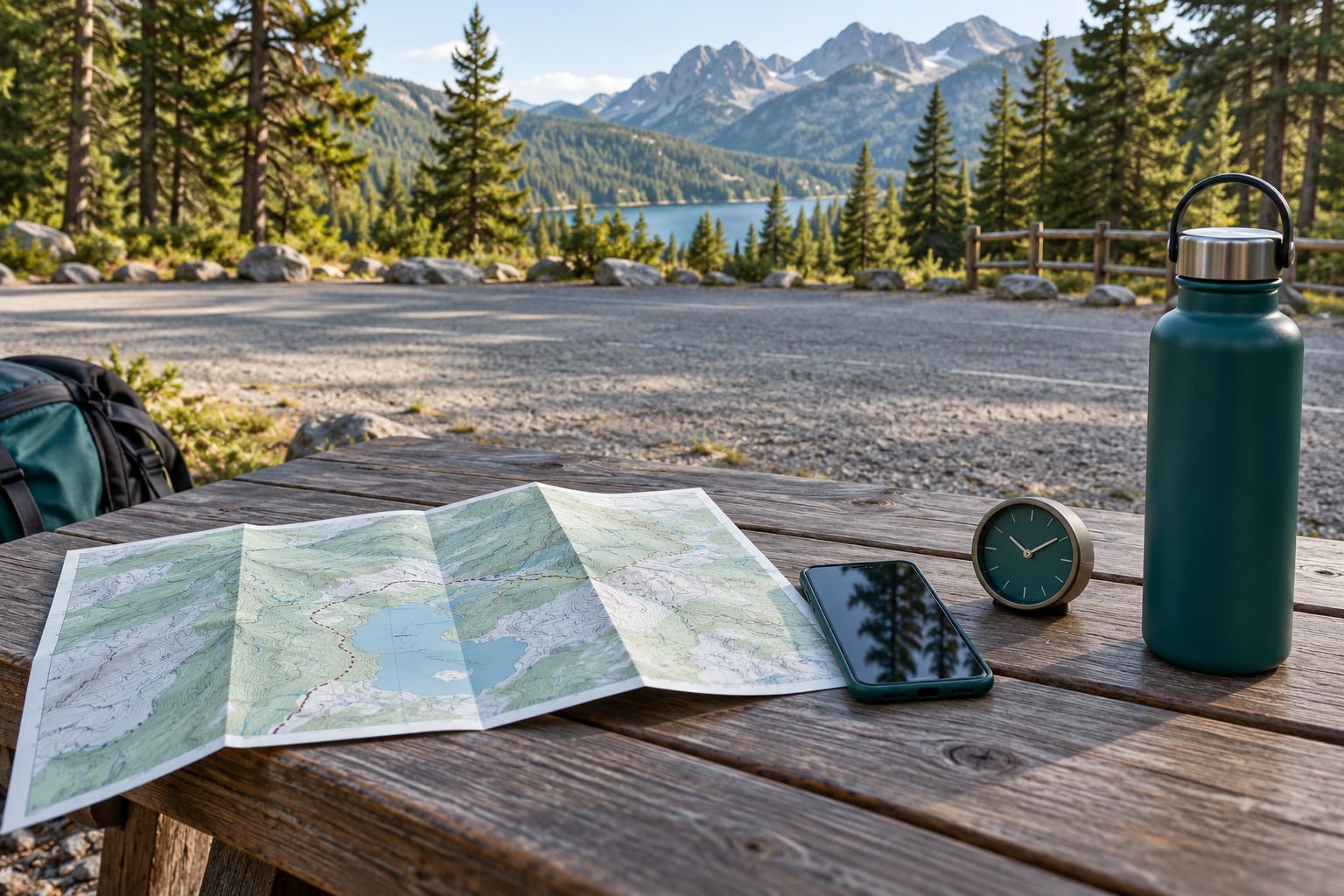
Download the park information for offline use before you leave the house. Mobile coverage in large parks drops off exactly where you want to look up a trail map, and parking and closure updates often change through the morning.
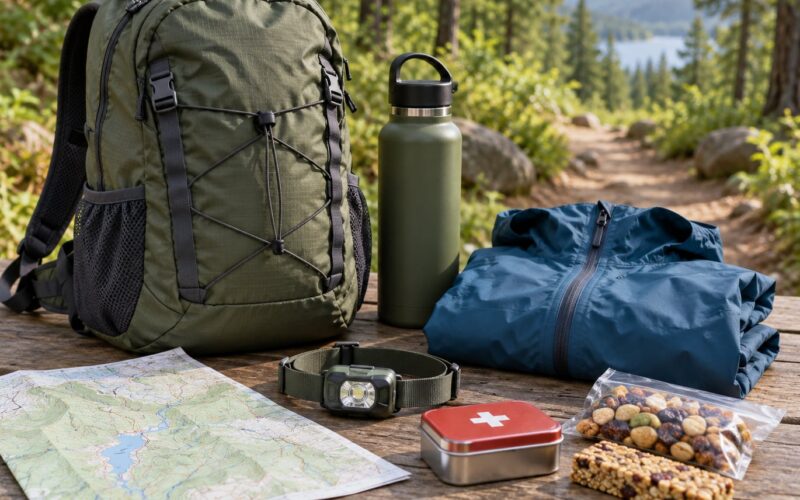
Bring more water than you think you need, footwear that suits the trail surface rather than the car park, and one weather layer you can put on quickly. Sunscreen matters even in the shoulder months, because the sun is often what pushes visitors off a trail and into a car, which is exactly the pattern you want to use.
Finally, have one backup activity that does not depend on a shuttle seat or a parking spot. An indoor exhibit, a short riverside loop or a nearby viewpoint gives you something to do when the headline attraction is packed.
Step-by-Step: How to Visit a Popular Park Without Crowds
1. Check When the Park Is Quietest
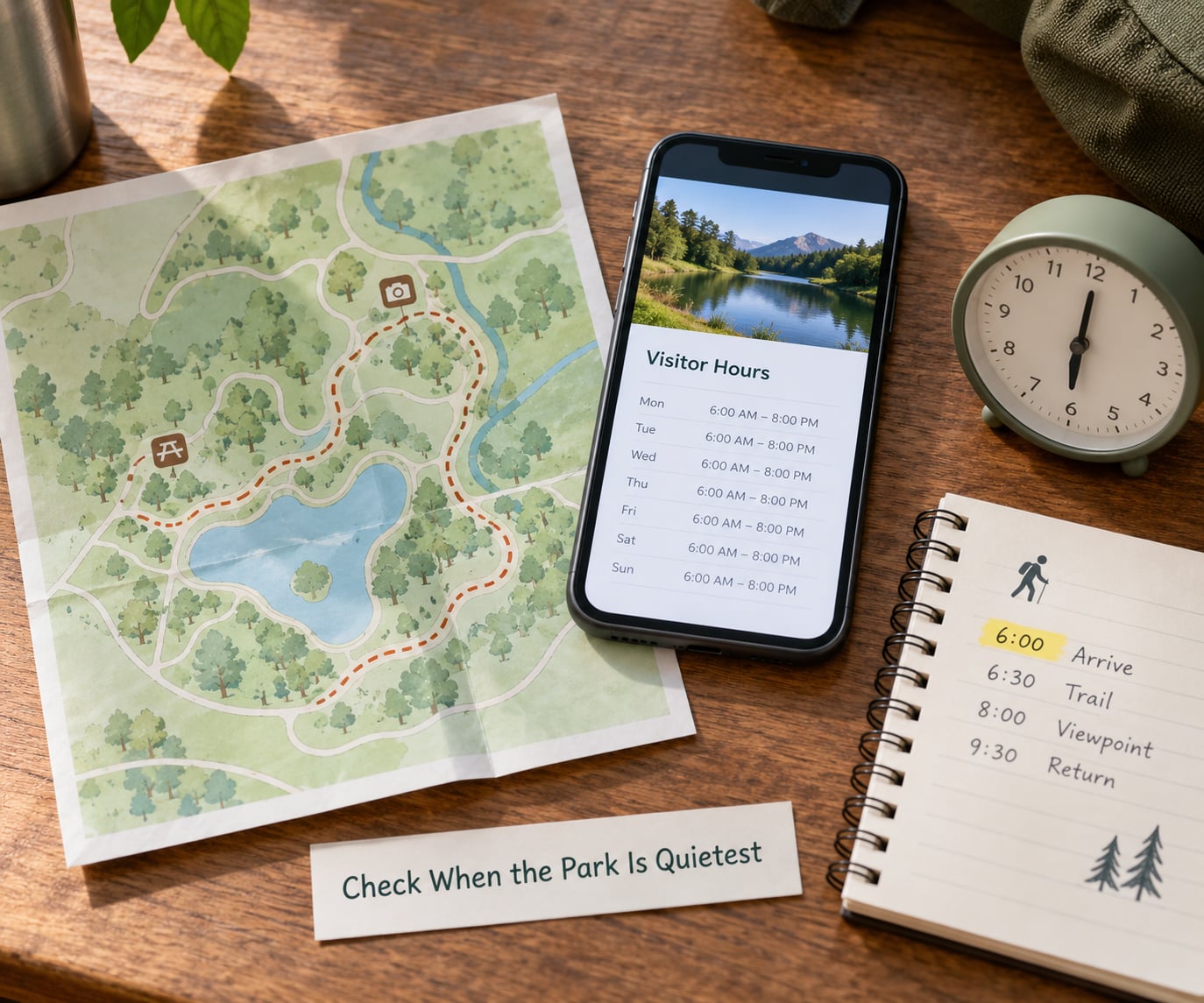
Start by comparing weekday and weekend patterns rather than guessing. Official visitor pages usually describe operating hours, road work and group movements, and recent traveler reports describe how the gates actually behaved. What you are looking for is the shape of the day: a rush at opening, a smaller bump around lunch, then a steady build through the afternoon on the main roads.
Groups are the other piece. School and tour groups tend to land in a mid-morning window and stay on the accessible, popular routes. If your visit overlaps that window, the easy walking trails near the entrance will feel busy even when nothing else does.
Set your arrival for 30 to 60 minutes before you expect the main entrance to fill. That early buffer is what makes the difference, and it usually costs you nothing but sleep. You will get the parking, the walk in and the first viewpoint to yourself.
2. Choose the Right Entrance and Parking Area
Most parks have more than one gate, and the famous one is rarely the quietest. Compare every official entrance before you commit, including the ones that serve the same trail network from a different direction. A gate that costs you an extra 30 minutes of driving can save two hours of standing in a queue.
Look at parking lots away from the main visitor center, transit stops at the edge of the park rather than in the middle of it, and trailheads that other visitors have not thought about. The tell is whether the lot has spaces, not how far the walk is.
Check four things before you pick an alternative: construction or closures on the roads, current road conditions, whether the alternative works for anyone with limited mobility in your group, and whether that entrance actually reaches the route you planned. An entrance that saves time at the gate and adds an hour back to the car is not a win.
3. Start With a Less-Demanding Route
Trade distance for quiet. A shorter loop, a trail one difficulty level down, or a viewpoint that most visitors skip will often put you in near-empty country while the main route doubles back on itself. Five extra minutes on a quiet trail beats forty on a crowded one.
You will know this step worked if there is still open space in the trailhead parking when you arrive, and if you pass other people at a steady pace rather than in clusters. It did not work if you are walking behind a line of visitors and can hear conversations ahead of you.
Build in a rest stop. Ten minutes sitting with water at a quiet junction is not wasted time, because it resets how far you are willing to walk and keeps the rest of the route a choice rather than a chore. Resist the urge to clear every attraction in one day; that pressure is what puts you back on the crowded road at 2 PM.
4. Visit the Main Attraction at the Right Moment
Go to the headline sight after you are inside, never on the way in. Everyone arrives with the same plan, so the first feature on the map gets the first hour of visitors. Move it to the middle of your day and it becomes a completely different place.
Then set a personal cutoff. Decide how long you will wait and what you will do instead, before you are standing there. Watching people queue for an hour and then leaving is a legitimate outcome, not a failure.
Look for a vantage point instead of the drop. A short side trail to an overlook, a higher pullout on the scenic drive, or a different angle on the same feature often gives you the view without the crowd. And remember that light improves after the midday crush. Many of the best photos people take in busy parks are shot in the last two hours, not the first.
5. Use Breaks, Weather, and Real-Time Conditions
Heat, rain, wind and smoke all change how crowds move, and all of them can work in your favour. When it is hot at midday, the shaded trail and the indoor exhibit fill up while the exposed viewpoint empties. That is a good trade.
Park webcams and official social accounts tell you what conditions look like right now without relying on somebody’s guess from a previous year. A quick check before you set off also tells you whether a road or area is closed, which changes your whole route plan.
Use breaks deliberately rather than as an interruption. A cafe stop, a shaded overlook, or a museum floor in the middle of the hottest hour turns an uncomfortable wait into a plan. You will know the step worked if you changed course on purpose and did not lose an hour of travel doing it.
6. Have a Backup Plan and Leave Gracefully
Put three things in place before the good part of the day starts: one nearby alternative that is genuinely less busy, one shorter version of your main route, and a departure time you will actually honour.
Leaving early is the step most people skip. The return surge builds in the late afternoon, so a day that ends at 3 PM walks out through an empty exit road, while a day that ends at 5 PM sits in it. Eat and use the restrooms before the queues form, and top up your water rather than planning to stop on the way out.
Last thing, check the logistics of getting back. Shuttles and parking have pickup windows, and missing one turns a smooth exit into a long wait in the wrong place. Ten seconds on the official site saves that.
Common Mistakes
Relying on an old crowd report. A guide written two seasons ago describes a pattern that has already changed, because timed entry programs, shuttle routes and road work all move. Use it for ideas and confirm the facts on the official site.
Choosing a remote entrance without checking access. An out-of-the-way gate is only useful if there is transit, an open road, or parking that suits your group. Check that before you commit to it, not at the junction where the road ends.
Arriving early and then standing around. The early hour is only worth something if you spend it walking. Sitting at the entrance or the visitor center at 7 AM just means you watch the crowd arrive.
Skipping water, food and shade breaks. Energy crashes push people back onto the main routes at the exact hour you wanted to avoid. Carry enough for the whole day and schedule the stops.
Trying to clear every attraction in one visit. Parks built for crowds do not reward an all-out schedule. Fewer stops, more time at each one, and an early finish beats a checklist every time.
A couple of habits help beyond the plan. Go early rather than going late: the light is better and the trails are emptier. Watch how people are moving and follow the quieter direction instead of the popular one. And be polite about it all, because an early hiker passing a full car park at 7 AM is not the problem, and treating them like one is.
Frequently Asked Questions
What is the best time to visit a popular park without crowds?
Arrive 30 to 60 minutes before the main entrance fills, and leave before the late-afternoon return surge. Weekday mornings in the shoulder months are usually the quietest combination available to most visitors. Check the official park page for operating hours, road work and any timed entry program before you pick a date, since those rules change more often than the crowd pattern does.
Are weekdays always quieter at popular parks?
Usually, but not always. School groups often use weekdays and arrive in a mid-morning window, so some accessible routes near the entrance stay busy on a Tuesday. School breaks, public holidays and big event weekends can be busier than ordinary weekends. If your only option is a holiday weekend, arrive far earlier than usual and lean harder on the side entrances and less popular trails.
How do I choose a less crowded entrance without missing the main attraction?
Open the official map and check what each entrance connects to before you choose. Many parks have a secondary gate that reaches the same trail network from a different direction. Confirm the roads are open, that transit or parking actually serves it, that it works for anyone with limited mobility in your group, and that the walk from there to your planned route is reasonable.
What should I do if a park is much more crowded than expected?
Drop the itinerary and keep the essentials. Pick one headline sight, walk it early or late in the day, and spend the rest of the time on a trail or an overlook that is not on the main route. Eat before the queues form, fill your water, and set a firm departure time. A short calm day is better than a full one spent moving through traffic.
Can I avoid crowds while visiting with children or someone with limited mobility?
Yes, but the plan changes. Shorter, surfaced routes exist at most large parks, and they are the ones that stay busy, so timing matters more, not less. Early morning and late afternoon are kinder to children and easier on anyone who cannot walk far. Bring a midday rest stop, and confirm accessible facilities and surface conditions on the official site before choosing the route.
Should I reserve parking or admission in advance?
Check the official park website rather than assuming. Admission and parking rules differ by park and by season, and timed entry programs appear and expire from year to year. Some gates stop taking vehicles once the lot fills, which can strand you on a road with no shoulder. If the park publishes a reservation requirement, book it early and download the confirmation before you leave home.
Knowing how to visit a popular park without crowds comes down to three things. Check the official visitor information the night before for hours, road work, reservations and parking rules. Decide your arrival window and your departure time before you pack the car. Then on the day, walk past the first trailhead, spend the late light at the attraction everyone else already saw, and go home before the queues form.