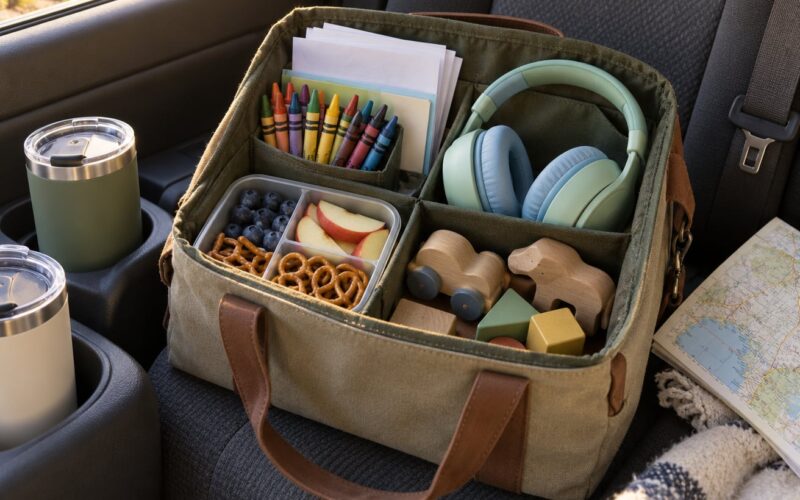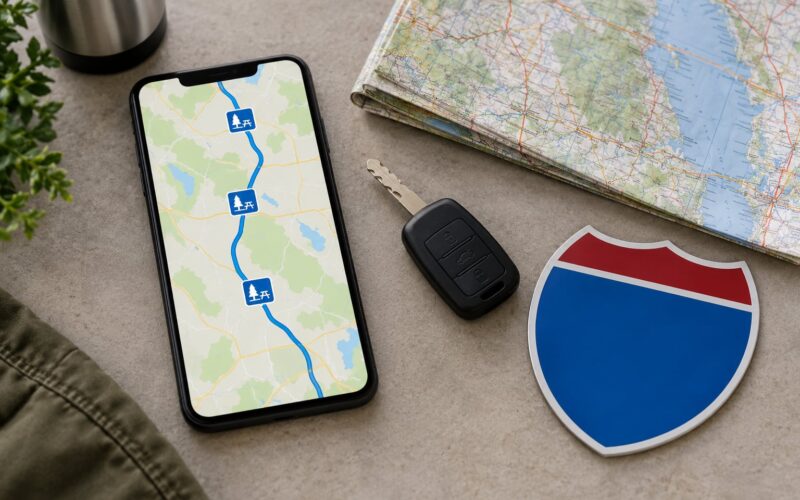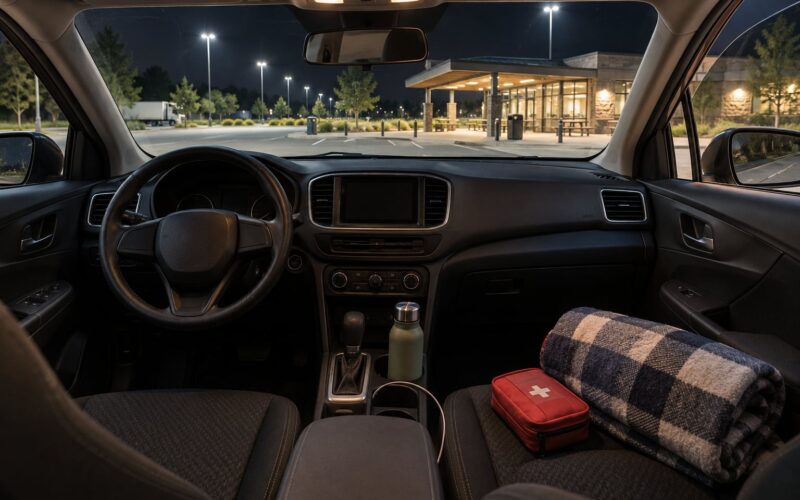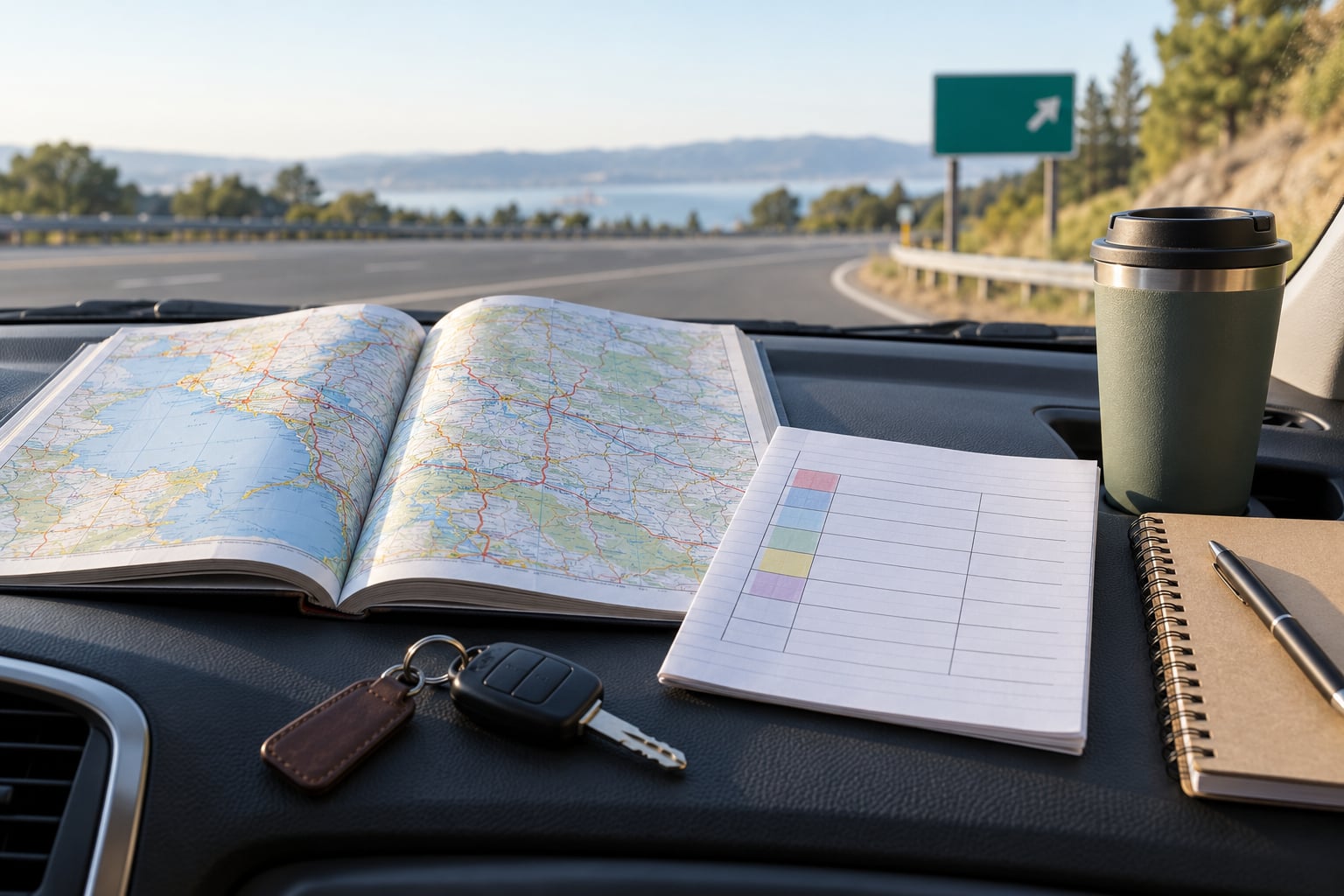
The simplest fair split is time, not distance: agree the total wheel time for the day, divide it in half, and swap drivers every two hours or 100 miles, whichever comes first. Write the plan down before you leave, because the version you agree in the car park is the one that survives a 4am argument about who is driving next.
Most disputes about sharing the driving are not about rules at all. They are about who happened to be sitting in the driver’s seat when the bags were loaded. Plan the rotation ahead of time and the trip gets noticeably calmer, even when the weather or the traffic does not.
Table of Contents
- What You Need
- Step-by-Step: How to Split Driving Duties Safely
- 1. Estimate the total driving time
- 2. Check each driver’s experience and limits
- 3. Build a fair duty roster
- 4. Schedule rest and fuel stops
- 5. Make every handoff predictable
- 6. Reassign duties when plans change
- 7. Review the plan after the first day
- Common Mistakes
- Splitting by distance alone
- Changing drivers while moving
- Treating the navigator as a spare driver
- Ignoring the last hour of the drive
- Building a roster that cannot flex
- Frequently Asked Questions
- How should two people split driving on a road trip?
- What is a fair way to divide driving duties?
- How long should each driver rest before taking over?
- Can drivers switch at a gas station or rest stop?
- How do you reassign driving when someone gets tired?
- Conclusion
What You Need
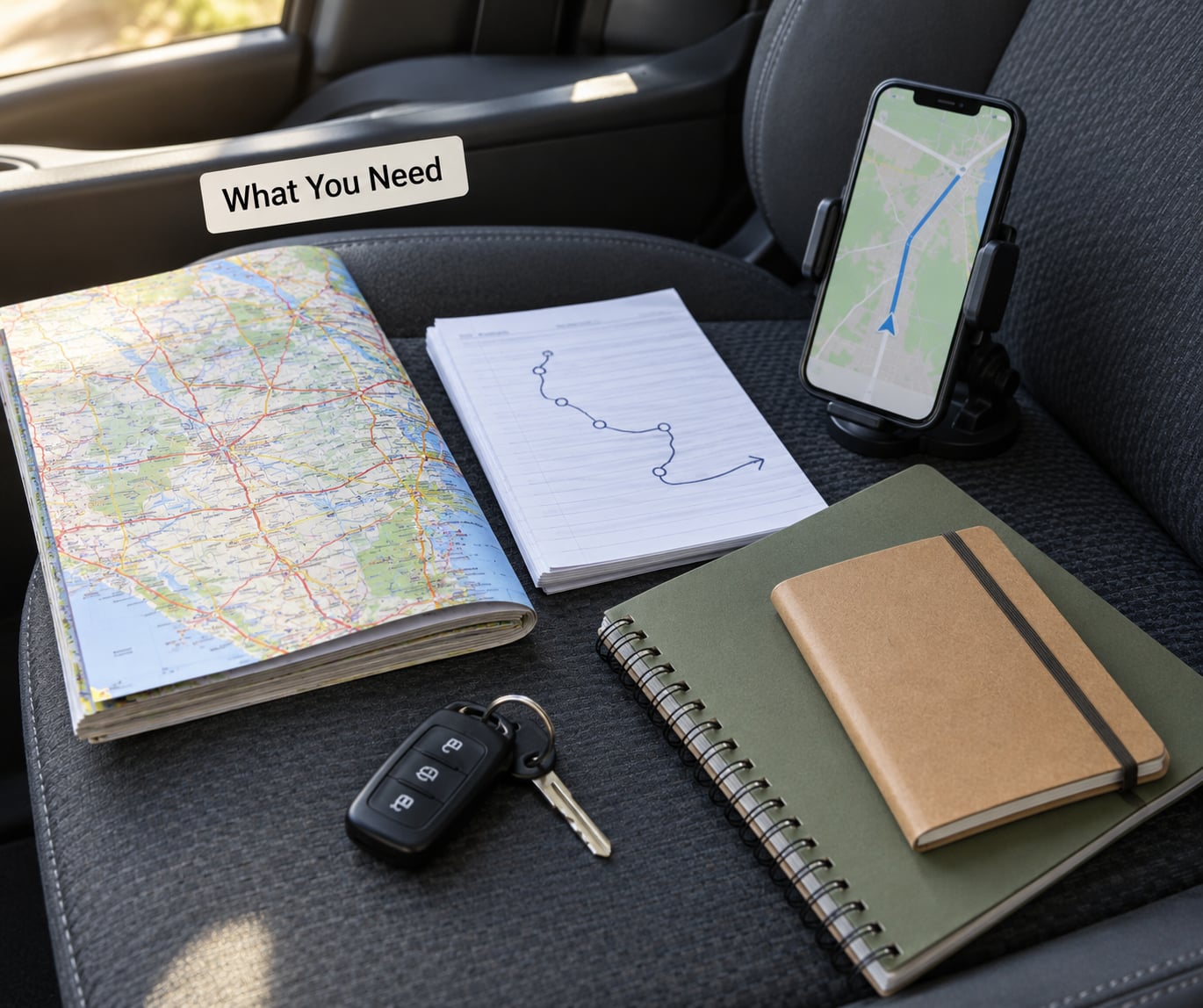
Before the rota goes in a group chat, gather five things:
- Total trip distance and daily target. Work from the route you will actually drive, including border crossings and ferries, not the shortest number the map app flashes.
- Each driver’s licence details. Confirm everyone holds a current licence for that vehicle class, and if you are renting, check who is listed as an authorised driver. An unlisted driver can void the rental agreement’s cover, which is a paperwork problem you do not want at 2am on a mountain road.
- Honest self-assessments. Ask about night driving, rain, mountain routes and heavy traffic. People often take a turn they are not ready for because they did not want to be the one who says no.
- Vehicle documents. Registration, insurance, roadside assistance number, and a spare key that lives in the glovebox rather than in one person’s pocket.
- A place to put the plan. A shared note, a pinned message, or a printed sheet taped to the dash. If it lives in someone’s head, it will be lost at the first unplanned detour.
Step-by-Step: How to Split Driving Duties Safely
1. Estimate the total driving time
Add up the wheel time for each day of the trip, not just the distance. A 400-mile day on motorways is often seven hours behind the wheel; the same 400 miles on two-lane roads can be nine. Then add roughly 10 to 15 percent for traffic, weather and fuel stops so the roster is built on a realistic number.
How you tell worked: at the end of the first day, your estimate was within about an hour of reality.
2. Check each driver’s experience and limits
Ask three questions instead of “are you good to drive?” First, when did you last drive this distance? Second, which conditions do you avoid? Third, are you on any medication that carries a drowsiness warning? That last one is worth asking plainly and without fuss. Nobody needs to share a diagnosis, and nobody should drive if the answer makes the plan uncomfortable.
Someone who is anxious at night is not a bad driver. They are a driver who should take the daylight legs, and the roster should say so out loud so it does not read as a demotion.
3. Build a fair duty roster
Divide the day’s estimated wheel time into shifts of about two hours, then alternate drivers shift by shift. With three or four drivers, rotate the order each time you stop so the same person is not always first on and last off.
A worked example for a 500-mile day with two drivers: shift one, 9:00 to 11:00, driver A; shift two, 11:15 to 1:15, driver B; shift three, 1:30 to 3:30, driver A; shift four, 3:45 to 6:00, driver B. Each person drives roughly two hours and twenty minutes more than a flat 50/50 of wheel time, which is close enough that nobody needs a spreadsheet.
With three drivers on a 600-mile day, split into three shifts of about 1 hour 45 minutes and rotate the starting position each stop. With four, you are looking at 90-minute shifts, so weight the split toward whoever is freshest rather than rotating blindly.
4. Schedule rest and fuel stops
Break every two hours or about 100 miles, whichever arrives first, and take 15 to 20 minutes. The break matters more than the schedule precision; a 20-minute nap restores alertness far better than pushing through to the next town.
Combine fuel, food and the break into one stop where you can, so you are not adding three separate ten-minute halts. Plan the stops before departure and note them on the route, because the alternative is deciding to push on when everyone is quietly hoping to pull over.
Avoid driving between midnight and 6am wherever the schedule allows. That window is when your body is at its lowest and a perfectly rested driver can still drift. If the trip cannot avoid it, put the freshest driver on the small hours and schedule a proper stop immediately after.
5. Make every handoff predictable
Decide the switch points before you leave: the fuel stop at mile 180, the rest area after the bridge, the service station two hours past lunch. Predictable swaps mean nobody has to negotiate mid-drive.
At the stop, park properly, switch the engine off, hand over the keys physically, and only then let the new driver get behind the wheel. Swap while moving and you have a passenger reaching across you at 70mph. Fuel first, then swap, then eat while the new driver gets used to the vehicle.
Give the new driver two or three minutes of quiet at the start of a shift. Silence is not rudeness; it is the settling-in period.
6. Reassign duties when plans change
Set the rule before you need it: any driver can call a stop, and nobody argues about whether they are tired enough to call it. A short “pull over at the next safe place” needs no justification, and the roster is a plan rather than a contract.
When the weather closes a mountain pass, an unfamiliar vehicle starts warning lights, or someone gets ill, split the lost time across the drivers who still have capacity rather than handing it all to whoever is freshest. Keep the same two-hour interval even if the day runs late, and accept a later arrival instead of a faster one.
If someone has consumed alcohol, they do not drive, full stop. Move the vehicle, park it, and wait. The rest of the rota can absorb a two-hour delay far more easily than you can absorb a legal or insurance problem.
7. Review the plan after the first day
At the first overnight stop, check three things: did anyone’s shifts come out noticeably unequal, did anyone hit a fatigue wall they did not expect, and did the break schedule survive contact with reality? Adjust the remaining days while everyone still has energy for the conversation.
Most good rotas change once. The first version is a starting point, not a commitment, and saying that on night one is far better than arriving at night two already resentful.
Common Mistakes
Splitting by distance alone
Mileage feels fair on paper but ignores how hard the driving was. Two drivers covering 250 miles each is not equal if one covered theirs entirely in the dark on a wet road. Track time at the wheel, and add a note about conditions.
Changing drivers while moving
Do not swap on a shoulder, in a lay-by entrance, or while crawling through traffic. A proper stop takes three minutes and removes the single riskiest moment in a shared drive.
Treating the navigator as a spare driver
Running directions, keeping an eye on fuel and watching the kids is a job. If the navigator also drives, they will do all three badly. Either give navigation its own rotating role or accept that whoever navigates is off the driving roster.
Ignoring the last hour of the drive
Fatigue creeps up near arrival, and so does the temptation to skip the final break because you are close. Keep the 2-hour rhythm all the way to the parking space, then stop for food before anyone makes decisions about directions.
Building a roster that cannot flex
A fixed two-hour script falls apart the moment a stop runs forty minutes long. Publish the rotation as a starting order, and agree in advance that the pair can shift it as long as no one exceeds their planned total.
One more worth naming: bad sleep before departure. No roster repairs a driver who went to bed at 1am because of a late finish, so treat a reasonable night as part of the safety plan.
Frequently Asked Questions
How should two people split driving on a road trip?
Split by time at the wheel rather than by miles, then swap every two hours or 100 miles, whichever comes first. Take a 15 to 20 minute break at each swap and write the rotation down before departure. If one driver is nervous at night or in bad weather, weight the split toward daylight legs and say so openly, so the roster reads as a plan rather than a judgement on the other person.
What is a fair way to divide driving duties?
Fair usually means equal time behind the wheel once you account for conditions, not equal distance. Keep a rough tally of each driver’s hours and reconcile it at the first overnight stop, because delays and stop durations shift things unevenly. Where one person genuinely cannot take a leg, say that plainly and redistribute the hours across the others instead of quietly absorbing them on the final stretch.
How long should each driver rest before taking over?
Take 15 to 20 minutes, and longer if the driver was genuinely struggling. A 20-minute nap is the most reliable way to restore alertness, and stepping out, stretching and getting a coffee all help. Avoid caffeine as the only strategy, since its effect fades quickly. If a driver has been awake for many hours before the trip, no short break is a substitute for sleep, and they should not take the wheel.
Can drivers switch at a gas station or rest stop?
Yes, and those are the safest places to do it. Pull fully in, park properly, refuel, switch the engine off and hand over the keys before anyone moves seats. Avoid service stations with tight forecourts, lay-by entrances and hard shoulders, where a changeover means standing near moving traffic. Give the new driver a couple of minutes of quiet before setting off so they can settle into the vehicle.
How do you reassign driving when someone gets tired?
Any driver can call a stop without explaining why, and that rule should be agreed at the start of the trip. At the next safe place, hand over the keys and give the replacement a short break before they continue. Spread the remaining hours across the other drivers rather than loading one person for the rest of the day, and accept a later arrival rather than shortening the interval between stops.
Conclusion
Start with a realistic total for the day’s wheel time, check each driver’s real limits rather than their willingness, and put a written, flexible rotation where everyone can see it. Keep the two-hour or 100-mile interval no matter what the schedule wants, and treat a call for a break as something nobody has to justify.