To road trip with kids without meltdowns, plan short driving legs of about two hours, protect nap time by scheduling around it, and hand over one new activity every sixty to ninety minutes instead of the whole toy bag at once. Most car meltdowns come from hunger, lost sleep, boredom or being buckled in too long, and timing fixes all four.
That is the whole method. Everything below is just the practical version of it: what to pack the night before, how to spend each hour of the drive, and what to do in the two minutes after the crying starts. You can read this once before you leave and you will not need it again mid-drive, which is the point.
I have done the version of this trip where the day is planned to the minute and it falls apart by mile 300. The trips that go well all look boring on paper: short legs, boring snacks, lots of stopping. This guide is what 2026‘s version of that looks like with kids of different ages in the back seat.
Table of Contents
- What You Need Before You Leave
- How to Road Trip with Kids Without Meltdowns: Step by Step
- 1. Set a route with shorter driving legs
- 2. Use a one-hour travel routine instead of continuous screen time
- 3. Pack one family road-trip kit
- 4. Match activities to the child’s age
- 5. Plan meals and snacks for delays
- 6. Schedule restorative stops
- 7. Prepare for the inevitable meltdown
- 8. Finish the day with a low-pressure routine
- Common Mistakes and Their Quick Fixes
- Overpacking the day
- Relying on screens for the whole drive
- Dumping the whole toy bag out at hour one
- Scheduling meals to the minute
- Changing clothes and doing a full reset at every stop
- Ignoring the early warning signs
- Frequently Asked Questions
- How often should we stop when road tripping with young kids?
- How can I keep a toddler occupied without relying on a screen?
- What is a realistic daily driving limit for children?
- How do I handle motion sickness in a child?
- What snacks and activities are easiest to manage in a car?
- How can I keep everyone calm when unexpected delays happen?
- Conclusion
What You Need Before You Leave
Most of the calm happens before the engine starts. Ninety minutes of prep on the night before removes half the risk of a blow-up, because almost every meltdown I have seen began with a rushed transfer into the car.
- Documents: registration, insurance card, any child travel documents, plus a paper copy of the hotel confirmation for the drive back.
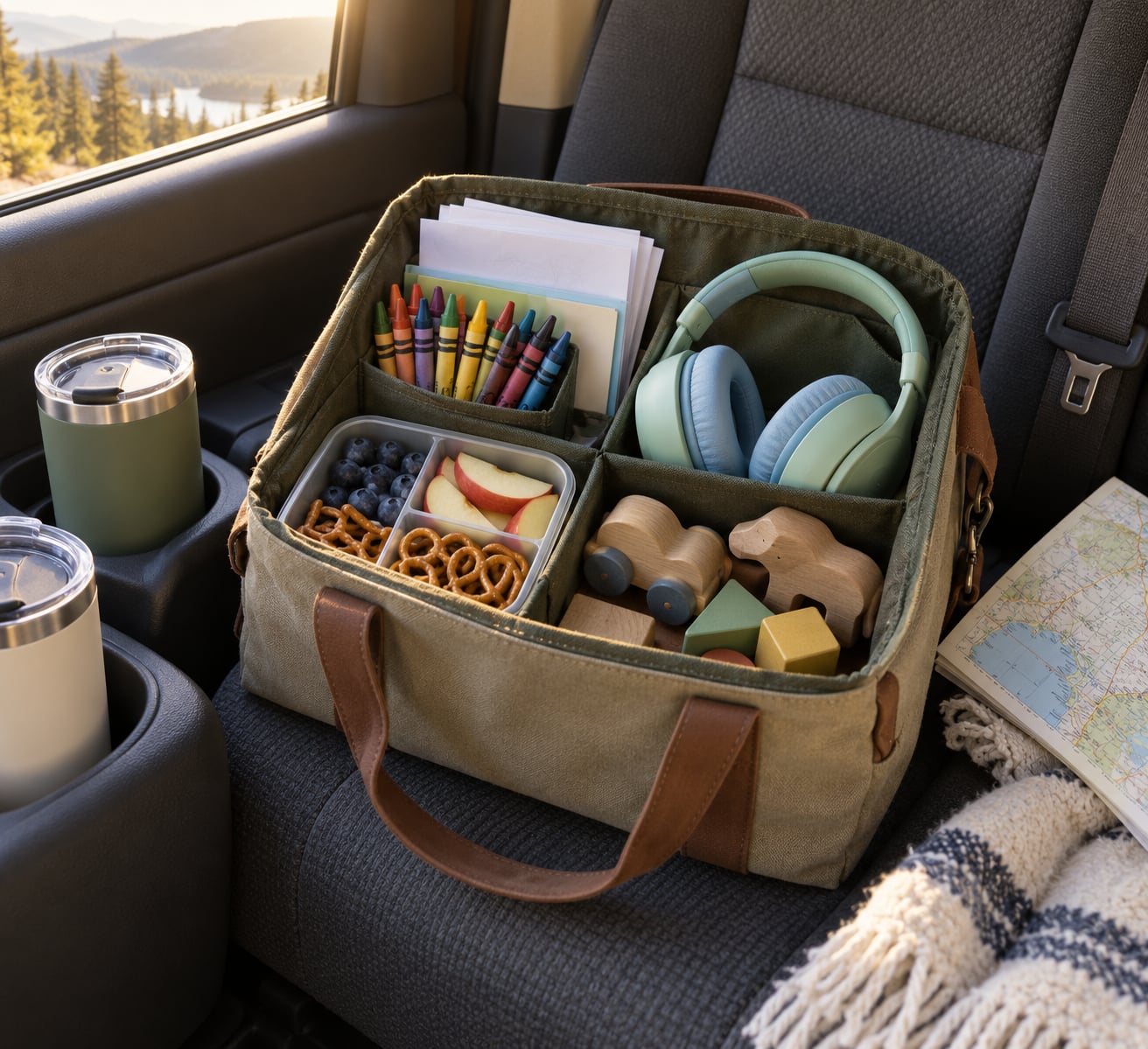
- One road-trip kit: a soft bag or console organizer that an adult can open without getting out of the seat. See step 3 for what goes in it.
- Snacks in three tiers: one per hour of driving, plus a hidden emergency tier nobody touches until hour four.
- Downloaded media: audiobooks, a sing-along playlist, and two or three movies already on the device. Rural stretches have no signal and no buffering.
- Comfort item: whatever the child sleeps with, even if it seems silly at 7am. It goes in the car in the morning, not at bedtime.
- Safety gear: correctly installed car seat, a trash bag or two, wipes, and a change of clothes per kid. Check the seat installation the night before, not at the curb.
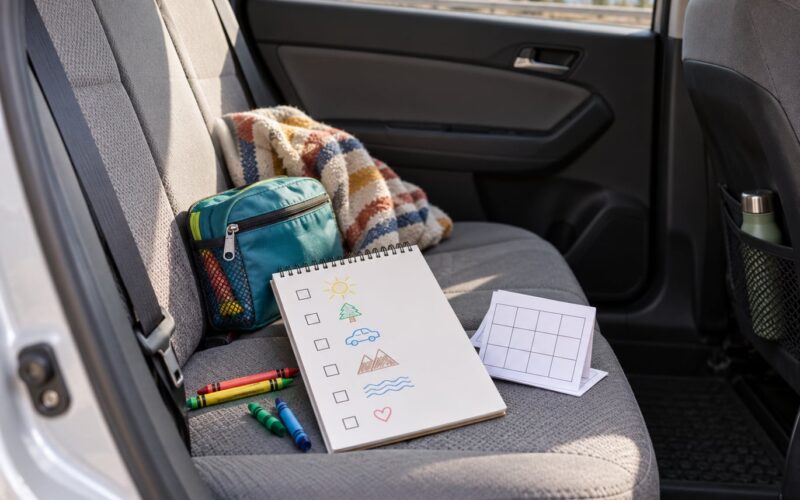
- Paper and pen: for a license plate game, a scavenger hunt or just drawing.
One thing parents on r/Mommit and other parenting forums repeat constantly: the car seat, the stroller and the highchair are three separate meltdown triggers in their own right. The loading-in moment deserves the same patience as the drive.
How to Road Trip with Kids Without Meltdowns: Step by Step
1. Set a route with shorter driving legs
Keep each stretch of driving under two hours for kids under six. Two hours is roughly the point where restraint and stillness stop being interesting, so build your route around that ceiling rather than around the shortest total distance.
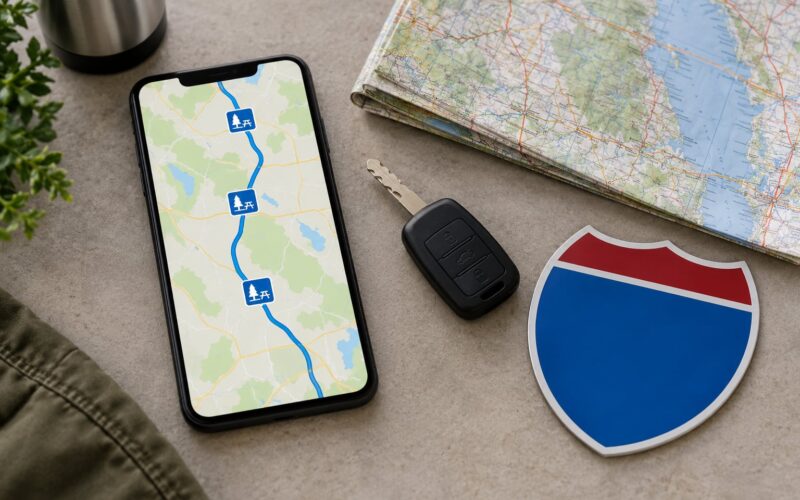
Pick your stopping points before you leave and put them in the navigation app, not in your head. A gas station with a clean bathroom and a patch of grass beats a beautiful viewpoint twenty minutes further on, because you will need the bathroom more than the view.
For older kids you can stretch the first leg to three hours if the drive is smooth and everyone slept well. For a toddler under three, keep it under ninety minutes. Every extra fifteen minutes of driving is fifteen more minutes of stillness added to a body that was already done sitting before you left.
Parents often use a rough rule of thumb called the 3-3-3 rule: roughly three hours of driving, three hours of sleep and three meals is a day most young children can actually cope with. Break any one of those three and the day gets harder for everyone, not just the child.
2. Use a one-hour travel routine instead of continuous screen time
Rotate between an activity, a snack, movement and quiet, on a loop, rather than letting a screen run from mile 10 to mile 400. The rotation is what prevents the boredom meltdown, because boredom is a separate problem from tiredness and it needs a separate fix.
Here is roughly how the hours stack up. Adjust the numbers to your children, not to mine.
| Elapsed time | What to do | Why it prevents a meltdown |
|---|---|---|
| Hour 0 | Depart right after the wake-up snack, no screens yet | Fresh novelty and a full stomach buy you the calmest stretch of the day |
| Hour 1 | First new item revealed, audio on | New things hold attention longer than familiar things do |
| Hour 1.5 | Movement stop, ten minutes outside the car | Restless energy discharged before it becomes resistance |
| Hours 2-4 | Second item, second snack, nap window if it fits | This is the stretch where hunger and boredom stack up, so change the inputs |
| Hours 4-6 | Screen window if you use one, then low-stimulation audio | Ending screens early leaves room for a calm finish rather than a hard stop |
| Last 45 minutes | Quiet drawing, sticker book, or a talk about what comes next | Arrival calm starts in the car, not at the door |
Two hours is also the practical ceiling for continuous screen use before a child comes off it. Ending it while they are still enjoying it is far easier than ending it after they have decided it is the only fair deal.
3. Pack one family road-trip kit
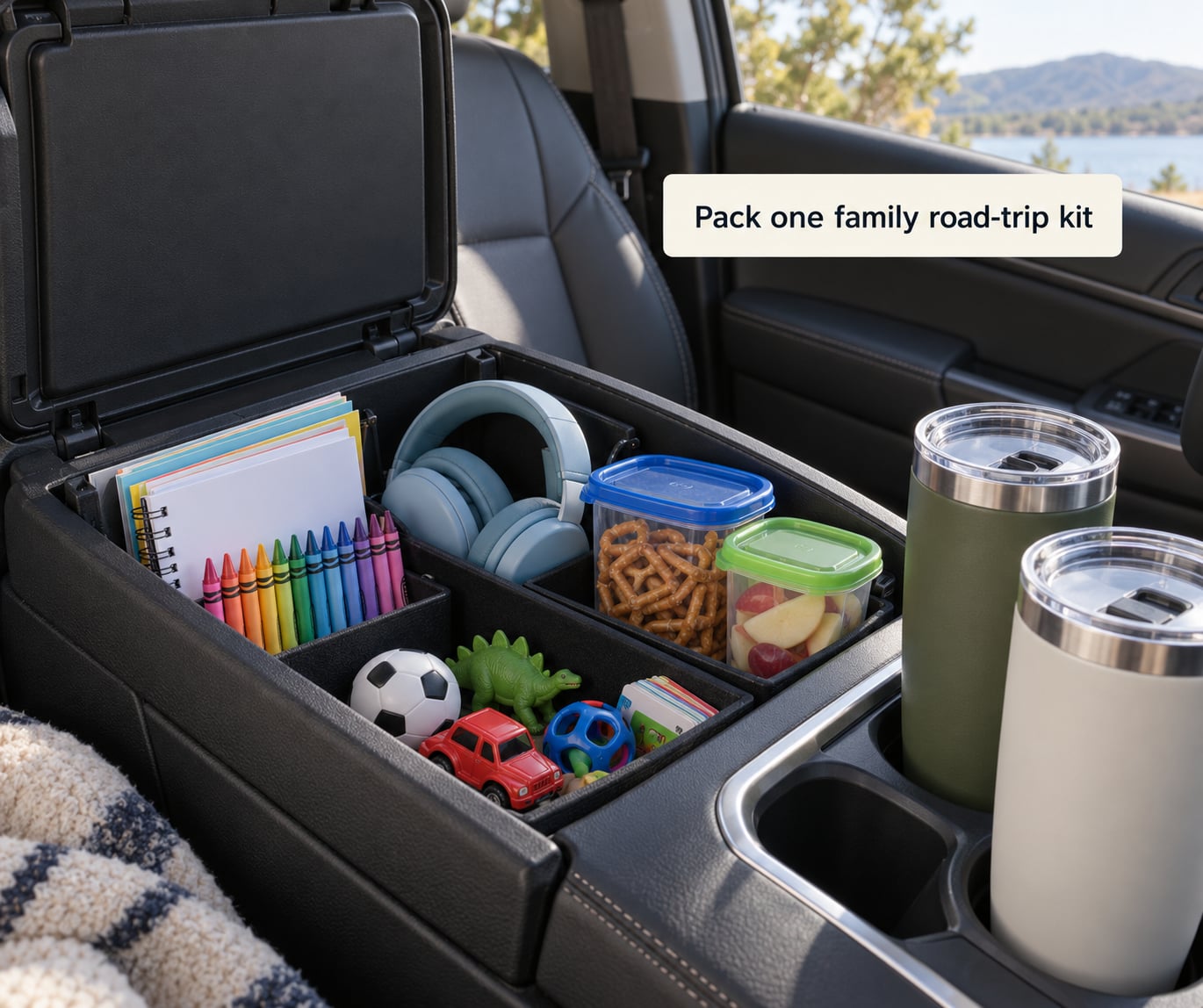
Fill one bag, put it within adult reach from the driver’s seat, and zip it. Digging through three bags at a rest stop is how adults lose patience ten minutes before a kid does.
What earns a place in the kit: a magnetic drawing board or laminated paper with washable markers, reusable stickers, a small puzzle, a pipe cleaner or bottle-cap sensory toy for the under-fives, headphones, a snack caddy, wet wipes, and a spare outfit per kid. Keep the noise-cancelling headphones for the child who is easily overwhelmed rather than for the one who just wants music.
Free substitutes work almost as well. A cookie sheet and a handful of plastic magnets become a farm-animal puzzle. A paper plate becomes a steering wheel. Dollar-store sticker books and a cookie tin of crayons cost very little and are meant to be left behind at the hotel rather than carried home.
4. Match activities to the child’s age
Age matters more than your child’s willingness. A four-year-old and a twelve-year-old given the same activity will both quit within twenty minutes, in opposite moods.
Under one year: a high-contrast cloth book, a rattle, a teether, and whatever sound they like. Plan two car-seat transfers and one long feeding stop, because a hungry infant is the least negotiable schedule item on the list.
One to three years: sensory toys that can go in a mouth, shape sorters, sing-alongs, reusable stickers, and the classic peekaboo through the seat. Keep everything round, soft and large enough to survive being dropped.
Four to six years: the I Spy game, the license plate game, audiobooks they have heard before, window name tags and a hunt for letters on buildings. Familiar stories matter here because the child is starting to predict the plot.
Seven and up: chapter books they have already read, podcasts made for their age, a deck of cards, a travel journal to write in, and responsibility for one task such as picking the next rest stop. Give a teenager a job, not more entertainment; being handed the map is usually enough.
With kids of very different ages, plan separate activities and stagger the reveal. The little one gets the noisy new toy, the older one gets something quiet, and the two of them never have to share the same twenty minutes.
5. Plan meals and snacks for delays
Crankiness in hour three is usually hunger, not boredom, even when boredom is what you can hear. Hand out a planned snack every sixty to ninety minutes instead of waiting for a fussy sign, and keep one tier of snacks sealed until you need them.
A useful mix: familiar crackers and fruit, cooler items like grapes and cheese, a slow-release option such as a bagel or banana for the back half, and a shelf-stable emergency stash of granola bars and pouches for when the cooler runs warm or a stop turns into a two-hour delay.
Skip the sugary drinks and the candy that dissolves in a hot car. The energy spike followed by the crash is very hard to sit through, and parents on the parenting forums describe it plainly: an over-sugared snack at hour two buys you a worse hour four.
Build in meal flexibility. Know where you will eat, but know the backup too, because a delayed meal at the wrong hour is one of the most reliable triggers of a rest-stop tantrum.
6. Schedule restorative stops
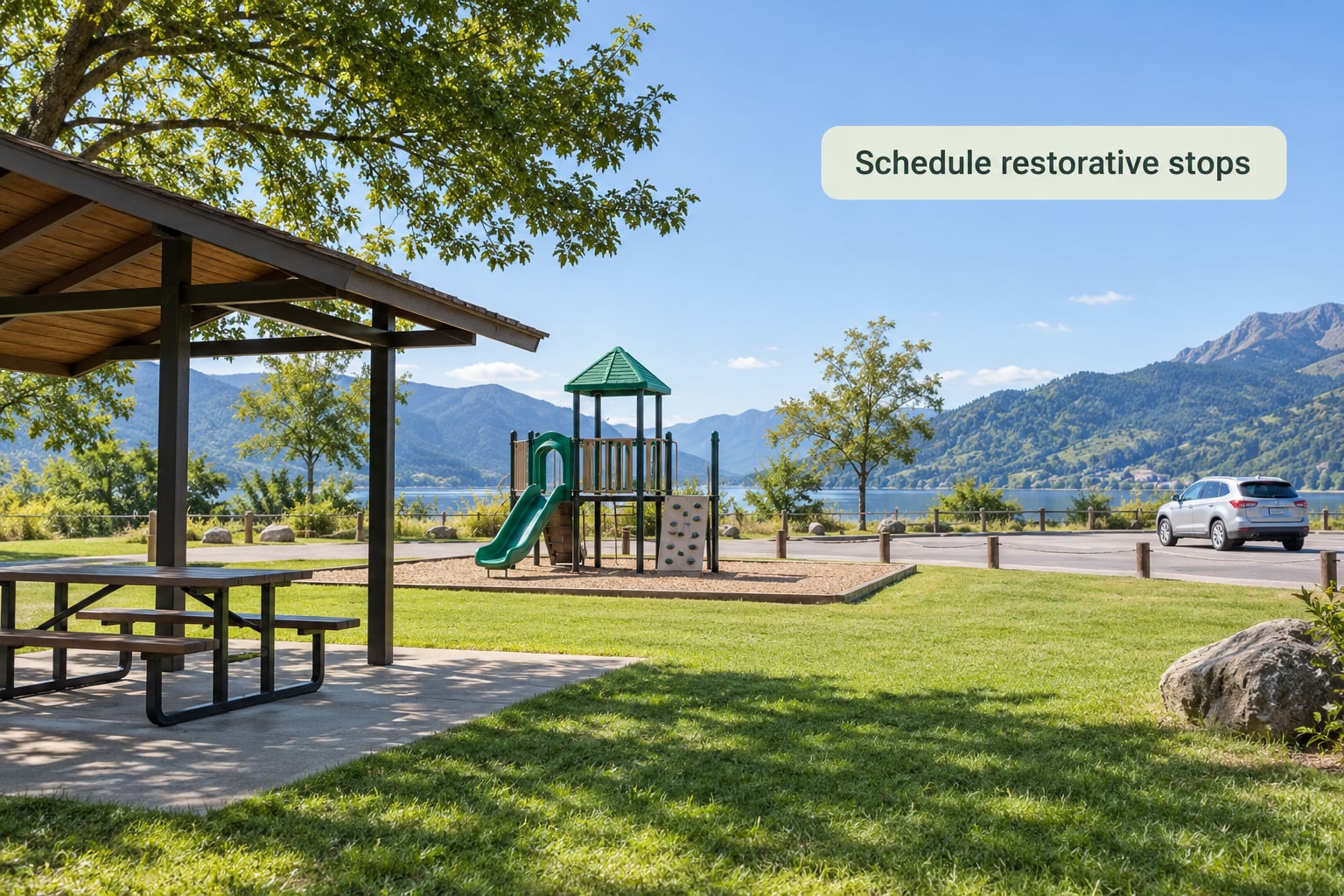
Stop every two hours for ten to twenty minutes, and make kids get out of the car every time. Standing up, walking and looking at something new resets far more than another snack does.
Alternate the types: a playground stop for burning energy, a picnic or grassy stop for eating, a bathroom stop for the routine, and one viewpoint stop to break up the sameness of the highway. The variety is the point, not any single stop.
Ten to twenty minutes is enough. Longer stops let everyone get re-wired and excited, and getting back into a seat after that is its own small struggle. WhatToExpect parents describe it well: find a park, play for fifteen minutes, and use the stop to top up gas while the child is occupied so a sleeping child lets you keep driving.
If you are driving alone, choose stops where you can see the car from where the kids are playing. You cannot supervise a playground and the highway at the same time.
7. Prepare for the inevitable meltdown
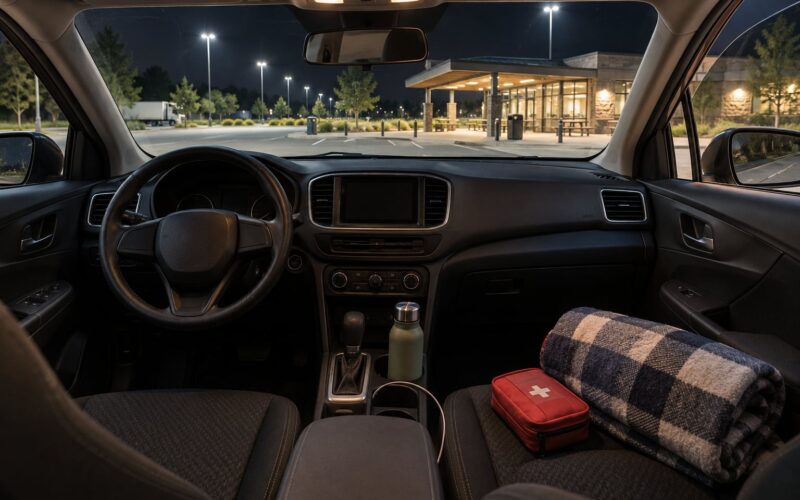
When the crying starts, stop driving first. Pull into a parking lot, shade or a safe spot away from traffic. A parent who is trying to calm a child while also driving has lost the only advantage they had.
Then work in order. Turn the volume down and dim the light, because noise and heat add to an overloaded nervous system. Check the three physical causes first: hunger, bathroom, discomfort from the harness or a twisted seat. Meet the basic need before addressing the behavior.
Next, give two acceptable choices, said calmly and once. Not a question, a decision: red shirt or blue shirt, book or stickers. Then stay quiet. Do not negotiate, threaten, or narrate a long lecture about behavior while they are mid-meltdown, because none of it is processed at that point.
If the child is safe and settled after five minutes and you are an hour from anywhere, driving on often works better than staying parked. If everyone is at their limit, shorten the day. Cutting the destination short costs you less than a white-knuckle finish with two exhausted children and one furious driver.
Never leave a child alone in the car, and never use physical punishment as a way to end a car meltdown. If a child seems unusually hard to settle or the behavior is very different from normal, check in with your pediatrician when you get home.
8. Finish the day with a low-pressure routine
Travel fatigue often shows up in the evening rather than on the road, which surprises people. An easy dinner, a short wash-up and one familiar bedtime choice prevent that second blow-up.
Try this: dinner that needs no cooking, a ten-minute shower or bath, one comfort item from the car seat that you left behind on purpose, and a preview of tomorrow in two sentences. Keep expectations low on the first evening, because everyone is tired and nobody is at their best after a long drive.
For the drive back, write down what actually worked on the way out while it is fresh. The toy that held attention, the snack that stopped the crankiness, the stop everyone liked. The second leg of a round trip is usually easier than the first.
Common Mistakes and Their Quick Fixes
Overpacking the day
Four hours of driving and a museum on arrival is a recipe for a blow-up in the car park. Cap the driving at what your youngest child can handle and treat arrival activities as optional. A family that gets one good hour at the destination is far better off than one that arrives wrecked at hour nine.
Relying on screens for the whole drive
Screens are a fine tool and a poor default. They buy you silence for ninety minutes and then you have to take the device away, which is often when the second meltdown happens. Use them for one stretch in the middle of the drive, not from departure to arrival.
Dumping the whole toy bag out at hour one
Everything visible is now boring within thirty minutes. Stagger the reveal instead, one item per hour, in a bag the adults control. Parents in r/toddlers describe spacing out the reveal for the novelty effect as the single biggest improvement they made.
Scheduling meals to the minute
A rigid meal plan breaks the first time traffic adds forty minutes. Plan flexible windows instead, and always carry food that does not need reheating. Kids who are hungry and stuck in a car seat have very little left to negotiate with.
Changing clothes and doing a full reset at every stop
It feels productive and it backfires. Twenty minutes of clothing, sunscreen and bathroom changes turns the stop into a struggle you then carry into the next leg. Change clothes only when something is actually spilled, and do it while standing up.
Ignoring the early warning signs
The signs arrive long before the screaming: sighing, quieter than usual, repeated questions, a stiffening body, poking at a sibling. When you see them, change something within two minutes: a new activity, a snack, a stop. Waiting for the meltdown means dealing with it at full volume in the worst possible place.
Frequently Asked Questions
How often should we stop when road tripping with young kids?
Stop every two hours for ten to twenty minutes, and shorter for toddlers under three, who can manage about ninety minutes of driving before patience runs out. Let children get out of the car and move at every stop rather than eating in the seat. Pick stops with a bathroom, grass or a playground so the break does real work, and fuel up while the child is occupied so you do not have to wake a sleeping toddler.
How can I keep a toddler occupied without relying on a screen?
Rotate activities on a loop instead of one long game: a sensory toy, a sing-along, a snack, then a quiet activity like reusable stickers or a laminated drawing board. Reveal one new item an hour rather than emptying the bag at departure, because novelty holds attention far longer than familiarity. Audio stories, the I Spy game and window name tags are free and work for most of the first three hours.
What is a realistic daily driving limit for children?
Keep total driving under about four hours for children under six, and under three hours for toddlers. Beyond that, add a real break in the middle rather than a quick fuel stop. Many parents use a rough guide of three hours driving, three hours sleep and three meals as the limit for a good day under five. Split the trip across two days rather than pushing past that and hoping for the best.
How do I handle motion sickness in a child?
Prevention comes first: a light meal before departure, a cool cabin, and a seat position with the best forward view, which is the middle of the back seat if your car seat can be safely installed there. If reading, screens and coloring make it worse, switch to audiobooks and talking games, and let them watch the scenery. Stop early at the first sign of queasiness rather than waiting, and check with your pediatrician about medicine for your child before the trip.
What snacks and activities are easiest to manage in a car?
Snacks that need one hand and no utensils win: crackers, grapes, cheese, small sandwiches, pouches and bananas. Put them in a caddy within adult reach and hand them out every sixty to ninety minutes on a schedule. Skip sugary drinks, which cause a crash an hour later. For activities, audiobooks, sing-alongs, a magnetic drawing board and the license plate game all work one-handed and clean.
How can I keep everyone calm when unexpected delays happen?
Acknowledge it once, briefly and honestly: the drive is going to take longer than planned and that is not your fault. Then reset the plan rather than the child, offering the next snack early and picking one activity for the extra time. Delay a rest stop only if everyone is settled. If a child escalates, pull over safely, lower noise and light, meet the physical need first, and shorten the day if you have to.
Conclusion
Calmer road trips come down to timing rather than tricks. Short legs, a nap that still happens, one new activity an hour, a snack before hunger turns into an argument, and a stop every two hours will get you most of the way there.
Start with the first thing: decide your realistic daily driving limit, pick a first leg you could do twice without complaining, and pack one kit bag tonight so it is sitting by the door. If a meltdown still happens, it is not a failure. Park safely, meet the physical need first, and take the shortest route home.