To get an exit row seat, book it and pay for it at the time you purchase your ticket. That is the only route that actually guarantees the row. If you would rather not pay, check in the exact moment your airline’s check-in window opens, take whatever exit row is free in the app, then ask the gate agent politely once you reach the aircraft door.
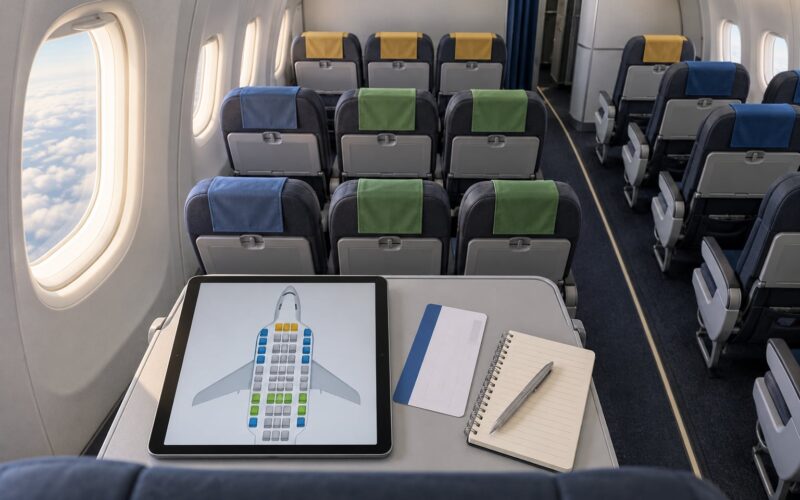
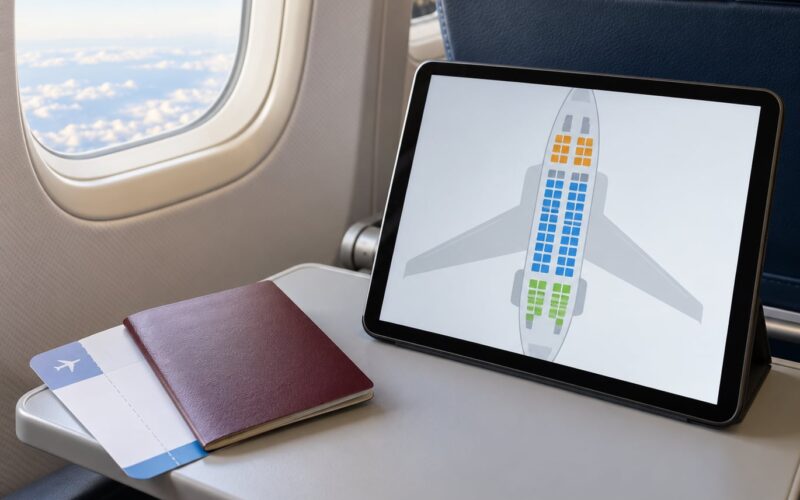
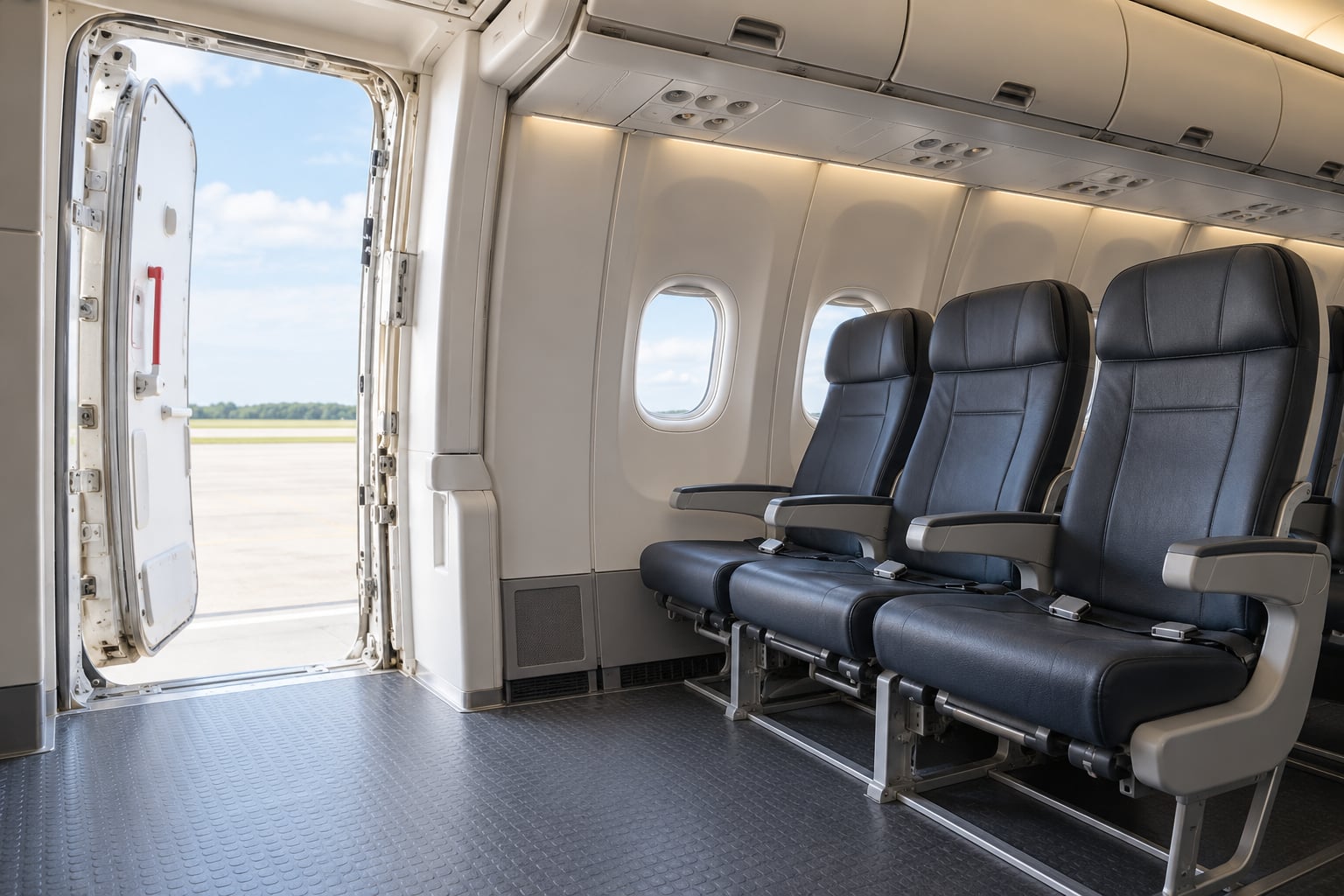
The extra space in an exit row is not a bigger seat or extra seat pitch. It is floor clearance so the emergency door beside you can swing open and so an evacuating passenger can move quickly through the row. That clearance is also why the trade-offs exist: most exit row seats do not recline, many have no under-seat storage, and the armrests can be fixed. The images below show where to look on a seat map and what to have ready at the gate.
A second thing worth knowing up front: a smaller set of exit rows is deliberately held back and released only at check-in or at the gate. Travellers on flight forums keep rediscovering this, and it is why the free route works for some people on the same flight that it fails for. Everything below is built around that distinction between a row that is yours and a row that is up for grabs.
Table of Contents
- What You Need
- Step-by-Step
- Check the Seat Map Before You Book
- Compare Fares and Upgrade Options
- Reconfirm the Assignment Before Check-In
- Ask at the Gate Without Expecting a Guarantee
- Prepare a Backup Plan
- Common Mistakes
- Frequently Asked Questions
- Can I guarantee an exit row seat when I book?
- How much does an exit row seat usually cost?
- Can children sit in an airplane exit row?
- Can passengers with disabilities request an exit row?
- What should I do if my exit row seat disappears?
- Does an aisle seat in front of the exit count as an extra-legroom seat?
- Conclusion
What You Need
Four things. Have them sorted before you open the booking flow and the whole process takes about five minutes.
- Your booking reference and the exact flight. Exit rows are assigned per flight, not per trip, so a through-ticket with a connection means two separate chances and two separate seat maps.
- The fare rules for that ticket. Some basic or lowest-cost fares exclude seat selection entirely, so you may not be able to reserve anything until you pay to change the fare.
- Passenger eligibility. U.S. carriers follow the FAA rule in 14 CFR 121.585, which requires a passenger to be at least 15 years old, able to lift and operate the door (roughly 60 pounds of force), able to follow crew instructions, and free of any condition that would slow an evacuation.
- A realistic answer about who is sitting with you. Every passenger in the row has to qualify independently. A partner who needs a seatbelt extension, a recent hip replacement, or a cast cannot sit there, and that can remove the whole row from consideration.
Physical readiness matters as much as paperwork. If you need to bend far forward, twist sharply, or move a heavy mobility aid without help, ask for an aisle seat in a regular row instead. A gate agent can and will say no at the door, and that happens in front of a line of people.
Step-by-Step
Check the Seat Map Before You Book
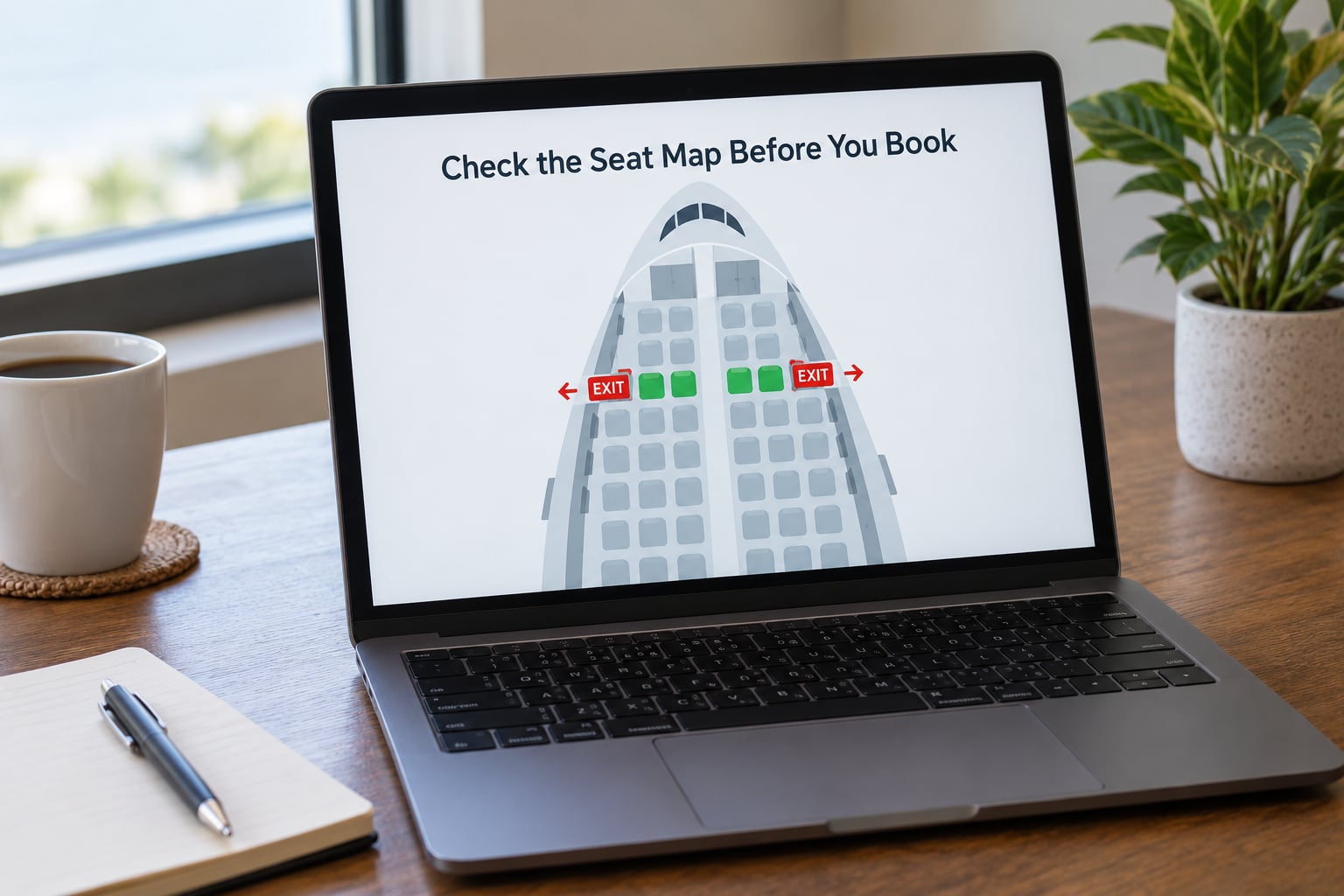
Not every row with extra space is an exit row, and the difference matters. Exit rows sit directly beside a door or hatch, and seat maps usually mark them with a door symbol, a gap in the row letter pattern, or a small plane-exit icon. Bulkhead rows have no door behind them but a fixed wall or galley in front, which gives you knee room with none of the evacuation responsibility.
Before you click, check the aircraft. Search the flight number plus the aircraft type and look up what that specific plane looks like, because a seat that exists on the A321 may not exist on the A320 in the same position. On many narrow-body jets the forward exit row is roughly rows 11 to 12, but that moves with the operator and the door configuration.
You know it worked when the seat number shows as selectable, not struck through or greyed, and the fare calculator shows it as part of your ticket rather than as a separate add-on you cannot afford.
Compare Fares and Upgrade Options
Airline names for the same thing differ, which is why searching for a specific row name is often less useful than searching for the seat product. Most U.S. carriers sell a front-cabin extra-legroom product (things like Comfort+, Economy Plus, Main Cabin Extra, Premium Class, Stretch Seating, or Big Front Seats) that covers the exit row along with the rows either side of it.
There are four ways to pay or trade for the row, and none of them guarantee anything except the first.
- Pay for seat selection at purchase. This is the only method that puts your name on the seat in advance.
- Use an advance seat assignment tool. Airlines and third-party booking tools sometimes let a high-value fare or a card perk pick the exit row without a separate fee.
- Use elite status. Top-tier flyers on most networks get priority access to the exit row and bulkhead seats at check-in. Travellers on r/delta and r/AlaskaAirlines describe watching those seats get held back for status members on nearly full flights.
- Buy a higher fare class for the flight. A premium economy or business fare on the same flight frequently includes an exit row or a comparable front-cabin seat without a separate charge.
You know it worked when your seat assignment appears on the boarding pass, not just as a suggested seat in the app. Hold off on any non-refundable add-on until that confirmation appears.
Reconfirm the Assignment Before Check-In
Schedule changes and equipment swaps happen, and when they do the seat map is redrawn. A row you paid for can turn into a regular row on a different plane flying the same route. Reopen the seat map in the airline app the night before departure, and again as soon as you check in.
If your exit row disappears, replace it in the same session. Do it through seat selection in the app, the manage-booking page, or the kiosk at the airport, whichever gives you a choice first. Every hour you leave it, more travellers pass through check-in and take the remaining rows.
You know it worked when the boarding pass preview shows the exit row seat number and the same number appears in the app seat map. If the app and the boarding pass disagree, trust the boarding pass and fix it at the desk.
Ask at the Gate Without Expecting a Guarantee
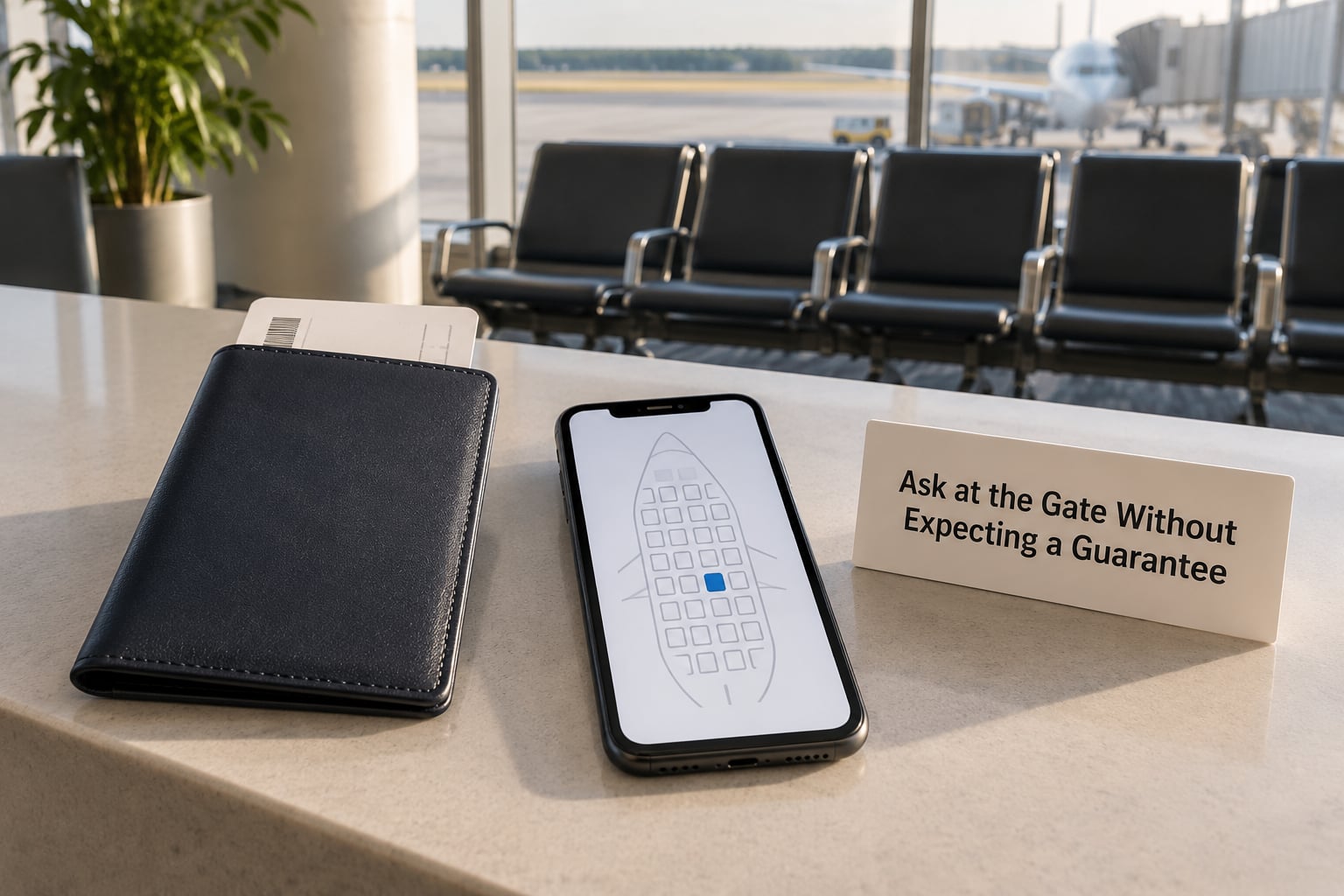
Ask once, early, and ask in a way that gives the agent something to work with. Say something like: I booked a seat with extra legroom and it shows as unavailable now. Is an exit row free today, or is there another front-cabin seat? That phrasing asks about an upgrade rather than demanding a specific seat, which is a conversation an agent can actually finish.
Understand what the agent needs from you. Three outcomes are normal. Your paid seat assignment is refunded or rebooked onto a comparable row. You are asked to pay a difference, which is cheaper than a standalone seat fee but not free. Or the agent has a discretionary reseat that depends entirely on who else is on the flight.
Ask before the line builds and before the last-minute crowd arrives, which is usually 30 to 40 minutes before departure. You know it worked when the agent edits your boarding pass in front of you. If you are moved out of a row you paid for, ask what compensation is available on the spot, and follow up in writing once you land, since some travellers on r/unitedairlines report cash offers for exactly this situation.
Prepare a Backup Plan
Decide your second choice before you fly, because backup choices disappear faster than first choices. An aisle seat in the bulkhead row behind the galley gives you comparable legroom without any eligibility check. An aisle seat two rows back from the exit keeps you near the lavatory without the safety briefing.
Changes get hard at three points: after the general boarding group starts, once premium and status passengers are seated, and in the final ten minutes before the door closes. Have your fallback ready by the time your group is called, and accept the second choice rather than refusing every option and boarding last with a middle seat.
You know it worked when you are sitting down before the priority group arrives.
Common Mistakes
Assuming any row with extra legroom is an exit row. Bulkhead rows have legroom and no exit door. If you book a bulkhead expecting evacuation-related space, you are also missing out on the front-of-cabin position you were actually after.
Booking on the cheapest fare and hoping. Many lowest-cost fares exclude seat selection, so there is nothing to select. Check the fare rules first, and decide whether the front-cabin product or a fare change is the cheaper route to the row.
Waiting until boarding to ask. The free exit rows are the ones held back, and they go in boarding order. By the time the general group is called, most are taken.
Not checking eligibility for everyone in the row. A companion who does not meet the age, mobility, or seatbelt requirements makes the row unusable, sometimes after you have already paid for it.
Not rechecking after a schedule change. Equipment swaps redraw the map. A week-old seat map is a rough guide at best.
Ignoring the storage loss. Travellers on r/delta repeatedly flag that under-seat space is removed or blocked in exit rows. If you plan to work on a laptop that needs bag space, an exit row is the wrong seat and a front-cabin extra-legroom row is better.
Treating the ask as a demand. Gate agents have a long queue and no authority to promise a specific seat. Ask about an upgrade, accept the first reasonable option, and thank them.
Frequently Asked Questions
Can I guarantee an exit row seat when I book?
Yes, if you select and pay for it during the booking process. That reservation is recorded on your ticket and the seat is held for you regardless of how full the flight gets. Seats released only at check-in or at the gate are never a guarantee, because they are distributed in boarding order and by agent discretion. Buy early, because front rows sell out on popular routes long before departure.
How much does an exit row seat usually cost?
It varies a great deal by carrier, route and fare, and the figure changes often, so check your own booking flow for the current price rather than trusting a number from a guide. Two things drive it: how far forward the row is, and whether your fare already includes a front-cabin extra-legroom product. Premium cabins usually have the row included, while the cheapest economy fares often exclude seat selection altogether.
Can children sit in an airplane exit row?
Not in most cases. Under U.S. FAA rules applied through 14 CFR 121.585, an exit row passenger must be at least 15 years old and able to operate the door, so a child under 15 cannot occupy the row, and neither can a passenger seated with an infant or lap child. Other airlines apply similar limits. If you are travelling with a young family, ask for a bulkhead row instead for the same extra legroom with no eligibility test.
Can passengers with disabilities request an exit row?
Requesting one is fine; being placed there depends on whether you can meet the operational requirements. These usually include opening the door without assistance or a mobility device, following crew instructions quickly, and not having a condition that would slow you during an evacuation. A wheelchair that cannot be moved quickly, a recent cast, or a seatbelt extension can disqualify you. Tell the airline in advance, and ask about a front aisle seat as an alternative.
What should I do if my exit row seat disappears?
Fix it in the same session. Reopen the seat map right after check-in and rebook the row if it is still free, and do it again the night before departure if you have a schedule change. If the row is gone, ask the airline to move your whole party to another front-cabin row rather than splitting you up. If you had paid for the seat and it was removed without consent, put the request for a refund or compensation in writing after landing.
Does an aisle seat in front of the exit count as an extra-legroom seat?
Usually not in the way an exit row does. A seat in front of an exit row may have a little more space because the door mechanism intrudes on the row behind, but it is not one of the regulated rows and carries no eligibility requirement. If you want dependable legroom with none of the baggage of exit row seating, look for the carrier’s dedicated extra-legroom product, such as a front-cabin cabin or a bulkhead row, which is designed for that purpose.
Conclusion
Do the simple part first: pick the seat and pay for it during booking, on the specific aircraft you are flying. That is the whole method. Everything after it, check-in timing, a polite ask at the gate, a backup row, is a second-best route that depends on how full the flight turns out to be.
Verify the assignment on your boarding pass before you leave for the airport, because equipment changes quietly undo it. And decide your second choice now, because a bulkhead aisle seat or a standard extra-legroom row is a better outcome than a long argument at the aircraft door with a line forming behind you.