Tipping is not a universal rule you carry with you — it changes completely from one country to the next. In the United States a 15 to 20 percent tip is close to mandatory, in most of Europe a few coins or rounding up the bill is normal, and in Japan, China and South Korea a tip can be taken as an insult. Knowing how tipping works in different countries is the difference between a generous gesture and an awkward mistake at the table.
The reason is wages, not manners. Where restaurant staff are paid a full salary, the tip is a bonus. Where they are paid on the assumption that customers will top them up, the tip is part of the income. Get that straight and the percentages almost explain themselves.
Table of Contents
- How Tipping Works in Different Countries at a Glance
- Is Tipping Expected Everywhere?
- Tipped wages: the customer finishes the salary
- Service included: the wage is already paid
- Optional: tipping neither expected nor forbidden
- How Much Should You Tip?
- Restaurants
- Bars, cafes and coffee counters
- Taxis and rideshare
- Hotels
- Guides and drivers
- How Do You Tip with Cards and Cash?
- Tipping in Popular Travel Destinations
- North America: the tip is part of the wage
- The Caribbean and cruise ships
- Southern and Western Europe: modest and optional
- Germany, Austria and the Netherlands
- Scandinavia: no tip, and that is fine
- Japan, China and South Korea: do not tip
- Southeast Asia: not expected, small change welcome
- Australia and New Zealand
- Who Should You Tip on a Trip?
- Common Tipping Mistakes to Avoid
- Frequently Asked Questions
- Is tipping required in most countries?
- How do I know if a service charge is already included?
- Should I tip when paying by card?
- How much should I tip a hotel porter or room attendant?
- Why is tipping unusual in Japan?
- Can tipping make a service charge smaller?
- Conclusion
How Tipping Works in Different Countries at a Glance
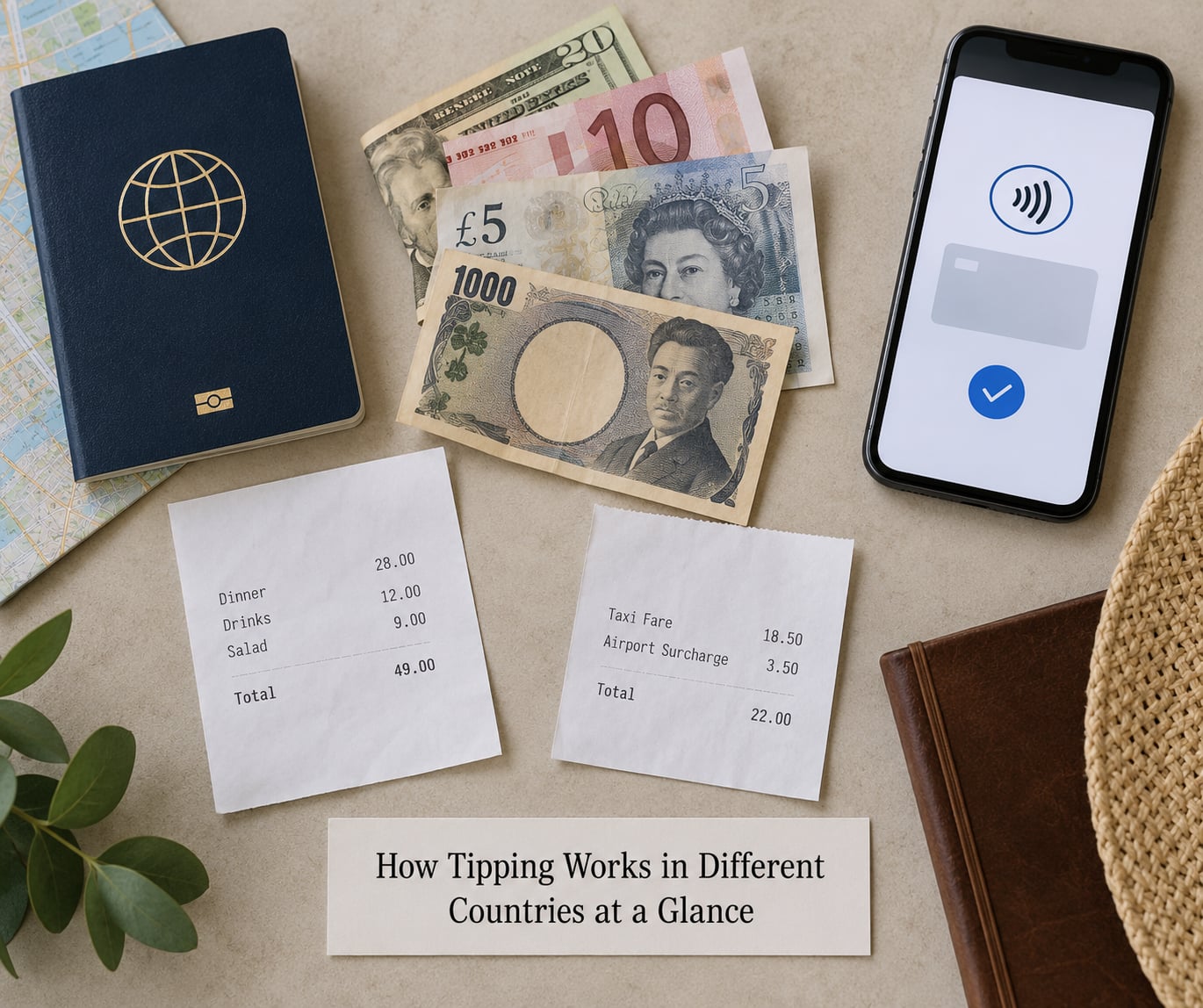
Here is the short version for the destinations most travelers land in. Read the “service charge” column before the tip column, because in much of Europe the meal price already covers the server’s wage.
| Destination | Customary tip | Service charge | Best way to pay it |
|---|---|---|---|
| United States | 15 to 20 percent, more for fine dining | Large parties often add one automatically | Cash or write the amount on the card slip |
| Canada | 15 to 20 percent, less at counter service | Not usually included | Cash or card, tip line on the slip |
| Mexico | 10 to 15 percent | Sometimes a small service charge on the bill | Cash in small notes |
| Caribbean resorts | 10 to 15 percent for good service | All-inclusive rates usually cover the basics | Cash, in the currency of the resort |
| Hawaii | 18 to 20 percent or more | Large parties are often charged automatically | Card with tip line, or cash |
| United Kingdom | 10 to 12.5 percent if the service was good | Rarely included | Card, add it yourself on the slip |
| France | Round up, or a few percent for good service | Service compris is standard | Cash in coins, or round up the card total |
| Italy | Round up, or 5 to 10 percent | Coperto is a cover charge, not a tip | Cash, or tell the server the total in euros |
| Spain | 5 to 10 percent, small change is normal | Sometimes listed separately | Cash or rounding up |
| Germany and Austria | Round up to about 10 percent | Not normally included | Cash — say the total out loud |
| Netherlands and Belgium | Round up or about 5 percent | Not usually included | Card or coins |
| Scandinavia | Not expected; round up if you wish | Servers are on full wages | Card, rounding up |
| Switzerland | Round up generously, 5 percent or more | Service is included by law | Card rounding up or coins |
| Portugal and Greece | 5 to 10 percent, often rounded up | Sometimes a small service line | Cash |
| Japan | No tipping. It can be confusing or offensive | Not applicable | Simply pay the bill |
| China | Not expected; small change is usually returned | Not applicable | Pay the bill, mobile payment common |
| South Korea | No tip; rounding up to the next thousand won is common | Not applicable | Card or cash |
| Thailand and Vietnam | Not expected, small change appreciated | Usually 10 percent tax and service on larger bills | Cash |
| Singapore | Not expected, 10 percent service charge by law on some bills | Service charge is common in restaurants | Card |
| Australia and New Zealand | Around 10 percent for good service | Not usually included | Card, cash for small cafes |
| India | 10 percent, more for a good meal | Often a 10 percent service charge on the bill | Cash in small notes |
Is Tipping Expected Everywhere?
No. Most countries fall into one of three models, and working out which one you are standing in tells you what to do without guessing.
Tipped wages: the customer finishes the salary
The United States is the clearest example, and Canada works similarly. Restaurant wages in the US are low enough that a tip is treated as part of the pay packet, and the law in many states allows employers to pay a tipped worker less than the standard minimum wage.
It is not purely American either. Tipping exists in Mexico, much of the Caribbean, Egypt and parts of Southeast Asia for the same wage reason. When a waiter in Cairo watches you calculate a percentage, that is not rudeness — that is somebody working out their evening wage.
Service included: the wage is already paid
Most of Europe and Japan work this way. Servers are paid a proper salary, so the tip is optional and small. In France you will see service compris, in Italy servizio incluso, in Germany the word Trinkgeld for the loose change in your saucer.
Long threads on travel forums such as r/tipping and r/GlobalTalk return to the same point again and again: the further you travel without tipping as though the server earns half their wage on tips, the more noticeable your gesture becomes. A folded five euro note left discreetly is usually better than a loud 20 percent on the slip.
Optional: tipping neither expected nor forbidden
Australia, New Zealand, Ireland and the Nordic countries sit somewhere in between. Nobody expects a tip and nobody is insulted by one. Servers are paid properly, but ten percent for genuinely good service is a normal thing to leave.
One further wrinkle worth knowing: some countries have a service charge that only partly covers service, and some bill items that look like service charges but are not one at all. That distinction is where most mistakes happen.
How Much Should You Tip?
Local custom always outranks a percentage you read on a website. Someone who lives in the country will know more in three seconds than a general guide will, so when a plan offers two conflicting numbers, ask a local who is not trying to sell you something.
Restaurants
In the US, 15 to 20 percent for table service, 10 percent for counter service, and more at fine dining where a server handles several tables at once. Hawaii runs at the top of that range, and a large party bill in the US may already carry a mandatory service charge — check before adding anything.
In the UK, 10 to 12.5 percent is generous and well received. Across Spain, Italy, Portugal and Greece, 5 to 10 percent or simply leaving the change does the job. In France and the Benelux countries, rounding up is plenty. Ask for the check in a busy Italian restaurant and they will often ask if everything was good before you leave, which is the moment to hand over a euro or two extra.
Bars, cafes and coffee counters
Coffee bars in the US have become tip-heavy, with a dollar or two in a jar genuinely normal. Everywhere else, leave the small change. A euro or two for a barman in a Spanish or German bar is generous without being odd. Tipping the person who pours your coffee every single day in a week is not expected and gets tiring for everyone.
Taxis and rideshare
Rounding the fare up is close to universal and almost never wrong. Add 10 percent only for genuinely good service such as help with luggage or a long wait. In the US, rideshare drivers are tipped through the app and it is normal to add a few dollars after a long trip or bad weather. In much of Europe, the meter plus a rounded amount is the whole custom.
Hotels
A porter carrying two suitcases expects a couple of euro or dollars. Housekeeping and the concierge do not expect anything, but a note or a small tip for someone who arranged something difficult is a reasonable gesture. Spas, hairdressers and masseurs follow the local restaurant rule for the country you are standing in.
Guides and drivers
Free walking tours expect a few euro per person at the end, if the guide was good. Paid tours generally do not need a tip unless you hired a private guide, where 10 percent of the fee is normal. Drivers for a full day are treated like a tipped-wage worker, so 10 percent or more of the day rate is fair.
How Do You Tip with Cards and Cash?
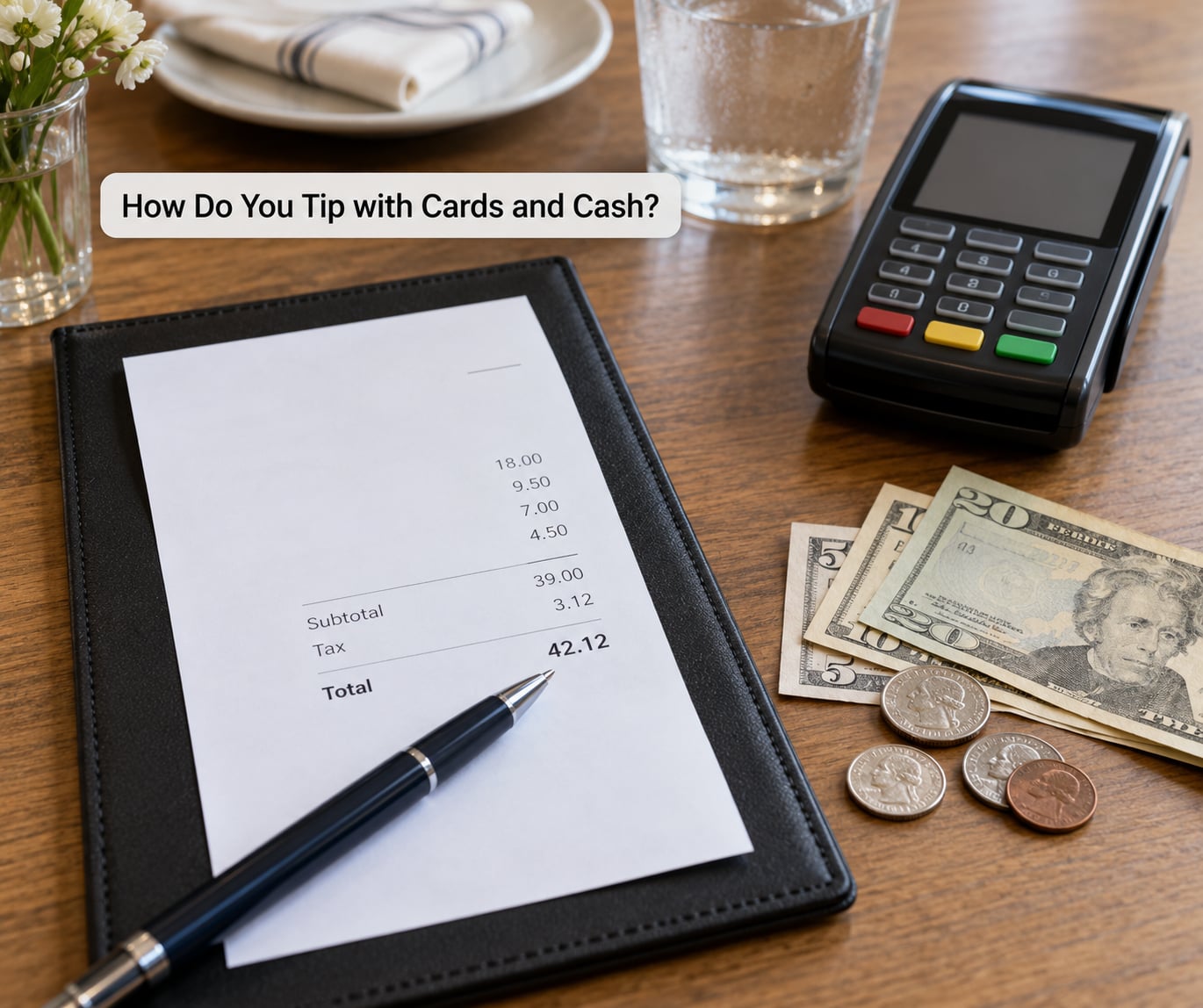
Mechanics matter as much as amounts. In a card-only country you may have no choice about how, so it is worth knowing the difference between paying a larger total and adding a tip line.
Read the bill before you tip. Look for service compris, servizio incluso, service included, 10 percent service charge or coperto. If a service charge is there and it covers the whole party, tipping on top of it is optional, not mandatory.
Know what a cover charge is. Coperto in Italy and Spain, and pane e coperto in Italy, cover bread, cutlery and table use. It is not a tip and staff do not receive it. Some restaurants add a separate service line on top of that, and only that second line counts.
Decide cash or card. Cash reaches the person faster and avoids a service charge on a small bill. If there is no tip line on the card slip, hand over a rounded amount in cash instead of standing there guessing whether a percentage was added.
In Germany and Austria, state the total. Say out loud the full amount you are handing over, including your tip — for example, telling the server you are giving twenty-two euro for a twenty-euro bill. Serveries, cafés and bars here frequently prefer this to a tip on a slip, and travelers who hand over a plain twenty often have change returned along with a small, puzzled look.
Never tip twice. If a 15 percent service charge is printed on the bill and you add 20 percent on the slip, the server rarely sees the difference but you have spent real money. Read the total, not the menu.
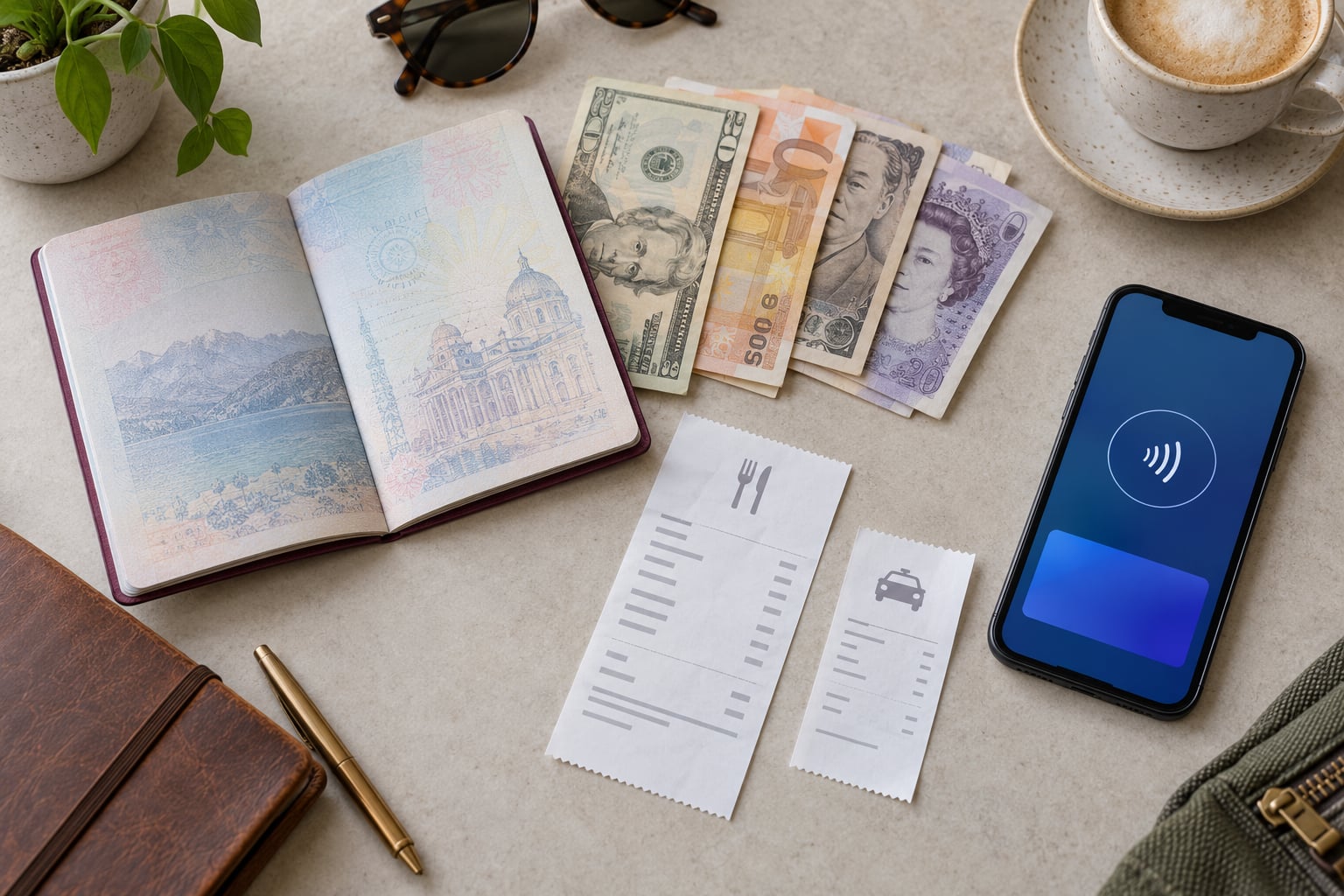
Digital tipping is spreading unevenly. Contactless terminals with a tip screen are common in the US, UK and parts of Europe, and QR codes on tables are now standard in Singapore, China and Hong Kong. Tip screens often default to 15 or 20 percent and pre-filled amounts are easy to accept without thinking. Check the amount before you confirm.
Tipping in Popular Travel Destinations
North America: the tip is part of the wage
Tip 15 to 20 percent in the United States for table service, 15 to 20 percent in Canada, and 10 to 15 percent in Mexico. Hawaii sits at the American top end, often 18 to 20 percent or more for attentive service. Buses in Mexico City and many US cities still have drivers who work largely on tips, so a small cash amount matters more there than the restaurant percentage does.
The Caribbean and cruise ships
Resort staff on the Caribbean and in the cruise industry are frequently paid on the tipped-wage model, so tips follow American habits even though the country may be Danish, Dutch or British. On a cruise, tips are pooled and shared by the crew regardless of who served you. Some lines add a daily service charge to your cabin bill that can be adjusted at checkout, and tipping on top of it is optional. All-inclusive resorts include most tipping, though a tip for a genuinely exceptional server is a kind gesture.
Southern and Western Europe: modest and optional
Italy, Spain, Portugal and Greece expect a small tip or simply the change, roughly 5 to 10 percent. France and the Netherlands and Belgium lean on rounding up, with service compris already on the bill. Switzerland includes service by law and expects you to round up, sometimes generously. The UK sits closer to American habits than most Europeans expect, with 10 to 12.5 percent welcomed in restaurants.
Germany, Austria and the Netherlands
Germany and Austria expect about 10 percent rounded up, and the state-the-total method described earlier is the polite way to do it. The Netherlands and Belgium prefer rounding or a few percent. A coperto-style charge turns up in the Netherlands too, and it is not a tip.
Scandinavia: no tip, and that is fine
Denmark, Sweden, Norway and Finland pay service workers full wages, and tipping creates an odd hierarchy rather than gratitude. Long-running discussions on r/germany and r/tipping circle back to this: Scandinavia is one of the safest places to tip nothing at all without anyone taking offence. Leave small change for a barman if you like. Nobody is counting.
Japan, China and South Korea: do not tip
Japan is the clearest case in the world of tipping being inappropriate. Service is part of the job, and a tip can suggest the server failed to do their job. There are recurring stories of staff chasing tourists down the street to return money left on a table, which is not unusual hospitality but an effort to correct a misunderstanding. China and South Korea work similarly, though in South Korea rounding the bill up to the next convenient thousand won is normal and not a tip.
Southeast Asia: not expected, small change welcome
Thailand, Vietnam, Indonesia and Malaysia do not expect tips. Service charges and taxes are often printed on the bill, so check before adding anything. In tourist areas small change left behind is genuinely appreciated. Singapore is an odd case, where a 10 percent service charge is legally added to restaurant bills, so nothing further is needed.
Australia and New Zealand
Ten percent for good service is the norm in restaurants, less for cafés. Card payment dominates, and tipping after a session with a regular barista is optional rather than expected.
Who Should You Tip on a Trip?
Role determines the custom more than the country does, so it helps to know the short list before you land.
Waiters and servers. The core case, and the one where the local percentage range always wins over your own habits.
Bartenders. Small change, or around 5 to 10 percent in countries where tipping is normal. More in the US, especially at an open bar.
Taxi, rideshare and private drivers. Round the fare up everywhere. Add 10 percent for good service, and in the US tip through the app so the driver actually receives it.
Hotel porters and bellhops. A couple of units of the local currency per bag in most countries. In Japan this is the one role where a small tip is sometimes quietly accepted, though hotels there may discourage it.
Housekeeping and room attendants. Optional almost everywhere. A small note left with a tip is common in the Caribbean and the US.
Concierges. No standard custom. If someone booked a hard-to-get table or solved a real problem, a tip and a note is appropriate in tipped-wage countries.
Tour guides. Free walking tours take a few units per person. Private and full-day guides take 10 percent or more, especially where guiding is tipped-wage work.
Airport and station staff. Usually nothing, but porters who handle luggage in India, Mexico, Egypt and Turkey expect a small amount per bag.
Common Tipping Mistakes to Avoid
Tipping without reading the bill. The most expensive mistake is a mandatory service charge plus an added tip. Check the bill first, every time.
Treating your home percentage as universal. Handing over 20 percent in Tokyo or Denmark is not generosity, it is confusion at best. Locals notice.
Tipping where it is not wanted. In Japan, China and much of Scandinavia, leave the money on the table and you may have it returned.
Treating a coperto as a tip. Cover charges go to the business for bread and cutlery, not to the server.
Handing over a plain banknote and waiting. Without a tip line on the slip, silence means no tip. Either say the total out loud or ask for the bill to be adjusted.
Rounding down when the bill is odd. If the total is 47 euro and you leave 47, the gesture reads as indifference. Round up to the next convenient amount instead.
Leaving a pile of foreign coins. Small change from another currency is not a tip. Bring small notes of the local currency and hand one over discreetly.
Assuming the amount is the same everywhere in a country. Resort areas, tourist districts and border towns often follow different customs from the city a few hours away.
Frequently Asked Questions
Is tipping required in most countries?
No. Tipping is genuinely expected only where restaurant wages are low, which in practice means the United States, Canada, Mexico and parts of the Caribbean. Across most of Europe, Japan, China and Singapore, wages cover service and a tip is a bonus rather than an obligation. Rounding up the bill is the most common courtesy, and tipping at all is never rude.
How do I know if a service charge is already included?
Read the itemised bill before you pay. Look for service compris, servizio incluso, service included, or a stated percentage such as 10 percent service charge. In Italy and Spain also check for coperto or pane e coperto, which is a cover charge for bread and cutlery and never reaches the server. If a real service charge is listed for your whole table, no extra tip is required.
Should I tip when paying by card?
Yes, if a tip line appears on the machine or printed slip, but enter the amount yourself rather than accepting the preset. In Germany and Austria there is often no tip line, so tell the server the total you are handing over instead. In Japan and China, pay the bill exactly as shown and leave no cash behind. A tip on a card slip is not automatically shared, so cash is faster if the bill is small.
How much should I tip a hotel porter or room attendant?
For a porter carrying bags, one or two units of local currency per bag is standard, and the same rule applies to airport porters in India, Mexico, Egypt and Turkey. Room attendants are not tipped routinely in most of Europe or Japan. In the Caribbean and the US a small tip or a written note is more common. In tipped-wage countries the concierge usually receives nothing unless they solved a specific problem.
Why is tipping unusual in Japan?
Because service is part of the job, not an extra. Japanese staff are paid a proper salary, and the idea of omotenashi, attentive hospitality without expectation of reward, is central to the culture. A tip can read as implying the server did not do their job properly, and staff may chase you down the street to return money left by mistake. The same reasoning applies in China, South Korea and Singapore, where a service charge is often added instead.
Can tipping make a service charge smaller?
It can, but only rarely and only in countries where service charges are negotiable rather than fixed. In the United States, large-party restaurant bills often carry an automatic service charge that the manager may reduce or remove if the service was poor, so mention a problem early rather than tipping smaller. In countries where the service charge is a legal or standard line, tipping changes nothing. Ask at the table before adding anything on top.
Conclusion
Check the bill before you tip. Look for service compris, servizio incluso, a stated service percentage or a coperto line, and if a real service charge is already there, leave it alone. When nothing is included, match the local habit: 15 to 20 percent in the United States, around 10 percent in Australia and the UK, a few percent or a rounded bill across most of Europe, and nothing at all in Japan, China and Singapore.
Keep small notes of local currency in your pocket, hand them over discreetly rather than on a slip, and when you are genuinely unsure, ask someone who lives there. That one question has never once caused offence.