If your checked bag never came off the carousel, the fastest way to track it is to report it to the airline’s baggage service desk before you leave the airport, get your Property Irregularity Report (PIR) file reference number, then check status on the carrier’s own tracing portal using your last name and that number. A Bluetooth tracker packed in the bag gives you a second, independent signal.
The desk part takes about 20 minutes. What follows is a few minutes of checking status each day, and it starts the search plus the compensation clock on the same visit.
The mistake travelers make is walking out to the car and hoping the bag turns up. Airline systems do not open a search until someone files that report, and every day of delay costs you options.
For context on frequency: the Bureau of Transportation Statistics publishes mishandled-bag figures in its Air Travel Consumer Report, and the widely reported industry rate has hovered around 0.58%, a bit under one bag in every 175. Individual carriers report their own figures, often under 1%. So a missing bag is uncommon and annoying, not rare enough to shrug off. Carrier details in this guide were verified in October 2026 and do change; confirm with your own airline before you travel.
Table of Contents
- What You Need
- Step-by-Step: How to Track a Lost Checked Bag
- 1. Confirm the Bag Is Missing Before Leaving the Airport
- 2. File a Report With the Airline at the Airport
- 3. Check the Airline’s Baggage Tracking Record Yourself
- 4. Provide a Detailed Description of the Missing Bag
- 5. Contact the Airline and Monitor the Claim
- 6. Ask About Delivery, Reimbursement and Coverage
- 7. Escalate the Claim If the Bag Is Not Recovered
- Common Mistakes
- Frequently Asked Questions
- How long does it take an airline to return a lost checked bag?
- Can I track my lost bag myself without a claim number?
- What if my bag shows as delivered but I cannot find it?
- How much money can I get if my checked bag is not returned?
- Should I wait at baggage claim until my flight is officially delayed?
- Does travel insurance cover a bag that the airline cannot find?
- Conclusion
What You Need
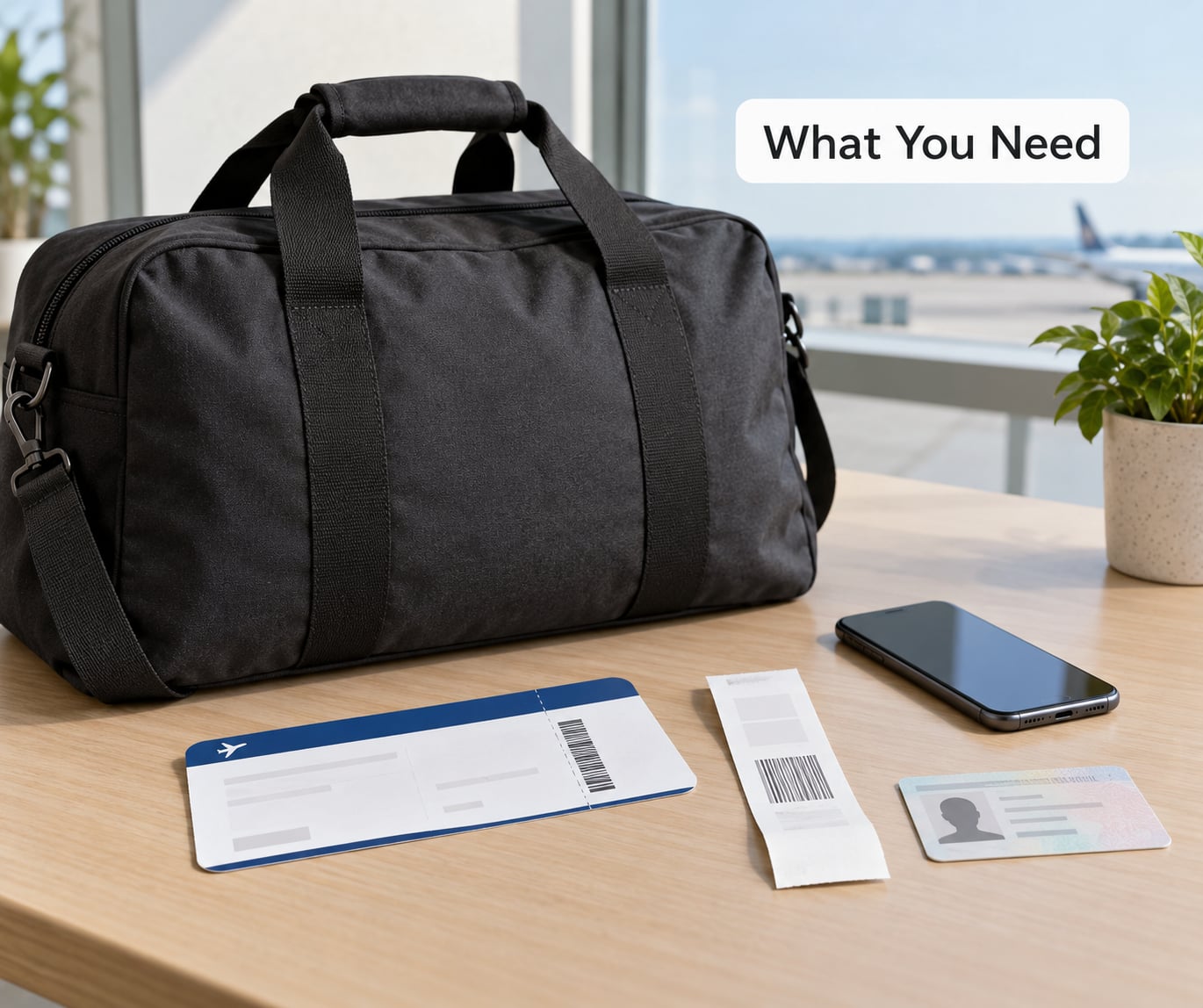
Have these within arm’s reach before you approach the desk. Scrambling to find them is the reason some travelers leave without a reference number, and that number is the key to everything after.
- Your baggage claim receipt or bag tag number. If the tag was stapled to the bag and came off, most carriers can reprint it from your booking record.
- Boarding pass and booking confirmation. The record locator, flight number and date are faster than your name when the desk pulls up your itinerary.
- A written description of the bag. Colour, size, brand, shape, straps, stickers, ribbons and anything unusual about the handle or shell.
- A clear photo of the bag. One you already have on your phone beats a panicked search through your camera roll.
- The airline’s contact details. The baggage service desk location at this airport and the central baggage resolution phone number, which is not the same as reservations.
- ID and a payment card. You will be buying a toothbrush, a charger and a change of clothes, and some carriers reimburse those expenses.
- Receipts for essentials you buy. Every single one. Incidental expense claims get declined without them.
- A charged phone. You will want photos, notes, and your tracker app.
Add an itemised list of what was inside, down to the last charger. When a bag eventually turns up or is written off, that list is the basis of every reimbursement you ask for.
Step-by-Step: How to Track a Lost Checked Bag
Seven steps, in order. The first three happen at the airport within the hour, and they are the ones that decide whether the rest goes smoothly.
1. Confirm the Bag Is Missing Before Leaving the Airport
Stay at the carousel. Bags keep arriving late, and the belt often runs for 20 to 30 minutes after the last bag of your flight appears. Then check the oversized and odd-size baggage area, which is usually behind a separate belt near the end of the claim hall.
If it is not there, ask a baggage agent rather than wandering. Airport staff can check whether your bag was scanned onto a different belt, handed to a misconnecting passenger, or tagged for an earlier flight that landed after yours.
Do not leave until staff officially log the bag as undelivered. That log entry is the first record in your file, and walking out early is the single most common reason a claim stalls later.
2. File a Report With the Airline at the Airport
The baggage service desk is normally on the arrivals level near the carousels, sometimes labelled lost luggage or baggage services. Some airports staff a combined service desk during busy periods.
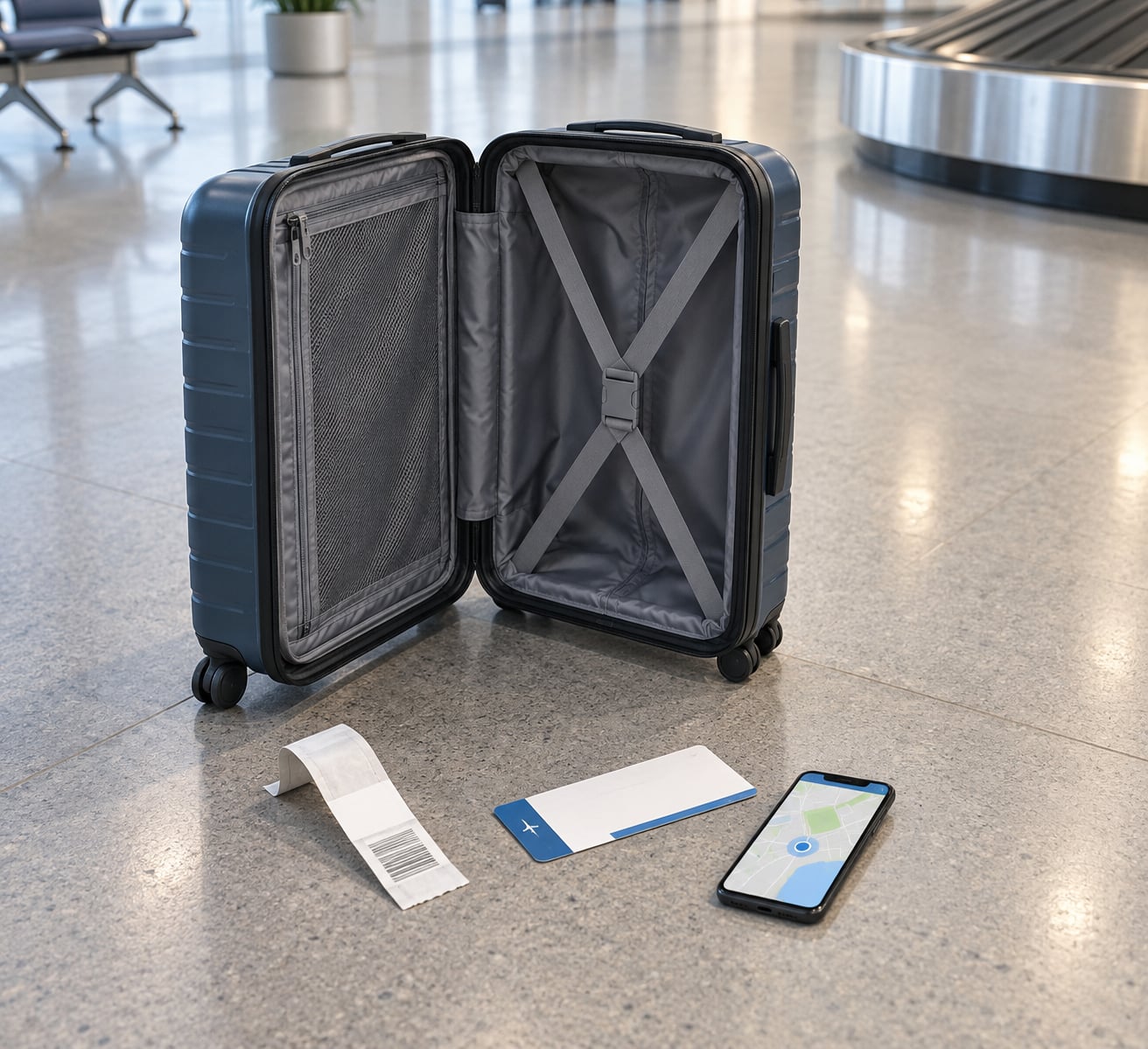
Expect to give your name, itinerary, bag description and a contact method. What you want in return is a Property Irregularity Report, sometimes called a PIR, incident report or file reference number. United’s format is a 13-character reference. Write it down and photograph it.
While you are standing there, also ask two things: the central baggage resolution phone number for the airline, and what the search timeline looks like. Getting those two answers at the desk saves you hunting for them later. Your airline’s published baggage policy page is worth bookmarking on your phone too, since rules vary by carrier and route.
3. Check the Airline’s Baggage Tracking Record Yourself
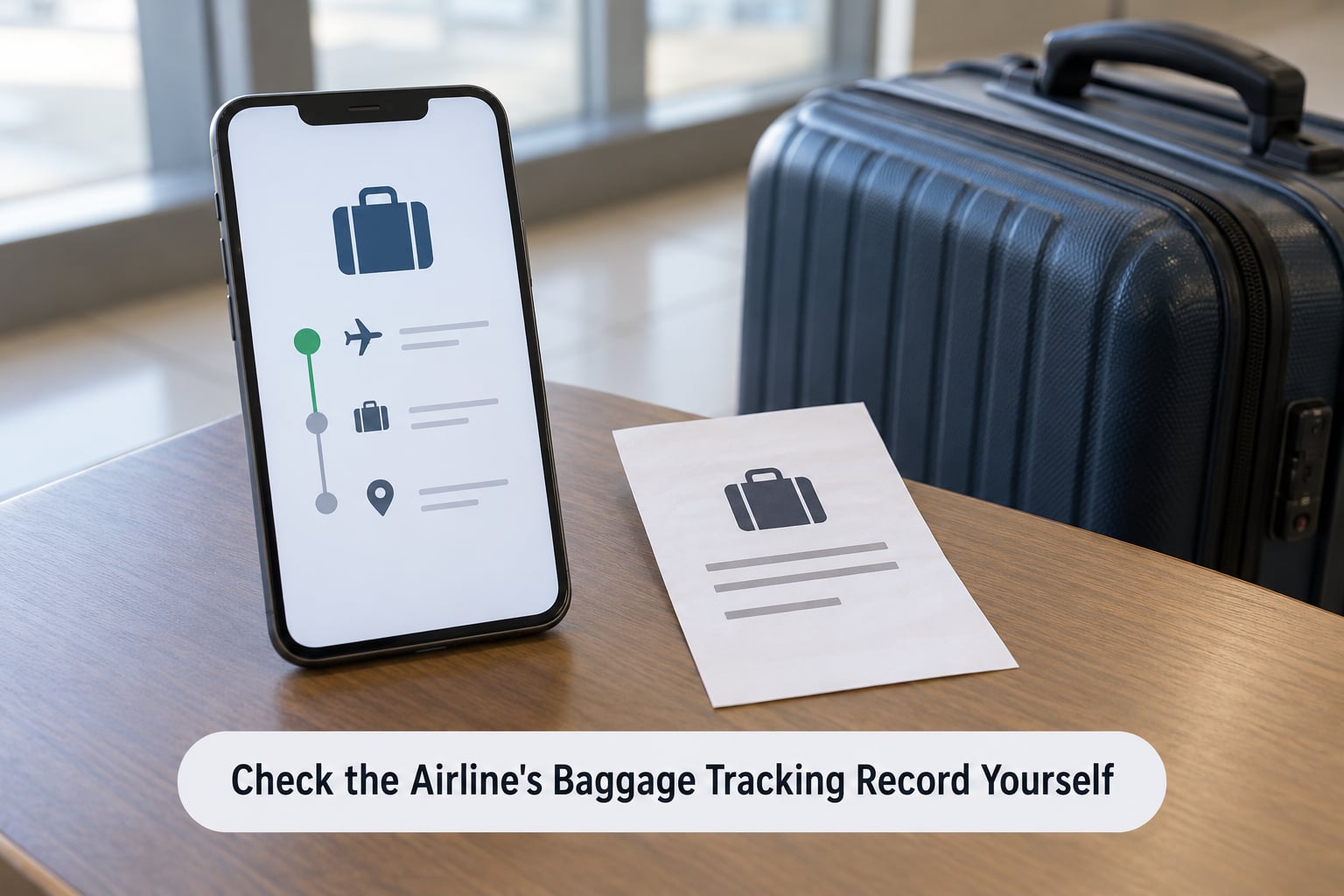
Every checked bag carries a tag number, and the tag is read by RFID readers as it moves through the airline’s automated sorting system. Those scans populate your tracing record, which is why a bag that shows a last scan at an airport four stops back is a strong lead rather than a mystery.
Each carrier’s portal wants slightly different credentials. Here is what the major US carriers and KLM ask for, based on their own published pages.
- American Airlines. The tracing tool is called Delayed or Damaged Baggage tracing, and you reach it from a QR code sign at baggage claim. It wants your last name plus your American confirmation code or bag tag number. Status goes live once the report is filed at the airport.
- United Airlines. Delayed or Damaged Bag Tracing asks for your last name and the 13-character file reference number. Status goes live once the report is filed.
- KLM. The baggage tracking system takes your last name plus file reference number, and status typically appears about 24 hours after you file the declaration.
- Delta, Alaska, Southwest and JetBlue. Each carrier does it differently, usually inside the airline’s app or help site. Credentials are typically your last name plus a file reference, confirmation number or bag tag, and status usually appears once the report is filed.
Check again each morning. The status line moves through stages such as located, in transit, out for delivery, and delivered or unable to locate, and each change is a small piece of evidence about where your bag is.
A scan is not the same as recovery. The portal tells you where the tag was last read, which may be an airport that has already handed the bag to someone else entirely.
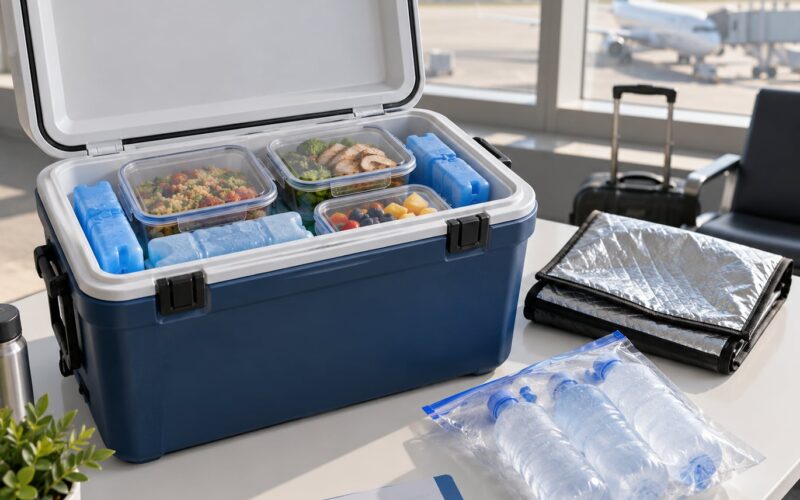
If you packed a tracker, this is where you add it. Open your Find My or equivalent app, find the tag, and read the location and movement history yourself before you bother the airline. Bluetooth trackers rely on nearby phones passing a ping along, so an indoor sorting hall, a basement warehouse or a country with thin phone coverage can leave the location stale for days. A tracker showing an address in a hotel lobby in another city means someone picked up your bag, and only you can decide whether to pursue that privately. Verify that your phone system is current, since sharing a tag’s location with an airline requires iOS 18.2 or later on Apple devices.
4. Provide a Detailed Description of the Missing Bag
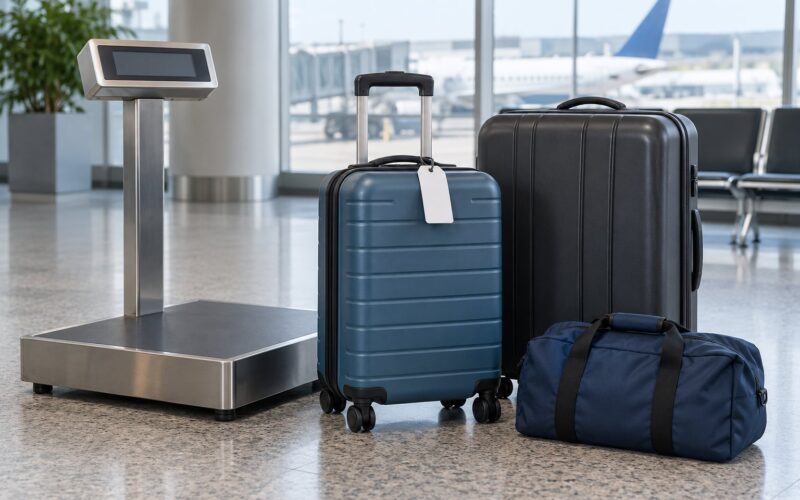
Description is where good claims beat bad ones. Handlers sorting thousands of bags are not reading an essay, so make it specific and scannable: hard-shell versus soft, carry-on versus checked size, colour and brand, rounded or boxy corners, telescoping handle or top handle, number of external pockets, and every sticker, tag, strap or luggage lock.
Add identifiers you already own rather than buying new ones at the airport. A distinctive luggage strap, a bright luggage band or a printed address label inside the main compartment all help. Skip your full name, address and phone number inside the bag; a tag on the outside is enough, and travellers posting their details publicly is how bags end up in the wrong country.
State the estimated weight if you know it. Bags that feel unusually light are the ones people carry off by accident, and a weight estimate narrows the search pool.
5. Contact the Airline and Monitor the Claim
Settle into a rhythm. Check the tracing portal each morning, and send a polite email or call the central baggage resolution number every three days or so with your file reference number in the subject line.
Ask for three specific things each time: the last scan location and date, whether the case has moved from investigation to a delivery request, and whether anything is needed from you. Keep a dated log of every contact, with names and reference numbers, because you will be asked to prove what was promised when you escalate.
Use email as well as the phone. Written replies are evidence, and the baggage resolution teams are usually better at answering in writing than on a call where you are on a timer. Airline social channels work for chasing a status, though they rarely replace the formal claim.
If the airline says it has no record of your bag, do not accept that as the end of the conversation. Ask specifically whether a Property Irregularity Report exists under your name for that flight number and date, and whether a misconnected or unclaimed bag record was created at the destination. Ask them to note the request in the system. Travellers report hitting this wall across every channel, and the fix is persistence with the exact identifiers: flight number, date, bag tag number and booking reference.
Trackers often move faster than airline systems. If your tag shows the bag sitting in a lost and found building, send that location to the baggage desk in writing and ask them to check that specific cage or shelf. One traveller whose bag vanished during a Paris connection used a tracker to name the exact building at the airport, which turned a week of silence into a same-day pickup.
6. Ask About Delivery, Reimbursement and Coverage
Before you spend anything, ask what the airline will cover. Most carriers refund the checked bag fee after roughly 12 hours and reimburse reasonable incidental expenses during a delay, provided you keep receipts. Some carriers issue daily allowances instead of reimbursing item by item, so the answer changes what you are allowed to buy.
Then line up the other sources, because they rarely stack. Your travel insurance policy may cover delayed baggage above a waiting period, but only if you bought it and it lists the carrier’s payment or reimbursement. Your credit card may offer baggage protection, usually as a benefit of the card rather than an insurance policy, with its own terms. Your home or renters insurance is often a fallback for contents, though it typically expects you to claim against the airline first.
For international itineraries, the Montreal Convention of 1999 governs, and its limit is expressed in Special Drawing Rights rather than a fixed dollar figure. Domestic US claims run under federal rules and your carrier’s published policy, and both international and domestic limits sit far below the real value of a full wardrobe. If the money matters, a contents inventory with receipts filed early is what makes the difference later.
Say plainly that rules vary by airline, route and jurisdiction, and read your carrier’s own baggage policy before assuming any of this applies to your flight.
7. Escalate the Claim If the Bag Is Not Recovered
Work up a ladder rather than repeating yourself. First, the baggage service desk, then a supervisor at the same desk, then the airline’s central baggage resolution department, then its consumer affairs or complaints team in writing. Keep the tone factual and keep attaching your file reference number.
Beyond the airline, your options depend on the route. For US domestic flights, the US Department of Transportation takes complaints about airline service, and you file with the carrier first. For international flights, your country’s consumer protection body handles complaints under the Montreal Convention, and for mishandled baggage the industry runs a standard tracing service that airlines are meant to use.
If a tracker location is being ignored, put it in writing with a deadline: here is the address, here is when it was last updated, here is the date I need a response. Written deadlines move cases more often than repeated calls. Small claims or a civil filing is a last resort once the airline has failed to meet its obligations, and it becomes realistic when you have a documented claim, receipts and a clear paper trail.
A reasonable expectation, not a promise: most mishandled bags are found within a few days, and airlines generally have around 21 days to locate and return a bag before it can be treated as permanently lost. Expect no proactive phone call, because most travellers report silence rather than updates. The bag may also be forwarded to a central unclaimed-bag facility, which changes your delivery address and your paperwork.
Common Mistakes
Almost every stalled claim comes down to one of these.
Leaving the airport before the bag is declared missing. The fix is simple and boring: wait, then get the report filed in person, even if it means standing in a queue for an hour.
Losing the file reference number. Photograph it the moment it is issued and put it in your notes app, your email drafts and a photo of your boarding pass.
Waiting days to make contact. The clock on reimbursing checked bag fees and incidental expenses starts with the report, not with your first follow-up call.
Giving a vague description. “Black suitcase” describes most bags on any belt. Specific features and stickers separate yours from thousands.
Treating the last scan as proof the bag is safe. A scan shows where a tag was read, which can be an airport the bag passed through weeks ago.
Spending money without receipts. Every unbought receipt is a declined reimbursement. Photograph the receipt at the till, not later when the paper is crumpled.
Missing deadlines. Insurance policies and some carriers require notice within a set window, often measured in days from the flight. Check yours now rather than after two weeks of calls.
Assuming the airline will contact you. Nobody is assigned to chase your case unless you chase it. Set a reminder for every third day.
If medication was in the bag, treat it as urgent and separate from the luggage claim. Ask a pharmacy or your prescriber for a replacement supply and keep documentation of the original prescription, since insurers and the airline will ask for it. Many travellers put essential medication in carry-on luggage for exactly this reason.
Frequently Asked Questions
How long does it take an airline to return a lost checked bag?
Most mishandled bags are located within a few days, and airlines generally have about 21 days to find and return a bag before it can be treated as permanently lost. Plenty of bags reappear within 48 hours because they simply missed a connection. Later cases, where the bag was misrouted to another city or picked up by a traveller, can take much longer. Set your expectations from your airline’s own published policy rather than from anyone else’s experience.
Can I track my lost bag myself without a claim number?
Not really. Airline tracing portals all key off the file reference number or Property Irregularity Report issued when you report the bag missing, plus your last name. Without that number there is nothing to look up, which is why getting it at the airport is the single most useful thing you can do. A Bluetooth tracker in the bag is the one self-service option that works without the airline’s system at all.
What if my bag shows as delivered but I cannot find it?
Delivered in the system means the tag was scanned at a delivery point, not that it reached your hands. Check your hotel front desk, your accommodation’s reception, the airline’s local delivery office and any locker or holding area. Then report the delivery as failed straight away with the timestamp and the address on the record. Once it is logged as a failed delivery, the case usually reopens as an active trace instead of closing.
How much money can I get if my checked bag is not returned?
Expect the checked bag fee back after roughly 12 hours plus reimbursement for reasonable incidental expenses during a delay, with receipts. If the bag is never found, compensation follows the airline’s published liability limit, which for international flights sits under the Montreal Convention cap of about 1,519 Special Drawing Rights per passenger. That is well below a full wardrobe’s value, so travel insurance and credit card coverage matter. Limits vary by airline, route and jurisdiction.
Should I wait at baggage claim until my flight is officially delayed?
Stay at the carousel until staff officially log the bag as undelivered, which normally happens once the belt has run for 20 to 30 minutes with no more bags. After that, move to the baggage service desk and file the report in person. Waiting for an official delay notice that appears hours later, if at all, is a bad trade against the clock on reimbursement and delivery timelines.
Does travel insurance cover a bag that the airline cannot find?
Usually eventually, and often as a backup rather than a first route. Most policies pay only after the carrier has declared the bag lost or stopped paying, so file with the airline first and keep every receipt. Check three things in your policy: the waiting period before cover starts, whether the airline’s own liability payout reduces what you can claim, and whether a per-item cap applies. Cover for items bought during the delay is often separate and lower.
Conclusion
The first thing to do is stay at baggage services until your bag is logged as missing, and get a written claim reference in your hand before you leave the terminal. That number unlocks everything after it, from the tracing portal to reimbursement.
Then check status in the morning, contact the airline every few days in writing with the reference number in the subject line, and keep receipts and a dated log from the first hour. Prompt documentation and steady follow-up do not guarantee the bag comes back, but they are the difference between a trace that moves and one that goes quiet.