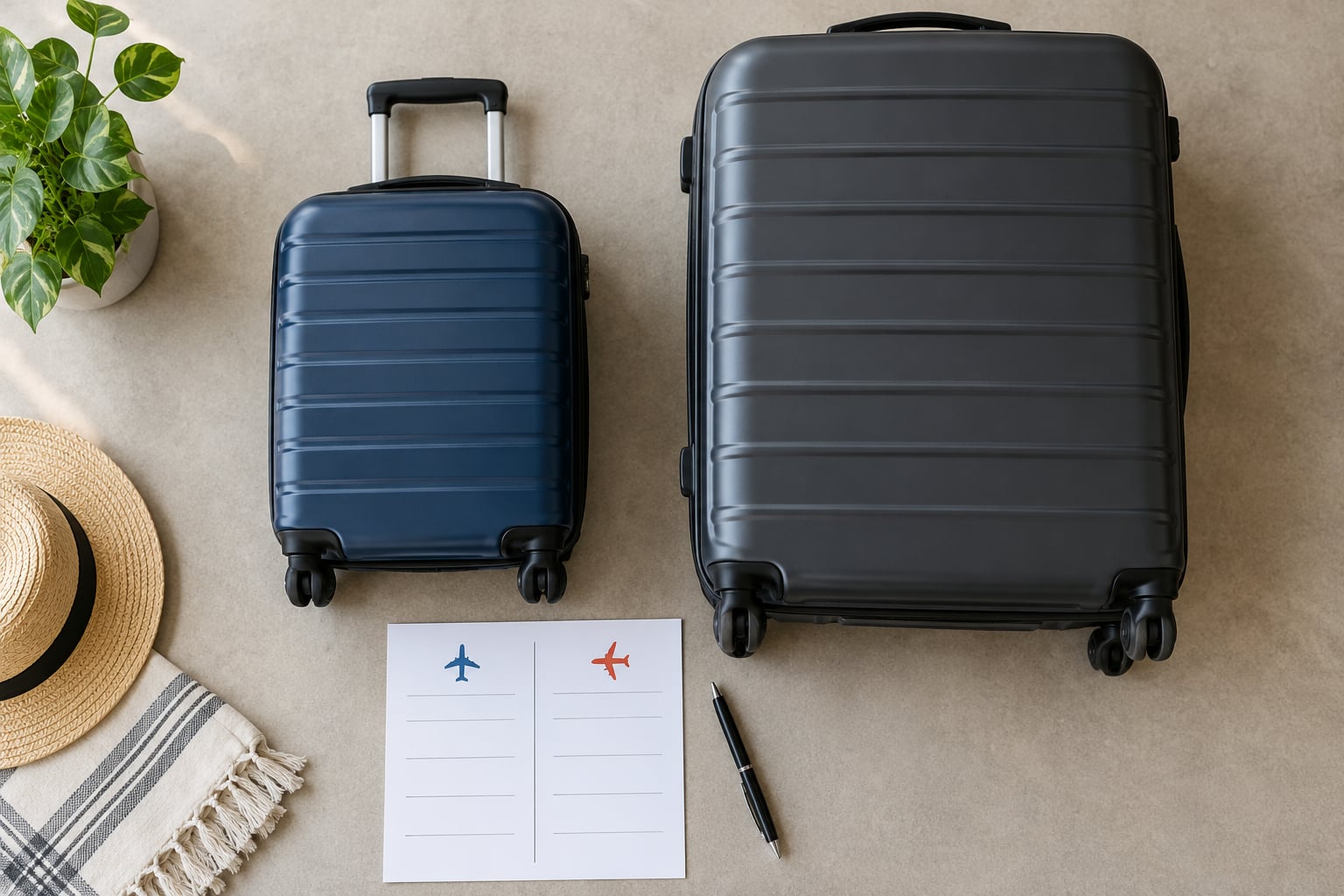
A carry-on usually costs less, because on most major US carriers one cabin bag and a personal item come included with the fare while a checked bag is sold as an add-on. The exceptions are basic economy tickets that strip the carry-on, and ultra-low-cost airlines that price a carry-on and a checked bag at about the same level. Which one wins on your trip depends on the airline, the fare and how much you are packing.
That is the honest answer, and it is more useful than a flat rule. Fees change, routes differ, and the cheapest printed bag fee is often not the cheapest trip. This guide walks through what each option really costs in dollars and in airport time, where the break-even point sits, and how to check your own itinerary before you book.
Figures below are typical US ranges as of 2026 rather than guaranteed tariffs. Airlines reprice baggage by route, fare class and season, so treat them as a planning range and confirm on the airline’s own baggage page before you commit.
Table of Contents
- Carry On vs Checked Bag Which Costs Less at a Glance
- What Does a Carry-On Cost Compared With a Checked Bag?
- Carry On vs Checked Bag Fees by Airline and Fare Type
- How Packing Needs Affect the Total Cost
- What Is Cheaper for a Short Domestic Trip?
- What Is Cheaper for a Long Trip or International Flight?
- How Baggage Calculator Tools and Airline Search Filters Help
- Which Should You Choose?
- Frequently Asked Questions
- Is a carry-on always cheaper than a checked bag?
- Why does one airline include a carry-on while another charges for it?
- Is a checked bag cheaper than paying for a second carry-on?
- Does a basic economy ticket usually allow a carry-on?
- How do I compare baggage prices before choosing a flight?
- Can I move items from a checked bag to a carry-on at the airport?
- Conclusion: Compare the Total Cost, Not Just the Fee
Carry On vs Checked Bag Which Costs Less at a Glance
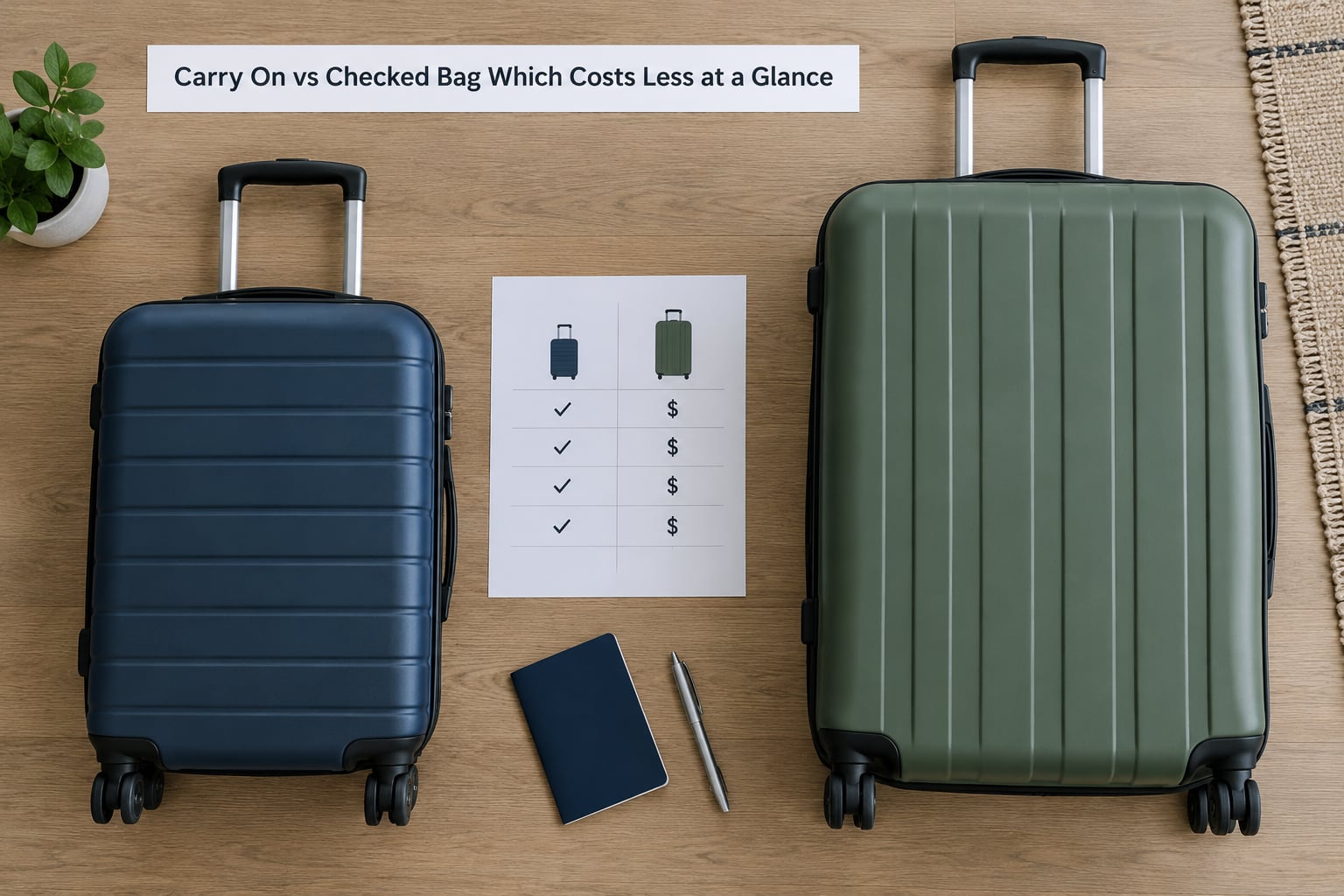
| Factor | Carry-On | Checked Bag |
|---|---|---|
| Typical cost on a major US carrier | Included on standard fares | Priced per bag, per direction, usually in the tens of dollars and higher on international and premium routes |
| Basic economy fare | Often not included at all; on United basic economy a full-size cabin bag is not allowed and a personal item is the limit | Still the only way to bring volume, so the fee simply moves onto the checkout page |
| Ultra-low-cost carriers | Usually a paid add-on, priced dynamically | Also a paid add-on, and often similar in price to the carry-on |
| Packing volume | Roughly three to five days of clothing for one traveler | Several weeks, plus bulky items and gear |
| Size and weight rules | Commonly 22 x 14 x 9 inches; personal item often 18 x 14 x 8 | Linear inches matter more than volume; weight caps of 50 pounds standard, 40 pounds on some low-cost carriers |
| Airport time | Straight to security and the gate | Add bag-drop queue time at the origin and a wait at baggage claim on arrival |
| Risk of a surprise charge | Gate check, sometimes charged on basic economy | Oversize and overweight fees, and a second bag priced higher than the first |
| Item restrictions | Liquids, blades, tools and spare lithium batteries are restricted in the cabin | Most of those items belong in a checked bag anyway |
| Best for | Short trips, solo travelers, fee-sensitive itineraries | Longer trips, families, gear, souvenirs, mobility needs |
What Does a Carry-On Cost Compared With a Checked Bag?
The short version: on a standard domestic fare at a major US airline, the carry-on is free and the checked bag fee is not. First checked bags on those carriers usually fall in the low-to-mid tens of dollars and climb on international and premium routes, while a second or third bag costs substantially more than the first.
Three details push the real total above the headline number. Fees are charged per direction, so a round trip roughly doubles it. Oversize and overweight charges are added on top, and they vary by carrier rather than following a national standard. And prepaying online is usually cheaper than paying at the airport counter.
Then there is the time cost, which no fee chart shows. Checking adds a bag-drop queue before security and a carousel wait at the far end of the terminal, often twenty to forty minutes each way. Business travelers describe this as the real price of a checked bag, and for a two-hour hop it can exceed the fee in value.
A carry-on has hidden costs of its own. A compliant bag can still be gate-checked when bins fill, and on some fares that handling is charged at roughly the level of a small checked-bag fee. Forum travelers also point to regional jets, whose overhead bins are small enough that a standard 22-inch spinner gets pulled even when it complies.
Carry On vs Checked Bag Fees by Airline and Fare Type
The fare you book matters as much as the airline you book. Basic economy is the fare to read carefully: it is priced lower because the cabin allowance, free changes and seat selection were removed to get there.
| Fare type | Carry-on | Checked bag | Watch for |
|---|---|---|---|
| Basic economy | Frequently excluded; personal item only on some carriers | Charged as an add-on | A gate-handling charge if you arrive with a bag the fare does not include |
| Standard economy | Usually one carry-on plus one personal item | Charged per bag per direction | Second bag priced well above the first |
| Premium economy and business | Included | Often included on long-haul itineraries | Confirm whether the allowance is per passenger or per reservation |
| International long-haul | Usually included | Typically one or two pieces included on major carriers | Budget and transatlantic fares often exclude it |
| Ultra-low-cost carrier | Paid add-on with dynamic pricing | Paid add-on, similar in level to the carry-on | Bundle pricing at checkout can change the comparison |
Carrier-specific notes: United basic economy bars a full-size carry-on and allows a personal item only. Spirit and Frontier charge for a carry-on and cap checked bags at a lower weight than the usual standard. Southwest still advertises two free checked bags on most of its network, which is the outlier that makes fee charts from other carriers hard to generalise from.
European low-cost carriers such as Ryanair and easyJet follow the same pattern as US ultra-low-cost airlines: a free small personal item with the cabin bag sold separately. Read the policy for the exact route rather than generalising from a headline fee.
How Packing Needs Affect the Total Cost
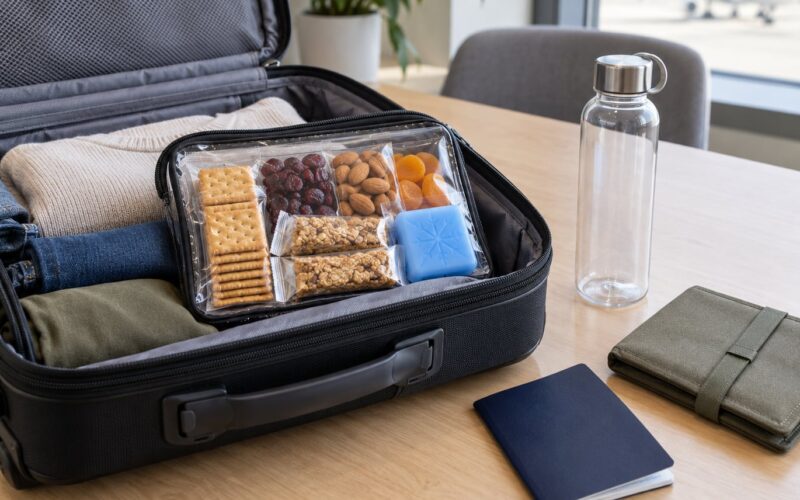
Capacity drives the decision more than price does. A carry-on realistically holds three to five days of clothing for one person, and forum regulars put the practical ceiling nearer forty litres once shoes and a jacket are included.
Several packing realities push travelers toward a checked bag no matter how fee-conscious they are:
- Liquids and blades. Liquids over 100 millilitres, razors with removable blades, tools and sporting goods are restricted in the cabin, so some items can only go in a hold bag.
- Lithium batteries. Spare batteries and power banks stay in the cabin, which can eat the personal item slot and force a second bag if you also need the volume.
- Footwear and bulky clothing. One pair of walking shoes and a winter coat can fill a carry-on on their own.
- Trip length. Past roughly a week, most travelers start crushing clothes into a bag that then fails the sizer at the gate.
- Gear and mobility needs. Golf clubs, ski gear, instruments and mobility devices carry their own allowances and rules, so the standard fee math does not apply.
- Shopping and souvenirs. Anything bought at the destination needs a bag, and a second checked bag usually costs more than the first.
None of that changes the fee. It changes whether the fee is the cheapest option, and for gear-heavy or family travel it usually is.
What Is Cheaper for a Short Domestic Trip?
For a weekend or a three-day trip, the carry-on wins on money and on time. One cabin bag plus a personal item is normally included, you walk past the bag-drop queue, and you leave the terminal as soon as the doors open.
Two situations flip that. On an ultra-low-cost carrier, the carry-on is a paid add-on priced close to the checked bag, so the fare difference between the two is often narrow enough that capacity should decide. And on a basic economy ticket with no cabin allowance, arriving with a roller to check is the mistake; adding the bag in advance is cheaper than a gate handling charge.
A useful shortcut for short trips: run the numbers on one bag versus two. If you would need a second carry-on, a second checked bag costs more, and splitting between a personal item plus a checked bag is often the cheapest workable setup.
What Is Cheaper for a Long Trip or International Flight?
On long-haul itineraries the economics often reverse, because most major carriers include one or two checked pieces with premium and standard international fares. If the bag is already included, carry-on-only travel just means paying to leave volume at home.
Weight limits matter more here. Standard checked limits are commonly 50 pounds, premium cabins often allow 70, and some low-cost carriers cap at 40, which is the number that catches people who pack a full suitcase and then buy a scale at the airport. Overweight charges stack on top of the bag fee and vary by carrier.
International rules also vary by country and by alliance agreement, so confirm the allowance for your specific route and ticket rather than assuming a US pattern holds.
How Baggage Calculator Tools and Airline Search Filters Help
Every major airline publishes a baggage calculator and a fee chart on its own site, and that is the only source worth trusting for your exact flight. The calculators take a route, a fare type and a passenger type and return the allowance and cost for that combination.
A short routine before you book:
- Enter the exact route and dates, not just the airline name, because allowances differ by direction and by market.
- Select your fare class and read what it includes, especially the basic economy line.
- Check the size and weight limits for the carrier, not the industry average.
- Compare prepaid bag pricing against the airport rate on the same page.
- Confirm the currency if you are booking on a foreign carrier’s site, since the same fee can display differently.
- Recheck close to departure, since carriers adjust fees and promotions through the year.
When comparing flights, use the fare filters for included carry-on and included checked bag rather than comparing the headline ticket price alone. Two fares a few dollars apart can differ by hundreds across a family of four once baggage is added.
Which Should You Choose?
| Trip type | Better option | Why |
|---|---|---|
| Solo weekend, standard fare | Carry-on | Included on most fares and the fastest path through the airport |
| Basic economy booking | Check and prepay, or pay for the cabin bag | The fare excludes the carry-on; decide before you reach the gate |
| Ultra-low-cost carrier, domestic | Either, priced | Carry-on and checked bag fees are close, so capacity decides |
| Family of four or more | Checked bags, prepaid | A second and third bag costs more each, and nobody wants to repack at the carousel |
| Two weeks or longer | Checked bag | A carry-on cannot hold the volume without overpacking |
| Ski, golf or instrument travel | Checked, on the sports equipment allowance | Standard fees often do not apply to sporting gear |
| International long-haul in premium or business | Checked bag, included | The allowance is already part of the fare |
A simple rule I use: if you can pack the trip into a bag you can lift into an overhead bin on your own, carry on. If the answer depends on vacuum bags and a hard stare at the sizer, check it.
Frequently Asked Questions
Is a carry-on always cheaper than a checked bag?
Usually, yes. On standard fares with the major US airlines one carry-on and one personal item are included, so a carry-on costs nothing extra while a checked bag is a paid add-on charged per direction. The exceptions are basic economy fares, which often drop the cabin allowance, and ultra-low-cost carriers, which charge for the carry-on at a level close to the checked bag. On long-haul fares that already include a checked bag, the answer flips.
Why does one airline include a carry-on while another charges for it?
It comes down to where the money comes from. Full-service carriers built their fares around long-haul and premium customers, so a free cabin bag is cheaper for them than billing every leisure traveler. Low-cost carriers unbundle almost everything, so a carry-on becomes a line item at checkout with a variable price. The same trip on the two models can differ by a full bag fee in each direction.
Is a checked bag cheaper than paying for a second carry-on?
It depends on the carrier’s own prices, so compare them in the airline’s own baggage calculator for your route and fare. Second checked bags are usually priced above the first, which is why many travelers buy one checked bag plus a personal item instead of two cabin bags. On ultra-low-cost airlines, where a cabin bag is a paid add-on, one checked bag often costs the same or less and holds far more.
Does a basic economy ticket usually allow a carry-on?
No, that is the point of the fare. Basic economy on most major US carriers removes the carry-on and leaves a personal item as the cabin allowance, and some carriers allow only the personal item in the cabin at all. United basic economy is the most restrictive case, with no full-size carry-on and a gate handling charge if you arrive with a bag the fare does not cover. Check the fare rules before you pack.
How do I compare baggage prices before choosing a flight?
Use the airline’s own baggage calculator rather than a generic chart, then filter the flight search results by included carry-on and included checked bag. Enter your exact route, fare class, passenger count and currency, because allowances and prices differ by direction and by market. Compare prepaid bag fees with airport rates on the same page, and recheck closer to departure since carriers adjust fees during the year.
Can I move items from a checked bag to a carry-on at the airport?
Yes, and it is worth doing at the bag-drop counter before you hand anything over. Remove anything you want to keep with you in the cabin, including medication, documents, valuables and liquids, then check the remaining bag. Anything over the cabin size limit will still need to be checked or paid for, and on basic economy fares even a compliant roller is not covered by the fare.
Conclusion: Compare the Total Cost, Not Just the Fee
Start with the airline’s baggage policy for your exact route and fare, because that decides whether a carry-on is free, paid or not allowed. Then compare the likely bag fee against the cost of carrying everything yourself: bag-drop queue, carousel wait, and the risk of a gate check landing on a fare that charges for it.
Short trips and standard fares almost always favor the carry-on. Longer trips, families, gear and fares that already include a checked bag favor checking. The cheapest option is whichever one fits your actual bag, not whichever one looks cheaper on a fee chart.