To avoid sunburn on a tropical vacation, use broad-spectrum SPF 30 or higher, apply it generously about 15 minutes before you go outside, reapply every two hours and after every swim, and cover up with shade, a hat, and clothing. Set-up takes about ten minutes a day. Skipping any one of those four layers is how people end up pink on day two.
The reason a routine that works at home fails on a beach five hundred miles from your kitchen is simple: near the equator the sun sits high and the UV index runs high for most of the day, and sand and water bounce extra radiation back at you. Thin cloud does not save you either. Most of what follows takes adjustment rather than money.
Table of Contents
- What You Need
- Step-by-Step: How to Protect Yourself from Tropical Sun
- Step 1: Check the UV index and plan around peak exposure
- Step 2: Apply broad-spectrum SPF 30 or higher correctly
- Step 3: Wear shade, a hat, and protective clothing
- Step 4: Reapply and ask about missed protection
- Step 5: Know when to stop and seek help
- Common Mistakes
- Frequently Asked Questions
- Does sunscreen prevent sunburn completely?
- How often should I reapply sunscreen at the beach?
- Can I get sunburned on a cloudy or overcast day?
- Is SPF 50 or higher always better than SPF 30?
- What should I do if I think I have a bad sunburn?
- Conclusion
What You Need
Everything on this list is available at a drugstore or online, and nothing needs a prescription. This is general sun-safety guidance, not medical advice.
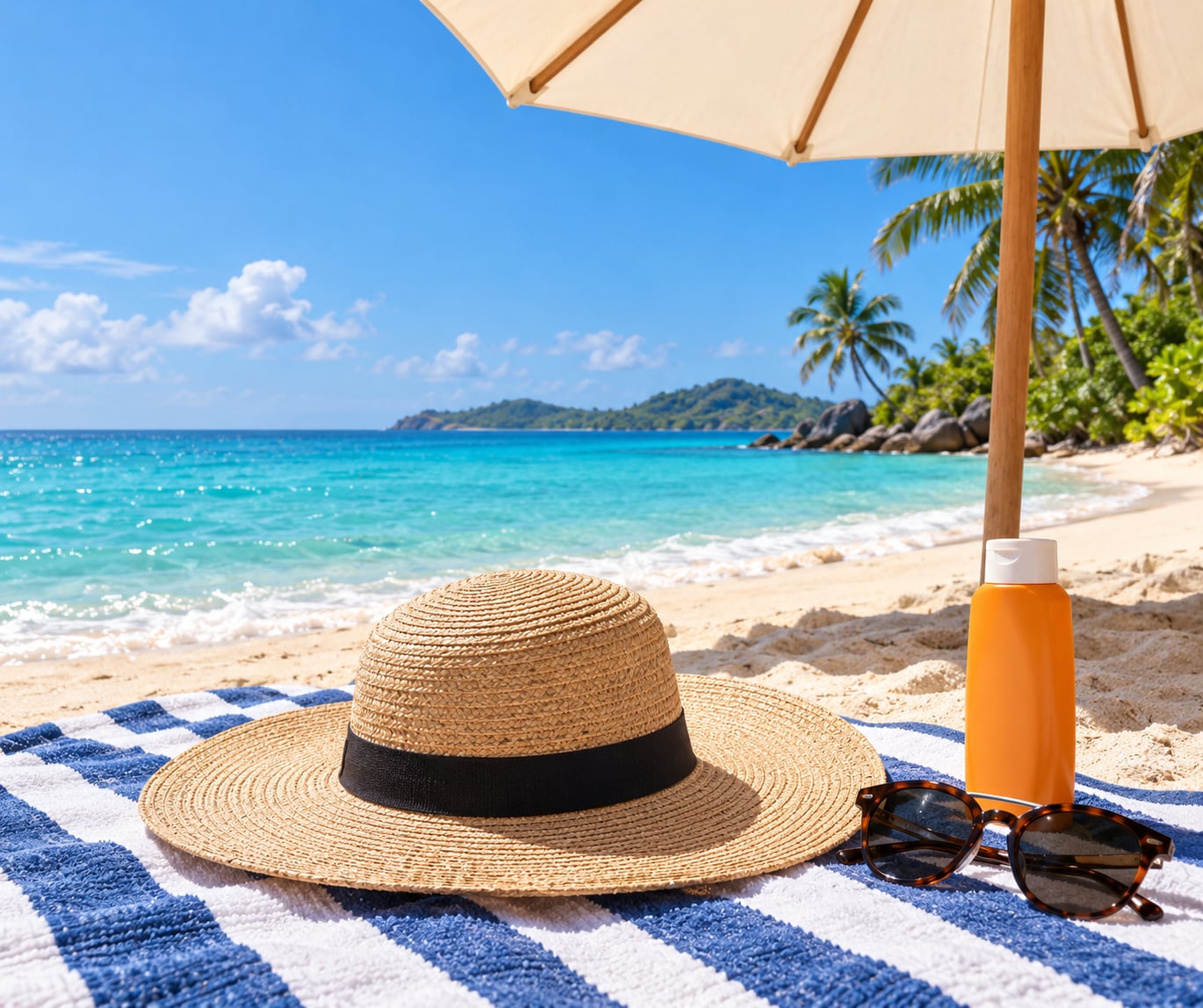
- Broad-spectrum SPF 30+ sunscreen. SPF 50 or higher makes sense for fair skin, red or freckled skin, light-colored eyes, or a history of burning easily.
- A water-resistant formula if you will be swimming or sweating. No sunscreen is waterproof, so water resistance means it holds up longer before it fades.
- Protective clothing. A long-sleeve swim shirt or a lightweight UPF top covers skin no bottle can fully reach.
- A wide-brimmed hat. A brim with at least a couple of inches of shade protects the forehead, ears, and back of the neck better than a baseball cap.
- UV-blocking sunglasses that cover the eyes and the skin around them.
- Lip balm with SPF. Lips burn surprisingly often and are easy to miss.
- A shade plan: an umbrella, a pop-up beach shelter, a cabana, or simply knowing which side of a building casts shadow in the afternoon.
- Water and something to sit on that isn’t bare sand for hours.
- A checked local forecast, ideally one that shows the UV index rather than just a temperature.
If you have a physical condition, take medication that increases sun sensitivity, or are traveling with a baby or young child, ask your doctor or pharmacist for specific advice before you go. Skin that has had skin cancer removed also deserves a plan built with a clinician rather than a blog post.
Step-by-Step: How to Protect Yourself from Tropical Sun
Five steps, in order. You will know each one is working when you can point to the evidence described at the end of it.
Step 1: Check the UV index and plan around peak exposure
The UV index is a one-to-eleven scale where anything at eight or above is very high and at eleven is extreme. Many weather apps show it on an hourly strip, which is more useful than a single daily number because the peak shifts a little with your latitude and the time of year.
Move the strenuous parts of your day — hiking, snorkeling, walking tours, anything that makes you sweat — into the morning before about ten or into the last couple of hours before sunset. When the sun is highest, the burning rays come in nearly straight down, which means a hat and a shirt do more work than they do at noon in your home town.
How you know it worked: you can name the hours you have deliberately chosen to be in the sun, and the rest of the itinerary is built around shade, water, or indoor stops.
Step 2: Apply broad-spectrum SPF 30 or higher correctly
Broad-spectrum means the product covers both UVA and UVB rays, not just the UVB that causes the visible burn. Most mainstream health authorities recommend a generous application about fifteen minutes before exposure for any extended time outdoors.
On quantity, the widely repeated rule is about one ounce for an adult body, roughly a shot glass, and most people apply a fraction of that. Think of it as a measure rather than a rule about your body size. Put it on before you put your clothes on, so nothing gets missed at the edges.
Then work through the checklist that catches nearly every missed spot: the tops of your feet, both ears, your scalp where the part is, your lips, the back of your neck, the backs of your hands, and your back if nobody can reach it. The strip across the nose is the classic souvenir burn, and it comes from skipping between the eyes.
How you know it worked: skin looks slightly damp or evenly covered right after you finish, and no missed patches show up after a couple of hours. If you can still see your own tan lines from last summer in daylight, you used too little.
Step 3: Wear shade, a hat, and protective clothing
Sunscreen is a filter, not a wall, and it wears down. Anything that physically blocks radiation — a hat, a shirt, an umbrella, a towel draped over your shoulders — does not degrade, so treat it as your primary defense and sunscreen as the layer on top.
Fabrics vary enormously. A thin white cotton T-shirt gives you roughly SPF 7 or so, and less once it is wet, so it is not real protection for a long beach session. Tightly woven fabric, darker colors, and anything sold with a UPF rating of 30 or 50 do much better. A rash guard or swim shirt covers the shoulders and back, which are the two hardest places to reach with a bottle.
A wide-brimmed hat outperforms a cap because it shades the ears and neck as well as the face. Sunglasses matter for more than comfort: they cut glare off bright sand, which reduces squinting and headaches, and they shield the thin skin around the eyes.
How you know it worked: at midday you are sitting in an actual shadow, wearing a shirt with a sleeve, and you can stay out for a few hours without burning through anything.
Step 4: Reapply and ask about missed protection
Set a reapplication reminder when you set your first alarm in the morning, because the reason people get burned is usually that two hours quietly passed while they were reading a book. Reapply about every two hours, and again after swimming, heavy sweating, or toweling off.
Water-resistant formulas hold up for a limited window and only under test conditions, so treat swimming as a reason to reapply rather than a reason to skip. The same goes for a long sightseeing day or a windy afternoon where a spray blows into an uneven coat and leaves bare patches behind. Rub spray in properly or use a lotion or stick on those areas instead.
If you have lost the sunscreen or it has been sitting in a hot car, replace it rather than stretching what is left. Sunscreen degrades in heat, and an expired bottle from two summers ago is not protecting anyone. Buying a fresh bottle at a resort shop or supermarket on arrival is normal and easy.
How you know it worked: you reapplied without being prompted, and you paid attention to the spots that are usually skipped rather than going over already-protected skin.
Step 5: Know when to stop and seek help
There is a point in a day where more sun stops being fun and starts being damage. If your skin is hot and tender, move into shade or air conditioning, cool down with water or a cool compress, and cover any skin that was left exposed before you go back out.
Seek medical advice for a sunburn with severe blistering, fever, chills, confusion, fainting, or pain that will not settle. Heat exhaustion looks similar and needs real attention, not another hour on the beach.
How you know it worked: you have a rule in advance about which symptoms end the day, so you are not deciding while your skin is stinging and the sun is still up.
Common Mistakes
Most sunburns on vacation come down to a short list of repeated habits. Here is what goes wrong and what to do instead.
Relying on sunscreen alone. A bottle covers the skin you can reach. The fix is to add a hat, a shirt, and real shade, and treat the sunscreen as the extra layer.
Using expired or heat-damaged product. A bottle that spent a week in a hot car has lost effectiveness. Throw it out and buy a new one, ideally at your destination.
Applying too little. The instinct is to use a small amount quickly. Use the shot-glass measure instead, and reapply more often rather than trying to make one thin coat last.
Forgetting the edges. Tops of feet, ears, scalp, lips, backs of hands, and the back of the neck account for most of the classic tan-line burns. Run through that checklist every single time.
Assuming water or clouds block UV. Light passes through clouds, and both sand and water reflect radiation back upward, which is why you can burn in the sea on a bright but overcast afternoon.
Counting on a t-shirt. Thin white cotton sits around SPF 7 and drops further when wet. Bring a UPF top or a long-sleeve swim shirt instead.
Pushing through warning signs. Tenderness, heat, and a pink cast are the body’s signal, not a challenge. Break the session and reassess.
Assuming darker skin is safe. Deeper skin tones carry more natural pigment protection, but they still burn, they still develop photoaging, and sun exposure still raises skin cancer risk. Everyone needs protection.
Anything about your own skin, medication, or medical history is worth a conversation with a doctor or pharmacist before you fly. General guidance is a good baseline, not a substitute for advice tailored to you.
Frequently Asked Questions
Does sunscreen prevent sunburn completely?
No. Sunscreen reduces the amount of UV radiation reaching your skin, but it wears down, it rubs off, and most people apply far less than the tested amount. That is why mainstream health authorities recommend combining it with shade, a hat, and protective clothing rather than treating it as a complete barrier. Treat sunburn prevention as layers, with sunscreen as one of them.
How often should I reapply sunscreen at the beach?
About every two hours, and again after swimming, heavy sweating, or toweling off, even if you are using a water-resistant formula. Water resistance means a product holds up longer under test conditions, not that it stays on indefinitely. Set a repeating phone reminder when you arrive, because two hours pass quickly when you are reading, swimming, or walking around a resort.
Can I get sunburned on a cloudy or overcast day?
Yes. Most UV radiation passes through clouds, so an overcast sky removes very little of the exposure. On tropical trips, pair that with the way sand and water reflect UV back at you, and burning on a bright but cloudy beach is a common experience for travelers who assumed the weather was handling it. Keep the same sunscreen and clothing routine you would use on a clear day.
Is SPF 50 or higher always better than SPF 30?
Not always, but higher SPF buys you margin when you are applying too little or staying out longer than planned. SPF 30 broad-spectrum is the widely recommended baseline. SPF 50 or higher is a sensible choice for fair skin, freckles, light eyes, or a tendency to burn easily. The bigger practical difference usually comes from amount and reapplication, not from the number alone.
What should I do if I think I have a bad sunburn?
Get out of the sun first, then cool the skin with cool water or a compress and drink fluids to replace what you lost in the heat. Keep the skin covered loosely and avoid further sun exposure until it settles. Seek medical advice for severe blistering, fever, chills, confusion, fainting, or pain that does not ease, since those can point to heat illness or a more serious burn.
Conclusion
Start with the UV index for the days you will be there, and use it to decide which hours you actually want to be outdoors. Pack a wide-brimmed hat, a long-sleeve or UPF top, sunglasses, SPF lip balm, and more sunscreen than you think you need. On the beach, find real shade early rather than assuming you will find some later, and set a repeating two-hour reminder before the first hour passes. If you get a little pink, treat that as information about the routine rather than something to push through.