You must declare anything bought abroad that pushes you past your personal duty-free allowance, most food, plants and animal products, commercial goods, controlled medicines, and high-value items such as watches and designer bags. Cash of 10,000 US dollars or more is always reported, as is alcohol and tobacco beyond the personal limits. Anything on that list means the red channel. Nothing means the green one.
That paragraph is the whole answer, and almost nobody needs more than five minutes at the customs counter to get it right. The confusion usually comes from one thing: travellers think a duty-free allowance means you can carry anything up to that amount without mentioning it. It does not. The allowance covers duty. The declaration is a separate, legal reporting step that applies to restricted items no matter how small they are.
Because the exact rules belong to the country you are flying into rather than the one you left, this guide gives you the process that works everywhere, then the US and other common thresholds so you have concrete numbers to compare against.
Table of Contents
- What You Need
- Step-by-Step: What to Declare at Customs When Returning Home
- Step 1: Work Out What to Declare at Customs When Returning Home
- Step 2: Check the Destination Country’s Limits Before You Fly Home
- Step 3: Separate What You Must Declare From Allowed Exemptions
- Step 4: Complete the Customs Declaration Accurately
- Step 5: Declare Cash, Alcohol, Tobacco and Medicines in Your Possession
- Step 6: Answer Questions and Keep Your Documentation
- Common Mistakes to Avoid at the Customs Counter
- Frequently Asked Questions
- What do I say when customs asks if I have anything to declare?
- How much can you bring through customs without declaring?
- Is it better to declare everything at customs?
- Do I need to declare personal items and souvenirs?
- Do I need to declare duty-free shop purchases?
- What food do I have to declare?
- Conclusion
What You Need
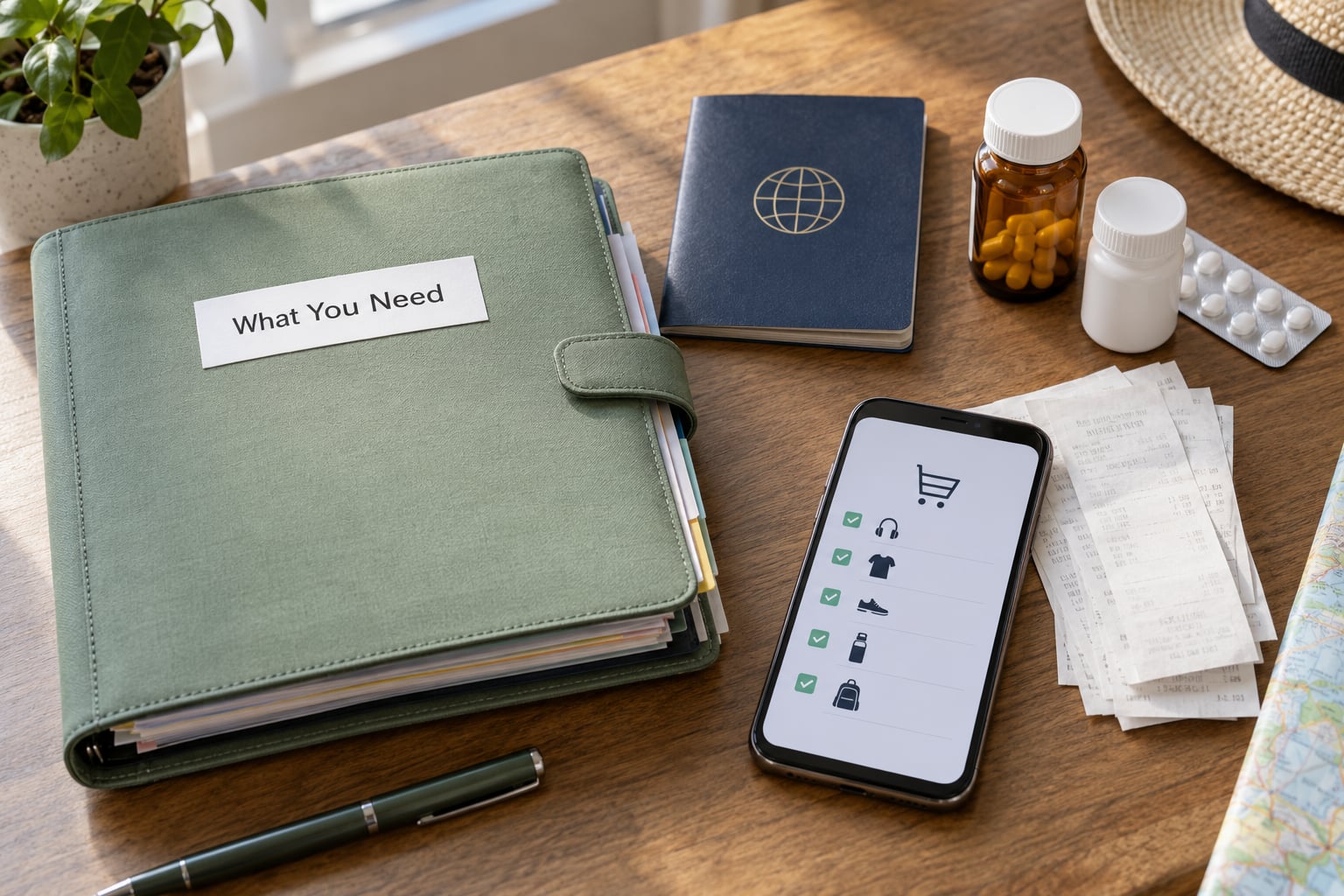
Customs is not a paperwork exam. It is a short conversation about what is in your bag, and you cannot have that conversation well if you were sorting receipts while the queue moved.
- Your passport and any travel documents, kept with your bag rather than in a jacket pocket until you have cleared immigration.
- The paper or electronic declaration form for your destination. Most countries put one on the flight, some airports have kiosks, and a growing number use only an app. Check the airline or the official customs site before you land.
- Receipts or a spending list for anything bought outside a shop that would issue one, or for anything expensive. A list of what you paid is proof of value; a guess is not.
- Medication in its original packaging with a copy of the prescription or a letter from your doctor for anything controlled or injectable.
- A rough inventory of the food, plants, animal products and gifts in your bag. Fresh produce is the item most often forgotten and the one most likely to be confiscated.
- The official customs page for your destination bookmarked on your phone, so you can check a limit while you wait in the queue.
Two things buy you goodwill later: binning the fresh food before you land, and photographing your receipts before you pack. Neither takes long, and both make the counter conversation thirty seconds.
Step-by-Step: What to Declare at Customs When Returning Home
Step 1: Work Out What to Declare at Customs When Returning Home
Start with an honest inventory rather than a decision. Write down every item you acquired during the trip that is going home with you: purchases, gifts for other people, things bought for a work colleague, food, medicines, alcohol, tobacco, and cash. Include duty-free shop purchases and anything shipped to your luggage by a seller.
Do not include what you already consumed. A jacket you wore every day and the meal you ate on the plane are not purchases. Anything you bought or received and still have is.
| What you are carrying | When you must declare it | What to do |
|---|---|---|
| Goods over your personal allowance | When the total value of everything exceeds the duty-free allowance | List each item and its value on the declaration form |
| Alcohol | Above the personal limit, which is 1 litre for arrivals to the US | Declare the full volume; duty is charged on it |
| Tobacco | Above the personal limit, which is 200 cigarettes or 100 cigars for arrivals to the US | Declare the full quantity and type |
| Cash and payment instruments | At or above the reporting threshold, which is 10,000 US dollars or more | Declare the amount and the currency; the form is a reporting form, not a way to be caught |
| Food, plants, animal products | All of them, including packaged and processed items in most countries | Declare and expect inspection; expect fresh produce to be confiscated |
| Medicines | Anything controlled, prescription-only, or not in original packaging | Original box, prescription copy, doctor letter if controlled |
| Commercial goods or large quantities of one item | When quantity and value look resalable rather than personal | Contact a broker or declare it; personal exemption does not cover commercial cargo |
| High-value purchases | Watches, jewellery, designer bags, electronics, instruments | Declare and be ready to pay duty; expect a closer look at the serial number |
Step 2: Check the Destination Country’s Limits Before You Fly Home
You are declaring to the country you are entering, so its rules are the ones that matter. A souvenir bought in Tokyo faces a completely different threshold on the way home to a buyer arriving in London, and a French allowance does not carry over to a separate UK declaration at a later date.
Rules also change. Amounts, currency conversions and prohibited lists get revised on multi-year cycles, so a blog post from a few years ago can be quietly wrong. Use the official customs or border agency site as the source of truth, and treat any number you find on a forum or a travel blog as a starting point only.
| Destination | Typical personal allowance | Cash reporting threshold |
|---|---|---|
| United States | 800 US dollars per person, once every 31 days, for personal or household goods | 10,000 US dollars or more, or the equivalent in foreign currency |
| United Kingdom | 390 GBP per person, plus separate personal limits on alcohol and tobacco | 10,000 GBP or more in cash or the equivalent in valuables |
| EU customs union | 430 euros per adult resident arriving by air or sea, 300 euros by land | 10,000 euros or more in cash |
| Japan | General goods allowance based on total value, with separate limits on alcohol and tobacco | Cash above the equivalent of 1,000,000 yen |
Treat that table as orientation, not law. Each of those countries publishes its own current figures, and the alcohol and tobacco lines change independently of the goods allowance.
Step 3: Separate What You Must Declare From Allowed Exemptions
The exemption system is not one big permission. It works category by category, which is why people get confused: the goods allowance has no effect on your alcohol limit, and a sealed duty-free bag does not exempt a necklace.
- Ordinary goods within the allowance. You normally do not itemise these, and no duty is charged. The rule of thumb is the one most experienced travellers use: if you would happily state the value out loud, it is almost certainly a personal item within the allowance.
- Alcohol and tobacco. Separate personal limits apply, and duty is charged on the overage even if the rest of your bag is untouched.
- Cash and payment instruments. Reporting the amount is not an accusation of anything. The threshold exists so that authorities can trace legitimate large transactions.
- Food, plants and animal products. Almost no agricultural item is exempt simply because it is eaten. Sealed, factory-processed, shelf-stable products such as vacuum-packed cheese, canned fish, plain crackers and commercially packaged baked goods are the usual low-risk category; fresh fruit, vegetables, cut flowers, seeds, live plants, homemade preserves, meat and dairy are the ones that regularly get destroyed.
- Medicines. Ordinary prescription medicine in the original pharmacy packaging with the label intact is usually fine. Anything controlled, anything in a different container, and anything containing an ingredient that is restricted in your country is a different question entirely and sometimes requires an import licence that has to be arranged before you fly.
- Straw, untreated wood, soil-based pottery and wildlife products. Widely restricted, often for biosecurity reasons, and frequently not obvious to the person who bought them.
Two things to remember about the duty-free shop. First, an airport purchase is still your purchase until you are home, and a sealed tax-free bag does not remove the declaration duty, because the exemption is applied by the exit country rather than assumed. Second, a broken seal or a repacked bag is exactly what draws an officer’s attention, so keep the receipt inside the sealed bag and leave the packaging alone.
Step 4: Complete the Customs Declaration Accurately
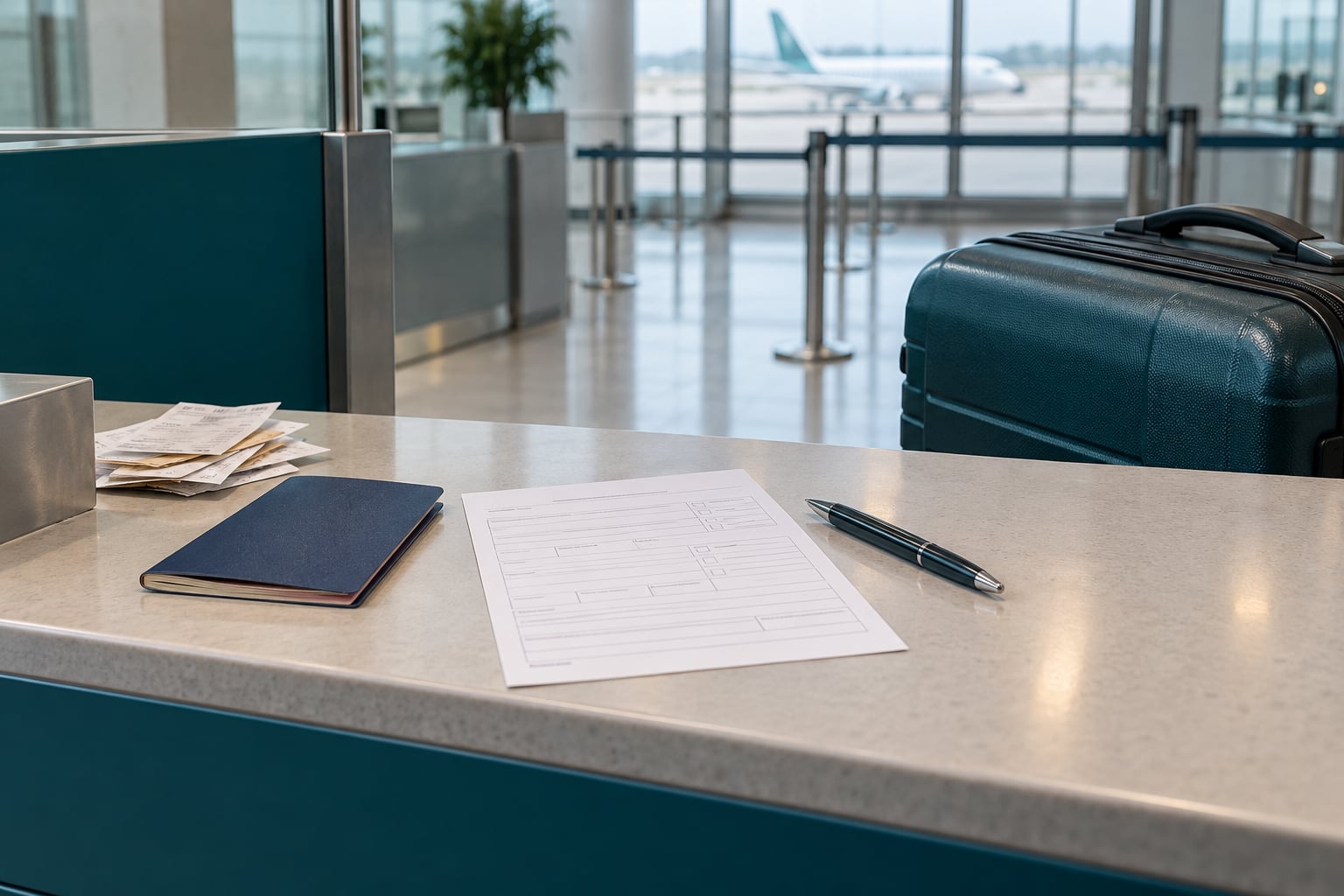
Fill the form in flight, before you are tired and before anyone is watching. Description, quantity, value in the currency you paid, and the country of purchase are the four things officers look for, and vague entries are what turn a five-minute question into twenty.
A worked example. You bought a wool blanket, a pair of shoes and a ceramic bowl. Write the blanket as “wool blanket, one, 60 euros, purchased in Spain”, the shoes as “leather walking shoes, one pair, 75 euros, purchased in Spain”, and the bowl as “ceramic bowl, one, 25 euros, purchased in Spain”. Total 160 euros, well under the 800 US dollar arrival exemption if you are landing in the US, so you would usually list nothing at all beyond the restricted categories. If your total had been 900 euros, all three would be itemised and duty assessed on the full amount above your exemption, not just the difference.
Never guess a value downward and never leave a required field blank. A blank field is read as an incomplete declaration, which is a worse starting point than a simple, honest entry. If you genuinely do not know what something cost, write your best estimate and say so; officers do occasionally accept an estimate for small market purchases.
Where there is no paper form, the electronic version asks the same questions on a screen, often before you even land. If you are unsure which channel an electronic system routes you through, declare anyway. Being routed to an officer costs you a few minutes; routing yourself through the wrong channel can look like a false statement.
Step 5: Declare Cash, Alcohol, Tobacco and Medicines in Your Possession
Cash is the category where people get most anxious, and almost all of that anxiety is misplaced. There is no penalty for reporting lawful money. Fill in the amount, state whether it is foreign currency or cash in your own currency, and if the form asks for a declaration of cash in a specific format, follow the form. What causes problems is a number that changes after you have already said it, or a gap between the figure you declared and what is actually in the case.
Alcohol and tobacco are counted, not estimated. Know how many bottles and how many cartons are in your bag before you reach the counter, and include the duty-free purchases in that count. Note the concentration too; spirits are assessed differently from wine, and a bottle of vermouth is not the same as a bottle of whisky.
For medication, keep everything in the original pharmacy packaging with the label showing the drug name and the prescriber. Carry a photo or paper copy of the prescription, and for controlled substances, opioids, some stimulants and injectables, a letter from your prescribing doctor. The officer wants evidence that the medicine is yours and prescribed to you, and the paperwork answers that question before it is asked.
Step 6: Answer Questions and Keep Your Documentation
At the counter, the usual opening is the one people fear most: do you have anything to declare? The script that works is short. Say yes or no honestly, and if yes, mention the categories rather than the excuses. Something like “Yes, a wool blanket and some chocolate, receipts here” is a complete and calm answer. You do not need to apologise, explain that the gift is for a child, or argue about whether the total is under the allowance.
If you go through the red channel, expect a short screening, a few reference questions, and possibly a bag search. Answer what is asked, do not volunteer a story, and do not help anyone else. If asked to remove a prohibited item, hand it over; the alternative outcome is much worse and offers you nothing.
Once you have paid any duty or accepted the disposal of food, keep the declaration, the receipts and the officer’s slip for the rest of the trip. A copy of a receipt is also the record you need if you later file a refund or a claim.
Common Mistakes to Avoid at the Customs Counter
Guessing values downwards. An itemised list is only useful if the numbers are honest, and a total that cannot be reconciled with your receipts creates a problem you would not otherwise have. Fix: use the real purchase value, and write “value estimated” if you have no receipt.
Forgetting the food. The realistic confiscation story involves a forgotten piece of fruit or a homemade jam in a checked bag, not a luxury watch. Fix: go through your bag in the airport bathroom before you join the queue, and eat the fresh stuff on the last day.
Leaving medicines out of the declaration. Undeclared medication gets treated as an attempt to move controlled substances, which is a different and much more serious category of problem. Fix: original packaging, prescription copy, doctor letter for anything controlled.
Mixing personal and commercial goods. Two identical phones, ten identical boxes, or a suitcase of samples are not personal use, and the personal exemption does not apply to them. Fix: check the import rules for commercial goods before the trip, not at the counter.
Forgetting gifts and other people’s purchases. The shopping your partner did, the souvenirs you bought for your kids, the gifts your host pressed on you: all of it is part of your declaration. Fix: build the inventory together before you fly.
Counting on someone else’s exemption. A travelling companion’s unused duty-free allowance does not extend to your bag, and in some countries a family or group allowance has to be requested rather than assumed. Fix: check whether allowances are per person or per group at your destination.
Walking through without reading the form. A declaration you never read can contain answers that are wrong, and a form submitted in a hurry with a blank field is the one people regret. Fix: five minutes on the plane.
Frequently Asked Questions
What do I say when customs asks if I have anything to declare?
Say yes or no, plainly, then name the categories. u0022Yes, a wool blanket, a bottle of wine and some packaged chocolate, and I have my receipts hereu0022 is a complete answer. You do not need to explain or justify the purchase, and you do not need to work out whether you are under the allowance first. Officers prefer a short factual statement they can write down.
How much can you bring through customs without declaring?
That depends on the country you are entering. Arrivals to the US get a personal exemption of 800 US dollars per person, once every 31 days, plus separate limits of 1 litre of alcohol and 200 cigarettes or 100 cigars. The UK allowance is 390 GBP per person and the EU figure is 430 euros per adult by air or sea. Cash thresholds are separate and much higher.
Is it better to declare everything at customs?
Yes, if you are unsure. An honest declaration almost always ends in a conversation and, at worst, the duty you owed. Undeclared goods are treated as an attempt to evade duty, which can mean paying the duty plus a penalty, losing the goods, or prosecution. A declaration over the allowance is an inconvenience; a concealed item is a different problem entirely.
Do I need to declare personal items and souvenirs?
Worn clothing and anything you used on the trip are not purchases, so they are not declared. New clothing, cheap souvenirs, gifts for other people and handcrafted items all count toward the total value of goods you are bringing home. When people ask what to declare at customs when returning home, small souvenirs are the most common worry and the least costly: they simply go on the total.
Do I need to declare duty-free shop purchases?
Generally yes. The exemption is applied by the country you depart from, and your home country assesses the goods on arrival. Keep the purchase receipt inside the sealed tax-free bag and do not open or repack it, because a broken seal is what prompts questions. If the purchase is above your home allowance, you may owe duty on it even though you never touched a shop till.
What food do I have to declare?
All of it, in most countries, including packaged and processed items. Factory-processed goods that are sealed, commercial and shelf-stable, such as vacuum-packed cheese or canned fish, are the lower-risk category. Fresh fruit and vegetables, cut flowers, seeds, live plants, homemade preserves, fresh meat and unpasteurised dairy are the items most often confiscated at the border.
Conclusion
Start on the official customs page of the country you are flying into, and confirm the current personal allowance, alcohol, tobacco and cash thresholds for that specific arrival. Then write down what you actually bought, received and are carrying, keep the receipts with your passport, and declare anything you are not certain about. The counter conversation is a minute. Guessing your way through one is what turns a holiday into a problem.