Knowing how to get through customs and immigration faster comes down to preparation, not tricks. Complete the official forms before the wheels touch down, keep every document in one accessible place, fill in your declaration accurately, and pick the queue you actually belong in. No traveler is exempt from border control, but prepared travelers routinely clear it in a fraction of the time of those who fumble at the desk with a phone full of photos.
An international arrival puts you through two separate checkpoints. Immigration, also called passport control or border control, is where an officer verifies that you may enter the country. Customs comes next, where you declare goods and pay any duty owed on them. Neither can be skipped, and both can be slowed down by avoidable mistakes.
Timing varies wildly by airport, hour and how many flights banked at once, so nobody can promise a specific minute count. What follows is the process, in order, with the preparation that shortens each stage.
Table of Contents
- What You Need Ready Before You Land
- Step-by-Step: How to Get Through Customs and Immigration Faster on Arrival
- 1. Complete Official Forms Before You Land
- 2. Arrange Documents for Rapid Inspection
- 3. Follow Airport Signs and Staff Instructions
- 4. Answer Questions Clearly and Briefly
- 5. Retrieve Luggage Efficiently
- 6. Use the Correct Customs Channel
- 7. Prepare for Secondary Screening
- 8. Know When You Have Reached the Arrivals Area
- Common Mistakes
- Tips for a Faster Airport Arrival
- Frequently Asked Questions
- Can I skip immigration or customs lines at an international airport?
- What documents should I keep accessible during immigration?
- Will online immigration forms make customs and immigration faster?
- What happens if I miss a connecting flight after going through immigration?
- Does TSA PreCheck get me through customs and immigration faster?
- Is Mobile Passport Control better than Global Entry?
- Conclusion: What to Do First
What You Need Ready Before You Land
You need four things ready: your travel documents, your device set up, your arrival details, and your customs declaration. That sounds obvious, but the most common delay in this whole process is a traveler standing at the counter with a passport buried at the bottom of a bag.
On the document side, keep ready:
- Your passport, valid for the required period beyond your departure date
- A visa, e-visa, or entry authorization if your nationality needs one
- Your onward or return ticket details
- The address and name of the accommodation where you are staying
- Proof of funds or onward travel if your destination asks for it at the border
- Any declaration form or advance passenger record your destination requires
On the device side, an unlocked phone with a charged battery is more useful than a paper notebook at immigration. If your destination offers an official pre-arrival app, install and submit it before departure. For US arrivals from abroad, the CBP One app hosts the Mobile Passport Control flow that replaces the paper customs form for eligible travelers.
On arrival details, write down the flight number you are arriving on and the hotel or host address in the local language. Officers ask for these routinely, and searching a booking confirmation on a spotty connection is a poor use of their time and yours.
On declarations, know what you are carrying before you are asked. Fresh fruit, homemade food, meat products, plant material and large amounts of cash all attract attention in most countries, and undeclared food can mean fines.
Requirements vary by destination and by your nationality, and the same trip can involve different rules depending on the route. Check the official immigration and customs authority for the country you are entering, not a blog or a forum post written three years ago.
Step-by-Step: How to Get Through Customs and Immigration Faster on Arrival
1. Complete Official Forms Before You Land
The single biggest time saver available to you happens in the air. Many destinations now offer advance passenger forms, electronic declarations or pre-arrival registration through an official government portal or app, and the airline will usually hand you the link before boarding.
In the US, Mobile Passport Control is the best-known version of this. Eligible travelers open the CBP One app during the flight, enter passport and flight details, answer the customs questions once, and receive a QR code. At the airport you go to a dedicated MPC line, scan the code on a tablet, and answer a handful of questions. Recent traveler reports on r/travel and r/unitedairlines describe savings ranging from a minute or two on a quiet evening to twenty minutes or more during a busy arrival bank, because the dedicated line is often nearly empty.
Two things trip people up. Screenshots of the QR code are not accepted, so a dead phone means a trip back to the paper form. And many flights have no usable Wi-Fi, so travelers who wait to start the app on the ground lose most of the benefit. Start it in the air, submit before landing, and screenshot the confirmation for reference only.
Outside the US, the equivalents are eGates and electronic arrival cards in much of the Schengen Area, electronic customs declarations in countries that offer them, and advance passenger registration systems in Australia, New Zealand, Canada and the UK. Use the official government site for each country. Third-party sites that sell visa or arrival forms are a common source of wasted time and wasted money.
2. Arrange Documents for Rapid Inspection
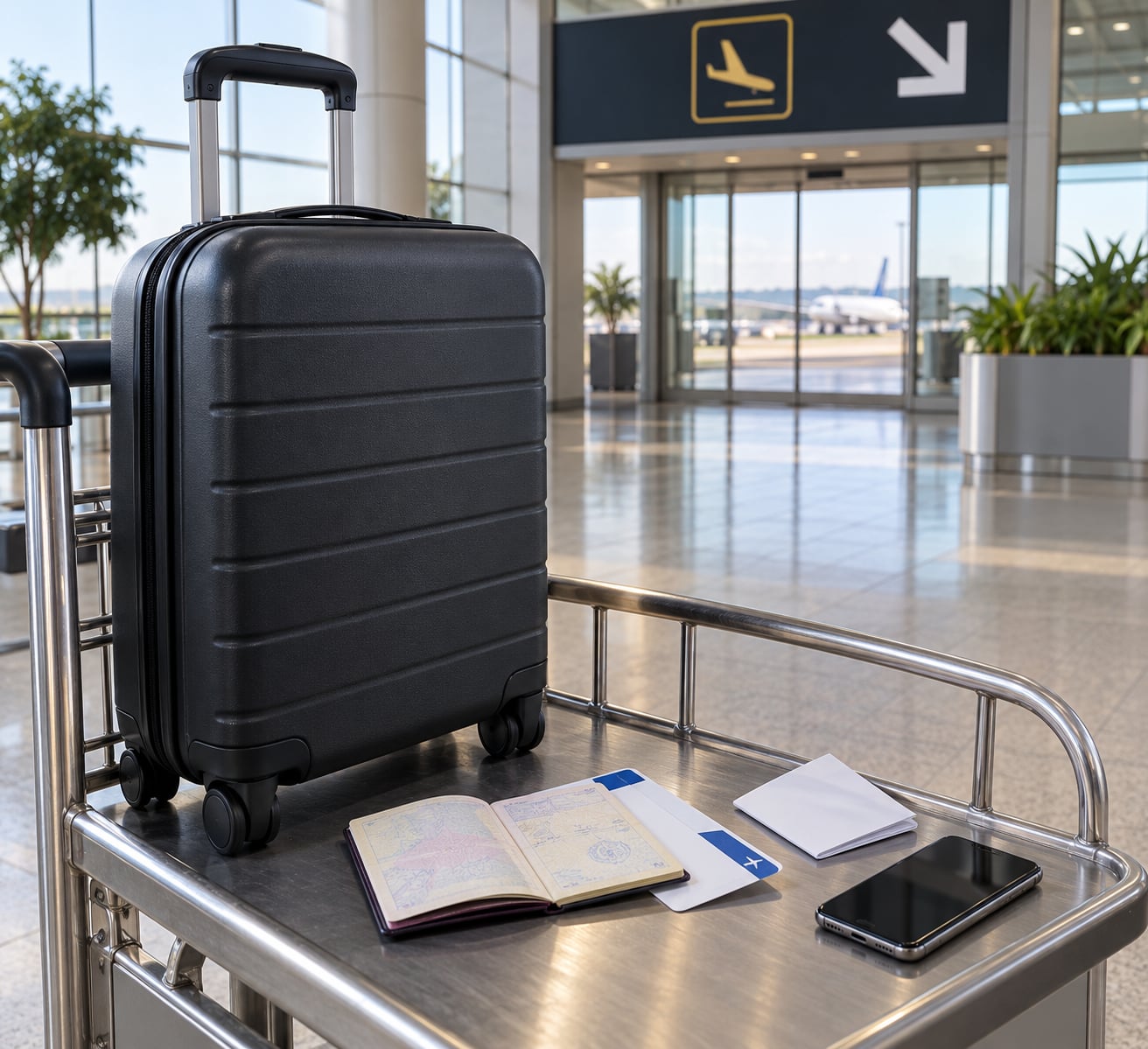
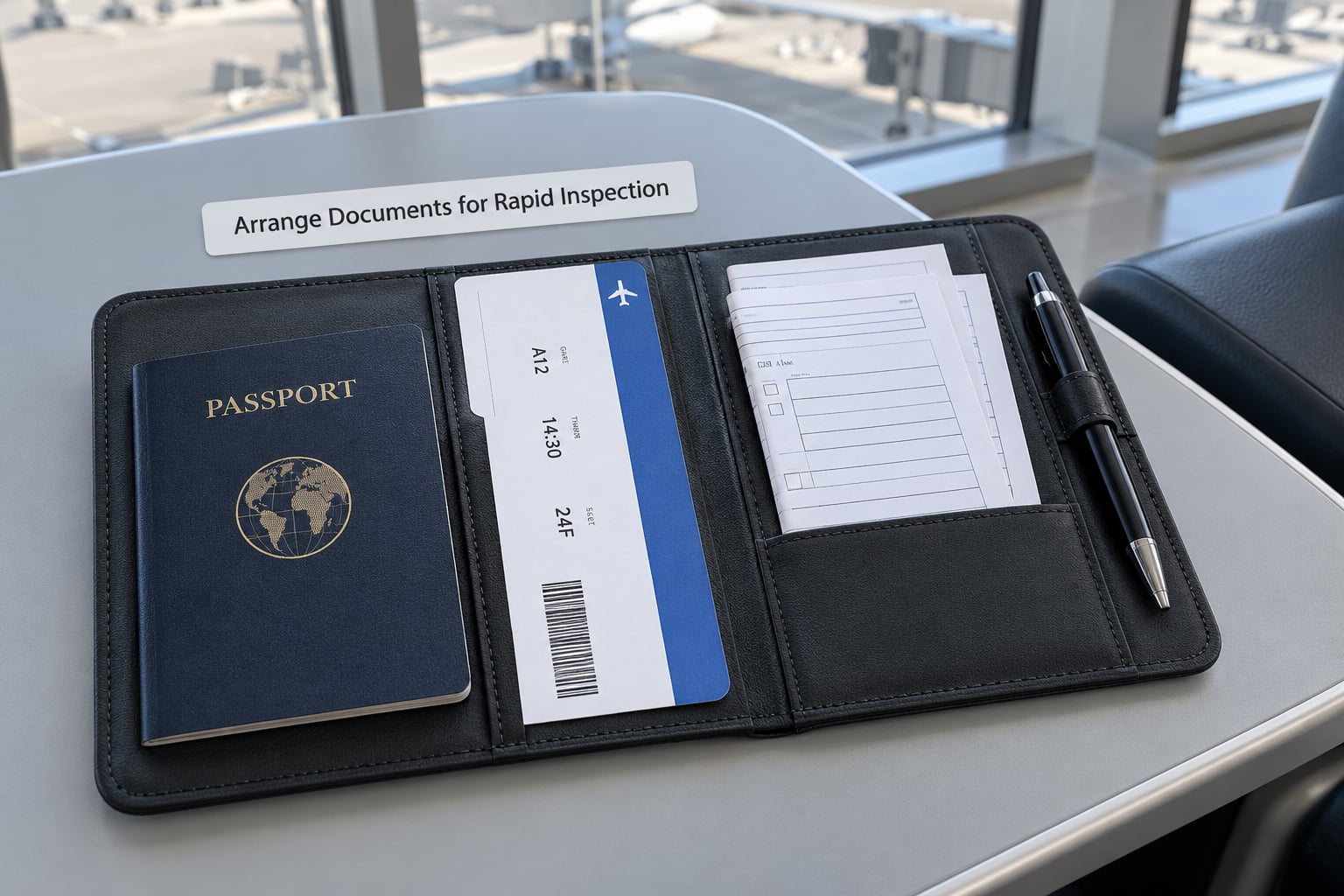
Put your passport, entry permission, ticket, accommodation details and completed declarations in one folder, in your cabin bag, and keep it above the tray rather than underneath it. Passports stored in checked luggage cannot be produced at the counter, and digging through a bag in front of a line of forty people is the single most common avoidable delay.
Order matters more than neatness. Passport first, because the officer looks for the photo page immediately. Then the entry permission, then whatever the form asks for next.
3. Follow Airport Signs and Staff Instructions
Most airports split the arrival path into three clearly signed zones: immigration first, then baggage claim, then customs, then the public arrivals hall. You cannot reach customs without passing immigration, and you cannot collect bags before you clear it.
Queues are not always labeled in the way you would expect. In the US you will see separate lines for Global Entry members, Mobile Passport Control users, and everyone else, and the dedicated lines are only open at certain times of day. Look for a line that is actually moving, not just the shortest one. When signs conflict or a lane is closed, ask an airport or airline staff member rather than drifting into a lane that is not yours; going the wrong way costs far more time than asking.
Keep your phone in your hand rather than in a pocket you have to unzip. Walking speed, stairs over escalators, and choosing the correct door on the aircraft all add up, but only after you land.
4. Answer Questions Clearly and Briefly
Answer with plain facts, not a script. The questions themselves rarely change: what is the purpose of your visit, how long are you staying, where are you staying, how are you getting home, and do you have anything to declare.
Give the specific answer, not the vague one. Naming the city, the hotel and the date you fly home takes five seconds. A traveler who says “a couple of weeks” when the booking shows six weeks has created a second look for no reason.
Honesty protects you. If you are unsure whether an item counts, say so. Officers are not looking for a gotcha, and an accurate declaration is always faster than a confident wrong one that unravels later at the agriculture counter.
5. Retrieve Luggage Efficiently
Watch the carous from the walkway rather than standing at the end of it. Bags on a carousel that has just unloaded start at the far end, so the early part of the wait is often just walking. A collapsible bag you can carry and a photo of your bag’s identifying marks help you claim yours fast.
Check your bag before you leave the hall. If it is damaged or missing, report it at the airline’s baggage desk in the arrivals area rather than waiting in a customs queue first. Filing early gives you a case number and a replacement timeline, and the process is usually faster before you leave the secure zone.
Do not repack at the carousel. Open the bag if you need to confirm a declaration item, but do the sorting at home, where a longer stay costs nothing.
6. Use the Correct Customs Channel
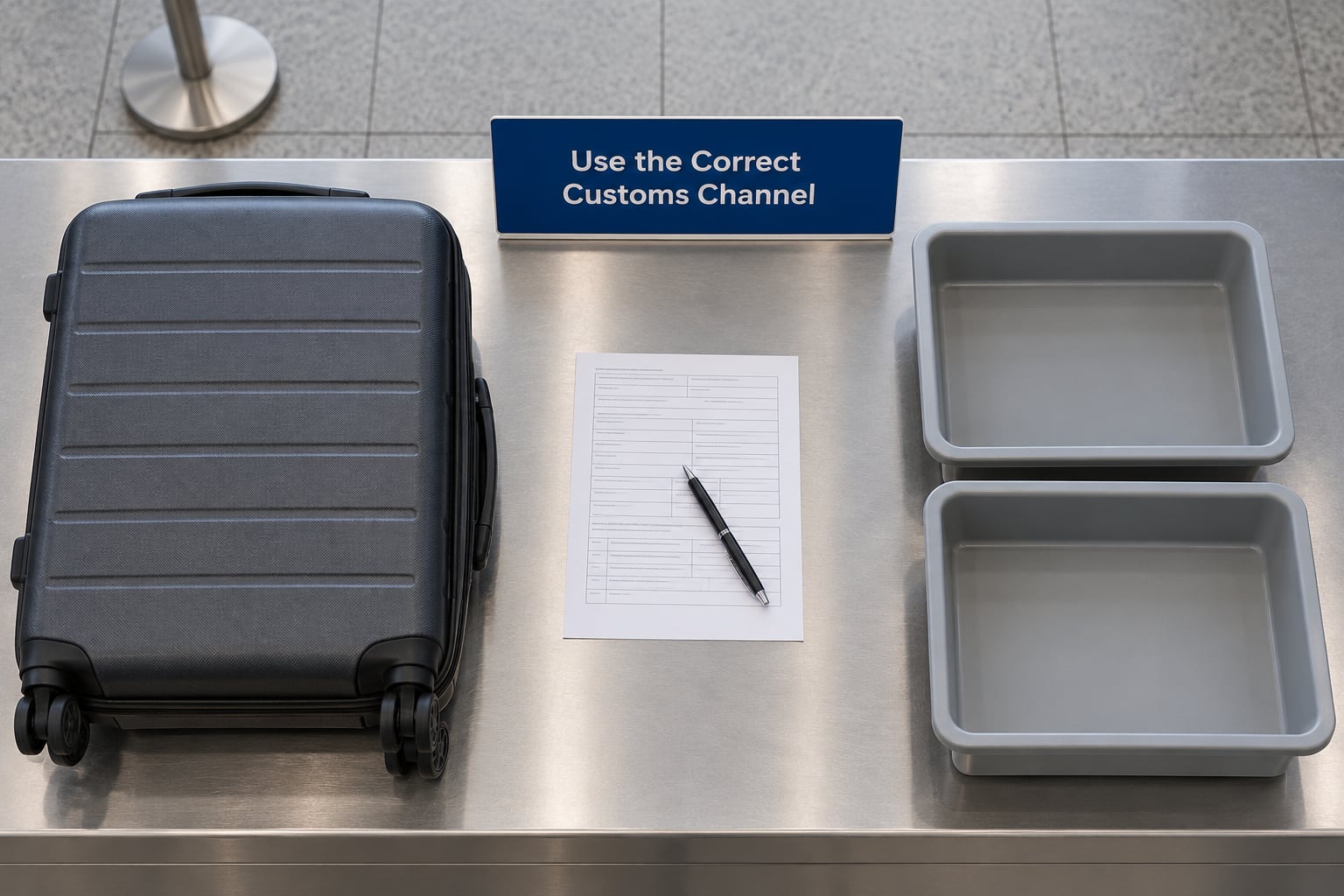
Customs handles goods, not people. You declare anything restricted, dutiable, or in quantities above your allowance, and you pay duty if the destination charges it. The red channel means you have goods to declare and need to speak to an officer. The green channel means you are declaring nothing.
Neither channel is a shortcut. Green-channel users who are sent to a desk are checked for accuracy, and declarations that contradict what the officer sees in your bag are the main reason for a referral. Mobile Passport Control and equivalent digital declarations simply move the same questions to your phone, so the answers you give should match exactly.
Allowances are set by each country and change. If your trip involves alcohol, tobacco, cash above the local threshold, or multiple purchases made abroad, check the official customs authority for the destination before you fly so you know the current figures rather than remembering a number from a decade ago.
7. Prepare for Secondary Screening
Some travelers are referred for an additional check on documents, bags or both. Selection is routine and often random, and officers are not required to explain why a particular traveler was chosen. A mismatch between your declaration and the bag, a routing that looks unusual, or simply bad luck can trigger it.
Cooperation is the only useful response. Answer questions, give up the bag when asked, and keep your phone and laptop where staff can see them. Travelers who post long complaints online about a referral usually spent less time in secondary screening than the person who argued.
8. Know When You Have Reached the Arrivals Area
You are through when you can leave the secure zone into the public arrivals hall, where taxis, trains, hotel shuttles and rental cars meet. Some airports place the transport hall and the currency counters before the exit, and some place them after, so read the signs rather than assuming.
Before you go, take thirty seconds to confirm that your onward travel is booked for after immigration, that you know which terminal your next transport leaves from, and that you have a working way to pay for a taxi or train if needed. A missed connection is usually a planning problem, not a border problem.
Common Mistakes
Avoidable errors show up in the same places, year after year:
Using unofficial or paid third-party arrival forms. Many sites that look official are resellers charging a service fee for a free government form, and some are pure scams. The fix: start from the destination country’s official immigration or customs website, or from the link the airline gives you at boarding.
Packing documents in checked luggage. The fix: passport, entry permission and declaration in your cabin bag, always.
Joining the wrong queue. Travelers with a Global Entry number who queue for everyone else, or MPC users who queue at the officer desks because the MPC line was closed on a different part of the concourse. The fix: walk the full line before you join it and check the sign at the head of the queue.
Declaring inconsistently. Answering “nothing to declare” at the desk while a declared item sits in your bag. The fix: one honest answer, repeated consistently, on the form, in the app and to the officer.
Leaving food from the flight. Apples, sandwiches and similar items handed out on board are a frequent trigger for a bag search. The fix: eat them or bin them before the queue.
Missing time-sensitive connection instructions. Terminal changes and short connections are posted on departure boards and in airline apps. The fix: check both screens before you deplane, and photograph any gate change.
Tips for a Faster Airport Arrival
Join a trusted traveler program if you cross a border regularly. Global Entry, NEXUS and similar schemes put members in a shorter, dedicated line that is often empty while the general queue wraps the concourse. The catch is an enrollment appointment at a center that can be inconvenient, and membership terms and fees are set by the authority running each program, so check the official site for current rules. FlyerTalk regulars are consistent on one point: Global Entry and Mobile Passport Control are complements, not substitutes. Use the program that matches your eligibility and your citizenship, not the one that is trending.
Fly into quieter banks when you can. Forum travelers report multi-hour immigration lines at Chicago O’Hare during peak international arrival waves and calm arrivals in the middle of the day. A flight timed to land between banks is worth more than any trick, because the queue is a function of how many people landed in the same twenty minutes.
Allow time for the parts you cannot control. One traveler described a full entry process of roughly ninety-five minutes with apps enabled, and other accounts describe far longer waits. Build your connection plan with a buffer of at least two hours when you have checked bags to recheck and an international segment ahead of you; a shorter buffer works only if you carry on through and the airports allow a transfer without reclaiming bags.
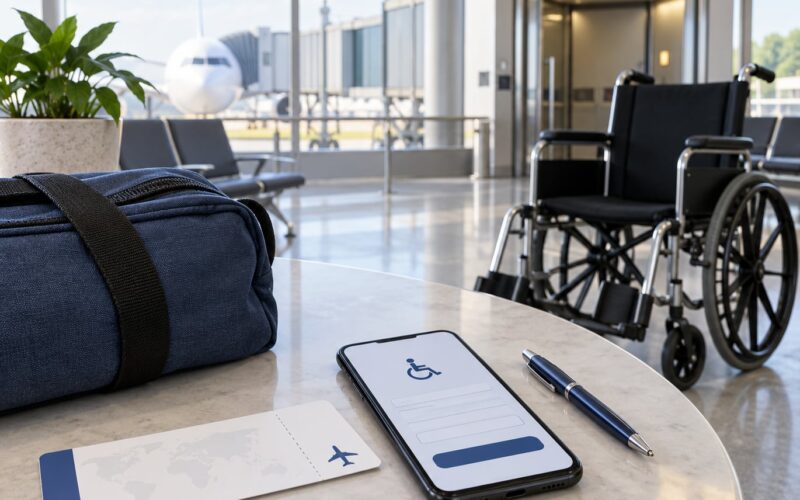
Give families and travelers needing assistance a slower plan. Children, passengers in wheelchairs and anyone with a connecting mobility device often get routed through a dedicated assistance channel that is faster in the corridor but slower on paper. Arrive early, tell the airline in advance, and accept that the process will not match a solo traveler’s.
For arrivals outside the US, check whether your destination offers eGates, whether you meet the biometric requirements, and whether your nationality qualifies. Border agencies outside the US publish their own trusted traveler schemes, and the eligibility rules differ from one country to the next.
Keep a copy of everything on your phone in case of a dead battery, stored locally rather than in a cloud drive that needs a connection to open. And keep your expectations honest. No preparation guarantees a fast clearance, but preparation reliably prevents the slow kind.
Frequently Asked Questions
Can I skip immigration or customs lines at an international airport?
No. Some travelers are directed through faster processing because of eligibility, staffing, or a trusted traveler program, but authorities can still select any traveler for document checks or secondary screening. What you can control is preparation: forms filed before landing, documents in one place, an accurate declaration, and the correct queue. That removes delay, but it never removes the checkpoint itself.
What documents should I keep accessible during immigration?
Keep your passport, any required visa or entry authorization, onward or return travel details, accommodation information, and your completed official declaration in your cabin bag, above the tray rather than underneath it. The exact set depends on your nationality and your destination, so confirm on the destination country’s official immigration website. A paper copy and a photo of each document on your phone covers a dead battery or a damaged passport.
Will online immigration forms make customs and immigration faster?
They can cut airport time when the destination officially offers pre-arrival processing, because the questions get answered once in the air instead of at a counter. Online submission does not grant priority or guarantee clearance. Complete the form early, use the official government site or airline link, and remember that screenshots of generated barcodes or QR codes are usually rejected, so a charged phone matters.
What happens if I miss a connecting flight after going through immigration?
Usually you collect your checked baggage and pass through customs before reaching the public transfer or arrivals area, but the precise sequence depends on the airport and whether the connection allows you to transfer without reclaiming bags. If you have already cleared the border, speak to airline staff rather than immigration. Rebooking options are often better on a same-ticket itinerary than a separately purchased one, so buy connections on one ticket when you can.
Does TSA PreCheck get me through customs and immigration faster?
No. TSA PreCheck is a security screening program, not a border program. It speeds you through the departure security queue, and a Global Entry membership often includes a TSA PreCheck indicator for its members, but it does not shorten passport control or customs on arrival. For arrivals, the programs that matter are Global Entry, NEXUS and equivalent trusted traveler schemes, or a digital declaration app such as Mobile Passport Control where it is offered.
Is Mobile Passport Control better than Global Entry?
They are not really comparable. Mobile Passport Control is a free digital customs declaration for eligible US and Canadian citizens at participating airports, and it removes the paper form. Global Entry is a paid trusted traveler membership that puts you in a shorter immigration line. Traveler consensus on travel forums is that the two complement each other, and eligibility rules for both are set by the issuing authority and change, so check the official program pages.
Conclusion: What to Do First
Start with the destination country’s official immigration and customs website, using the route you are actually flying. Confirm whether you need a visa or entry authorization, whether an advance passenger form or digital declaration is available, and what the current declaration thresholds are.
Then use only official forms, completed before you land, and never a paid third-party site dressed up to look like a government page. Finally, pack your documents in your cabin bag in the order an officer will ask for them.
Entry rules, program eligibility and airport procedures change often, so check again shortly before each trip. How to get through customs and immigration faster is not one clever move; it is a short list of ordinary ones, done early.