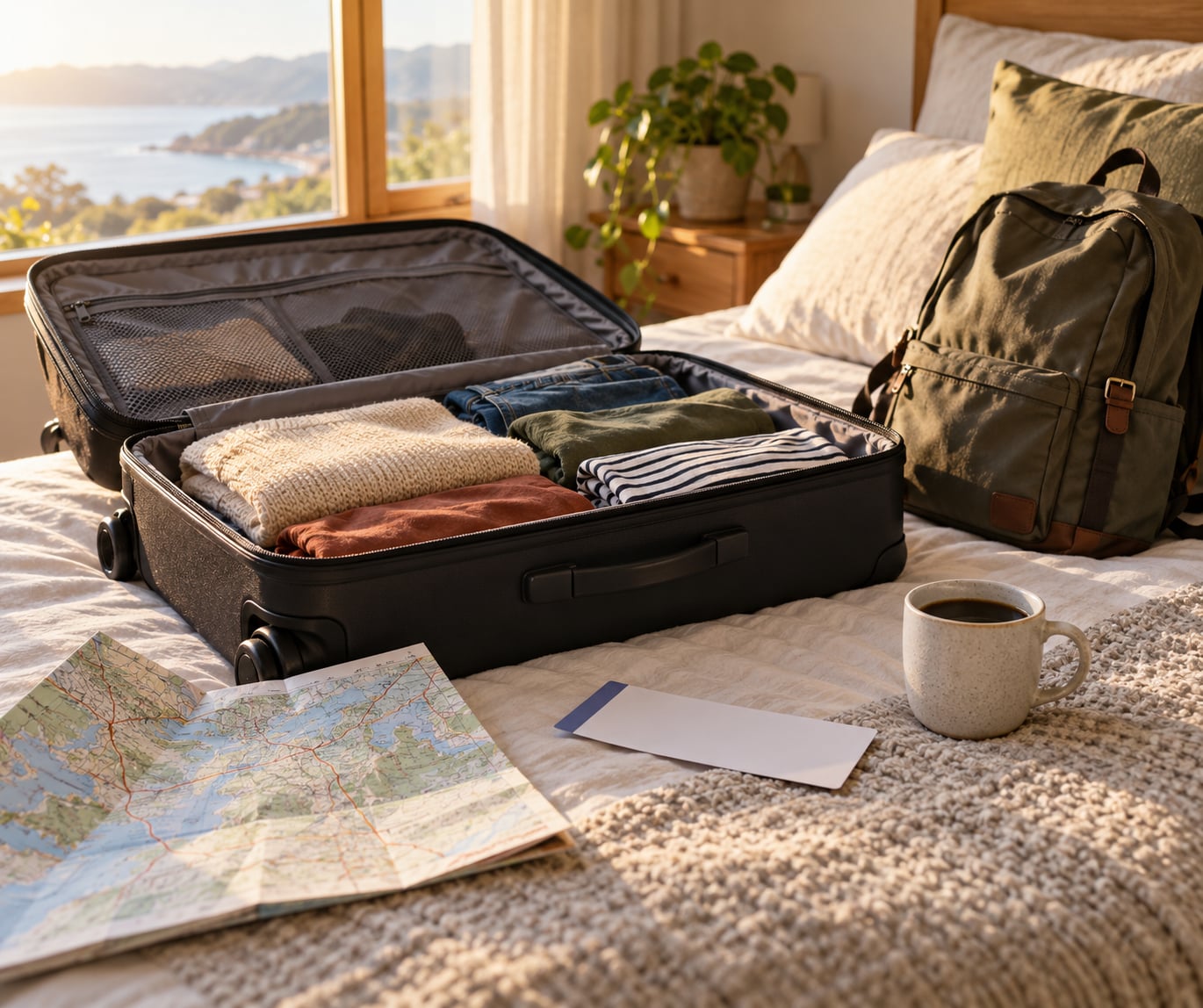
You turn three days into a real vacation by capping door-to-door travel at about three hours, staying in one base, and giving each day a single anchor activity with the rest of the hours unplanned. That is the entire method behind how to use a three day weekend for a real vacation, and it takes roughly two weeks of work, not two months.
The reason most long weekends disappoint is arithmetic, not bad luck. Six hours of round-trip transit turns a 72-hour window into roughly 48 usable hours, and you spend the first and last of those recovering from the journey. Pick a place you can reach quickly, stay put, and do less than you think you should.
What You Need
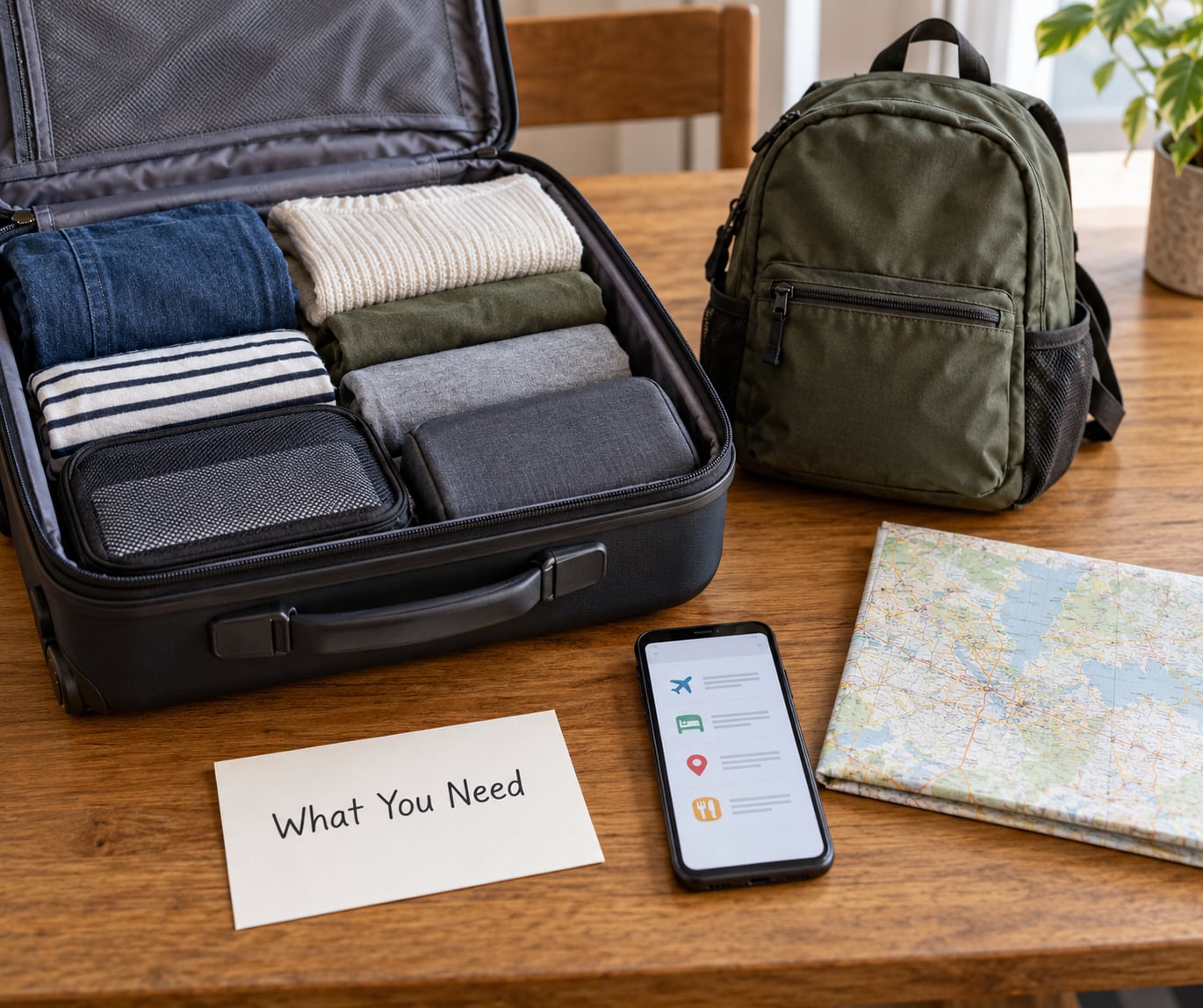
Before you open a booking site, get five things straight. Miss one and the weekend gets eaten by logistics instead of rest.
- A hard travel-time limit. Decide the maximum door-to-door time you will accept, in hours, before you look at destinations. Three hours each way is a good ceiling; four is the point where people start counting the trip as a transit exercise.
- A destination that fits inside that limit. Check the full journey, not the flight time. Door to door includes getting to the station, boarding, the transfer, the ride from the arrival airport, and waiting for bags.
- One flexible booking. At least one refundable rate, ideally the lodging. Weather, delays, and sick kids are ordinary parts of a fixed 72-hour window, and flexibility is what keeps a bad day from ruining the whole trip.
- Money or points already set aside. A small fund that you do not think about during the trip. Three days is short enough that cost anxiety eats real hours.
- Documents in one place. Photo ID, passport or birth certificate if you are crossing a border, insurance details, cards, and boarding passes downloaded to your phone and a screenshot folder. Airport Wi-Fi fails more often than people expect.
- One clear reason to go. Not a list of twelve. A single non-negotiable, whether it is a hike, a birthday dinner, a museum, or doing absolutely nothing, is what you build the weekend around.
Step-by-Step
1. Decide What Kind of Break You Need
Most disappointing weekends are the wrong type of break rather than the wrong place. A restorative getaway, an active mini-adventure, a food-and-culture trip, and a visit with people each need a different pace, and they are hard to mix.
Restorative means unstructured: a walkable base, a good bed, one outing a day at most. Active means a trail, a bike route, or a climb, and it needs daylight hours you actually control. Food and culture rewards early starts and one anchor per day, because tasting rooms and museums both close in the evening. Social trips are the only kind that tolerate a full schedule, since the point is the people, not the place.
Pick one primary objective and let the rest be optional. How you know it worked: on the flight home you can name the thing you did, not just the places you passed through.
2. Choose a Destination with Short and Simple Travel Times
Compare destinations by door-to-door time instead of appeal. The number that matters is how many hours remain after you subtract travel both ways, plus roughly an hour for check-in and an hour for the return buffer on the final day.
This is the filter most people skip, and it is the one travelers on forums like r/ucla and r/lancaster keep landing on independently: the best weekend destination is usually two or three hours away, and further is rarely better.
| Door-to-door travel time | Realistic usable hours out of 72 | Best trip type | Main risk |
|---|---|---|---|
| Under 3 hours by car or train | 54 to 60 | National parks, wine regions, coastlines, lake towns, small cities | Driver fatigue on the return evening |
| 1 to 3 hours, nonstop flight | 48 to 54 | City breaks, food trips, weekend festivals | Security and boarding lines eat the first morning |
| 3 to 5 hours with a connection | 36 to 42 | Only when the destination is genuinely non-negotiable | A delay on the outbound leg costs you the first full day |
| 5 hours or more | 24 to 30 | Occasional special occasion only | You arrive tired and go home tired |
Weather matters more than people admit. Shoulder season, roughly April through May and September through October, gives you the best combination of empty trails, open restaurants, and calmer booking. Federal holiday weekends such as Memorial Day, July 4th, and Labor Day deliver four days, and you pay for them in crowds and peak pricing.
How to know the choice is right: you can describe the arrival evening in one sentence, and that sentence does not contain the word airport twice.
3. Build a Three-Day Schedule with Breathing Room
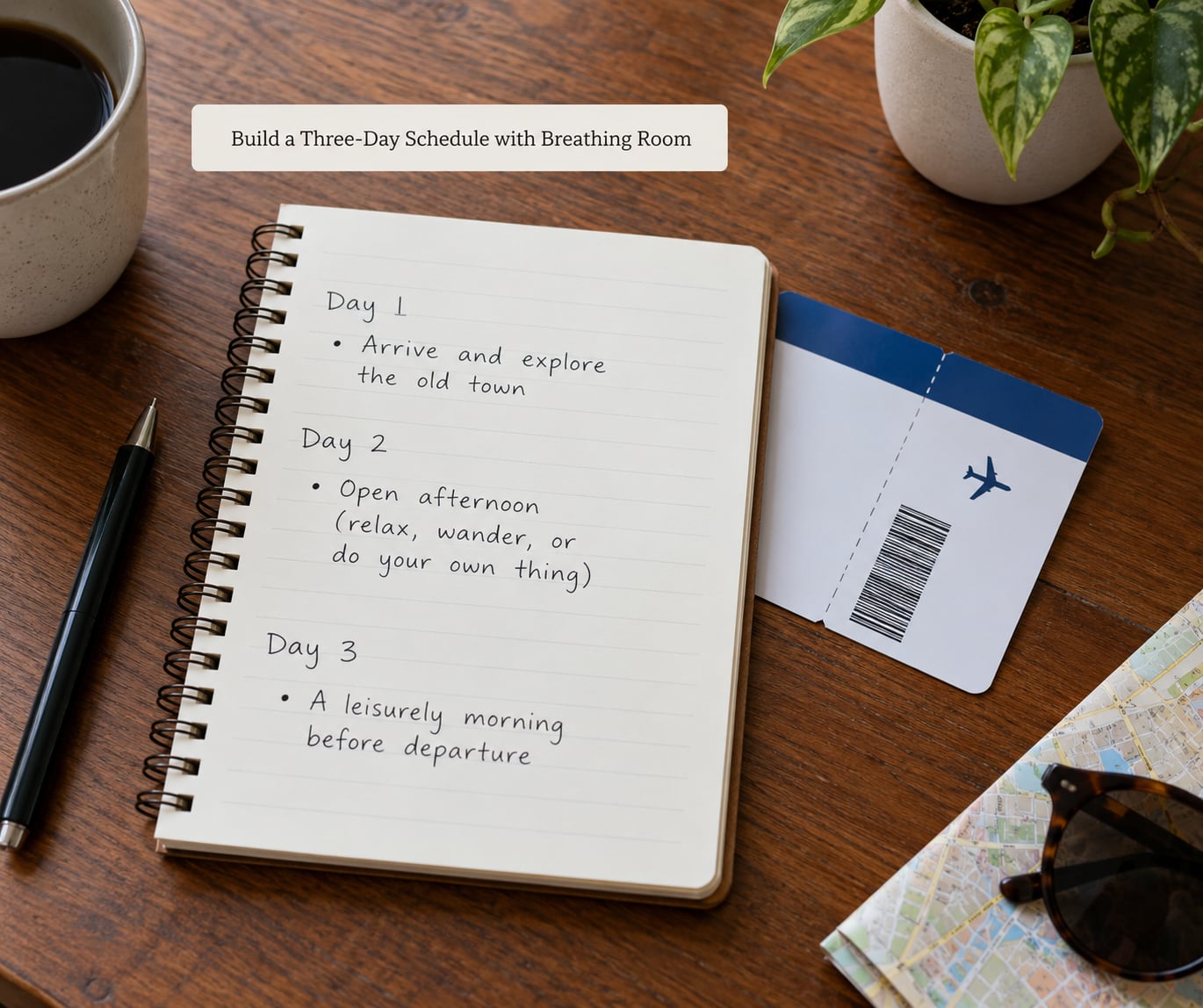
A workable three-day schedule treats Friday and Sunday as travel days with light plans and gives Saturday the anchor. That is the whole structure, and it is deliberately boring.
| Day | Morning | Afternoon | Evening |
|---|---|---|---|
| Friday, arrival | Work, then travel | Check in, walk the neighborhood, no agenda | Dinner near the hotel, early night |
| Saturday, anchor day | One pre-booked anchor activity | Unstructured: nothing you would regret missing | A sit-down meal with no reservation pressure |
| Sunday, slow exit | Sleep in, market or short walk, pack | Check out, one last coffee, buffer | Travel home, no connections if avoidable |
Two or three activities on Saturday is plenty. Regulars in travel forums describe pre-planning Saturday with only a couple of stops and mixing in sit-down meals rather than racing between sights, and that advice holds up. Add a scheduled downtime block of two or three hours, and decide in advance that it is not available for catching up on email.
How to know the schedule worked: on Saturday evening you are not tired, which is the entire test. If you are exhausted at dinner, the plan had one item too many.
4. Book the Right Combination of Transport and Lodging
Prioritize a nonstop flight over a cheaper connecting one, and a central hotel over a larger room further out. Every transfer you remove gives back an hour, and every hour of walking you add back hurts more than it looks on a map.
Rental transport pays off when your anchor is spread across more than about 30 kilometers. In a walkable city, transit passes and a pair of comfortable shoes beat a car and parking. A short drive beats everything when the trip is a single trailhead, a lake, or a countryside base with no evening options.
Booking tradeoffs are real: refundable rates cost more and are worth it for the first booking of a fixed window. Book the lodging and the anchor activity early, then leave meals and the second day open. Check schedules rather than assuming them, because holiday Monday changes local bus and train hours more often than people expect, and an early Sunday departure is where most self-imposed deadlines come from.
As a share of total spend, a short trip usually lands near these proportions:
| Category | Typical share of trip spend | Where to control it |
|---|---|---|
| Lodging for two nights | About 40% | Refundable rate, central but not luxury |
| Transport both ways | About 25% | Off-peak timing, avoiding a connection |
| Food and drink | About 20% | One sit-down meal a day, casual the rest |
| Activities and entries | About 10% | One anchor, free options for the rest |
| Buffer | About 5% | Held for a taxi, a rebooking, or an extra night out |
How to know the booking is right: you can get from the arrival point to the front door without a second plan.
5. Pack for the Trip, Not for a Long Holiday
Three days is a carry-on trip, and a carry-on is the single best thing you can do for a short weekend. You skip the bag claim, you skip the check-in queue, and if the flight goes sideways you have everything with you.
- One flexible outfit that works for both a walk and a restaurant, plus one layer for the temperature you actually expect.
- Walking shoes that are already broken in, plus a second pair of sandals or light shoes for long travel days.
- Toiletries in a small pouch that fits inside a day pack, so you are not digging through a suitcase in an airport queue.
- Any medication you use regularly, in your carry-on, in the original packaging.
- Chargers, a power bank, and a universal adapter if the trip crosses borders.
- One comfort item. A book, a sleep mask, or the good pillow. This is the item that decides whether a hotel room feels like a hotel room.
Leave the second outfit at home. You will wear the same three things and feel better for it.
6. Protect the Vacation by Making the Return Easy
The return decides whether you feel restored Monday morning or resentful. Treat it as part of the trip rather than the part that ruins it.
Set a real departure time and work backwards from it, including the drive or train to the station, boarding, and a buffer for a delayed connection. Aim to be at the terminal an hour early for a flight and 30 minutes early for a train. Keep the last hour before leaving free, and pack the night before rather than at 5 a.m.
Download anything you will need offline, including maps and a screenshot of your lodging address in the local language. Eat before you board rather than relying on an airport stop. Tell one person at home your route and check-in time if you are travelling solo.
Then plan the first hour back: a shower, something to eat, laundry started that night. Sunday evening inbox triage in two short passes, not one long scroll. Forum readers describe coming home on Sunday night feeling wiped out, and the fix is almost always the return plan rather than the destination.
Common Mistakes
- Choosing the destination before the travel time. Pick the maximum journey first, then browse inside it. The fix is a one-line rule: three hours door to door, no exceptions.
- Treating arrival day as a full day. You will not have the energy, and pretending otherwise manufactures resentment. The fix is a light Friday with one walk and an early night.
- Filling every hour. Cramming a dozen activities into three days produces a trip nobody enjoyed. The fix is one anchor per day, chosen before you leave, with everything else marked optional.
- Booking a restrictive hotel. Late check-in fees, a far-out neighborhood, or a no-show clause will eat your evening. The fix is one refundable rate, ideally with free cancellation until the day before.
- Ignoring how you will actually get around. A destination that needs a rental car is a different trip from a walkable one. The fix is checking local transit hours and last-service times, especially on a holiday Monday.
- Packing for a week of possibilities. Overpacking turns a carry-on into a checked bag and adds twenty minutes at both ends. The fix is the three-day list, with one comfort item and nothing speculative.
- Forgetting the unofficial 3-3-3 driving rule. The practical version is simple: about three hours of driving, then a real break, then three more. Breaks every two hours are safer if the first stretch is at night, in the rain, or after a long flight.
- Forgetting the road trip mistake everyone makes. Driving straight through to arrival is the most common one, followed closely by booking the first night somewhere inconvenient and the last night right next to the departure point. Both are fixed with a 30-minute margin and a one-base plan.
- Leaving the return as an afterthought. A 6 p.m. flight after a 5 p.m. checkout does not exist. The fix is working backwards from the departure time, and putting the last hour in your bag before the trip.
One more honest caveat: three days is not enough for a distant destination. Community consensus on travel forums is blunt about it, calling two nights and three days too short to see a far-off place properly. If the trip requires a long-haul flight or two transfers, take five days or choose somewhere closer. The rule is simple: match the length to the distance, and the weekend will reward you.
Frequently Asked Questions
How far away should a three day weekend destination be?
Keep total door-to-door travel to about three hours each way. That leaves roughly 54 to 60 usable hours out of 72, which is enough for arrival, one anchor day, and a slow exit. A 5-hour journey can leave you with barely a day of real time, so it needs a much stronger reason.
Is 3 days enough to be a real vacation?
Yes, when you treat it correctly. Three days works because you are not recovering from a long trip, you sleep in your own bed on Sunday night, and you are back for work Monday. It stops working the moment you add a long flight, two hotel changes, and a full itinerary. One base and one anchor a day is the whole difference.
What is a good budget for a 3 day trip?
Think in shares rather than a fixed number, because costs swing by city. Lodging for two nights runs about 40 percent of the total, transport about 25 percent, food about 20 percent, activities about 10 percent, and you should hold roughly 5 percent back as a buffer. Set a ceiling before booking and refundable rates make the risky part reversible.
What should I pack for a 3 day weekend?
A carry-on with two flexible outfits, one weather layer, broken-in walking shoes, a second light pair, toiletries in a small pouch, regular medication, chargers, a power bank, and one comfort item such as a book or sleep mask. Skip anything you would only use once, and download maps and documents before you leave.
How do I ask for time off work for a long weekend?
Make the ask small and early. Name the specific dates, confirm you will be reachable for one real emergency, offer handover notes in advance, and say which days you will cover remotely if the week is busy. Send it a week or two ahead, keep it to four or five sentences, and put the dates in the first line rather than burying them.
Conclusion
Start with three things this week: decide the kind of break you need, set a firm door-to-door travel limit, and pick one anchor activity per day with the rest of the hours deliberately open. That is how to use a three day weekend for a real vacation, and it costs a little planning rather than a long holiday. Book the flexible thing first, then let the weekend arrive before you have finished thinking about it.